
TL;DR:
- Poor inventory control causes significant profit loss in UK pubs through wastage, theft, and over-pouring.
- Implementing proper tools, staff training, and routines can dramatically reduce stock variances and improve margins.
- Ongoing audits, leadership accountability, and external stocktaking are key to maintaining effective inventory management.
Unnoticed wastage is quietly draining profit from pubs across the UK every single week. The industry loses £212m annually from beer wastage alone, and that figure does not account for spirits, wine, or food. If you have ever wondered why your gross profit figures look healthy on paper but feel thin in practice, poor stock control is almost certainly part of the answer. This guide walks you through the real costs of inventory mismanagement, how to prepare your venue and team for better control, the step-by-step process to streamline your operation, and how to verify that your improvements are actually working.
Table of Contents
- Understand the real costs of poor stock control
- Get prepared: Tools, staff, and processes to set up
- Step-by-step: Streamlining your pub inventory process
- Verification: Auditing and troubleshooting your inventory regime
- Why most pubs miss the mark on inventory – and how to make yours the exception
- Streamline your pub inventory with proven hospitality solutions
- Frequently asked questions
Key Takeaways
| Point | Details |
|---|---|
| Inventory losses are costly | Stock errors and wastage can devastate profit, costing the UK sector over £212 million a year. |
| Preparation is essential | Robust tools, trained staff, and clear processes lay the foundation for inventory improvement. |
| Step-by-step controls work | Implementing consistent checks and waste logging is proven to reduce losses. |
| Audit and adapt | Regular internal and external audits are vital to spot issues and optimise performance over time. |
Understand the real costs of poor stock control
Most pub owners focus on the obvious costs: rent, wages, utilities. Inventory loss tends to stay invisible until someone runs the numbers properly. When you do, the figures are sobering.
UK pubs lose 3 to 6% gross profit from poor stock control, with draught beer shrinkage running at 5 to 10% across the industry. On a pub turning over £500,000 per year in wet sales, a 5% loss equates to £25,000 walking out the door annually. That is not a rounding error. That is a member of staff, a refurbishment, or a year’s worth of marketing.
The main sources of that loss break down into three categories:
- Over-pouring: Staff who free-pour spirits or let beer lines run inefficiently can each cost hundreds of pounds per month without realising it.
- Theft: Both customer and staff theft are more common than most owners want to acknowledge. Short-changing the till, giving away drinks, or removing stock are all real risks.
- Waste and breakages: Spillages, line cleaning losses, and broken bottles add up fast, particularly on high-volume nights.
Here is a comparison of what poor versus good inventory control typically looks like across key metrics:
| Metric | Poor control | Good control |
|---|---|---|
| Draught beer shrinkage | 8 to 10% | 2 to 4% |
| Gross profit on drinks | 54 to 57% | 63 to 67% |
| Stock variance per week | Unknown | Under 1% |
| Theft detection time | Months | Days |
The inventory management benefits of getting this right extend well beyond the numbers. Knowing your stock position accurately means you order correctly, waste less, and serve consistently. You can also find more inventory efficiency tips that apply directly to pub environments. The motivation to act is clear. The question is how.
Get prepared: Tools, staff, and processes to set up
Before you can improve your inventory results, you need the right foundations in place. Rushing into stocktakes without proper tools or trained staff is a common mistake that produces unreliable data and frustrated teams.
Start with your hardware and software. A reliable POS system is non-negotiable. It should capture every sale in real time and link directly to your stock levels. Beyond the till, you will need:
- A dedicated stocktaking app or software that integrates with your POS
- CCTV covering bar areas, cellar access points, and delivery zones
- Calibrated measures for spirits and a drip tray audit process for draught lines
- A simple wastage log, either digital or paper-based, kept behind the bar
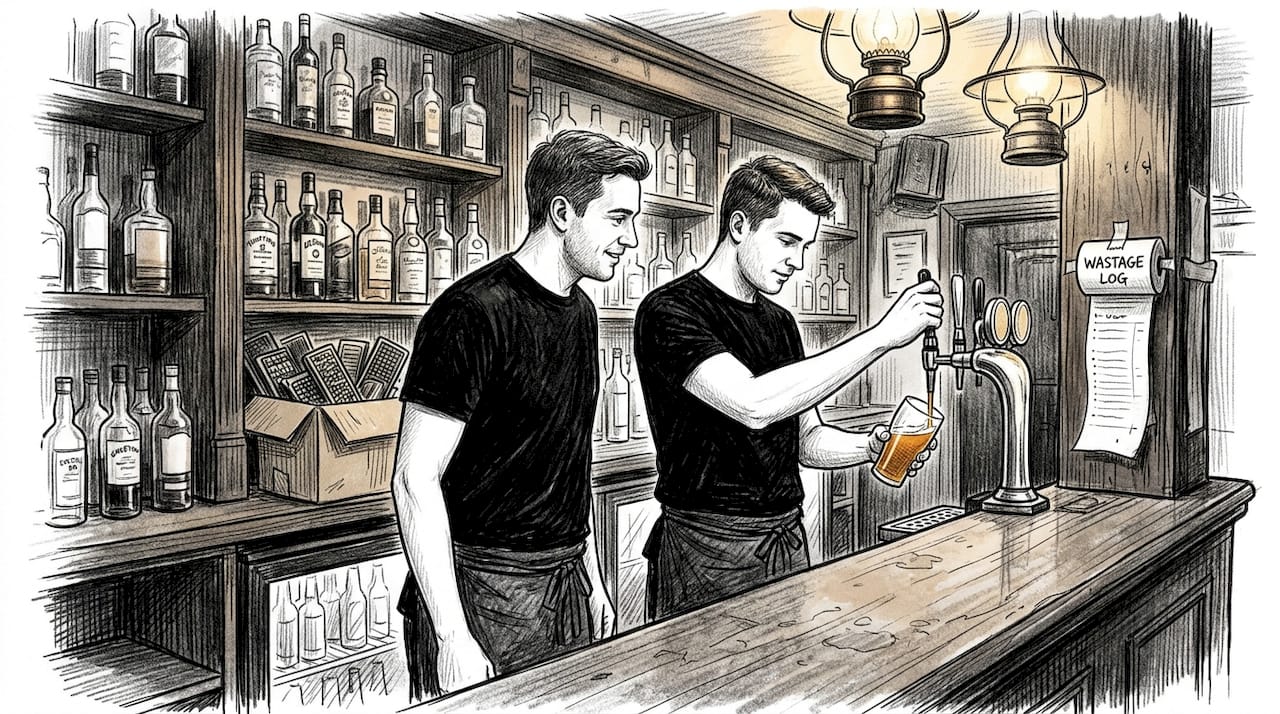
Staff training is where many venues fall short. Train staff on precise pouring, use CCTV actively, and make wastage logging part of every shift handover. The goal is not to create a culture of suspicion but one of accountability. When staff know that every pint is tracked, behaviour changes naturally.
Here is a practical overview of the key roles and responsibilities in a well-run inventory process:
| Role | Responsibility | Frequency |
|---|---|---|
| Bar manager | Wastage log review, daily counts | Daily |
| Cellar manager | Delivery checks, keg and cask records | Per delivery |
| General manager | Variance review, audit sign-off | Weekly |
| External stocktaker | Independent full audit | Monthly |
Processes matter as much as tools. Introduce closing stock counts for your top ten highest-value lines every night. Build a habit of logging wastage with a reason code, such as spillage, line clean, or breakage. This data becomes invaluable when you start troubleshooting variances later.
Pro Tip: When choosing a POS or stocktaking tool, prioritise integration over features. A system that automatically updates stock levels with every sale removes human error entirely. Use the step-by-step inventory setup approach to build your process correctly from the start, and refer to this inventory guide for venues for a broader framework.
Step-by-step: Streamlining your pub inventory process
With tools, processes, and people ready, you are set to carry out streamlined inventory procedures. Here is the sequential workflow that makes the biggest difference.
-
Establish delivery acceptance protocols. Every delivery must be checked against the order and invoice before it is accepted. Count cases, check weights on casks, and refuse anything that does not match. Unsigned or unchecked deliveries are a common entry point for discrepancies.
-
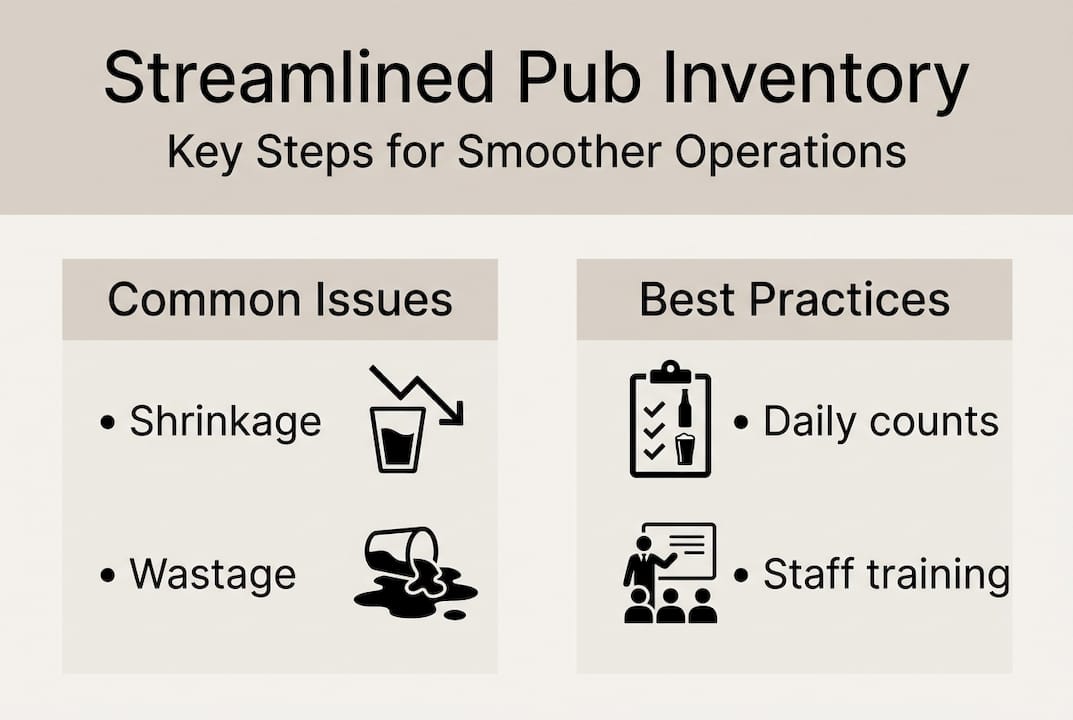
Run daily counts on high-movement lines. Draught beer, house spirits, and popular wines should be counted at the start and end of every trading day. This is not a full stocktake. It is a quick pulse check that flags problems within 24 hours rather than at the end of the month.
-
Log all wastage at the point it happens. A pint spilled, a bottle broken, a line clean completed. Every loss gets recorded immediately with a reason. This single habit eliminates the biggest source of unexplained variance in most pubs.
-
Conduct weekly cellar and bar audits. A structured walk-through of the cellar, back bar, and storage areas every week keeps stock organised and reveals any irregularities before they compound. Check that stock rotation (first in, first out) is being followed.
-
Reconcile sales data against stock movement. Your POS should tell you how many pints of each product were sold. Compare that against the physical stock reduction. Any gap is your variance and needs investigation.
-
Review and act on variance reports. Do not just file the numbers. When variance exceeds your target threshold, investigate the cause before the next trading period.
The financial stakes here are significant. 1.5 pints per tap daily in a ten-tap pub adds up to roughly £27,000 lost per year. Structured pouring training and better cellar management can recover a substantial portion of that.
Pro Tip: Focus your tightest controls on draught beer and spirits. These two categories carry the highest risk of loss and the greatest opportunity for recovery. Explore improving inventory steps and consider a cloud POS for pubs that gives you real-time visibility from anywhere.
Verification: Auditing and troubleshooting your inventory regime
Process improvements mean little without ongoing checks. Here is how to confirm your efforts are paying off.
The first sign that your inventory regime is working is a narrowing variance gap. If your weekly reconciliation shows stock movement aligning closely with sales data, you are on the right track. Signs that something is still wrong include:
- Consistent unexplained variances on specific products
- Stock levels that do not match delivery records
- Wastage logs that are incomplete or show suspiciously round numbers
- GP percentages that fluctuate wildly week to week
The difference between a manual internal audit and an independent professional one is significant. Internal counts are useful for day-to-day monitoring, but they are vulnerable to bias, familiarity blindness, and deliberate manipulation.
“Professional stocktaking services provide independent audits that reveal hidden losses from over-pouring, waste, and theft that internal processes routinely miss.”
Here is how the two approaches compare:
| Audit type | Frequency | Objectivity | Best for |
|---|---|---|---|
| Internal count | Daily or weekly | Lower, bias risk | Routine monitoring |
| Manager-led audit | Weekly or monthly | Moderate | Variance investigation |
| BII-accredited stocktaker | Monthly | High | Full accuracy and legal compliance |
When your results disappoint, troubleshoot systematically. Double-check your counting methodology. Are staff counting full bottles or including partials? Are kegs being measured by weight or assumed full? Review procedure compliance before assuming theft.
Bringing in a BII-accredited professional stocktaker at least once a quarter gives you an unbiased baseline. They will often identify issues that internal teams have normalised. You can also find useful reduce waste strategies and caterers inventory tips that translate well to pub environments.
Why most pubs miss the mark on inventory – and how to make yours the exception
Here is the uncomfortable truth: most pubs that struggle with inventory do not have a tools problem. They have a culture problem.
We have seen venues invest in expensive POS systems and sophisticated stocktaking software, only to see their variance figures barely move. The reason is almost always the same. The team has not bought into the process. Managers count what they expect to find. Staff log wastage selectively. The data becomes a formality rather than a diagnostic tool.
The real shift happens when leadership treats inventory accountability the same way they treat customer service standards. Non-negotiable, consistent, and modelled from the top. When a manager personally reviews the wastage log every morning and asks questions about anomalies, the entire team’s behaviour changes.
Internal manual stocktakes are particularly prone to error and bias, which is precisely why external auditors consistently find losses that internal teams have missed for months. The myth that “we know our own pub” is the single most expensive belief in the industry. Pair your internal discipline with advanced inventory insights and external verification, and you will see results that no spreadsheet alone can deliver.
Streamline your pub inventory with proven hospitality solutions
Taking control of your pub’s inventory is one of the most impactful decisions you can make for your bottom line.
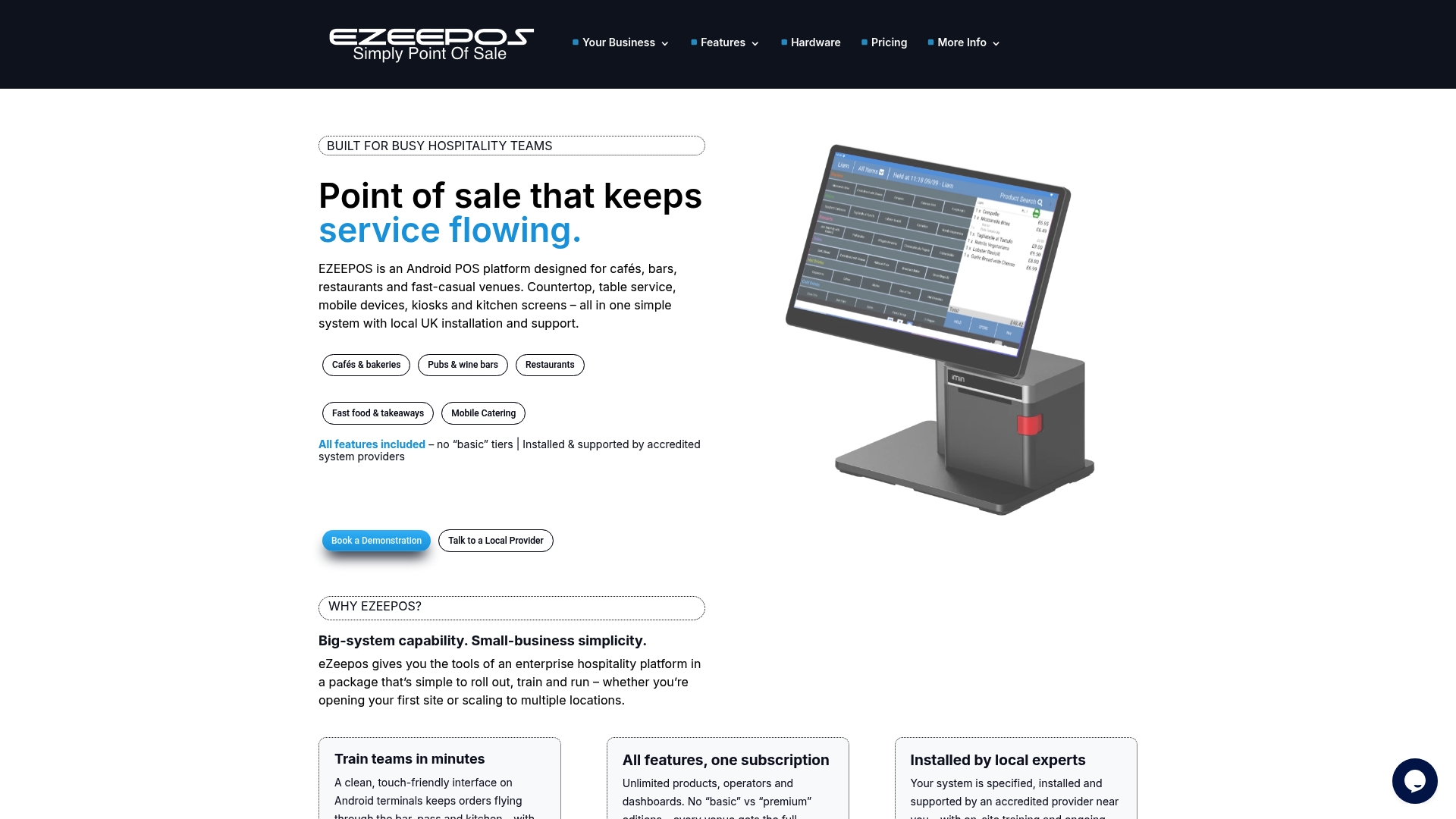
EZEEPos offers inventory POS tools built specifically for busy hospitality venues, giving you real-time stock tracking, automated variance reporting, and seamless integration with your bar operations. The platform is designed so your team can use it from day one without lengthy training. Explore the full range of hospitality inventory software options, or dive deeper into practical further inventory tips to keep improving. Local UK installation and ongoing support mean you are never left to figure it out alone.
Frequently asked questions
What is the most common cause of inventory loss in pubs?
Over-pouring, theft, and wastage are the primary drivers of inventory shrinkage in pubs. Robust staff training, CCTV monitoring, and consistent wastage logging are the most effective controls.
How much beer does the average UK pub waste yearly?
A ten-tap pub wasting 1.5 pints per tap daily can lose approximately £27,000 per year. Better pouring technique and cellar management can recover a significant portion of this.
Are professional stocktaking services worth the cost?
Yes. Independent stocktakers routinely uncover hidden losses that internal teams miss, and their fee is typically far outweighed by the savings they identify.
What is the target gross profit margin for drinks in UK pubs?
A healthy GP margin for drinks sits between 60 and 70%, but poor stock control can reduce this by 3 to 6 percentage points, which has a significant impact on overall profitability.
Recent Comments