

TL;DR:
- Cafe waste costs UK industry billions annually, with 61% being avoidable.
- Proper inventory management, routines, and data tracking significantly reduce waste and boost profits.
- Continuous review and simple systems ensure sustainable, effective inventory control.
Running a café in the UK is unforgiving when stock goes to waste. Surplus milk poured down the drain, overripe pastries binned at closing time, and coffee beans left unused all eat directly into your margins. UK hospitality food waste costs £3.2 billion yearly, with cafés contributing significantly and 61% of that waste entirely avoidable. This guide gives you a practical, step-by-step path to tighter inventory control, less spoilage, and stronger profits, whether you run a single neighbourhood café or a small chain.
Table of Contents
- Understanding café inventory challenges
- What you need before streamlining inventory
- Step-by-step: How to streamline café inventory
- Common pitfalls and how to avoid them
- Tracking progress and verifying results
- A fresh perspective: Streamlining is continual, not a one-off task
- Streamline your café inventory with the right solution
- Frequently asked questions
Key Takeaways
| Point | Details |
|---|---|
| Majority of waste is avoidable | Most café inventory waste can be cut by addressing prep and perishables. |
| Simple tools drive savings | Even spreadsheets and regular checks lead to notable cost reductions. |
| ROI for improvements is strong | For every £1 spent cutting waste, cafés often save £7. |
| Continuous process, not one-off | Ongoing tracking and adapting to trends ensure efficiency sticks. |
Understanding café inventory challenges
Every café owner knows the feeling: you over-ordered oat milk for a promotion that underperformed, or your team prepped twice as many sandwiches as you needed on a quiet Tuesday. These are not isolated incidents. They are symptoms of systemic inventory gaps that quietly drain cash from your business every single week.
The numbers are stark. Cafés waste 20 to 25% of all milk purchased, while preparation waste accounts for 45% of total food loss and spoilage contributes a further 21%. Combined, these three categories alone represent a significant portion of your food costs that simply vanishes without generating any revenue. For an inventory tips for UK cafés perspective, understanding where the losses occur is the essential first step.
Where does café waste come from?
- Milk and dairy: Over-ordering relative to actual drink sales, inconsistent barista portions, and failing to rotate stock correctly
- Perishable ingredients: Baked goods, fresh salads, and sandwich fillings with short shelf lives that exceed customer demand
- Preparation errors: Staff portioning too generously, mis-reading recipes, or prepping too far ahead without refrigeration plans
- Supplier deliveries: Accepting stock with shorter expiry dates than expected, leading to spoilage before items sell
| Waste category | Percentage of total café waste | Primary cause |
|---|---|---|
| Preparation waste | 45% | Over-prepping and portion inconsistency |
| Spoilage | 21% | Short shelf life, poor rotation |
| Milk waste | 20 to 25% of purchases | Over-ordering, incorrect portioning |
| Delivery issues | Variable | Accepting near-expiry stock |
For an average UK café turning over £250,000 annually, food costs typically represent 28 to 35% of revenue. If 20% of that is wasted, you are losing £14,000 to £17,500 every year to inventory mismanagement alone. That is not a rounding error. That is a part-time member of staff, a refurbishment, or a healthy profit buffer.
Targeting waste is the fastest route to improved profitability that does not require attracting a single new customer.
What you need before streamlining inventory
Getting your inventory under control does not begin with a software purchase or a new spreadsheet. It begins with gathering the right information and putting the right habits in place. Without accurate data and clear responsibilities, any system you introduce will produce unreliable results.
The data you need to collect first:
- Standardised recipes for every item on your menu, with exact quantities for each ingredient
- At least eight weeks of sales history, broken down by day and time of day where possible
- A current spoilage log tracking which items are binned and why
- Delivery records including expiry dates on arrival and any rejected items
- A staff rota that maps preparation duties to specific team members
Seasonal demand shifts and variable footfall are among the trickiest challenges cafés face. A bank holiday weekend can double your milk usage. A stretch of wet weather in August can suppress the footfall you were counting on. Rejecting deliveries of short-expiry perishables and substituting powdered dairy or shelf-stable alternatives for low-traffic periods are practical ways to reduce risk. Integrating these edge cases into your planning means your step-by-step inventory control process stays resilient when conditions change.
Choosing the right tools for your café:
| Tool type | Best for | Limitations |
|---|---|---|
| Manual paper log | Very small cafés, tight budgets | Time-consuming, error-prone |
| Spreadsheet | Small independents with time to maintain | Manual entry, no automation |
| POS with inventory module | Growing independents and multi-site | Upfront cost, training required |
| Dedicated inventory software | High-volume or complex operations | Overkill for simple menus |
Staff training is non-negotiable. Your morning barista needs to know what a correct milk portion looks like. Your kitchen lead needs to understand the prep schedule and why over-prepping costs the business real money. Assign clear ownership: one person should be responsible for each daily count, and a manager should review the weekly totals.
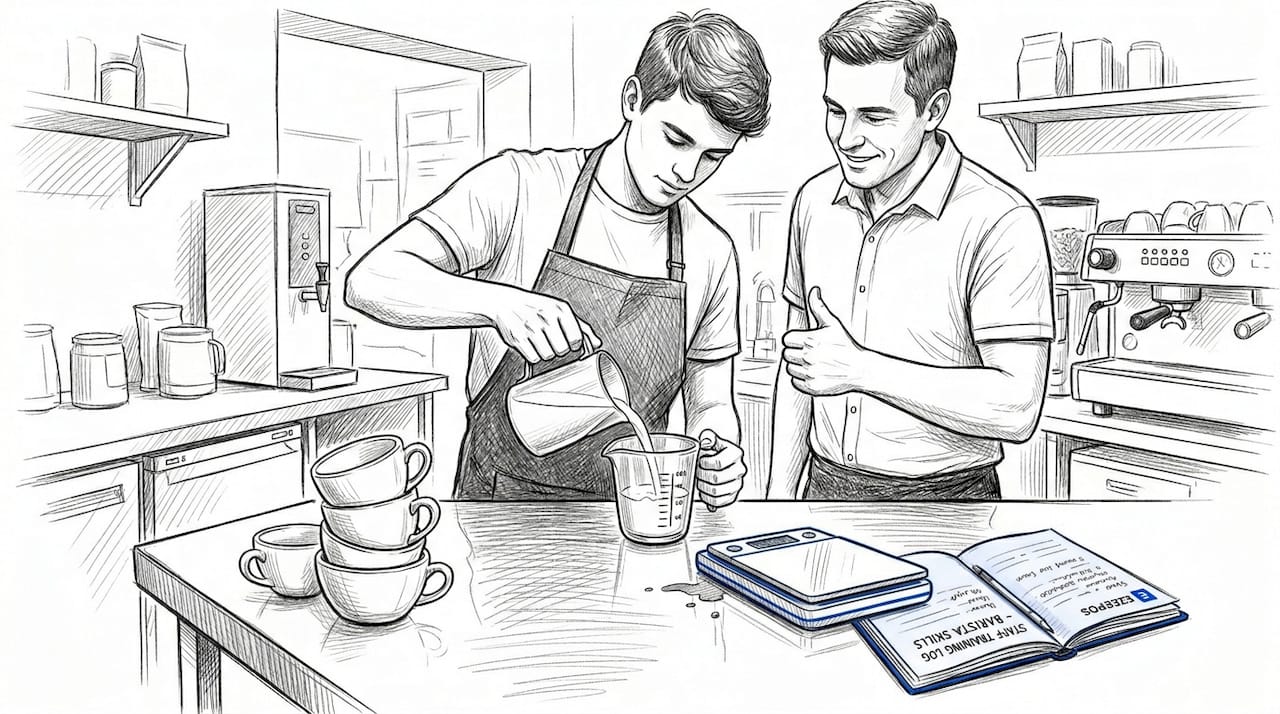
Pro Tip: Before introducing any new system, spend two weeks logging waste manually. You will uncover patterns that no software can reveal until you have baseline data to compare against.
Step-by-step: How to streamline café inventory
With your data collected and your team briefed, you are ready to implement a proper streamlining process. The steps below are scalable, meaning a two-person café can follow them with pen and paper, while a growing multi-site operation can layer in technology at each stage.
-
Conduct a full opening stock count. Count every ingredient, container, and consumable at the start of your process. Record quantities against your standardised recipe list to understand current stock levels accurately.
-
Set par levels for every item. A par level is the minimum quantity you need on hand before reordering. Base these figures on your sales history, adjusted for your delivery lead times. For milk, your par level might be three days of projected usage. For dried goods, it might be two weeks.
-
Implement a daily waste log. Every item binned, returned, or written off gets recorded with a reason. This creates a live picture of where losses are occurring and makes patterns visible within days rather than weeks.
-
Review your supplier order schedule. Match your order frequency to your actual usage. Ordering milk three times a week instead of once dramatically reduces the risk of spoilage. Negotiate smaller, more frequent deliveries where your suppliers allow it.
-
Choose your tracking method. For a small café, a well-maintained spreadsheet with columns for opening stock, purchases, sales, waste, and closing stock is entirely sufficient. For larger or growing operations, a café order management guide explains how integrated POS tools can automate much of this, pulling sales data directly into stock depletion calculations.
-
Inspect every delivery. Check expiry dates on arrival. Reject any items that fall short of your minimum shelf-life requirement, which for perishables should be at least 50% of the total shelf life remaining on delivery.
-
Run a weekly reconciliation. Compare theoretical stock (what your sales data says you should have used) against physical stock counts. Variances indicate either waste, theft, or portioning errors.
For small independent cafés, starting with spreadsheets and par levels is the right move. But investing in POS software pays off quickly as volume grows, particularly across multiple sites where manual tracking becomes unsustainable.
The financial case for doing this properly is compelling. Every £1 spent on waste reduction returns £7 on average across the hospitality sector. That is not a marginal gain. That is a transformation in profitability for relatively modest effort.
Simple systems vs. full software investment is a genuine debate among café operators. The honest answer is that the right tool is the one your team will actually use consistently. A sophisticated system that sits unused is worth nothing. A spreadsheet checked religiously every morning is worth a great deal.
Common pitfalls and how to avoid them
Even with a solid plan in place, cafés frequently stumble at the same points. Knowing these pitfalls in advance means you can build prevention into your process from day one.
The most common inventory mistakes UK cafés make:
- Infrequent or inaccurate counts: Counting stock fortnightly instead of daily or weekly means problems compound before you spot them. By the time a discrepancy appears, the cause is nearly impossible to trace.
- Ignoring seasonal shifts: Many café owners set par levels in January and never revisit them. Summer footfall, school holidays, and local events all change demand significantly. Par levels should be reviewed at least monthly.
- Poor staff engagement: If your team does not understand why waste matters, they will not take the extra sixty seconds to log a binned muffin. Connect waste reduction directly to job security and bonus potential when appropriate.
- Over-ordering perishables to “be safe”: This feels cautious but costs more than running slightly lean. It is nearly always cheaper to run out of a perishable item occasionally than to routinely discard surplus.
- Skipping delivery checks: Accepting near-expiry stock is one of the fastest ways to build a waste problem that looks like a sales problem.
- No clear waste reduction targets: Avoidable café waste at 61% is a sector-wide figure, but your targets need to be specific to your menu, your team, and your customer volume.
The solution to almost all of these is consistency. Short daily checks beat lengthy monthly audits every time. A two-minute end-of-day waste log prevents the need for a two-hour investigation into why your COGS figures have crept up.
Pro Tip: Set a specific waste reduction target expressed as a percentage of food purchases, for example reducing waste from 18% to 12% of your monthly food spend. Track it publicly on a back-of-house whiteboard. Visible targets change team behaviour faster than any memo.
For a broader view of boosting hospitality profits through inventory control, the same principles apply whether you are running a café or a full-service restaurant.
Tracking progress and verifying results
Streamlining is not a one-time project. It is an ongoing practice, and without measurement you cannot verify that it is working. Tracking the right metrics turns your inventory effort into a continuous improvement engine.
Key metrics every UK café should monitor:
- Waste percentage of food purchases: Total waste value divided by total food purchases, expressed as a percentage. Your target should reduce over time.
- Cost of goods sold (COGS) ratio: Food cost as a percentage of sales revenue. Industry benchmarks for cafés typically sit between 28% and 35%. Anything higher warrants investigation.
- Sales to waste ratio by item: Which menu items generate the most waste relative to their sales volume? These are candidates for portion review, recipe adjustment, or menu removal.
- Theoretical versus actual stock variance: The gap between what your sales data says you should have used and what actually disappeared. Recurring variances signal specific problems.
| Metric | What it tells you | Review frequency |
|---|---|---|
| Waste % of food purchases | Overall waste efficiency | Weekly |
| COGS ratio | Food cost relative to revenue | Monthly |
| Sales to waste ratio | Problem items on the menu | Monthly |
| Stock variance | Theft, portioning, or counting errors | Weekly |
The £7 return for every £1 invested in waste reduction only materialises if you measure progress consistently. Without baseline data and regular review, you cannot confirm the savings are real or identify where further gains remain.
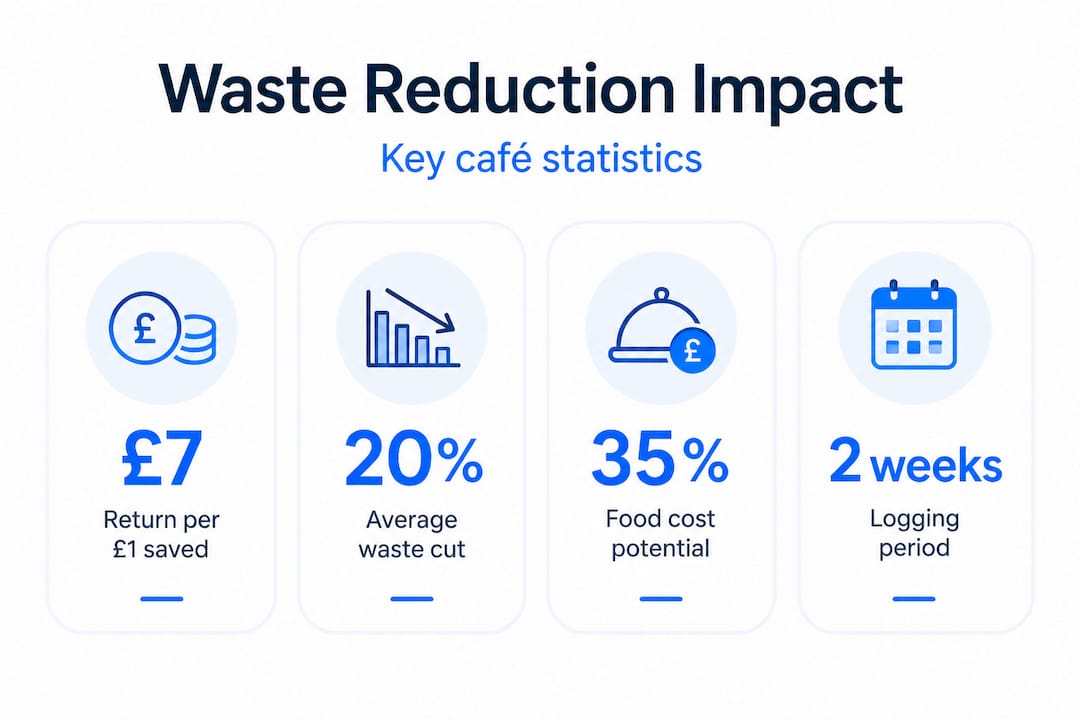
Build a monthly review session into your management calendar. Compare current metrics against the previous month and against your targets. If a specific item category is still generating high waste, drill into whether the issue sits with ordering, prep, portioning, or storage.
Your inventory guide for hospitality venues should become a living document, updated as your menu evolves, your team changes, and your sales patterns shift with the seasons.
A fresh perspective: Streamlining is continual, not a one-off task
Here is something the guides do not always say plainly: most cafés that fail at inventory management do not fail because they chose the wrong software or the wrong spreadsheet format. They fail because they treat streamlining as a project with a start date and an end date, rather than as a permanent feature of how they operate.
The best-run cafés we see embed inventory habits the same way they embed food safety habits. Nobody debates whether to follow hygiene protocols. They just happen, every shift, without discussion. Inventory checks should work the same way.
The uncomfortable truth is that a basic system used religiously every day will outperform an expensive, feature-rich system that the team finds complicated and gradually stops using. Simplicity and consistency beat sophistication and sporadic use every time.
Equally, streamlining needs to be adaptive. A café that fixed its inventory process in 2023 and has not revisited it since is likely leaving money on the table. New menu trends, new suppliers, shifts in customer spending behaviour, and changing team composition all mean your system needs periodic recalibration. The inventory management benefits compound precisely because they enable you to adapt quickly. When a supplier fails to deliver, when a new product takes off, or when a quiet period requires leaner ordering, a café with good inventory habits responds in hours rather than days.
The goal is not perfect inventory on day one. It is a slightly better system this month than last month, repeated indefinitely.
Streamline your café inventory with the right solution
Tighter inventory control is one of the highest-return improvements any UK café can make, but managing it manually at scale has limits. Purpose-built POS systems with integrated inventory modules remove much of the manual effort, automatically depleting stock as sales are recorded and flagging variances in real time.
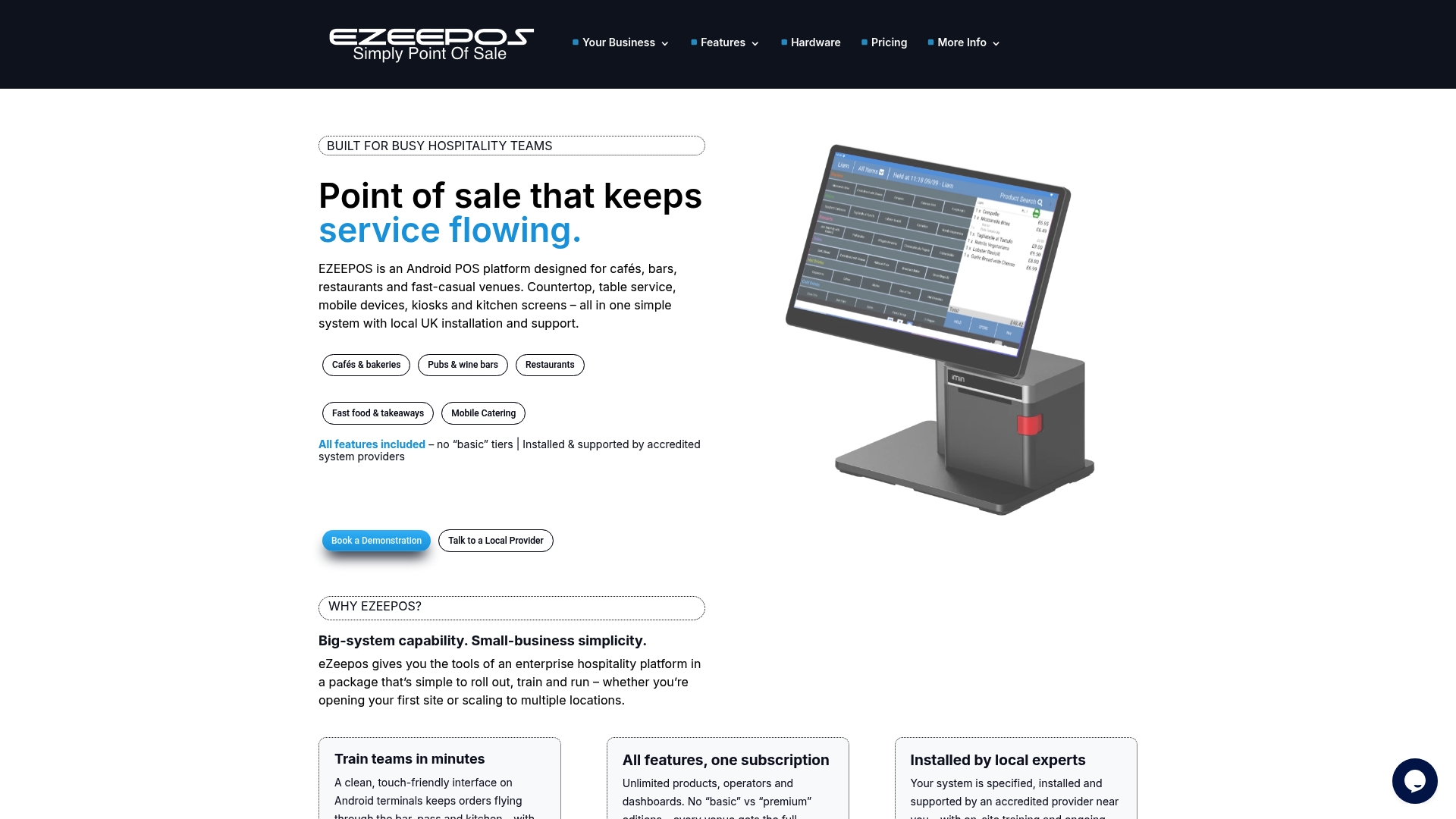
At ezeepos.co.uk, we work with cafés across the UK to put cloud-based inventory control at the centre of their daily operations. From single-site independents to growing multi-site operators, the platform connects sales data directly to stock levels, reducing counting errors and giving managers the reporting they need to act fast. Explore our inventory guide for caterers or see the full range of inventory management solutions designed for busy UK hospitality venues. The right system makes consistent inventory management something your team can sustain without it feeling like extra work.
Frequently asked questions
What are the top reasons for inventory waste in UK cafés?
The primary drivers are over-ordering perishables such as milk, poor tracking of short shelf-life items, and preparation wastage, with preparation losses accounting for 45% of total café food waste alone.
How often should I review café inventory processes?
Review your full inventory process at least monthly, but weekly stock counts and daily waste logs help you catch problems early and build the savings faster.
Does technology offer a real ROI for small UK cafés?
Yes. Even modest improvements to waste tracking deliver significant returns, with waste reduction yielding £7 saved for every £1 invested across the hospitality sector.
What’s the best way to handle seasonal demand changes?
Track sales trends by week and month, adjust par levels ahead of known busy or quiet periods, and review seasonal demand impact on perishables so you avoid overstocking items with short shelf lives.
Recent Comments