
Why data analytics in POS matters for hospitality
TL;DR:
- Data-driven venues have a 23% higher survival rate than those relying on intuition alone, highlighting the importance of POS analytics. Embedded dashboards provide real-time insights that enable immediate operational decisions, benefiting all venue sizes. Starting with simple KPIs and integrated data sources allows hospitality businesses to quickly leverage analytics for smarter, faster decisions.
Venues that run on gut instinct are playing a dangerous game. Data-driven restaurants survive at a 23% higher rate than those relying on intuition alone, and in an industry where profit margins sit between 3% and 9%, that gap is the difference between thriving and closing. Understanding why data analytics in POS systems is no longer optional gives hospitality owners a real edge. This article breaks down what POS analytics actually does, why it matters for venues like yours, and how to start using it to make smarter, faster decisions every single day.
Table of Contents
- Key takeaways
- Why data analytics in POS is a hospitality game-changer
- The real benefits of POS analytics for your venue
- Embedded analytics vs traditional reporting
- How to start using POS analytics effectively
- Myths that hold venues back
- My take on why this matters right now
- How Ezeepos puts analytics to work for your venue
- FAQ
Key takeaways
| Point | Details |
|---|---|
| Analytics beats intuition | Data-driven venues survive at significantly higher rates than those relying on gut feel alone. |
| Real-time insights win | Embedded POS dashboards let you act on data immediately, not at month-end. |
| All venues can benefit | Independent cafés and bars gain as much from POS analytics as large chains. |
| Connected data is critical | Pulling all sources into one system prevents fragmented, misleading insights. |
| Start simple, build fast | Clean data, clear KPIs, and user-friendly dashboards are all you need to begin. |
Why data analytics in POS is a hospitality game-changer
At its core, data analytics in a POS context means taking every transaction, every stock movement, and every staff interaction your system records and turning it into information you can act on. It goes well beyond a weekly sales report. A modern POS captures a continuous stream of data points that, when analysed correctly, reveal exactly how your venue is performing in real time.
For hospitality venues specifically, the data landscape is unusually rich. Your POS is not just processing payments. It is recording which menu items sell at which times, which members of staff process the most covers, how long tables turn over, and which promotions actually shift volume. When you layer in reservations, kitchen order screens, and inventory feeds, the picture becomes even more detailed.
Here is the type of data a well-connected POS typically captures:
- Sales data: Revenue by item, category, time of day, day of week, and service period
- Inventory data: Stock levels, usage rates, wastage, and reorder triggers
- Customer behaviour: Frequency of visits, average spend, preferred items, and response to promotions
- Staff activity: Covers per hour, voids, discounts applied, and shift performance
- Operational data: Table turnover times, order fulfilment speed, and kitchen throughput
The distinction between traditional reporting and connected analytics matters enormously. A traditional report tells you what happened last week. Embedded analytics shift POS analysis from retrospective review to continuous operational support woven into your daily workflow. That shift changes how quickly you can respond to problems and opportunities.
The real benefits of POS analytics for your venue
The advantages of point of sale analytics are not abstract. They translate directly into pounds saved and revenue gained across every area of your operation.
Inventory control becomes precise. When your POS tracks stock in real time and flags low levels automatically, you stop over-ordering and under-ordering. You can see which ingredients are being wasted and which dishes are driving that waste. For a venue running on thin margins, that level of inventory management precision is worth serious money.
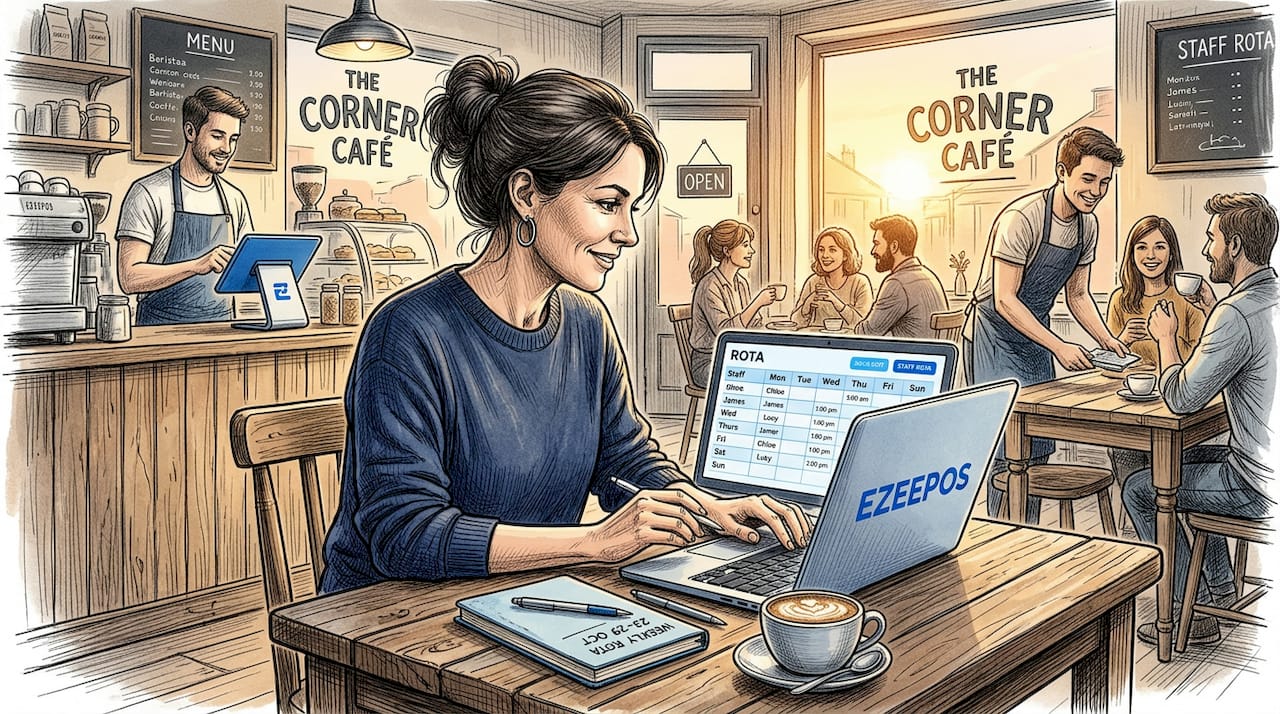
Staffing decisions get sharper. Labour is typically the largest controllable cost in hospitality. Analytics tells you exactly when your busiest periods are, down to the hour, so you can schedule the right number of staff without overspending on quiet shifts or understaffing during a rush.
Menu engineering becomes evidence-based. You can identify which items are high-margin and high-volume, which are popular but unprofitable, and which are dragging down both metrics. That data lets you redesign your menu with confidence rather than guesswork.
Dynamic pricing becomes viable. Revenue per cover increases by 6-9% when venues apply demand-based pricing adjustments during peak periods. This is not about alienating customers. It is about reflecting real demand intelligently.
Customer retention improves. When you understand purchase patterns, you can create targeted promotions that actually resonate. A customer who orders the same dish every Friday does not need a discount on something they have never tried. They need a loyalty reward for what they already love.
Pro Tip: Set up a weekly review of your three lowest-margin, highest-volume items. Raising the price by even 50p on dishes that sell 200 times a week adds £5,200 annually to your bottom line.
The benefits of data analytics in POS compound over time. The longer your system collects clean, connected data, the more accurate your forecasts become and the faster you can spot trends before they become problems.
Embedded analytics vs traditional reporting
The way you access your data matters as much as the data itself. Most venues have experienced the frustration of pulling a monthly report, spotting a problem that started three weeks ago, and realising there was nothing they could do about it at that point.
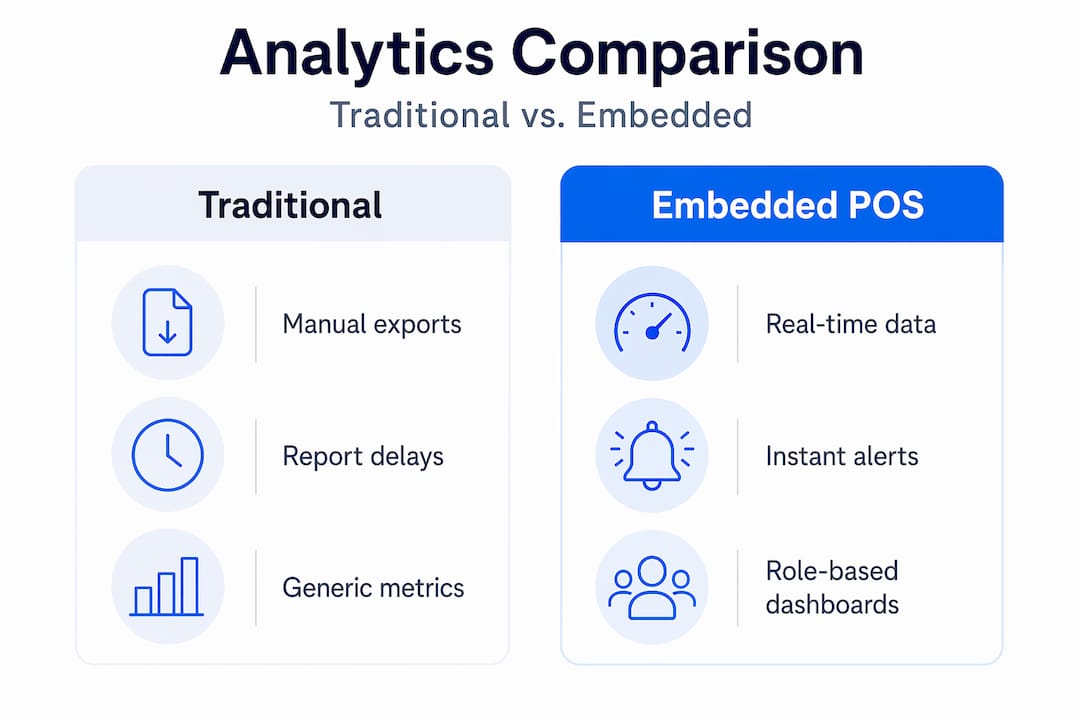
| Feature | Traditional reporting | Embedded POS analytics |
|---|---|---|
| Timing | Weekly or monthly | Real time |
| Access | Separate BI tool or spreadsheet | Built into POS interface |
| Audience | Management only | Role-specific for all staff |
| Response speed | Days to weeks | Immediate |
| Complexity | High, often requires IT support | Low, designed for daily use |
Embedded POS dashboards eliminate report delays and align metrics directly to the roles of the people using them. A floor manager sees table turnover and covers. A kitchen supervisor sees order throughput and prep times. A venue owner sees margin, labour cost, and revenue trends. Everyone gets the information relevant to their decisions, without wading through data that does not concern them.
The operational impact is immediate. When stock of a popular item drops below a threshold, the system flags it before you run out. When a Tuesday lunchtime is tracking 40% above forecast, you can call in an extra member of staff before the rush hits. AI-powered analytics is expanding this further, with the global POS terminal market projected to reach £181.1 billion by 2030 as venues invest in smarter, faster systems.
Pro Tip: When evaluating any POS analytics tool, ask whether frontline staff can access their relevant metrics without logging into a separate system. If the answer is no, the insights will not reach the people who need them most.
How to start using POS analytics effectively
Getting started with data analytics does not require a dedicated IT team or a six-month implementation project. Modern analytics platforms connect directly to POS databases or APIs, allowing analysis in minutes rather than months, with no complex data warehouse required.
Follow these steps to build a solid foundation:
-
Connect all your data sources first. Your POS, inventory system, and scheduling tool should feed into one place. Full-service restaurants pull data from at least six sources daily but typically use only two, which means critical profitability signals get missed until month-end.
-
Define your KPIs before you start reporting. Decide what you actually want to measure: gross margin by category, labour cost as a percentage of revenue, stock variance, table turnover time. Without clear KPIs, you end up drowning in data with no direction.
-
Choose a system your team will actually use. Analytics tools that support natural language queries allow non-technical staff to ask questions in plain English and get immediate answers, without needing SQL or complex report builders. Adoption is everything.
-
Start with one operational problem. Do not try to analyse everything at once. Pick your biggest pain point, whether that is food waste, labour overspend, or slow table turnover, and focus your analytics there first. Build confidence before expanding scope.
-
Review and adapt regularly. Analytics is not a set-and-forget tool. Schedule a monthly review of your KPIs, adjust your dashboards as your venue evolves, and treat data as a living input into your decisions rather than a static report.
The back office integration behind your POS is where much of this consolidation happens. A cloud-based back office that syncs with your POS in real time removes the manual reconciliation that wastes hours every week.
Myths that hold venues back
Several misconceptions stop hospitality operators from embracing POS analytics, and most of them do not hold up under scrutiny.
- “Analytics is only for big chains.” Independent venues often benefit more because every decision has a more direct impact on survival. A single insight about your busiest hour can reshape your entire staffing model.
- “It takes too much time to set up.” Most retailers spend over 4 hours a week manually preparing operational reports. A connected analytics system eliminates most of that time within weeks of setup.
- “It’s too technical for my team.” Modern POS analytics is designed for hospitality professionals, not data scientists. Role-based dashboards and natural language querying mean your team does not need any technical background.
- “We already know what’s happening in our venue.” Intuition is valuable, but it cannot tell you that your Wednesday afternoon shift is your least profitable per labour hour, or that one menu item is responsible for 30% of your food waste. Data can.
- “Collecting data is the goal.” Collecting data without aligning it to business goals produces noise, not insight. The importance of analytics in POS lies in connecting the right metrics to the right decisions, not in generating reports for their own sake.
My take on why this matters right now
I have watched a lot of hospitality operators make the same mistake: they invest in a POS system for its transactional capability and never touch the reporting side. The system is capturing gold and they are leaving it in the ground.
What I have seen change operations most dramatically is not the sophistication of the analytics. It is the speed. When a venue manager can look at a live dashboard at 11am and know that tonight’s service is tracking to be 30% busier than last Thursday, they can make a staffing call, a prep call, and a purchasing call before lunch. That is the kind of decision-making that used to require experience built over years. Now it requires a decent POS and the willingness to look at the data.
My honest advice: do not wait until you have a perfect data strategy. Start with your biggest operational headache and find out what your POS already knows about it. You will almost certainly be surprised. The venues I have seen thrive are not the ones with the most data. They are the ones who act on what the data tells them, consistently and quickly.
The competitive advantage of optimising hospitality operations through POS analytics is not a future consideration. It is already separating the venues that grow from the ones that struggle.
— John
How Ezeepos puts analytics to work for your venue
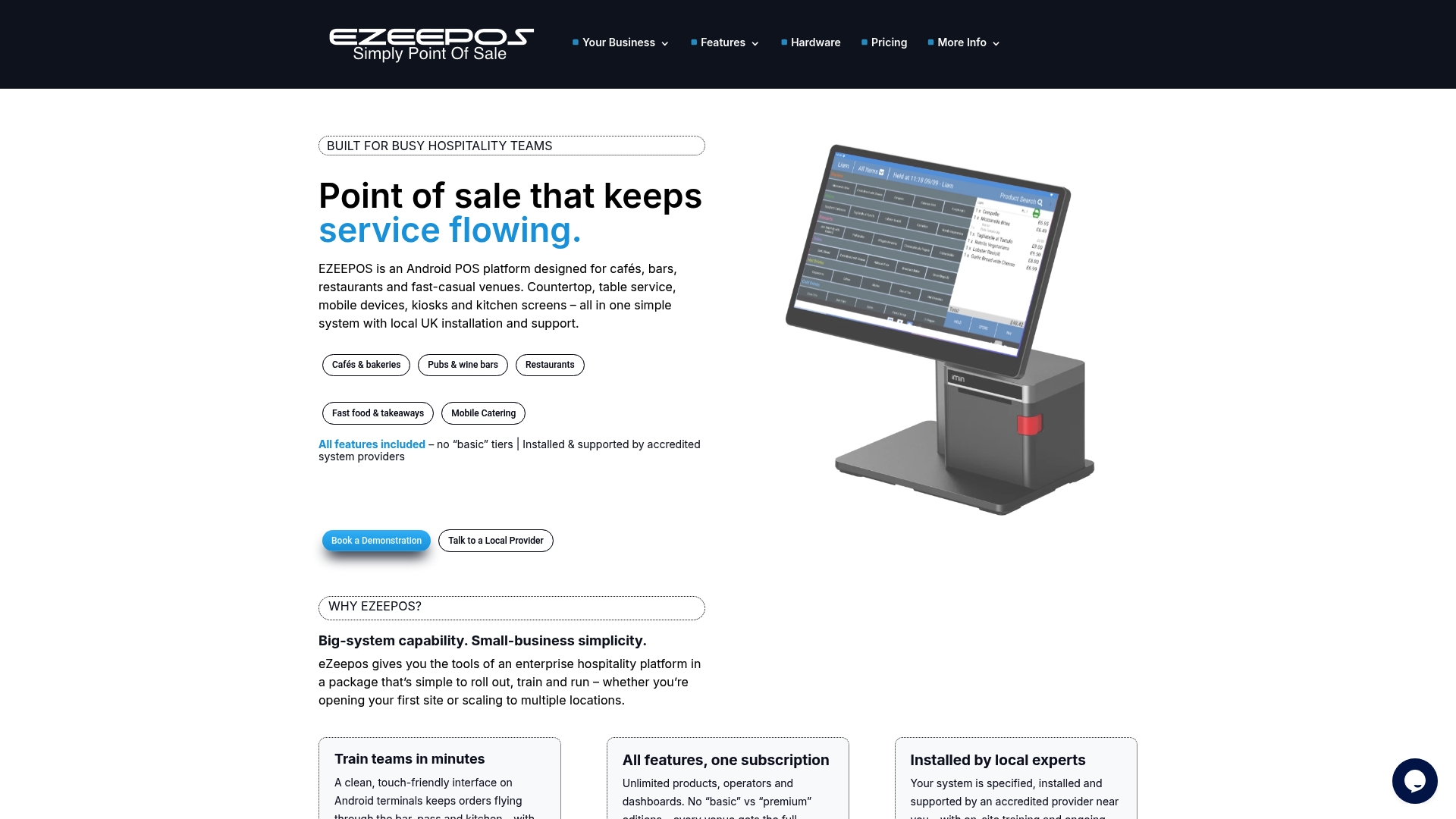
Ezeepos is built specifically for hospitality venues across the UK, from independent cafés and bars to multi-site restaurant groups. The platform captures sales, inventory, staff activity, and customer behaviour through a unified Android-based POS, with a cloud-based back office that makes all of that data accessible in real time, wherever you are.
Every Ezeepos venue gets full access to reporting and analytics features without tiered pricing or add-on costs. The system connects countertops, tablets, kiosks, and kitchen screens into a single data environment, so nothing falls through the gaps. Local UK installation and ongoing human support mean you are never left figuring it out alone.
If you are ready to move from gut feel to evidence-based decisions, explore the Ezeepos POS platform or learn more about the benefits of a unified POS for your venue.
FAQ
What does data analytics in a POS system actually do?
POS analytics collects and interprets data from every transaction, stock movement, and staff interaction to surface patterns and insights you can act on. It turns your daily sales activity into decisions about pricing, staffing, inventory, and menu design.
Why use analytics in retail and hospitality specifically?
Hospitality venues generate unusually rich data from multiple sources, including sales, reservations, kitchen throughput, and customer behaviour. Analytics connects these sources to reveal profitability and operational problems that would otherwise stay hidden until month-end financials.
Do small independent venues benefit from POS analytics?
Yes, often more so than large chains. Every operational decision in an independent venue has a direct impact on margins. Data-driven venues have a 23% higher survival rate, and that advantage applies regardless of venue size.
How quickly can a venue start using POS analytics?
Modern platforms connect directly to POS databases without complex setup, meaning analysis can begin within days rather than months. Starting with one clear KPI and a connected data source is all you need to get going.
Is POS analytics difficult for non-technical staff to use?
Not with the right system. Role-based dashboards and natural language querying allow frontline staff and managers to access the insights relevant to their role without any technical training or report-building experience.
Recent Comments