
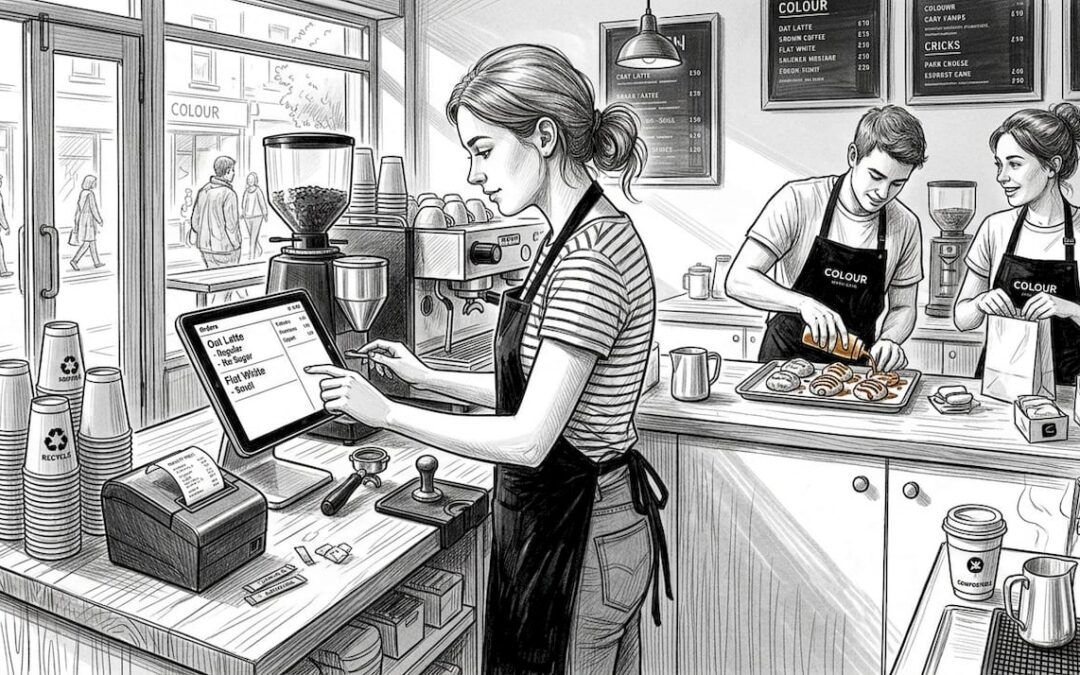
It’s Saturday morning, and your café is packed. Orders pile up, staff scramble between counter and kitchen, and a customer’s oat milk latte arrives with dairy. Sound familiar? Poor order management costs UK cafés thousands in lost sales, wasted stock, and frustrated customers. This guide delivers practical strategies to transform chaos into smooth, profitable service. You’ll discover proven tools, step-by-step processes, and expert insights to reduce errors, speed up service, and delight every customer who walks through your door.
Table of Contents
- Why effective order management matters
- What you need: Tools and essentials for seamless order flow
- Step-by-step: Setting up smarter order management
- Troubleshooting: Common pitfalls and how to avoid them
- Verifying success: Measuring results and making continuous improvements
- Take your café further with modern POS solutions
- Frequently asked questions
Key Takeaways
| Point | Details |
|---|---|
| Prioritise order accuracy | Digital systems and clear processes cut mistakes, ensuring consistent service and fewer complaints. |
| Embrace technology | Implementing POS solutions and integrations improves speed, tracking, and reporting, especially during busy periods. |
| Continuously review performance | Regularly track metrics and seek staff input to optimise your order management and boost profits. |
| Prepare for the unexpected | Offline capabilities and robust backup plans keep your café running smoothly even during outages and rushes. |
Why effective order management matters
Order management in a café context means tracking, placing, fulfilling, and finalising every food and drink order accurately and efficiently. It’s the backbone of your daily operations. UK café benchmarks show average revenue of £250k-£750k annually, with net profit margins between 3-10%, food costs at 25-35%, and labour costs at 30-35%. When order systems work well, these numbers improve dramatically.
Real-world data proves the impact. One Square case study found that implementing better order systems cut queue times by 50% and generated an extra £100 per week in tips alone. Customers who wait less spend more and return more often. Smoother operations also mean happier staff, which translates to better service and lower turnover.
Poor order management creates a cascade of problems:
- Missed or duplicated orders that frustrate customers and waste ingredients
- Staff stress and confusion during peak periods
- Inventory errors that lead to stockouts or spoilage
- Lost revenue from customers who leave due to long waits
- Damaged reputation through negative reviews and word-of-mouth
Modern table ordering systems and staff management practices address these issues directly. They create a clear chain of accountability from order placement to delivery, reducing errors and improving customer satisfaction. The link between operational smoothness and customer loyalty is undeniable. When you get orders right consistently, customers trust you and become regulars.
What you need: Tools and essentials for seamless order flow
Before improving your order management, assess what you currently have and what gaps need filling. The right tools make the difference between chaos and control.
Core equipment for modern café order management includes:
- POS terminal: Central hub for processing orders and payments
- Tablets or mobile ordering devices: For tableside or queue-busting service
- Receipt and kitchen printers: Clear communication between front and back of house
- Kitchen display screens: Visual order tracking that reduces paper waste
- Reliable Wi-Fi with backup: Keeps systems running during outages
- Integrated payment processing: Speeds up transactions and reduces errors
Pro Tip: Invest in systems with offline capabilities. Offline ordering and forecasting features keep operations steady even during network issues or unexpected surges.
Here’s how digital and manual approaches compare:
| Feature | Digital POS | Manual System |
|---|---|---|
| Order speed | 2-3x faster | Baseline |
| Error rate | 50-70% reduction | Baseline |
| Data insights | Real-time analytics | Limited/none |
| Initial cost | £2,000-£8,000 | £200-£500 |
| Staff training | 2-4 hours | 1-2 days |
| Scalability | Excellent | Poor |
Before implementing improvements, ensure you have:
- Stable network infrastructure with backup connectivity
- Clearly structured menu with consistent naming and pricing
- Staff trained on current processes to identify pain points
- Compliance measures for data security and allergen tracking
- Budget allocated for equipment, software, and training
Different POS system types suit different café formats. A busy city centre café needs different capabilities than a quiet neighbourhood bakery. Consider your peak volumes, service style, and growth plans when selecting tools. Mobile POS setups work brilliantly for outdoor seating or pop-up events, whilst fixed terminals suit counter-focused operations.
Step-by-step: Setting up smarter order management
Follow this practical process to transform your order management from reactive to proactive:
-
Audit your current process: Spend three days tracking every order from placement to delivery. Note where delays, errors, and confusion occur. Ask staff what frustrates them most.
-
Select appropriate tools: Based on your audit, choose technology that addresses your specific pain points. Don’t buy features you won’t use.
-
Redesign your workflow: Map out the ideal order journey. Where does the customer place their order? How does it reach the kitchen? Who delivers it? Eliminate unnecessary steps.
-
Train your staff thoroughly: Implementing technology reduces staff stress only when everyone knows how to use it. Schedule hands-on sessions during quiet periods.
-
Test under gentle pressure: Run your new system during off-peak hours first. Iron out issues before facing Saturday morning rushes.
-
Collect feedback and refine: Ask staff and customers what works and what doesn’t. Make adjustments quickly.
-
Roll out fully: Once confident, switch to the new system completely. Keep your backup plan ready for the first few weeks.
Pro Tip: Involve staff in every stage. They’ll spot practical problems you miss and feel ownership over the new system, dramatically improving adoption rates.
Here’s a sample roll-out plan:
| Week | Task | Assigned to | Completion |
|---|---|---|---|
| 1 | Audit current process | Manager + 2 staff | Day 7 |
| 2 | Research and select tools | Manager | Day 14 |
| 3 | Install equipment | Tech provider | Day 21 |
| 4 | Staff training sessions | Manager + provider | Day 28 |
| 5 | Soft launch (off-peak) | All staff | Day 35 |
| 6 | Gather feedback | Manager | Day 42 |
| 7 | Full implementation | All staff | Day 49 |
Integrate payment processing and loyalty schemes from the start. Customers appreciate seamless experiences where ordering, paying, and earning rewards happen in one smooth flow. Streamlining POS operations means connecting all these elements rather than treating them as separate systems. Modern platforms handle this integration automatically, saving you from manual reconciliation headaches.
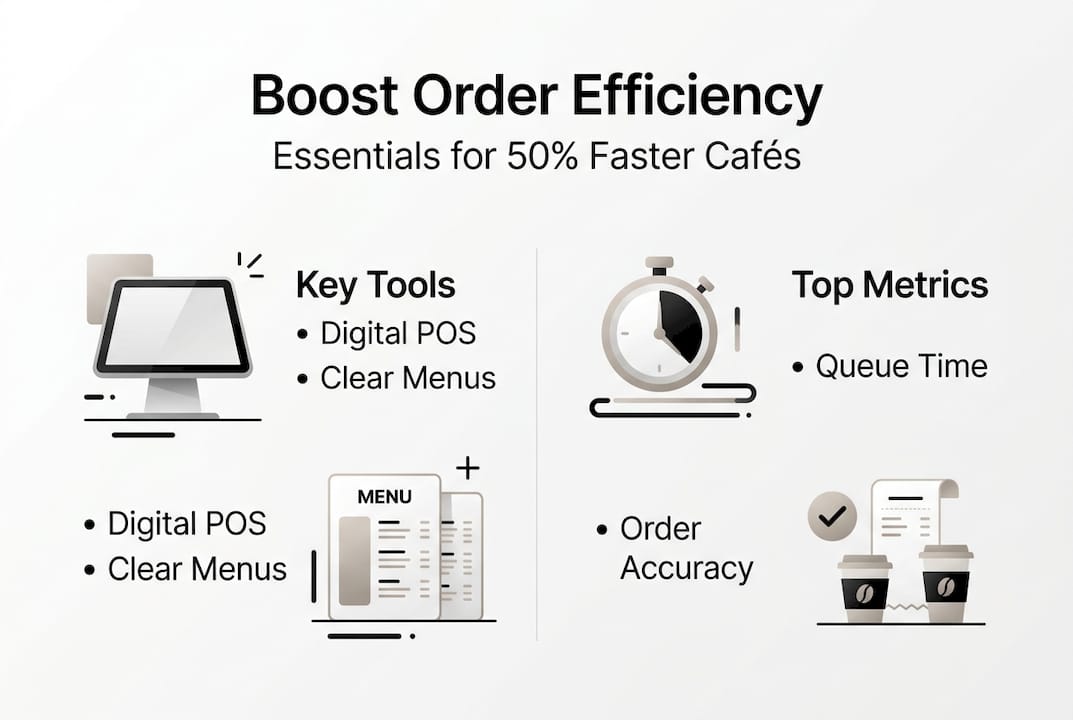
Regular feedback loops keep your system sharp. Schedule brief weekly check-ins with staff to discuss what’s working and what needs adjustment. Monthly reviews of sales data, waste figures, and customer feedback reveal trends you might otherwise miss. Inventory management tips show how linking order data to stock levels prevents both shortages and over-ordering.
Troubleshooting: Common pitfalls and how to avoid them
Even well-planned systems encounter problems. Here’s what typically goes wrong and how to prevent it:
- Lost tickets: Digital systems eliminate paper tickets that blow away or get coffee-stained
- Kitchen mix-ups: Display screens show all active orders clearly, reducing confusion
- System outages: Offline modes and manual backup procedures keep service flowing
- Staff forgetting steps: Simple interfaces and regular refresher training maintain consistency
- Out-of-stock errors: Real-time inventory tracking prevents selling items you can’t deliver
“Offline ordering and forecasting technology keeps operations steady even during unexpected surges. Custom modifiers and smart menu design minimise waste and errors, especially with perishable items.”
Plan specifically for outages. Test your POS offline mode during a quiet period so staff know exactly what to do when Wi-Fi drops during a rush. Keep a manual backup system ready: order pads, calculator, and clear procedures. Assign specific roles for rush periods so everyone knows their responsibility without asking.
Perishable items require special attention. Addressing edge cases like perishables means using data-driven ordering to match stock levels with actual demand patterns. Your POS should track which items sell when, helping you prepare appropriately without waste.
Encourage a culture of continuous review. Weekly debriefs where staff discuss what went well and what didn’t create opportunities for improvement. Use sales and waste data to spot patterns. Did you run out of almond croissants three Saturdays in a row? Adjust your ordering. Are oat milk orders declining? Update your menu or promotions accordingly.
Common restaurant setup mistakes often stem from choosing technology without considering workflow. The fanciest POS won’t help if it doesn’t match how your café actually operates. POS solutions for cafés should adapt to your service style, not force you to adapt to them.
Verifying success: Measuring results and making continuous improvements
You can’t improve what you don’t measure. Track these metrics to assess your order management effectiveness:
- Average order time: From placement to delivery
- Queue length: Peak and average throughout the day
- Net profit margin: Should improve as waste and errors decrease
- Order error rate: Percentage of orders requiring correction
- Waste percentage: Food and drink discarded due to mistakes or over-preparation
- Average spend per customer: Often increases when service is smooth and quick
Real results from UK cafés: Queue times dropped by 50% after implementing digital order management, with staff earning an extra £100 weekly in tips due to improved service quality. These aren’t exceptional results. They’re typical outcomes when you get order management right.
Schedule monthly reviews of your systems and menus. What sold well? What didn’t? Are there seasonal patterns you should prepare for? Technology provides the data, but you need to act on it. Adjust your menu, staffing levels, and inventory based on what the numbers tell you.
Signs your order management is working:
- Staff report less stress during peak periods
- Fewer customer complaints about wrong orders or long waits
- Improved online ratings mentioning service speed and accuracy
- Increased repeat customer rates
- Higher average transaction values
Continuous improvement isn’t a one-time project. It’s an ongoing commitment to making your café better every week. Small adjustments compound over time. Shaving 30 seconds off each order might seem trivial, but multiply that by 200 daily orders and you’ve saved over an hour of customer waiting time. That’s an hour of goodwill and potential additional sales.
Order processing efficiency improves gradually as staff become more comfortable with systems and you refine workflows based on real data. The cafés that thrive long-term are those that treat order management as a core competency, not an afterthought.
Take your café further with modern POS solutions
You’ve seen how effective order management transforms café operations. The right technology makes these improvements sustainable and scalable. Modern, hospitality-focused POS solutions deliver speed, accuracy, and analytics that manual systems simply cannot match.
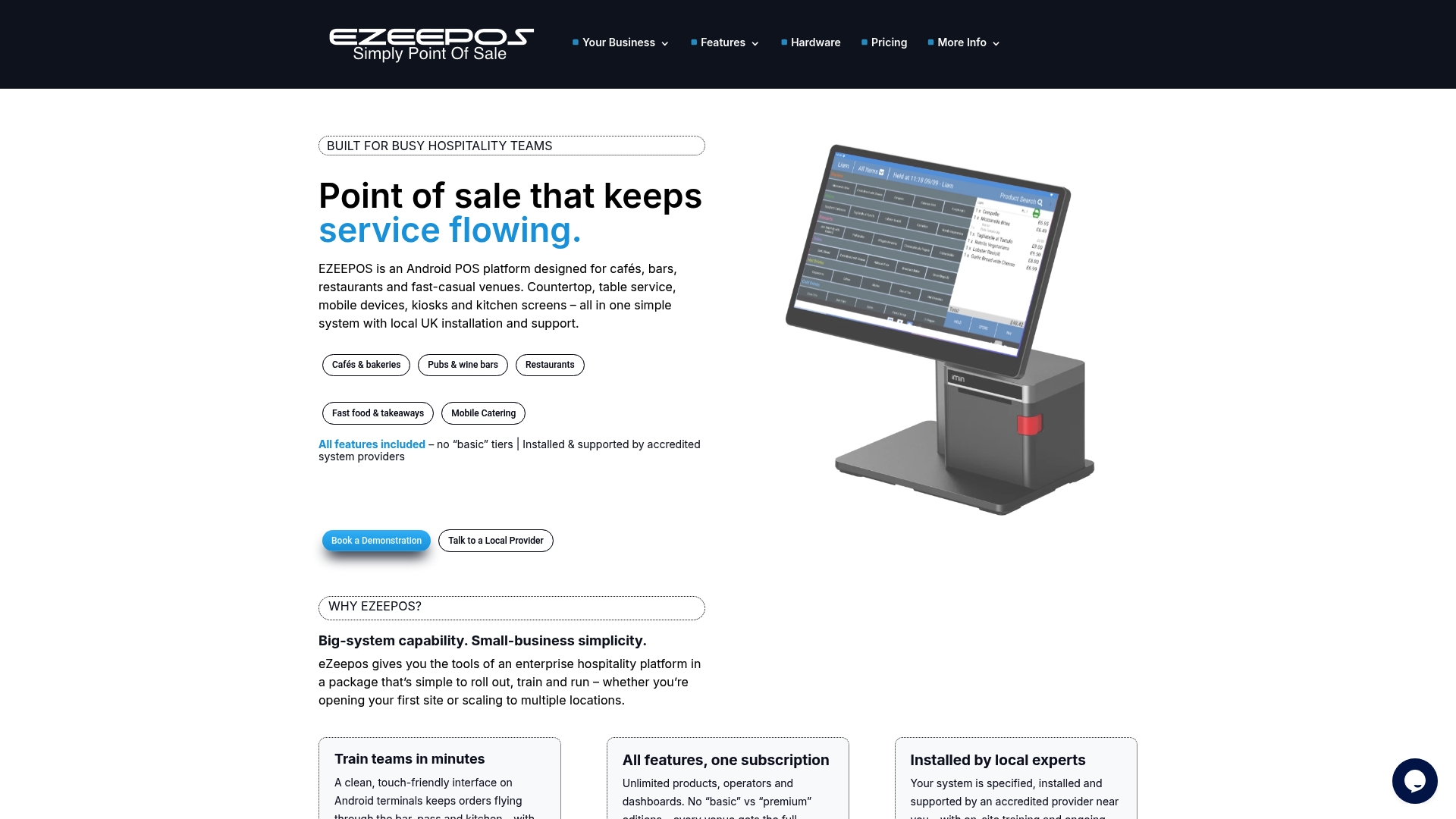
Integrated platforms connect order management with inventory control and staff scheduling, creating a unified system that works together seamlessly. When your POS knows what you’ve sold, it can automatically update stock levels and suggest reorders. When it tracks peak periods, it can help you schedule staff more effectively. These connections multiply the benefits of good order management.
POS systems for UK hospitality are designed specifically for the challenges you face: rush periods, complex orders, multiple service styles, and tight margins. Generic retail POS systems don’t understand table service, kitchen workflows, or the importance of order accuracy in hospitality. Purpose-built solutions do.
Inventory management for caterers shows how linking orders to stock creates powerful insights. You’ll know exactly what ingredients you need, when you need them, and how much to order. This precision cuts waste dramatically whilst ensuring you never run out of popular items.
Android POS solutions offer flexibility and affordability without sacrificing functionality. They support everything from fixed countertop terminals to mobile tablets for tableside ordering, all working together in one ecosystem. The technology adapts to your café, not the other way around.
Explore these solutions to discover how modern POS technology can take your café’s order management from good to exceptional. The investment pays for itself through reduced waste, faster service, and happier customers who become loyal regulars.
Frequently asked questions
What is the best way to reduce order errors in my café?
Use a digital POS with customisable menus and automated order tracking to cut mistakes by over 50%. Clear kitchen displays and confirmation steps prevent most common errors.
How do I manage rushes and large orders without more staff?
Invest in POS technology with offline and quick-modifier features plus pre-prepared menu setups. Smart systems handle surges by streamlining communication and reducing decision points.
What KPIs should I track to measure my order management’s effectiveness?
Monitor queue times, order accuracy, average revenue per ticket, staff satisfaction, and waste reduction. These metrics reveal both operational efficiency and customer experience quality.
How can I integrate order management with inventory control?
Opt for a POS that links menu items to stock, triggers reorders automatically, and tracks ingredient usage in real-time. This integration prevents stockouts whilst minimising waste.
Is setting up digital order management expensive?
Modern POS solutions are affordable and often increase profits beyond their costs by cutting waste and errors. Initial investment typically ranges from £2,000-£8,000, with payback periods under 12 months for most cafés.
Recommended
- How to Streamline POS Operations for Busy Cafés
- Guide to efficient table service: 30% faster processing
- 7 Essential Inventory Management Tips for UK Cafés and Restaurants
- Inventory Management Guide for Caterers: Streamline Operations
- Step by Step Home Coffee Bar Setup for Coffee Lovers – House Coffee
Recent Comments