

Managing catering staff without a specialised system means juggling spreadsheets, missed shift swaps, and compliance headaches that cost venues thousands annually. Manual scheduling wastes hours each week and creates friction between managers and teams. Smart staff management systems transform this chaos into streamlined operations, cutting labour costs by up to 10% whilst boosting team morale and retention. This guide reveals how UK hospitality venues can harness integrated platforms to master scheduling, compliance, and performance tracking.
Table of Contents
- Key takeaways
- Core features of staff management systems in UK catering
- Labour cost control and performance impact through optimised scheduling
- Handling challenges: turnover, fluctuating demand and compliance nuances
- Integrating POS and forecasting tools for improved scheduling and retention
- Discover specialised tools to streamline staff management in your venue
- Frequently asked questions about staff management systems in catering
Key Takeaways
| Point | Details |
|---|---|
| Smart scheduling | Smart scheduling automatically matches shifts to availability, flags conflicts and eliminates endless text chains. |
| Labour cost savings | Optimised scheduling can cut labour costs by five to ten per cent without reducing staff numbers. |
| Onboarding and compliance | Automated onboarding creates audit trails and real time alerts prevent compliance violations. |
| Geofence time tracking | Geofence time tracking verifies location and reduces buddy punching. |
Core features of staff management systems in UK catering
Modern staff management systems deliver far more than digital rotas. They integrate scheduling, compliance, performance tracking, and communication into unified platforms that eliminate the friction of manual coordination.
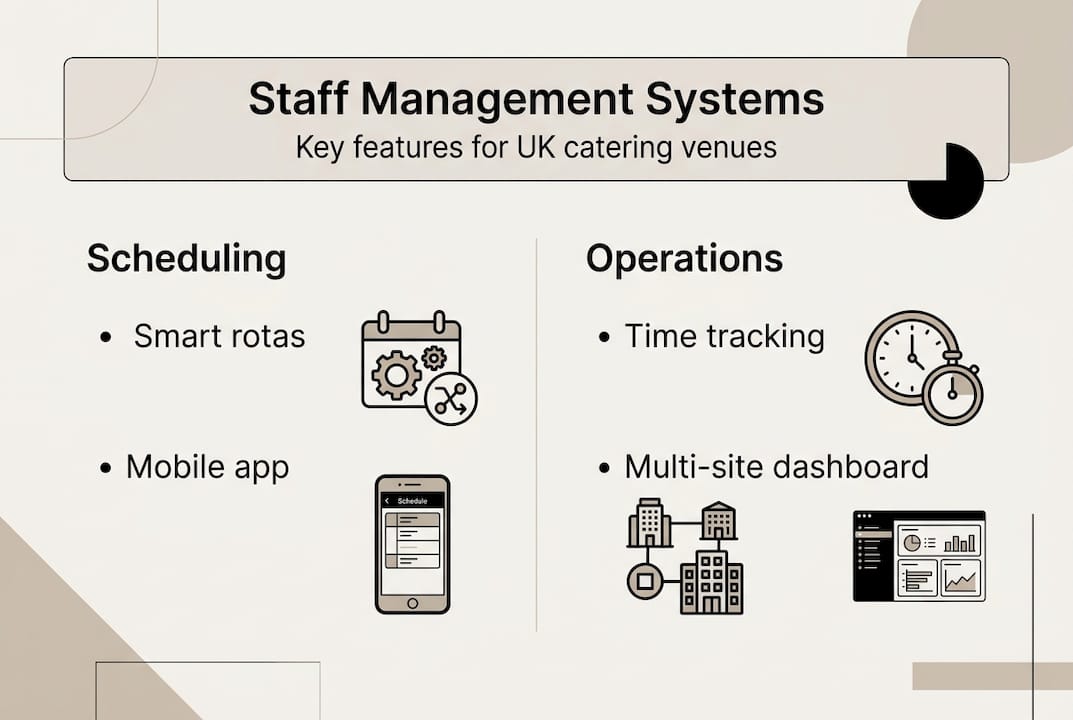
Smart scheduling sits at the heart of these systems. Staff upload their availability through mobile apps, and the platform automatically matches shifts to preferences whilst flagging conflicts. Shift swap functionality lets team members trade hours directly, with manager approval built into the workflow. This eliminates the endless text chains and last-minute scrambles that plague manual scheduling.
Automated onboarding accelerates new hire integration. Digital contracts, training modules, and document collection happen through the platform, creating audit trails that satisfy compliance requirements. Real-time alerts notify managers when food safety certificates expire or right-to-work documentation needs renewal, preventing costly violations.
Time tracking enhanced by geo-fencing ensures accuracy. Staff clock in and out through mobile apps that verify location, eliminating buddy punching and providing precise labour cost data. The system flags early arrivals, late departures, and missed breaks automatically.
Multi-site management dashboards give operators visibility across locations. You can compare labour costs, scheduling efficiency, and compliance status in real time, identifying underperforming venues instantly. Centralised reporting replaces the manual aggregation that consumes management hours.
Role-based permissions protect sensitive data whilst giving staff appropriate access. Front-line workers see their schedules and swap shifts. Supervisors approve changes and view team rotas. Senior managers access financial reports and compliance dashboards. This layered approach maintains security without creating bottlenecks.
Pro Tip: Prioritise systems offering personalised role-based permissions to safeguard payroll data and compliance records whilst maintaining operational flexibility for shift management.
Integration capabilities determine how well the system fits your existing technology stack. Look for platforms that connect with your hospitality POS, accounting software, and payment providers. Seamless data flow eliminates double entry and ensures labour cost calculations reflect actual sales performance.
Labour cost control and performance impact through optimised scheduling
Labour costs typically represent 25-30% of revenue in well-managed catering operations, yet many venues drift towards 32-35% through inefficient scheduling. The gap between optimal and actual performance costs a mid-sized venue £30,000-£60,000 annually.
Scheduling optimisation reduces costs by 5-10% without cutting headcount or compromising service quality. The savings come from eliminating overstaffing during quiet periods, reducing overtime premiums, and matching skill levels to task requirements. Blackbird Bakery saved 120 hours weekly through automated scheduling, translating to £25,000-£50,000 in annual labour cost reductions.
Real-world benefits extend beyond direct savings. Managers reclaim 10-15 hours weekly previously spent on rota creation and adjustment. Scheduling speed improves dramatically, with automated systems generating optimised rotas in minutes rather than hours. Staff satisfaction increases when they receive schedules further in advance and gain control over shift swaps.

| Scheduling approach | Labour cost % | Manager hours weekly | Staff satisfaction |
|---|---|---|---|
| Manual spreadsheets | 32-35% | 12-18 hours | Low to moderate |
| Basic scheduling software | 28-31% | 6-10 hours | Moderate |
| Integrated POS scheduling | 25-28% | 2-4 hours | High |
The performance impact compounds over time. Better scheduling reduces staff turnover by 15-20%, cutting recruitment and training costs substantially. A single front-of-house replacement costs £3,000-£5,000 when you factor in advertising, interviewing, onboarding, and lost productivity during the learning curve.
Pro Tip: Avoid relying solely on headcount cuts to control labour costs. Focus on smarter scheduling that reduces overtime, eliminates overstaffing, and matches skills to demand. This approach maintains service quality whilst cutting costs and reducing turnover.
Forecasting accuracy determines scheduling effectiveness. Systems that integrate sales data, booking patterns, and historical trends predict staffing needs with 85-90% accuracy. This precision eliminates the guesswork that leads to either understaffing during rushes or paying idle staff during slow periods.
Performance tracking built into staff management platforms identifies top performers and highlights training needs. Managers can track metrics like tables served per hour, average transaction value, and customer feedback scores. Recognition programmes reward excellence, whilst coaching addresses weaknesses before they impact service quality.
Handling challenges: turnover, fluctuating demand and compliance nuances
Catering venues face operational complexities that basic scheduling tools cannot address. High turnover rates between 30-100% annually create constant recruitment pressure. Multi-event overlapping strains resources when corporate functions, weddings, and regular service compete for staff. Last-minute cancellations and no-shows disrupt carefully planned rotas. Peak and off-peak fluctuations require flexible staffing models that adapt to demand.
Staff ratio guidelines provide starting points but require adjustment for your specific operation. Quick-service venues typically need one front-of-house staff member per 15-20 customers during peak hours, whilst full-service restaurants require one server per 4-6 tables. Kitchen ratios depend on menu complexity, with one chef per 30-40 covers common for standard menus and one per 20-25 for complex preparations.
Building roster buffers protects against unexpected absences and demand spikes. Maintain a pool of trained casual staff who can cover shifts at short notice. Cross-train existing team members so multiple people can handle critical roles. Schedule slightly above minimum requirements during historically busy periods, accepting minor inefficiency as insurance against service failures.
Compliance monitoring prevents costly violations and protects your licence. Food safety certification tracking ensures every kitchen staff member maintains current qualifications. Right-to-work verification creates audit trails proving legal employment. Working time regulations compliance prevents excessive hours that breach legal limits. Automated alerts flag expiring documents weeks in advance, giving you time to arrange renewals without operational disruption.
- Implement predictive scheduling that accounts for historical patterns, upcoming events, and seasonal trends to reduce last-minute adjustments
- Create a flexible casual staff pool with regular communication and fair shift distribution to maintain engagement and availability
- Use automated compliance tracking with 30-day advance warnings for expiring certifications, right-to-work documents, and training renewals
- Establish clear shift swap protocols through your platform, requiring manager approval but empowering staff to find their own cover
- Build seasonal hiring plans that recruit and train temporary staff 6-8 weeks before peak periods like Christmas and summer festivals
Proper forecasting for peak periods like Christmas separates thriving venues from those that struggle with service failures and staff burnout. Start planning 12 weeks ahead, factor in both regular customers and special event bookings, and schedule 15-20% above your baseline requirements to handle unexpected surges.
Multi-venue operations compound these challenges. Different locations have unique demand patterns, compliance requirements, and team dynamics. Centralised systems provide consistency whilst allowing site-specific customisation. You can deploy staff across venues during emergencies, track compliance centrally, and identify best practices worth replicating.
Integration with mobile POS systems enables real-time adjustments. When unexpected crowds arrive, managers can call in additional staff and track the labour cost impact immediately. When service slows unexpectedly, they can release staff early, capturing savings without compromising the customer experience. This agility transforms fixed rotas into dynamic staffing models that respond to actual demand.
Integrating POS and forecasting tools for improved scheduling and retention
POS integration elevates staff management from administrative task to strategic advantage. When your scheduling platform connects with sales data, you gain real-time visibility into labour cost percentages, revenue per labour hour, and staffing efficiency metrics that drive profitability.
Demand forecasting becomes precise rather than guesswork. The system analyses historical sales patterns, booking data, weather forecasts, and local events to predict customer volumes with 85-90% accuracy. This intelligence informs scheduling decisions weeks in advance, ensuring you have the right team size for actual demand rather than hopeful estimates.
| Feature | Manual scheduling | POS-integrated system |
|---|---|---|
| Forecast accuracy | 60-70% (manager intuition) | 85-90% (data-driven) |
| Labour cost visibility | Weekly or monthly | Real-time |
| Schedule adjustment time | 2-4 hours | 10-20 minutes |
| Overtime prevention | Reactive (after it occurs) | Proactive (flagged in advance) |
| Staff utilisation rate | 65-75% | 80-90% |
Retention improvements stem from fair scheduling practices that integrated systems enable. Staff receive consistent hours that match their availability preferences. Shift distribution algorithms prevent favouritism by rotating desirable and less popular shifts equitably. Advance notice gives team members predictability for personal planning, reducing the stress that drives turnover.
Peak management becomes systematic rather than chaotic. The platform identifies upcoming high-demand periods and suggests optimal staffing levels based on similar historical events. You can schedule additional staff confidently, knowing the labour cost increase aligns with expected revenue growth. Post-event analysis compares actual performance against forecasts, refining future predictions.
- Real-time labour cost tracking prevents budget overruns by alerting managers when costs approach thresholds
- Automated shift recommendations based on sales forecasts eliminate scheduling guesswork and reduce manager workload
- Fair shift distribution algorithms rotate desirable weekend and evening shifts equitably, preventing resentment
- Advance schedule publication gives staff 2-3 weeks notice, improving work-life balance and reducing turnover
- Performance metrics linked to scheduling identify top performers worthy of premium shifts and development opportunities
Pro Tip: Regularly train managers on forecasting tools to handle seasonal fluctuations confidently. Monthly reviews of forecast accuracy versus actual performance refine predictions and build trust in the system.
Promotion pathways become visible when performance data integrates with scheduling. High-performing staff who consistently exceed targets receive first priority for additional shifts and supervisory opportunities. This meritocratic approach rewards excellence and creates clear advancement paths that improve retention.
Communication features embedded in integrated platforms reduce friction. Managers can broadcast schedule changes, policy updates, and shift availability requests instantly. Staff can request time off, swap shifts, and update availability through mobile apps. This bidirectional communication eliminates the phone tag and missed messages that create scheduling conflicts.
Integration with payment systems ensures accurate, timely compensation. Hours worked flow directly to payroll, eliminating manual timekeeping errors. Overtime calculations happen automatically, preventing disputes. Staff can view their earned hours and upcoming pay through mobile apps, increasing transparency and trust.
The compound effect of these integrations transforms staff management from a cost centre into a competitive advantage. Venues with optimised scheduling, fair practices, and transparent communication attract better talent, reduce turnover, and deliver superior customer experiences. The initial investment in integrated systems pays back within 6-12 months through labour cost savings and retention improvements.
Discover specialised tools to streamline staff management in your venue
Transforming staff management from administrative burden to strategic advantage requires purpose-built tools designed for hospitality operations. EZEEPos delivers integrated solutions that connect scheduling, compliance, and performance tracking with your point of sale system, creating the unified platform UK catering venues need.
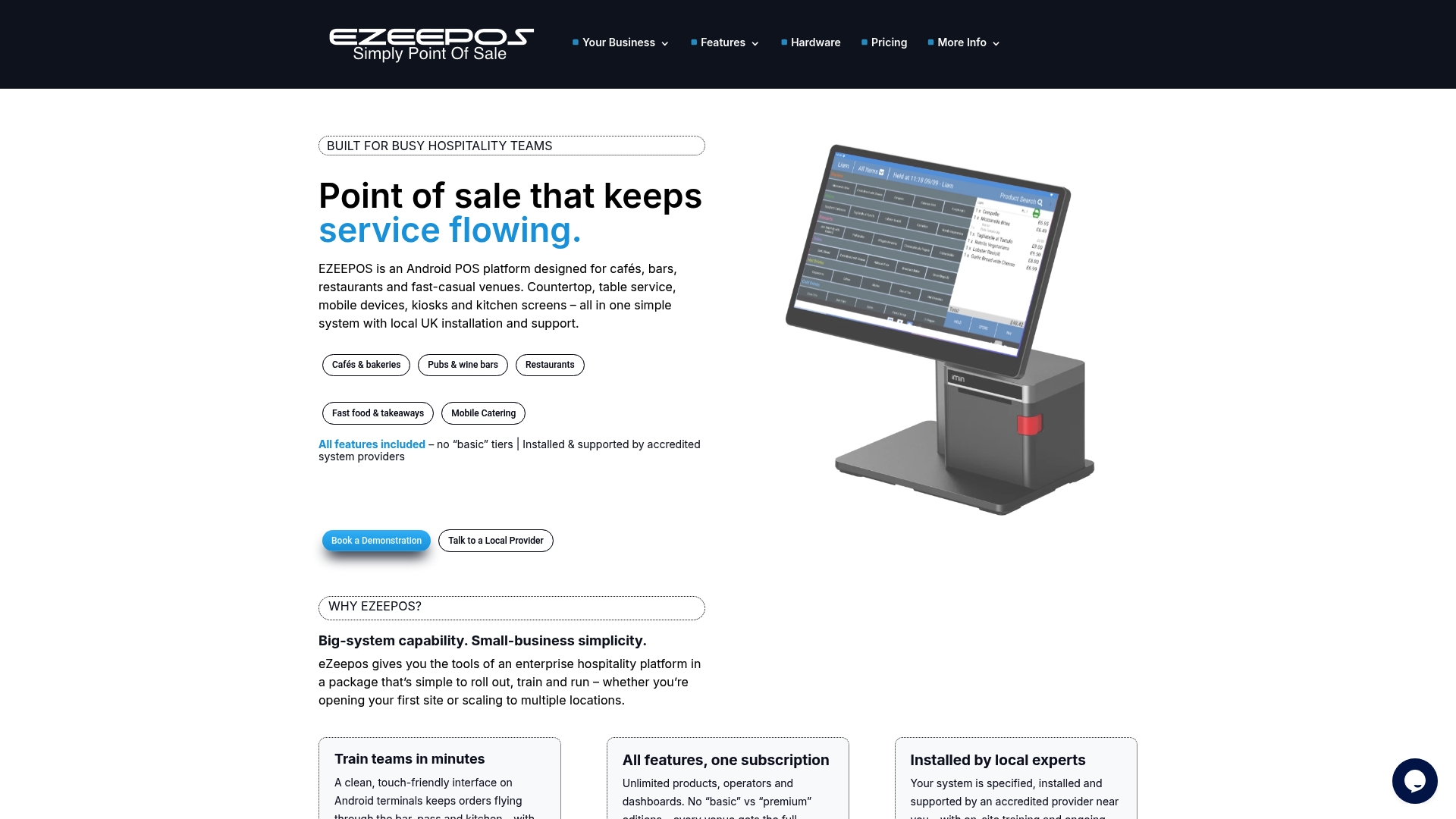
Our Android-based POS platform includes staff management features that eliminate manual coordination whilst providing real-time labour cost visibility. Smart scheduling matches team availability to demand forecasts automatically. Compliance alerts ensure food safety certifications and right-to-work documents stay current. Performance tracking identifies top performers and training needs. Multi-site dashboards give you complete operational visibility across locations.
Explore how EZEEPos supports UK hospitality venues with enterprise functionality, local installation, and ongoing human support. Discover the role of POS in catering operations and learn how to master staff management through integrated platforms that deliver measurable results.
Frequently asked questions about staff management systems in catering
What features are essential in a staff management system for catering?
Smart scheduling with availability matching and shift swaps forms the foundation. Automated compliance tracking for food safety certificates and right-to-work documents prevents violations. Time tracking with geo-fencing ensures accuracy. POS integration enables demand forecasting and real-time labour cost visibility. Multi-site dashboards provide operational oversight across locations.
How can staff management software reduce labour costs?
Optimised scheduling eliminates overstaffing during quiet periods and reduces overtime premiums, cutting costs by 5-10% without reducing headcount. Demand forecasting matches staffing levels to actual customer volumes rather than guesswork. Automated time tracking prevents buddy punching and ensures accurate payroll. Fair scheduling practices reduce turnover by 15-20%, lowering recruitment and training expenses.
What challenges do these systems solve in multi-venue operations?
Centralised dashboards provide visibility across locations, comparing labour costs and compliance status in real time. Staff can be deployed between venues during emergencies or demand spikes. Standardised processes ensure consistency whilst allowing site-specific customisation. Compliance tracking across multiple locations creates audit trails that satisfy regulatory requirements. Performance benchmarking identifies best practices worth replicating.
How does POS integration improve scheduling accuracy?
POS data enables demand forecasting based on historical sales patterns, booking data, and local events rather than manager intuition. Real-time labour cost visibility allows immediate adjustments when demand exceeds or falls short of expectations. Automated schedule recommendations match staffing levels to predicted customer volumes with 85-90% accuracy. Post-event analysis refines future forecasts by comparing predictions against actual performance.
How do systems support compliance with food safety and right-to-work laws?
Automated tracking monitors certification expiry dates and sends alerts 30 days in advance, giving you time to arrange renewals. Digital document storage creates audit trails proving legal employment and current qualifications. Onboarding workflows ensure new hires complete required training and provide necessary documentation before their first shift. Compliance dashboards flag risks across your operation, preventing violations that could jeopardise your licence.
Recent Comments