
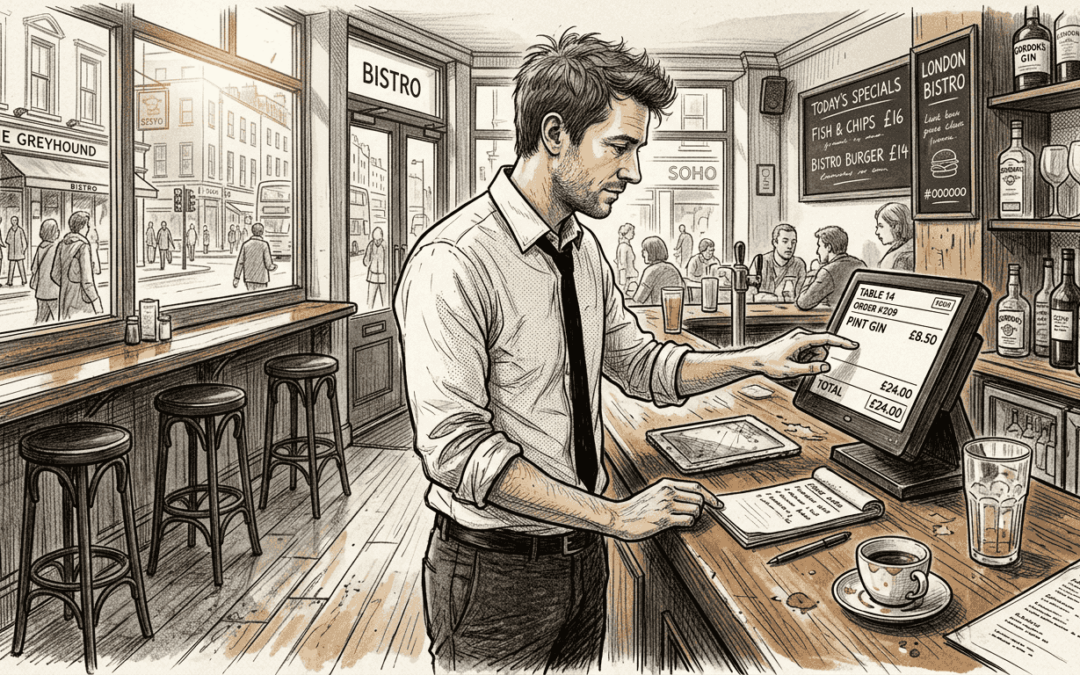
Choosing the right restaurant technology for your UK hospitality venue feels overwhelming. With countless platforms, conflicting advice, and varied operational needs, many managers struggle to identify solutions that truly fit. This checklist cuts through the noise, offering a structured approach to evaluate and select technology that streamlines operations, enhances customer service, and supports sustainable growth in 2026.
Table of Contents
- Key Selection Criteria For Restaurant Technology In The UK
- Core Technology Categories On Every Restaurant Technology Checklist
- Comparing Leading Restaurant Technology Solutions: Features, Pricing And Use Cases
- Benefits Of Local UK Support And Implementation For Hospitality Tech
- Practical Recommendations And Situational Picks For UK Hospitality Venues
- Discover Tailored Restaurant Technology Solutions With EzeePos
- Frequently Asked Questions
Key takeaways
| Point | Details |
|---|---|
| Match technology to service style | Select solutions compatible with your venue’s table service, counter operations, kiosks, or mobile catering needs. |
| Prioritise integration and local support | Integrated systems with UK-based support reduce downtime, minimise errors, and ensure faster issue resolution. |
| Demand pricing transparency | Understand total cost of ownership and avoid tiered pricing models that inflate long-term expenses. |
| Tailor choices to venue type | Different venues benefit from specific technology combinations suited to their operational complexity and customer habits. |
| Invest in proper implementation | Phased rollouts with staff training maximise technology value and adoption rates. |
Key selection criteria for restaurant technology in the UK
Before exploring specific platforms, establish clear evaluation criteria aligned with your venue’s operational reality. Start by assessing compatibility with your service modes. Does your venue primarily handle table service, counter transactions, self-service kiosks, or mobile catering? Multi-service mode compatibility cited by 70% of reviewers as crucial for UK hospitality tech. A mismatch here creates bottlenecks, frustrates staff, and slows service during peak hours.
Integration matters more than individual features. Your technology must connect seamlessly with payment providers, loyalty programmes, and accounting software. Disjointed systems force manual data entry, introduce errors, and waste management time reconciling discrepancies. Evaluate whether the platform supports real-time synchronisation across hardware and cloud-based back offices.
Pricing transparency separates reliable vendors from those hiding costs. Request detailed breakdowns of hardware, software licences, training, ongoing support, and transaction fees. Tiered pricing models often add unexpected expenses as your venue grows. Calculate total cost of ownership over three years, not just upfront investment. This reveals whether seemingly cheaper options actually cost more long-term.
Local UK support dramatically affects system uptime and issue resolution speed. When problems arise during busy service periods, you need expert help immediately. Vendors offering UK-based installation, training, and ongoing support reduce downtime and ensure solutions align with British regulatory requirements. Remote or overseas support teams often lack context for UK-specific operational challenges.
Finally, consider inventory and staff management capabilities relevant to your operations. Small cafés need basic stock tracking, whilst larger restaurants require detailed ingredient-level monitoring to reduce waste. Staff scheduling tools improve labour efficiency, but only if they integrate with your payroll and time-tracking systems. Examples of hospitality technology examples UK 2026 demonstrate how integrated capabilities transform operations.
Pro Tip: Create a weighted scorecard for evaluation criteria based on your venue’s priorities. Assign higher weights to must-have features like service mode compatibility and local support, lower weights to nice-to-have extras. This quantifies subjective decisions and helps compare vendors objectively.
Core technology categories on every restaurant technology checklist
Every UK hospitality venue needs to evaluate five core technology categories. Understanding their roles helps you build a cohesive technology stack rather than accumulating disconnected tools.
Point of sale systems form the operational backbone. Modern POS platforms manage orders, payments, inventory updates, and reporting in real-time. 80% of UK operators consider integrated POS essential to streamline orders and reduce errors. Your POS choice affects every other technology decision, so prioritise platforms offering flexibility across countertops, tablets, kiosks, and kitchen screens. Understanding hospitality POS importance UK contexts clarifies why this category deserves significant evaluation time.
Online and contactless ordering platforms cater to evolving customer habits. Mobile ordering, QR code menus, and delivery integrations reduce friction for customers whilst capturing valuable order data. These platforms must sync instantly with your POS to prevent kitchen confusion and inventory discrepancies. Look for solutions offering branded experiences rather than third-party marketplace dependencies.
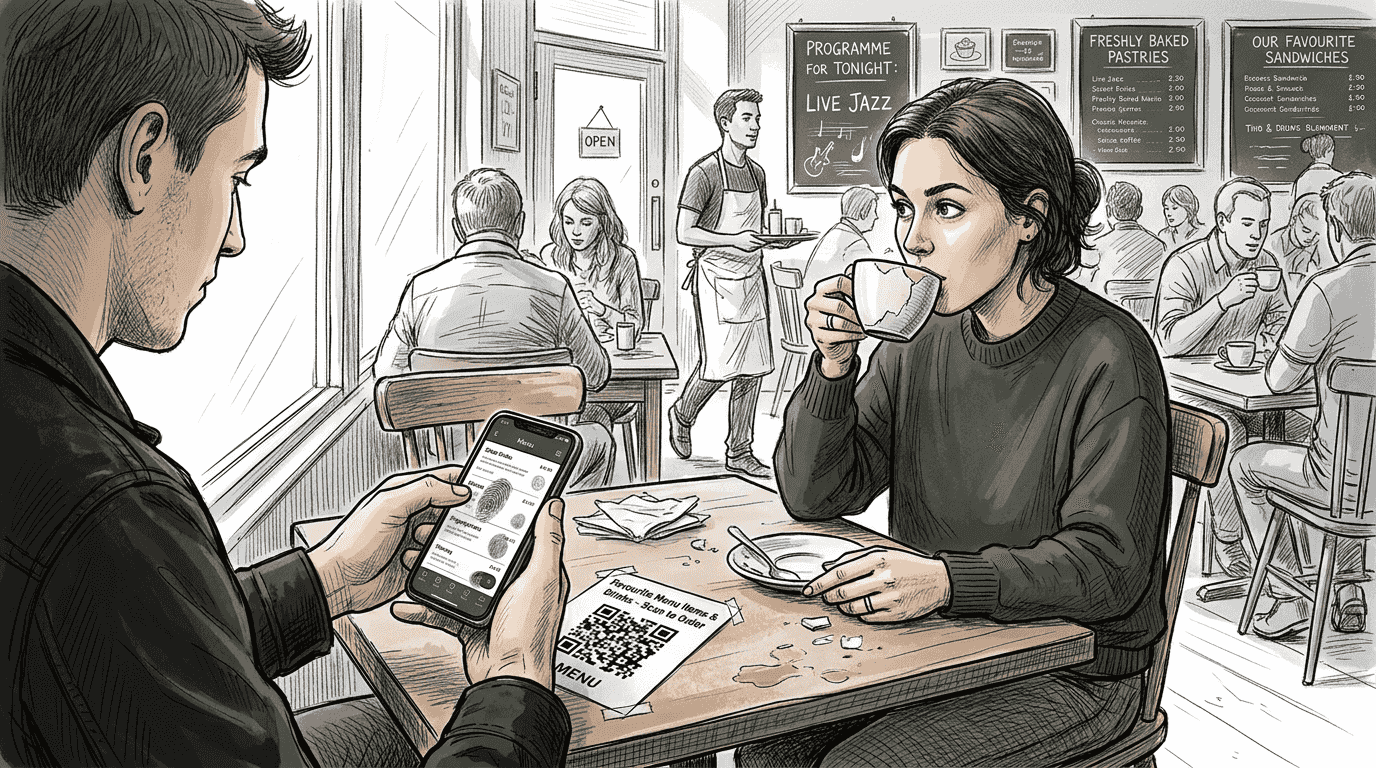
Payment integration streamlines transactions and supports loyalty rewards. Modern systems accept contactless cards, mobile wallets, and split payments without manual intervention. Integrated payment processing reduces reconciliation time and provides detailed transaction reports. Ensure your chosen platform supports major UK payment providers and complies with current security standards.
Inventory management decreases food waste by up to 15% through accurate tracking and automated reordering. Systems that monitor ingredient usage in real-time alert you to discrepancies, prevent stockouts, and identify theft or spoilage patterns. Cloud-based inventory tools let you manage multiple locations from anywhere, reducing the need for physical stock counts.
Staff management software improves scheduling efficiency and reduces conflicts. Platforms that integrate with your POS track labour costs against sales, forecast staffing needs based on historical data, and enable staff to swap shifts via mobile apps. This reduces manager workload whilst giving team members more control over their schedules. Explore various hospitality software examples UK to understand implementation possibilities.
Pro Tip: Map your current operational pain points to these five categories. If order errors plague your kitchen, prioritise POS and kitchen screen solutions. If staff scheduling consumes management time, focus on workforce tools. This targeted approach prevents technology overload.
Comparing leading restaurant technology solutions: features, pricing and use cases
Understanding how different platforms compare helps you match solutions to your venue type and operational complexity. Here’s a practical breakdown of leading technology approaches for UK hospitality.
| Solution Type | Key Features | Ideal For | Pricing Model |
|---|---|---|---|
| Android POS platforms | Flexible hardware, multi-service modes, cloud back office, integrated inventory | Cafés, fast-casual restaurants, mobile catering | Flat monthly fee, no tiered pricing |
| Traditional POS systems | Established platforms, extensive integrations, legacy hardware support | Large restaurants, hotel venues | Per-terminal licensing plus transaction fees |
| Self-service kiosks | Customer-facing ordering, payment integration, order accuracy improvement | Quick-service chains, busy counter venues | Hardware purchase plus software subscription |
| Cloud-based management | Remote access, real-time reporting, multi-location control | Growing chains, venues with multiple sites | Per-location monthly fees |
Android POS platforms offer 25% lower total cost over three years compared to traditional systems, making them ideal for budget-conscious cafés and independent restaurants. These platforms provide enterprise-level functionality without complex installations or proprietary hardware lock-in. You can mix countertop terminals with tablets for table service or add kiosks as demand grows.
Self-service kiosks improve order accuracy by 15% and reduce queue wait times during peak hours. Customers input orders directly, eliminating miscommunication and freeing staff for food preparation and customer service. Quick-service venues see fastest return on investment, typically within 12 months. However, kiosks require thoughtful placement and clear customer guidance to maximise adoption.
Cloud-based back office systems reduce management overhead by centralising menu updates, pricing changes, and promotional campaigns across multiple locations. Managers access real-time sales data, inventory levels, and staff schedules from any device. This flexibility suits growing chains and venues where owners split time between locations. Compare options through resources like POS software for quick service chains to identify best fits.
Tiered pricing models add up to 20% cost overhead by charging extra for features like advanced reporting, inventory management, or multi-location support. These incremental fees accumulate quickly as your venue grows or needs evolve. Flat-fee platforms with full feature access provide more predictable budgeting and eliminate unpleasant surprises.
Integrated staff scheduling systems improve labour efficiency in large venues by aligning staffing levels with predicted demand. Historical sales data forecasts busy periods, enabling proactive schedule adjustments. This reduces overstaffing during slow times and prevents understaffing during rushes. Venues with 15+ employees see the most significant efficiency gains. Robust inventory management solutions complement scheduling tools by ensuring adequate stock levels match staffing.
Pro Tip: Request trial periods or demonstrations before committing. Test how quickly staff learn the interface, how reliably the system handles peak transaction volumes, and whether integrations work as advertised. Real-world testing reveals issues that sales materials obscure.
Benefits of local UK support and implementation for hospitality tech
Local UK support increases technology uptime by 12%, directly protecting revenue during critical service periods. When your POS crashes during Saturday dinner service, you need immediate expert assistance, not overseas call centres with limited UK operational knowledge. UK-based support teams understand British hospitality contexts, regulatory requirements, and common venue challenges.
Faster issue resolution through UK-based expert teams avoids prolonged service disruptions that damage customer experience and staff morale. Local providers often offer same-day on-site support for urgent problems, whilst remote vendors require lengthy troubleshooting calls and delayed hardware replacements. This responsiveness difference becomes crucial during busy holiday periods or special events.
UK-specific training improves staff adoption and effective use of technology. Local trainers understand British service styles, customer expectations, and operational workflows. They tailor training to your venue’s specific needs rather than delivering generic global content. Staff who receive quality training use systems more efficiently, make fewer errors, and feel more confident during service.
Local installation ensures solutions align with UK regulatory and operational contexts. British hospitality faces unique requirements around data protection, payment security, and accessibility standards. Local providers design implementations that meet these obligations from day one, preventing compliance headaches later. They also understand practical considerations like limited kitchen space, heritage building constraints, and typical UK broadband capabilities.
“Switching to a locally supported POS system reduced our average issue resolution time from 48 hours to under 4 hours. During our busiest periods, that difference protects thousands in potential lost revenue.” — Operations Manager, London café group
Key advantages of prioritising local UK support include immediate access to replacement hardware when failures occur, training delivered in person at your venue on your schedule, and ongoing relationship with support teams who learn your specific operational needs over time. These benefits compound as your venue grows or adds locations. Resources explaining hospitality POS UK benefits detail how local support transforms long-term technology satisfaction.
Practical recommendations and situational picks for UK hospitality venues
Tailoring technology choices to your specific venue type maximises return on investment and operational improvement. Here are proven recommendations based on common UK hospitality scenarios.
Fast-casual restaurants benefit most from combining self-service kiosks with mobile POS systems. Kiosks handle routine orders during peak times, improving accuracy and reducing queues. Mobile POS tablets enable staff to take orders and payments tableside, speeding table turns and increasing average ticket sizes. This combination supports the speed and convenience customers expect from fast-casual concepts.
Small to medium cafés save costs with Android POS platforms offering flexible hardware options. Start with a countertop terminal and tablet for minimal investment, then add kitchen screens or additional terminals as business grows. Cloud-based back offices let you monitor sales and inventory remotely without expensive server infrastructure. Flat pricing models prevent costs from spiralling as you add features or hardware.
Large venues improve efficiency with integrated staff scheduling and inventory control systems. Restaurants with 20+ employees need sophisticated scheduling that considers skill levels, labour laws, and forecasted demand. Detailed inventory tracking at ingredient level prevents waste and identifies portion control issues. These venues justify higher technology investment through measurable efficiency gains and waste reduction.
Implementation should follow phased plans to minimise disruption and ensure thorough staff training. Avoid switching everything simultaneously during busy periods. Instead, roll out technology in stages:
- Install core POS hardware and conduct initial staff training during slower periods
- Add integrated payment processing once staff master basic order entry
- Implement inventory management after confirming POS data accuracy
- Deploy advanced features like loyalty programmes or online ordering once core operations stabilise
- Schedule refresher training sessions and gather staff feedback regularly
This phased approach reduces overwhelming staff, allows you to identify issues before they cascade, and builds confidence gradually. Budget extra time for training older team members or those less comfortable with technology.
Regular technology reviews avoid obsolescence and align tools with evolving needs. Schedule annual assessments of your technology stack, evaluating whether current systems still meet operational requirements, whether new features or integrations would add value, and whether vendor support quality remains satisfactory. Markets and customer expectations shift quickly. Technology that worked brilliantly two years ago might now constrain growth or frustrate customers. Consulting updated guides like hospitality technology examples UK 2026 keeps you informed about emerging capabilities.
Pro Tip: Create a technology transition team including managers, experienced staff, and newer employees. Diverse perspectives identify potential adoption obstacles early and ensure solutions work for everyone, not just management.
Discover tailored restaurant technology solutions with EZEEPos
Selecting restaurant technology that truly fits your UK venue requires expertise, local support, and integrated solutions aligned with your operational reality. EZEEPos provides Android-based POS platforms specifically designed for British hospitality, offering flexible hardware options from countertops to tablets and kiosks. Their systems integrate inventory management, staff scheduling, and payment processing without tiered pricing surprises.
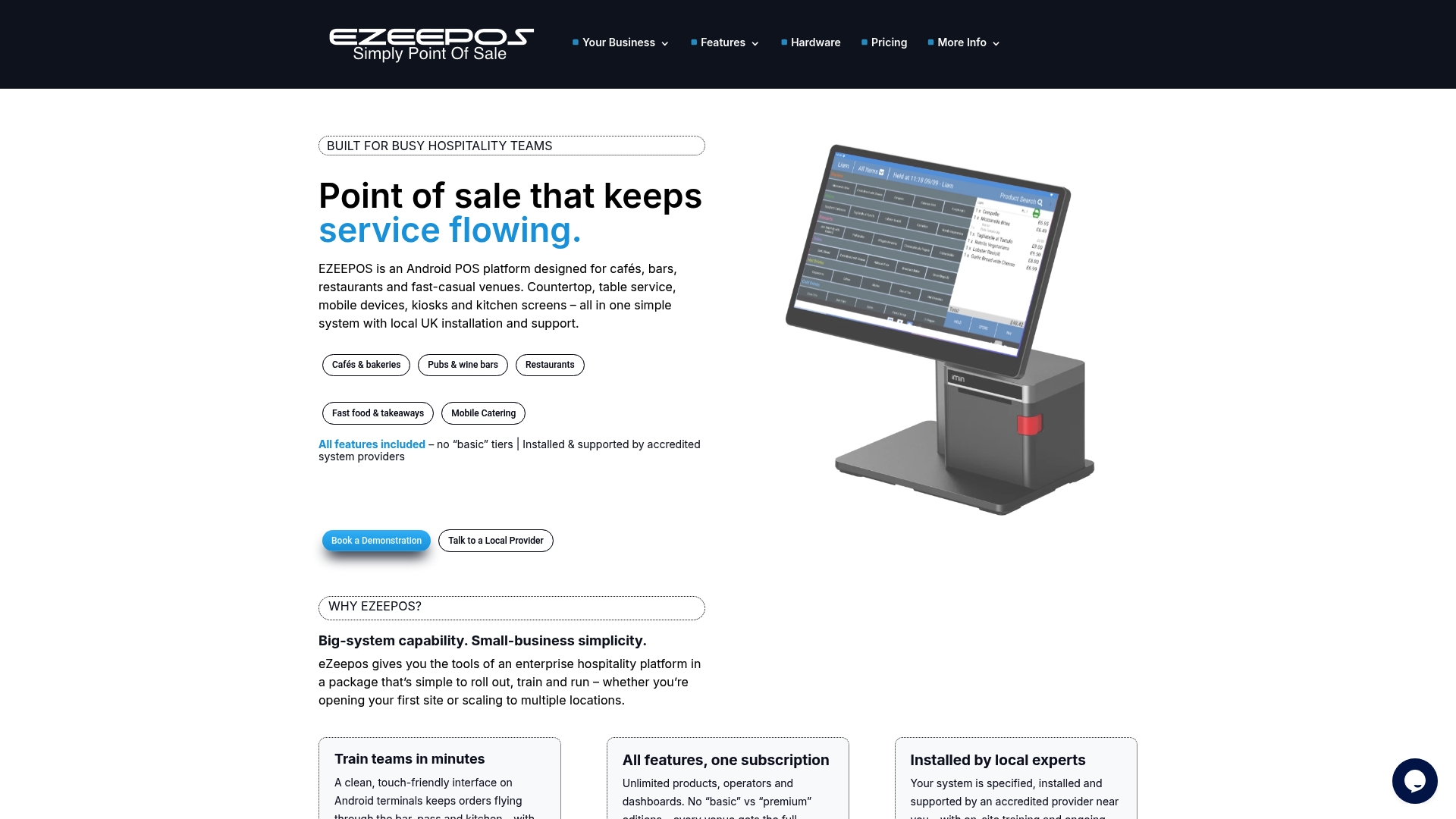
What sets EZEEPos apart is their commitment to local UK support through accredited installation partners and ongoing expert assistance. Whether you operate a busy café, fast-casual restaurant, or multi-location chain, their solutions scale with your business whilst maintaining enterprise-level functionality and simplicity. Explore how EZEEPos about us demonstrates their hospitality expertise, review their comprehensive inventory management solution capabilities, or compare their approach through detailed quick service POS software comparison resources to find your ideal technology match.
Frequently asked questions
What are the key technology elements every UK restaurant should have?
Every UK restaurant needs an integrated POS system managing orders and payments, inventory tracking to reduce waste, staff scheduling tools for labour efficiency, and payment processing supporting contactless transactions. Your specific service style determines whether you also need kiosks, mobile POS, or online ordering platforms.
How much should I budget for restaurant technology in 2026?
Small venues typically invest £3,000 to £8,000 for core POS hardware and software, whilst larger restaurants spend £15,000 to £30,000 for comprehensive systems. Factor in ongoing monthly fees of £100 to £500 depending on features and location count. Calculate total cost of ownership over three years for accurate budgeting.
Why does local UK support matter for hospitality technology?
Local support reduces average issue resolution time from 48 hours to under 4 hours, protecting revenue during busy service periods. UK-based teams understand British regulations, provide same-day on-site assistance when needed, and deliver training tailored to UK hospitality contexts. This responsiveness prevents prolonged disruptions that damage customer experience.
Should I choose Android or traditional POS systems?
Android platforms offer 25% lower total cost over three years with flexible hardware options and no proprietary lock-in, ideal for independent venues and growing chains. Traditional systems suit large established venues with complex legacy integrations. Consider your budget, growth plans, and need for hardware flexibility when deciding.
How long does restaurant technology implementation take?
Basic POS installation and initial training typically requires 1 to 2 weeks. Full implementation including inventory setup, staff scheduling integration, and advanced features takes 4 to 8 weeks depending on venue complexity. Phased rollouts during slower periods minimise disruption and ensure thorough staff adoption.
Recommended
- Streamline your UK restaurant inventory with a checklist
- Examples of hospitality technology to boost UK venues in 2026
- EZEEPos Solution Blogs – Latest Articles Insights
- 7 Essential Inventory Management Tips for UK Cafés and Restaurants
- 7 Steps to Build Your Sustainable Coffee Checklist – EcoVibe Roast
Recent Comments