
TL;DR:
- Mobile ordering reduces wait times and enhances operational efficiency during busy hospitality service.
- It improves order speed and accuracy, while elevating guest satisfaction through greater autonomy and customization.
- Effective implementation requires staff training, reliable hardware, guest feedback, and balanced human interaction.
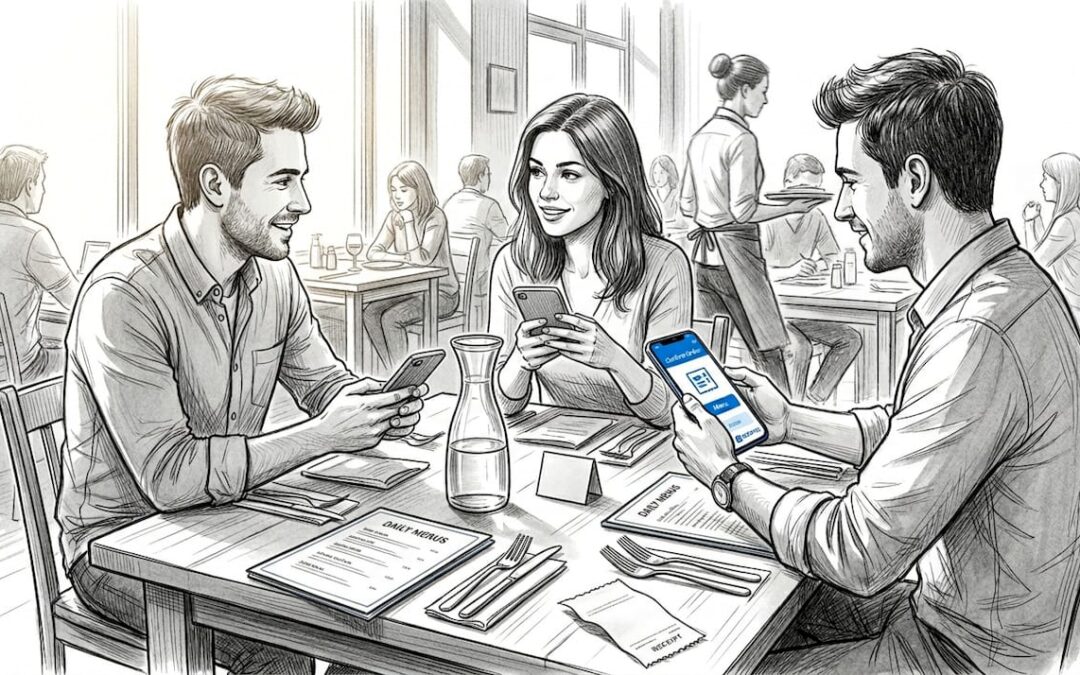
Picture this: a packed Friday evening, a queue at the bar stretching three deep, tables waving for attention, and orders being shouted across a noisy room. Every minute a guest waits is a minute they question whether to come back. Mobile ordering directly resolves this friction by giving guests control of their experience while freeing your team to focus on what they do best — delivering genuine hospitality. This article walks you through the key criteria for choosing the right solution, the real operational gains you can expect, and the best practices that separate successful rollouts from costly mistakes.
Table of Contents
- Key criteria for evaluating mobile ordering solutions
- Faster and more accurate order processing
- Enhanced customer experience and satisfaction
- Operational efficiency and staff empowerment
- Common pitfalls and best practices for successful mobile ordering
- Why mobile ordering is not a replacement for hospitality
- Connect your venue with powerful mobile ordering solutions
- Frequently asked questions
Key Takeaways
| Point | Details |
|---|---|
| Faster order processing | Native mobile apps speed up orders fourfold compared to web channels, increasing efficiency. |
| Enhanced guest satisfaction | Mobile ordering cuts waiting and errors, but visible staff remain key for the best experience. |
| Operational benefits | Streamlined workflows and fewer routine tasks let staff refocus on quality service. |
| Avoid common pitfalls | Train staff, pilot changes, and maintain hospitality to prevent guest frustration. |
Key criteria for evaluating mobile ordering solutions
With the importance of operational efficiency established, it is crucial to know what makes a mobile ordering platform effective for your unique needs. Not every system will suit every venue, and selecting the wrong one can create more disruption than it solves.
Start by scrutinising ease of use. A system that confuses your staff during training will frustrate guests during service. The best platforms feel intuitive from the first use, whether a team member is processing an order on a countertop terminal or a guest is browsing the menu on their phone at the table.
Integration is equally important. Your mobile ordering solution should talk directly to your existing kitchen screens, inventory records, and payment terminals. Fragmented systems create data blind spots, meaning a popular dish sells out but orders keep arriving, or a split payment fails because the till and the app are not communicating. Understanding mobile POS basics before you begin vendor discussions will help you ask the right questions.
Reliability during peak service is non-negotiable. Web-based ordering systems can suffer from browser compatibility issues, slow load times, and drop-offs mid-order. Native apps, built specifically for the device rather than running through a browser, tend to be significantly more stable and faster during high-volume periods.
Guest support is the criterion that is most often overlooked. QR ordering introduces edge cases around hospitality and guest support, so system selection should prioritise supplementing hospitality rather than replacing staff. A guest who is confused about an allergen, cannot find a menu item, or wants a recommendation still needs a person to help them.
Here are the essential features to look for when shortlisting platforms:
- Intuitive guest-facing interface that works without instruction
- Direct kitchen display integration to eliminate paper tickets
- Real-time inventory sync to prevent overselling
- Multiple payment options including card, contactless, and split bills
- Staff-accessible override functionality for special requests or adjustments
- Cloud-based reporting accessible from any device
Pro Tip: When you book a vendor demo, ask them to simulate a Friday evening peak. Do not let them show you the system when it is quiet and unloaded. Stress-testing the platform in the demo reveals how it performs when you actually need it.
Faster and more accurate order processing
Now that you know what makes a system effective, let us look at how mobile ordering transforms speed and accuracy during busy service shifts. The difference between a table that orders in two minutes and one that waits eight for a server can determine whether you turn a second cover that evening.
The data here is striking. Native mobile app ordering can be up to four times faster than web-based ordering, improving completion speed and reliability significantly. For a venue turning 80 covers on a Saturday night, that difference is not marginal. It is the gap between running smoothly and running ragged.
“Order completion via native mobile apps is materially faster and more reliable than web channels, with significant implications for throughput and guest satisfaction.” — Paytronix Online Ordering Report, 2025
Beyond speed, accuracy improves dramatically when guests enter their own orders digitally. Manual re-entry by a server introduces the risk of mishearing, misreading handwriting, or simply forgetting a modification. When a guest selects “no onions” and “extra sauce” on a digital menu, that information goes straight to the kitchen screen without passing through a human intermediary. Fewer errors mean fewer remakes, less food waste, and fewer apologies at the table.
The following table illustrates how order completion times typically compare across different ordering channels, based on industry benchmarks:
| Order channel | Average completion time | Error rate (estimated) | Guest satisfaction impact |
|---|---|---|---|
| Native mobile app | 1.5 to 2 minutes | Very low | High |
| Web-based ordering | 6 to 8 minutes | Low to medium | Moderate |
| Traditional staff/manual | 4 to 10 minutes | Medium | Variable |
You can explore how to put these gains into practice with a step-by-step table ordering approach, or review a more detailed fast food processing guide for quick-service environments.
Pro Tip: Pull your order completion data from your POS for a typical peak shift before you implement mobile ordering. Then run the same analysis three months after launch. The comparison gives you concrete evidence of return on investment to share with stakeholders or investors.
Enhanced customer experience and satisfaction
Speed is only part of the story. Guest experience shapes your venue’s reputation and repeat business, and mobile ordering influences both in ways that go well beyond queue reduction.
When guests can order at their own pace, without catching a server’s eye or waiting at a crowded bar, they feel more relaxed and more in control. That sense of autonomy translates into longer visits and higher average spend. Guests browse the full menu more carefully when they are not under pressure. They notice the premium sides, the upgraded drinks, and the desserts they would otherwise skip.
The practical benefits guests experience include:
- Less queuing at the bar or counter during peak periods
- No need to wait for attention when ready to order or pay
- Full customisation options for dietary requirements, allergies, and preferences
- Easy bill splitting directly through the app without staff involvement
- The option to reorder without leaving the table or interrupting a conversation
Venues that have adopted mobile ordering alongside attentive staff report measurable improvements in guest ratings on platforms such as Google and TripAdvisor, as well as stronger repeat visit rates. The key phrase there is “alongside attentive staff.” The unique challenges of digital ordering for guest experience mean best practice is to integrate digital journeys with visible staff support, not to leave guests entirely to their own devices.
“The venues seeing the strongest guest satisfaction improvements are those that use mobile ordering to remove friction, while keeping staff visible and approachable for questions, recommendations, and human moments.”
Understanding how this plays out in practice is easier when you look at table ordering for satisfaction in real venues, or browse mobile POS uses in practice for a wider set of examples.
Operational efficiency and staff empowerment
A happier guest experience usually means a more motivated team. When staff are not stretched between taking orders, relaying them to the kitchen, chasing payments, and handling complaints born of miscommunication, they have the space to do the work they actually enjoy: looking after people.
Here are three core ways mobile ordering improves operational efficiency for your team:
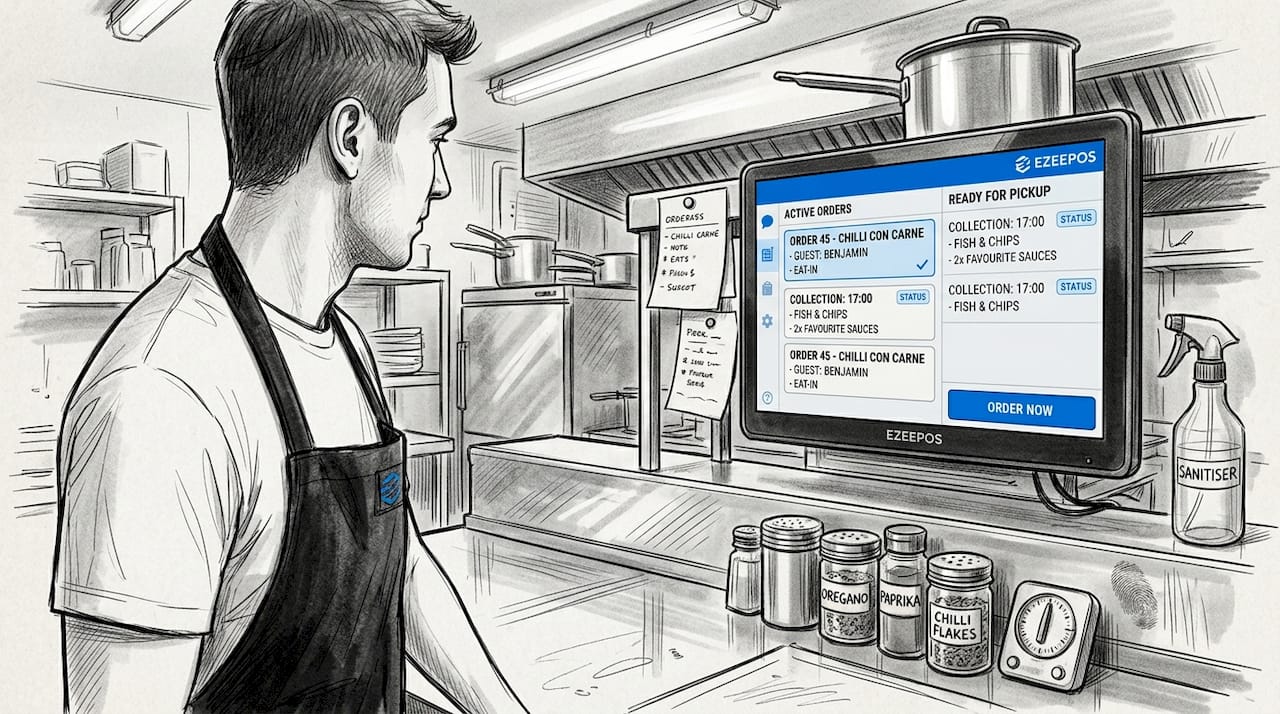
- Streamlined kitchen communication. Orders arrive directly on the kitchen display screen the moment a guest confirms them, with no intermediate steps and no risk of a ticket being lost or misread. Your kitchen team can prioritise accurately and prep in sequence.
- Reduced order errors. Because guests confirm their own selections, the volume of returned dishes, remakes, and comped meals drops. This has a direct positive effect on your food cost percentage as well as your team’s morale.
- Flexible front-of-house roles. When staff are freed from routine order-taking, they can be redeployed to greet guests, check on tables, run food, and handle anything that requires genuine human judgement. This shift often improves both job satisfaction and service quality simultaneously.
The operational contrast between traditional and mobile-assisted service is significant:
| Metric | Traditional service | Mobile ordering enabled |
|---|---|---|
| Time per order cycle | 8 to 15 minutes | 2 to 4 minutes |
| Order error frequency | Moderate to high | Very low |
| Staff tasks per cover | High (order, relay, pay) | Low (support, deliver, engage) |
| Table turnover rate | Slower | Faster |
| Staff focus | Administrative | Hospitality-led |
The four times faster order completion that native apps deliver compared to web channels creates a ripple effect through the whole operation, allowing staff to handle more covers without burning out. For venues operating mobile catering or high-volume quick service, the mobile POS efficiency gains compound quickly.
Pro Tip: Rather than measuring your staff solely on how quickly they process orders post-implementation, set targets for hospitality touchpoints. How many tables did a team member personally check on? How many upsells were based on a genuine recommendation? These metrics reflect the higher-value work mobile ordering unlocks.
Common pitfalls and best practices for successful mobile ordering
Having explored all the upsides, here is how to avoid setbacks and guarantee a smooth, guest-friendly transition. Many venues stumble not because the technology is wrong, but because the rollout is underprepared.
The most frequent mistakes include:
- Skipping staff training. If your team cannot explain the ordering process to a confused guest in thirty seconds, the system becomes a liability rather than an asset.
- Choosing unreliable hardware. Budget tablets that freeze mid-service or lose connectivity under load create guest frustration and staff stress.
- Ignoring guest feedback in the first weeks. Early complaints about navigation, menu clarity, or payment issues are fixable if you catch them quickly.
- Over-reliance on technology to handle service entirely. Without a staffed fallback, mobile ordering can erode the guest experience for anyone who is less comfortable with digital tools.
- Launching without a pilot. Rolling out across the whole venue at once means any teething problems affect every guest simultaneously.
Best practices that work consistently in UK hospitality include running a two-week pilot on a small section of your venue, holding brief daily briefings to gather staff feedback, and making sure at least one team member is specifically designated to assist guests with the ordering process during each shift.
You can follow a structured approach to avoiding these issues with practical guidance on catering order management steps that translate directly into restaurant and bar environments.
Pro Tip: In the first three months after launch, create a short feedback mechanism for guests. A two-question prompt at the end of the digital payment journey, asking how easy the ordering process was and whether they would use it again, gives you actionable data without being intrusive.
Why mobile ordering is not a replacement for hospitality
There is a misconception gathering pace in UK hospitality that mobile ordering is a cost-cutting tool, a way to reduce headcount and automate interactions that previously required people. In our experience, the venues that approach it this way consistently underperform compared to those that treat it as an empowerment tool.
Technology removes barriers. It cannot replace warmth. A digital menu cannot read the mood of a table celebrating a birthday and suggest something special. An app cannot notice that a guest looks uncertain and take a moment to explain the specials. These moments of intuition and genuine care are what create loyal regulars, and they come from people, not platforms.
Venues that over-automate often see a pattern: initial efficiency gains followed by a gradual decline in both guest satisfaction scores and staff retention. When front-of-house roles become purely transactional, the best hospitality talent leaves. The best practice around mobile and QR ordering is clear: use it as a supplement to staff, never as a hard replacement.
The most successful blended models we see are those where mobile ordering handles the routine, and staff handle the memorable. Guests order and pay digitally, but a team member brings the food with a genuine greeting, checks back mid-meal without being prompted, and notices when something is not right before a guest has to flag it. That combination of digital efficiency and human attentiveness is where hospitality really lives.
It is also worth remembering that not every guest wants to order on a phone. Older guests, large groups, and guests with accessibility needs will always benefit from a visible, approachable team member. Catering for every guest type is a mark of a well-run venue. You can see how this works across different service styles with practical hospitality examples from venues similar to yours.
The invitation here is to experiment with blended models rather than committing entirely to a digital-only approach. Culture and training matter as much as the platform you choose. The technology is the tool. The hospitality is yours.
Connect your venue with powerful mobile ordering solutions
If you are ready to put these ideas into action, eZeepos brings these principles to life for hospitality businesses across the UK. From cafés and bars to fast-casual eateries and mobile catering units, the platform is built specifically for the pace and complexity of UK hospitality.
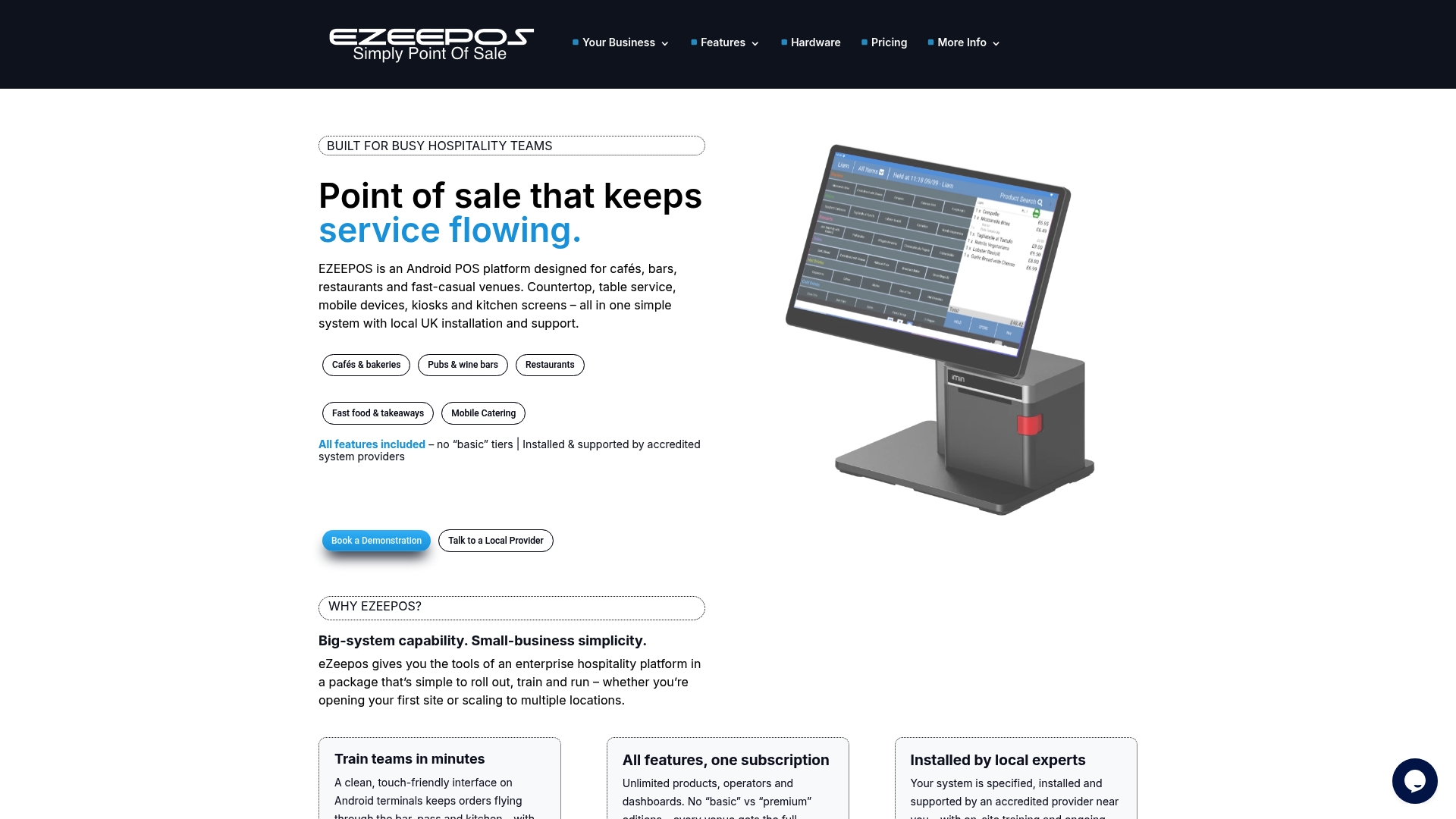
The eZeepos system integrates mobile ordering directly with kitchen screens, inventory, and payment processing, giving you a single, unified operation rather than a patchwork of disconnected tools. Explore the vital POS benefits that come with a purpose-built solution, understand how unified POS platforms reduce complexity across your whole venue, and browse real-world mobile POS examples to see how venues like yours are already using the system. The eZeepos team offers local UK installation, hands-on training, and ongoing support from accredited providers who understand hospitality from the inside.
Frequently asked questions
How does native mobile app ordering speed compare to web ordering for venues?
Native mobile apps enable guests to complete orders up to four times faster than web channels, reducing wait times and boosting order throughput significantly during peak service.
Can mobile ordering replace staff in hospitality venues?
No. Best practice is clear that mobile ordering should support the work of servers and hosts, not fully replace the human element that defines quality hospitality.
What are the most common mistakes when implementing mobile ordering?
Top mistakes include skipping staff training, over-automating without a support plan, and failing to gather early guest feedback. Guest experience erodes quickly when proper staff involvement is absent during the transition period.
How can mobile ordering improve order accuracy?
It removes manual re-entry from the process entirely, allowing guests to confirm their selections and special requests digitally before the order reaches the kitchen, which eliminates the most common source of errors.
Are UK guests satisfied with mobile ordering in hospitality?
Venues report increased repeat visits and improved ratings when mobile ordering is implemented alongside attentive, visible staff rather than as a standalone replacement for personal service.
Recent Comments