

TL;DR:
- Effective inventory management balances stock levels to prevent waste and shortages, boosting profit margins. Regular checks, proper categorization, and digital systems ensure accurate data and real-time stock visibility. Consistent routines and disciplined record-keeping are essential for optimal ice cream shop operations.
Running an ice cream shop means walking a daily tightrope between having too much stock that melts or expires and too little that leaves customers disappointed at the counter. A single warm weekend can wipe through three times your usual dairy stock, while a rainy fortnight can leave your freezers clogged with slow-moving flavours. Small errors in receiving, counting, or recording add up fast, and in a business with tight margins and highly perishable goods, those errors translate directly into lost profit. This article gives you a practical, itemised inventory checklist plus the strategies experienced UK shop owners use to keep stock levels sharp all year round.
Table of Contents
- Core inventory items for every ice cream shop
- Building your daily, weekly, and monthly inventory checks
- Comparison: manual vs digital inventory methods
- The ultimate ice cream shop inventory checklist (printable version)
- Why experienced shop owners swear by consistent inventory routines
- Take your ice cream shop inventory to the next level
- Frequently asked questions
Key Takeaways
| Point | Details |
|---|---|
| Track every stock category | Dairy bases, toppings, packaging, and hygiene supplies all require close monitoring for accuracy. |
| Routine is critical | Structured daily, weekly, and monthly checks help prevent waste, theft, and expensive mistakes. |
| Choose the right system | Digital inventory tools offer speed and data accuracy, but paper methods can work for small shops. |
| Customise your checklist | Adapt the template to match unique items, seasons, and the size of your ice cream shop. |
Core inventory items for every ice cream shop
With the importance of accuracy in mind, let us outline every essential inventory category to include in your checklist. Most ice cream shops carry more line items than their owners initially realise, and missing even one category creates blind spots that cost money over time.
Dairy bases and core ingredients form the backbone of your inventory. This covers ice cream mix, sorbet bases, gelato bases, cream, milk, and any fresh fruit purées. These items are highly perishable, often delivered multiple times per week, and must be rotated using the first-in-first-out (FIFO) method, which means older stock always moves to the front.
Mix-ins and toppings deserve their own section on your checklist. Chocolate chips, sprinkles, brownie pieces, caramel sauce, fruit compotes, nuts, and waffle crumbles all have different shelf lives and storage requirements. Tracking them separately gives you precise waste data rather than lumping losses into a vague “ingredients” category.
Cones, cups, and packaging are easy to forget until you run out mid-service. Stock waffle cones, sugar cones, cake cones, single-use tubs, lids, spoons, and napkins as distinct items. Running out of waffle cones during a busy Saturday afternoon is entirely avoidable with proper tracking, and doing so can help you streamline shop inventory planning throughout the season.
Cleaning and hygiene supplies must sit on your inventory list alongside food items. Sanitiser, food-safe surface spray, disposable cloths, and scoop rinse water additives are all operational necessities. Regulatory compliance in the UK requires documented cleaning procedures, which means running out of supplies is not simply inconvenient but potentially a food safety issue.

Point-of-sale and ancillary consumables round out the full picture. Till rolls, card machine rolls, bags, and loyalty cards all need monitoring. A good checklist, as shown in inventory efficiency tips for hospitality venues, ensures that no category is treated as an afterthought.
Pro Tip: Assign a unique SKU (stock-keeping unit) code to every item in your inventory, including packaging and cleaning supplies. This makes cross-referencing physical counts against digital records far faster and removes ambiguity when training new staff.
A well-structured checklist should, as any sound stock take guide will tell you, force data integrity around receiving and counting at every stage.
Building your daily, weekly, and monthly inventory checks
After listing the inventory essentials, the next step is structuring how and when you actually count and control your stock. Timing matters as much as thoroughness.
Daily checks should focus on the items with the highest turnover and the shortest shelf life.
- Count all fresh dairy bases and note any open containers nearing their use-by date.
- Check cone and cup stock levels and reorder triggers to avoid running short during peak hours.
- Verify that cleaning supplies are stocked for the full trading day ahead.
- Record any deliveries received, checking quantities against the delivery note line by line.
- Note any items pulled from service due to quality issues and record the reason.
Weekly checks go deeper into storage areas and focus on rotation and waste.
- Complete a full walk-through of the freezer, counting all flavours and comparing against your par levels (the minimum stock you need before reordering).
- Review packaging stock, including seasonal packaging for summer promotions or gifting ranges.
- Check dates on all sauces, syrups, and mix-ins stored in the cool room or fridge.
- Reconcile the week’s sales data against the stock consumed, noting discrepancies.
- Review waste records and identify whether losses came from spoilage, over-portioning, or incorrect ordering.
Monthly checks give you the strategic view.
- Identify slow-moving flavours or toppings that have been sitting in the freezer for more than three weeks.
- Review your supplier pricing against your current menu prices and adjust margins accordingly.
- Conduct a full loss and waste review, calculating the monetary value of what was discarded.
- Update your checklist template to reflect any seasonal menu changes coming in the next month.
- Brief your team on any ordering changes or new stock procedures.
“Organise stock before counting and validate physical counts against the printed/recorded stock figures, then update records.” This principle separates shops that control their inventory from those that simply react to shortages.
Pro Tip: Schedule your weekly stock count at the same time every week, ideally before a large delivery arrives. Counting with empty shelves is far easier and far more accurate than counting around incoming stock.
For a more granular walkthrough of these processes, the step-by-step inventory control approach used across hospitality can be adapted directly to your ice cream shop setup. The caterer inventory guidance framework is also worth reviewing if you operate a mobile van or market stall alongside your main shop.
Comparison: manual vs digital inventory methods
Once your checking routine is set, the next decision is choosing the best method to capture inventory data. Many UK ice cream shops still rely on paper-based clipboards, and whilst there is nothing inherently wrong with that approach, it comes with limitations that compound as your business grows.
| Feature | Manual (paper) | Digital (POS-integrated) |
|---|---|---|
| Speed of counting | Moderate | Fast with barcode scanning |
| Error rate | Higher (transcription errors) | Lower (automated entry) |
| Real-time stock visibility | None | Immediate |
| Reporting and analytics | Manual calculation required | Automated reports |
| Training time | Low | Low to moderate |
| Cost | Near zero | Ongoing licence or subscription |
| Audit trail | Paper-based, easy to lose | Cloud-stored, always accessible |
| Seasonal adjustment | Manual update | Easy to update digitally |
Strengths of manual checklists include zero technology dependency and simplicity for small-scale operations with a single site. Any member of staff can pick up a clipboard and begin counting without logging into a system.
Weaknesses of manual checklists become apparent quickly. Transcription errors, illegible handwriting, lost sheets, and the lack of automatic calculation mean that mistakes compound. When you need to compare this week’s waste against last month’s, pulling data from a folder of handwritten sheets is slow and unreliable.
Strengths of digital inventory systems are well-documented. A POS-integrated platform updates stock levels automatically with each sale, so your on-hand quantities are always current without a separate count. This is particularly valuable for high-volume summer trading days when your team does not have time to manually log every cone sold. Understanding the full POS system benefits for UK ice cream shops makes the case for digital tools clear.
Weaknesses of digital systems are fewer but worth noting. There is always a learning curve when onboarding staff, and a system is only as accurate as the data entered into it. If staff forget to log waste or returns, the digital record becomes unreliable.
A strong checklist should force data integrity around receiving and counting, regardless of whether your records are paper or digital. The method supports the discipline; it does not replace it.
For shops looking to boost throughput and POS for ice cream sales efficiency, the right digital tool pays for itself through reduced waste and better ordering decisions within a single season.
The ultimate ice cream shop inventory checklist (printable version)
Having compared methods, it is time to provide a practical checklist any UK ice cream shop can implement immediately. Use the table below as your starting template and adjust quantities and frequencies to suit your specific menu and trading patterns.
| Inventory item | Category | Check frequency | Expected qty | Actual qty | Variance | Action needed |
|---|---|---|---|---|---|---|
| Ice cream mix (litres) | Dairy base | Daily | ||||
| Sorbet base | Dairy base | Daily | ||||
| Fresh cream | Dairy base | Daily | ||||
| Waffle cones | Packaging | Daily | ||||
| Sugar cones | Packaging | Daily | ||||
| Single-use tubs (small) | Packaging | Daily | ||||
| Single-use tubs (large) | Packaging | Daily | ||||
| Chocolate sauce | Topping | Daily | ||||
| Strawberry sauce | Topping | Daily | ||||
| Sprinkles | Mix-in | Weekly | ||||
| Waffle crumbles | Mix-in | Weekly | ||||
| Nuts (assorted) | Mix-in | Weekly | ||||
| Napkins | Consumable | Weekly | ||||
| Spoons | Consumable | Weekly | ||||
| Sanitiser spray | Hygiene | Weekly | ||||
| Surface cloths | Hygiene | Weekly | ||||
| Till rolls | POS consumable | Weekly | ||||
| Seasonal flavours | Frozen stock | Monthly | ||||
| Loyalty cards | POS consumable | Monthly | ||||
| Slow-moving stock list | All categories | Monthly |
Tips for tailoring this checklist to your shop:
- Add a “supplier” column if you source items from multiple vendors, so ordering is easier to track.
- Include a “reorder point” column for each item, which is the quantity at which you need to place a new order to avoid running out before the next delivery.
- During summer trading, move weekly items to daily if footfall increases significantly.
- Create a separate version for your mobile van or market stall if you operate off-site.
- Review the checklist every quarter and remove discontinued items or add new seasonal lines.
Validating your physical counts against your recorded figures and then updating records promptly is the single most important habit you can build. For structured guidance on implementing this across your whole operation, the inventory steps for hospitality framework is a solid starting point.
Why experienced shop owners swear by consistent inventory routines
With a working checklist in hand, let us look at why consistency and discipline separate the highest-performing ice cream shops from the rest. This is where intuition fails and process wins.
The most common inventory error we see in UK ice cream shops is not theft or fraud. It is drift. A team member adds an extra scoop per portion because it “looks better.” Another assumes there is plenty of a particular flavour without checking. Someone logs a delivery without counting it. None of these are malicious acts. But over a week of trading, they erode margin in ways that never show up clearly until the monthly review lands and the numbers look wrong.
One shop manager told us she thought she was losing around £50 per week in unexplained variance. After implementing a daily checklist and training her team to document every wastage incident, she discovered the real figure was closer to £180 per week. The losses were almost entirely from over-portioning and a single delivery that had been short by two cases but accepted and signed off without counting.
The shops that perform best are not the ones with the fanciest equipment or the longest flavour menus. They are the ones where the owner or manager treats data integrity around stock counts as non-negotiable. A checklist is not a bureaucratic burden. It is a financial control.
The uncomfortable truth is that most “gut feel” inventory decisions are optimistic. Humans naturally underestimate waste and overestimate how much stock they actually have. A disciplined routine removes that bias entirely. And when you combine a strong checklist with a POS system that tracks sales against stock in real time, you close the loop on nearly every source of variance.
The shops benefiting most from hospitality inventory profits strategies are those that treat their checklist as a live management document, not a paperwork exercise. Review the data from each check. Act on it. Brief your team. Then do it again tomorrow.
Take your ice cream shop inventory to the next level
Your checklist is a powerful tool, but pairing it with the right digital system turns a manual discipline into an automated advantage. When your POS platform tracks every sale and deducts stock in real time, your team spends less time counting and more time serving customers.
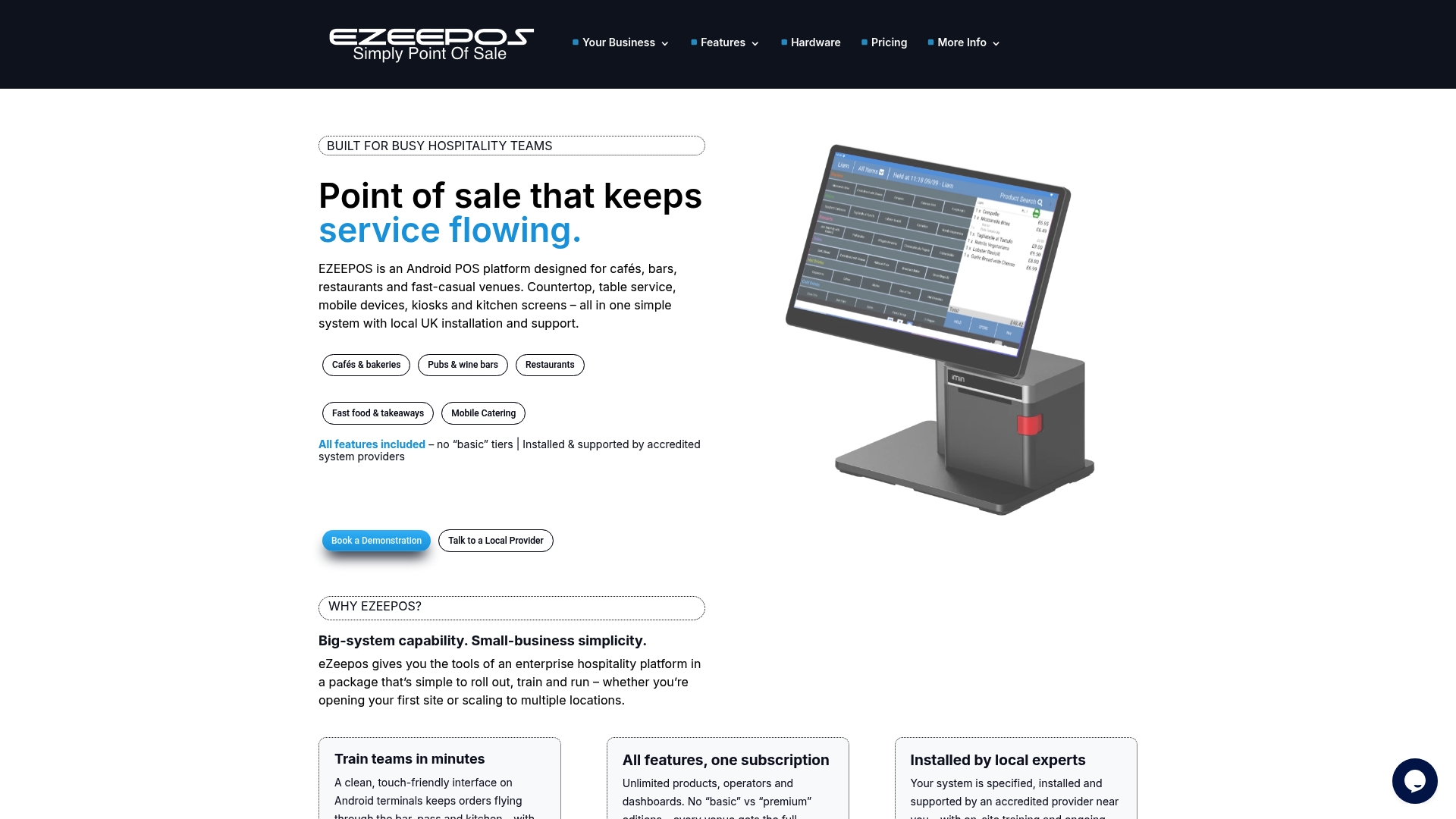
eZeepos offers a fully integrated POS solution built for UK hospitality venues, including ice cream shops and mobile catering operations. From cloud-based stock management to real-time sales reporting, the platform gives you complete visibility over your inventory without complexity or tiered pricing restrictions. Discover how better inventory for profits becomes a practical reality when your sales data and stock levels work together automatically. Talk to our UK-based team today and see how straightforward smarter inventory management can be.
Frequently asked questions
How often should ice cream shop inventory be counted?
Daily checks for perishables and weekly full counts are recommended to avoid spoilage and lost profit. As any sound stock take approach advises, you should always organise stock before counting and validate against your recorded figures.
What are the main causes of inventory loss in ice cream shops?
Spoilage, melting, miscounting, and customer service errors are the most common causes of inventory loss. A disciplined checklist that forces data integrity at the point of receiving and counting catches most of these issues before they compound.
How can POS systems help with ice cream inventory management?
A POS-integrated system tracks sales and stock levels automatically, making inventory control more accurate and efficient. This eliminates the manual effort of calculating what was sold versus what remains and reduces counting errors significantly.
Is a digital checklist better than paper for small ice cream shops?
Digital checklists reduce error and speed up tracking, though some small shops may still prefer paper for simplicity. The most important factor is not the format but the consistency of use and whether your team validates counts against recorded figures every time.
Recent Comments