
TL;DR:
- Running a mobile catering business in the UK faces increasing customer expectations, regulatory pressures, and rapid technological advancements.
- Operators must carefully evaluate tools like smart trailers, AI-driven stock systems, self-service kiosks, and mobile POS to ensure they meet specific operational needs and provide real value.
Running a mobile catering business in the UK has never been more demanding. Customer expectations are climbing, events are getting bigger, and regulations around clean air and food safety are tightening fast. Smart trailers now feature AI-driven stock systems, self-service kiosks, and electric power, meaning the technology available to food truck operators has jumped several levels in just a few years. The challenge is knowing which tools actually fit your operation and which ones simply add complexity without the return.
Table of Contents
- How to evaluate mobile catering technology for your business
- Smart trailers and AI-driven stock management systems
- Self-service kiosks and mobile ordering platforms
- Mobile POS systems for catering: Flexibility and integration
- Comparing top mobile catering technology solutions
- Our take: Technology should serve the trade, not the other way around
- How ezeepos.co.uk supports mobile catering operations
- Frequently asked questions
Key Takeaways
| Point | Details |
|---|---|
| Choose tech based on needs | Evaluate your operational size, customer flow, and regulatory requirements before selecting technology for mobile catering. |
| Smart trailers support compliance | AI-powered smart trailers boost sustainability and meet UK environmental and safety rules efficiently. |
| Self-service enhances service | Kiosks and apps reduce staffing pressure and improve accuracy, especially at busy events or festivals. |
| Mobile POS maximises flexibility | Integrated POS systems simplify payments, ordering, and inventory wherever you set up your business. |
How to evaluate mobile catering technology for your business
Before exploring the top tech options, it is vital to understand how to choose the right tools for your operation. Not every piece of technology suits every food truck. A two-person breakfast van serving a weekly market has completely different needs from a five-vehicle festival catering fleet. Getting the criteria right from the start saves you from expensive mistakes.
When assessing any new technology, ask yourself these key questions:
- Does it improve sustainability? Electric and solar options can help you meet UK clean air zone requirements and reduce running costs over time.
- Does it integrate cleanly? Technology that does not talk to your other systems creates more problems than it solves. Look for solutions with open APIs or recognised integrations.
- Does it reduce manual effort? Automation addresses staffing pressure, but only when it connects seamlessly to your ordering and payment systems. Automation that sits in isolation often creates duplication errors.
- Is it compliant? From food safety temperature logs to GDPR-compliant customer data, your tech stack must support your legal obligations.
- What is the total cost? Beyond the purchase price, consider installation, training, maintenance, and connectivity costs. Mobile environments are tough on hardware.
- How does it perform under pressure? Your busiest lunch service or festival rush is the real test. Slow software or fragile hardware becomes a serious liability.
- Does it fit the physical space? Space inside a trailer or truck is tight. Bulky equipment can disrupt workflow and slow your team down.
Pro Tip: Before committing to any technology purchase, trial it during a quiet trading period first. A 30-day pilot at a smaller event will reveal integration issues and usability problems that a product demo never will.
Staffing is another critical consideration. The mobile catering sector struggles with high staff turnover, particularly at seasonal events. Any technology you adopt needs to be intuitive enough that a new team member can use it confidently within minutes, not hours. If training takes longer than a shift briefing, you need a simpler solution.
Smart trailers and AI-driven stock management systems
With criteria in mind, explore the first set of technologies pushing the boundaries of what is possible in mobile catering. Smart trailers represent arguably the most significant hardware shift the sector has seen in a decade.
Electric and solar-powered trailers are no longer niche products. UK operators are adopting them partly because of cost savings on diesel and LPG, and partly because electric and solar trailers directly help operators comply with clean air zone regulations in cities like Birmingham, Bath, and London. These regulations affect where and when traditional combustion-engine vehicles can trade, which makes electric options genuinely strategic rather than just ethical.
Beyond power sources, the intelligence built into modern smart trailers is equally compelling. Here is what a well-specified AI-driven stock management system can do for your operation:
- Real-time inventory tracking: Sensors and integrated software monitor stock levels continuously, so you always know exactly what you have on board without manual counting.
- Demand forecasting: AI analyses your historical sales data and flags which items you are likely to sell out of during specific events or weather conditions. This prevents both over-ordering and running short mid-service.
- Automated temperature monitoring: Food safety compliance is non-negotiable. Automated temperature sensors track refrigeration units and alert you instantly if temperatures drift out of safe ranges, long before stock is compromised.
- Predictive maintenance alerts: Smart systems monitor equipment performance and flag potential failures before they occur, reducing costly breakdowns during peak trading.
- Waste reduction reporting: Seeing exactly which ingredients go unsold each day makes menu decisions much sharper. Over a season, reducing waste by even 10% can have a meaningful impact on profit margins.
“Smart trailers in mobile catering combine AI-driven stock systems, automated temperature sensors, and electric or solar power into a single operational platform that addresses both efficiency and sustainability goals simultaneously.”
Good inventory management in food trucks is the foundation of profitability in mobile catering. When your stock system connects to your POS and forecasting tools, you stop guessing and start making data-led decisions. Platforms that support this kind of integration are explored further over at hospitality tech innovations.
Self-service kiosks and mobile ordering platforms
Another critical field-changing advancement is customer-facing self-service and ordering solutions. At busy UK festivals, markets, and street food events, queue length is often the single biggest factor determining whether a customer buys from you or walks past to your competitor.
Self-service kiosks reduce staffing requirements and streamline transactions, but their impact goes well beyond just speed. Here is what operators consistently report after deploying kiosks:
- Shorter queues: Multiple customers can order simultaneously without additional staff. During peak periods, this is transformational.
- Higher average order values: Kiosks are excellent at upselling. On-screen prompts for extras, upgrades, or add-ons convert more often than verbal suggestions from a busy team member.
- Improved accuracy: When customers input their own orders, the chance of miscommunication drops significantly. This matters especially for allergen and dietary preference requests.
- Freed-up staff time: Your team can focus on food preparation and service quality rather than taking orders, which improves the overall customer experience.
- Better data collection: Every kiosk transaction builds a richer picture of your customer base, popular items, and peak ordering times.
Understanding the full range of self-service kiosk benefits reveals why fast-casual and mobile food businesses are adopting them so rapidly. The self-service kiosk efficiency case is particularly strong in high-footfall environments where staff ratios are stretched.
Mobile ordering platforms add another layer. When customers can order from their smartphones via a branded app or QR code, you effectively extend your ordering capacity without adding any physical infrastructure. Orders arrive directly to your kitchen screen, payments are processed instantly, and the customer collects when ready. For the caterer, this means fewer errors, faster throughput, and valuable behavioural data. Research into increasing revenue with guest-facing apps consistently shows that mobile ordering channels lift both transaction frequency and average spend.
Pro Tip: Position your kiosk or QR ordering option with a small sign at the back of the queue, not just at the front. Customers who spot it while waiting will switch to self-service, reducing pressure on your counter staff exactly when it is needed most.
Mobile POS systems for catering: Flexibility and integration
Powering the customer checkout and integrating orders, the next technology is the mobile POS system. For mobile caterers, a POS is not just a till. It is the operational hub that connects every part of your business.
Here is how the right mobile POS transforms your daily operations:
- Payment flexibility: Accept card, contactless, and digital wallet payments anywhere, whether you are at a rural farm market with patchy signal or a busy urban street food event. Cloud-based systems sync when connectivity returns.
- Instant menu management: Change prices, add limited specials, or remove sold-out items in seconds from a tablet interface. No reprinting menus, no awkward customer conversations about unavailable dishes.
- Real-time order tracking: Orders placed at the counter or via a kiosk flow directly to a kitchen screen, reducing verbal communication errors and speeding up preparation times.
- Stock integration: Every sale automatically updates your inventory, giving you a live picture of what is left on board. When connected to AI stock systems, this creates a closed loop of accurate data throughout the entire service.
- Reporting on the move: End-of-day sales reports, staff performance data, and item-level analysis are available from your phone or tablet, even when you are packing down at the end of a long event.
The mobile POS for catering use case is well established across the UK market. Operators working across multiple types of POS systems often find that Android-based platforms offer the best balance of affordability, flexibility, and integration capability for mobile environments. The hardware is durable, the software is intuitive, and the whole system is designed to survive the physical demands of outdoor catering.
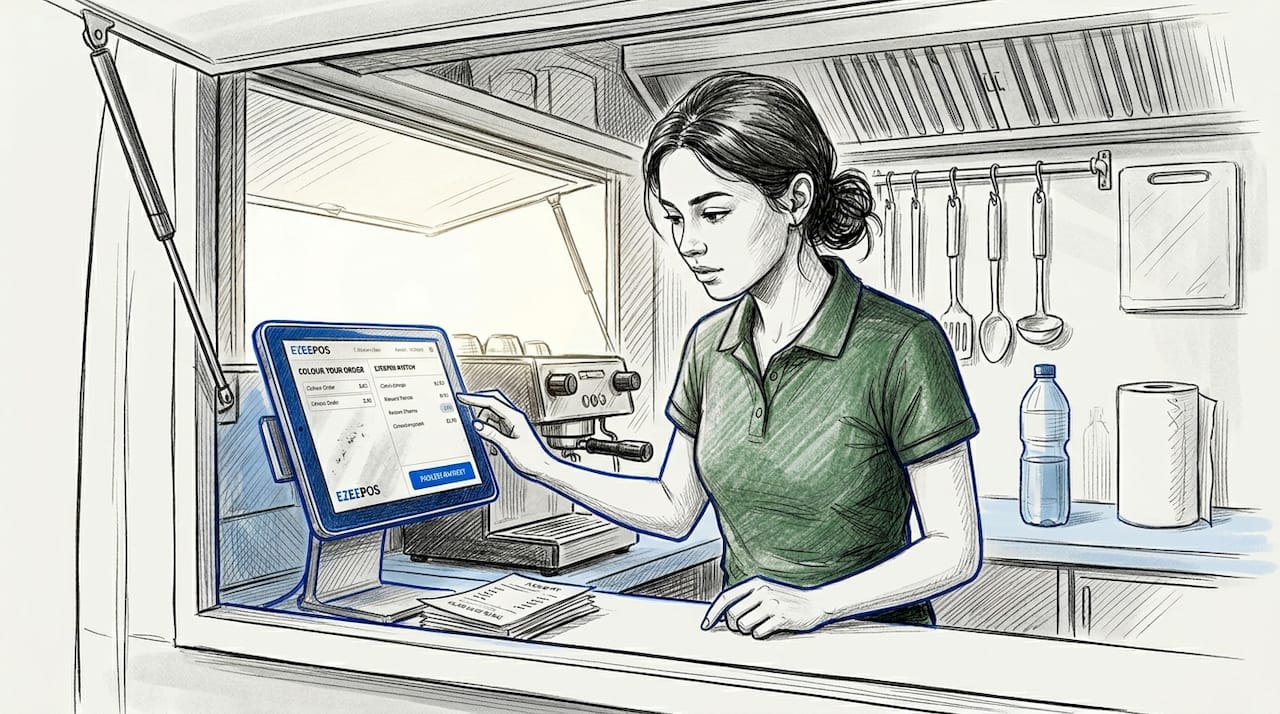
Smart trailer integration with POS platforms is increasingly standard in newer setups, meaning your stock data, sales data, and temperature logs all live in the same cloud-based back office. This is a significant step forward for compliance documentation and financial reporting.
Pro Tip: Choose a mobile POS system that works offline and syncs automatically when a connection is restored. At rural events or festival sites with crowded networks, offline capability is the difference between trading smoothly and losing sales.
Comparing top mobile catering technology solutions
To help decide which solution suits your operations, here is a feature-by-feature comparison.
| Feature | Smart trailer | Self-service kiosk | Mobile POS system |
|---|---|---|---|
| Sustainability | High (electric/solar) | Low to medium | Low |
| Queue reduction | Low | Very high | Medium |
| Stock management | Excellent | Basic | Good (with integration) |
| Compliance support | High (temp sensors) | Medium (allergen prompts) | High (reporting) |
| Ease of staff training | Medium | Very easy | Easy |
| Upfront cost | High | Medium | Low to medium |
| Integration capability | High | High | Very high |
| Suitability for start-ups | Low | Medium | Very high |
The global food truck market was valued at USD 5.4 billion in 2024 and is projected to reach USD 7.9 billion by 2030 at a 6.3% compound annual growth rate, with Europe holding a 29.6% share. This growth signal matters for investment decisions. Technologies that position you ahead of rising customer expectations now will pay dividends as competition intensifies.
Based on the comparison above, here are situational recommendations:
- Start-up food trucks: Begin with a reliable mobile POS system. It delivers the broadest range of operational benefits at the lowest entry cost and scales as your business grows.
- Growing operations with multiple staff: Add a self-service kiosk. It reduces staffing pressure at peak times and directly improves the customer experience at busy events.
- Established fleets targeting large events: Invest in smart trailer infrastructure. The combination of AI stock management, temperature compliance, and sustainability features supports both profitability and regulatory compliance at scale.
Understanding the varied POS use cases in hospitality makes it clear that the technology stack you build should match your current trading volume and your growth ambitions, not simply what looks most impressive on paper.
Our take: Technology should serve the trade, not the other way around
There is a tempting narrative in the industry right now that suggests more technology always equals more profit. We think that is worth challenging, because we see it lead operators astray.
The food truck operators who build genuinely successful businesses do so by understanding their customers and their product first. Technology amplifies that understanding. It does not create it. A mobile POS system is extraordinary when it is used by a team that already knows their menu and their customers. An AI stock system delivers real savings when the operator has a grip on their own buying patterns and waste habits. A self-service kiosk performs brilliantly at an event where the concept is well defined and the menu is sharp.
What we consistently observe is that operators who try to solve a weak concept with technology investment end up with expensive, underutilised kit. The hard truth is that no software fixes a menu that does not resonate or a location that does not draw footfall.
Where technology genuinely earns its place is in removing friction from what is already working. If your burgers are selling brilliantly but your queue is costing you customers, a kiosk solves a real problem. If your stock ordering is chaotic and you are throwing away expensive ingredients each week, an AI system pays for itself quickly. Start with the problem, then find the technology that addresses it specifically.
How ezeepos.co.uk supports mobile catering operations
If you have identified the right technology but need a POS platform that brings it all together, ezeepos.co.uk is built for exactly this environment.
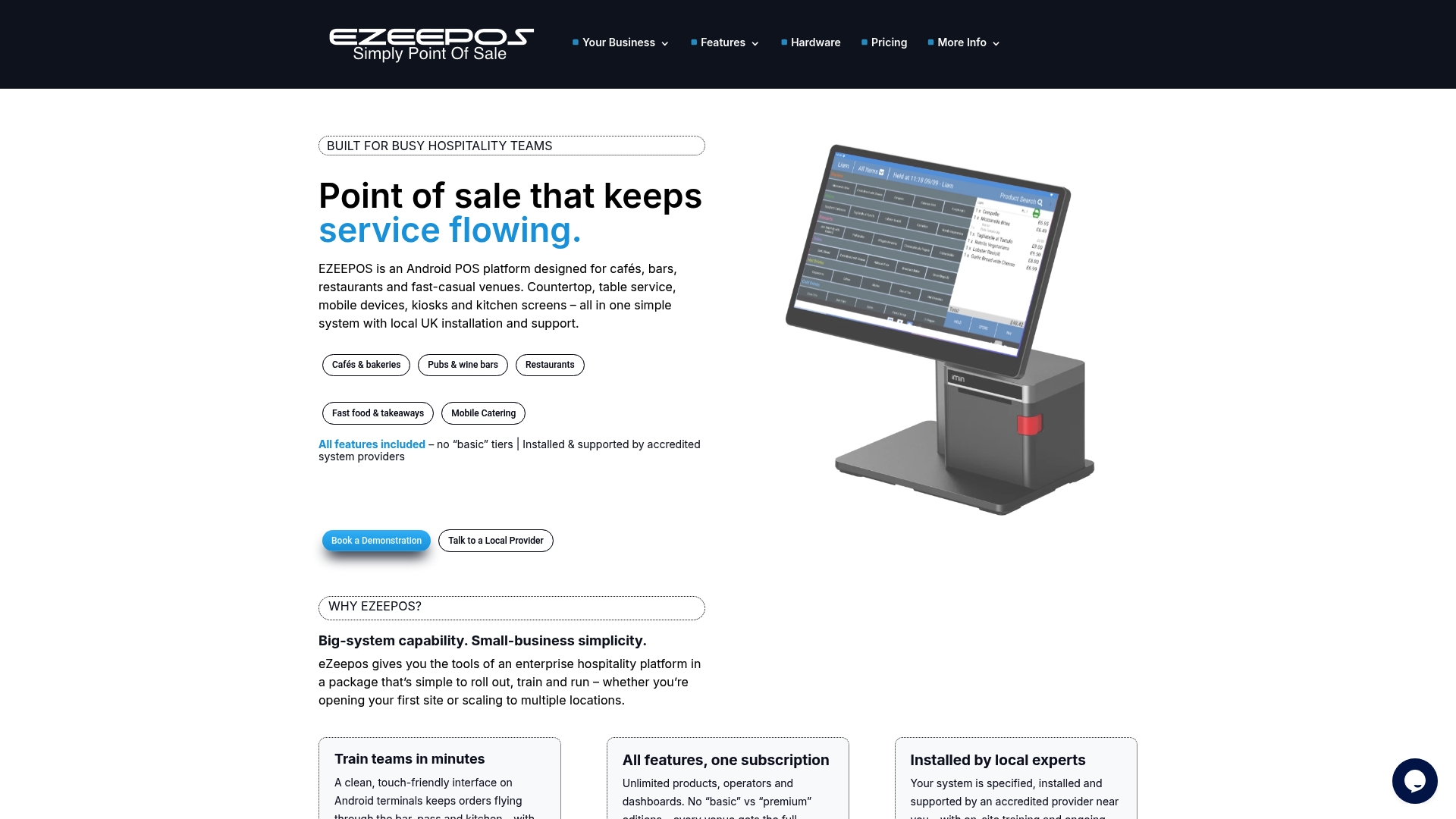
The EzeePOS platform is designed specifically for fast-paced hospitality settings, including mobile catering and food trucks. It runs on Android, works offline, integrates with self-service kiosks, manages inventory in real time, and supports kitchen order screens for faster fulfilment. There are no tiered pricing structures that lock essential features away, and every installation comes with local UK support from accredited providers who understand the operational realities of mobile catering. Whether you are running a single trailer or a multi-vehicle event fleet, EzeePOS grows with your business without adding unnecessary complexity.
Frequently asked questions
How do smart trailers improve food safety in mobile catering?
Smart trailers use automated temperature sensors that monitor refrigeration continuously and alert you to issues before food safety is compromised, supporting both compliance and stock protection.
Can self-service kiosks reduce staffing needs at mobile food trucks?
Yes. Kiosks streamline transactions so customers order and pay directly, which means you can operate with fewer staff during peak periods without sacrificing service speed or order accuracy.
What is the main benefit of mobile POS systems for caterers?
Mobile POS integrates payment processing, ordering, and inventory management into a single platform, allowing you to accept payments anywhere and make data-led decisions in real time.
Are electric or solar-powered trailers worth the investment for UK operators?
Electric and solar trailers reduce fuel costs over time and help operators comply with UK clean air zone regulations, making them a sound long-term investment for operators trading in urban locations.
Recommended
- Why use POS for food trucks: boost sales and efficiency
- Mobile Catering POS: Simplifying Outdoor Event Sales
- Streamline mobile catering: order management in 5 steps
- Mobile POS for Catering – Streamlining UK Events
- How to Increase Guest Count and Revenue with Apps like inKind — Wits End
- Top interactive menu board examples to boost engagement
Recent Comments