
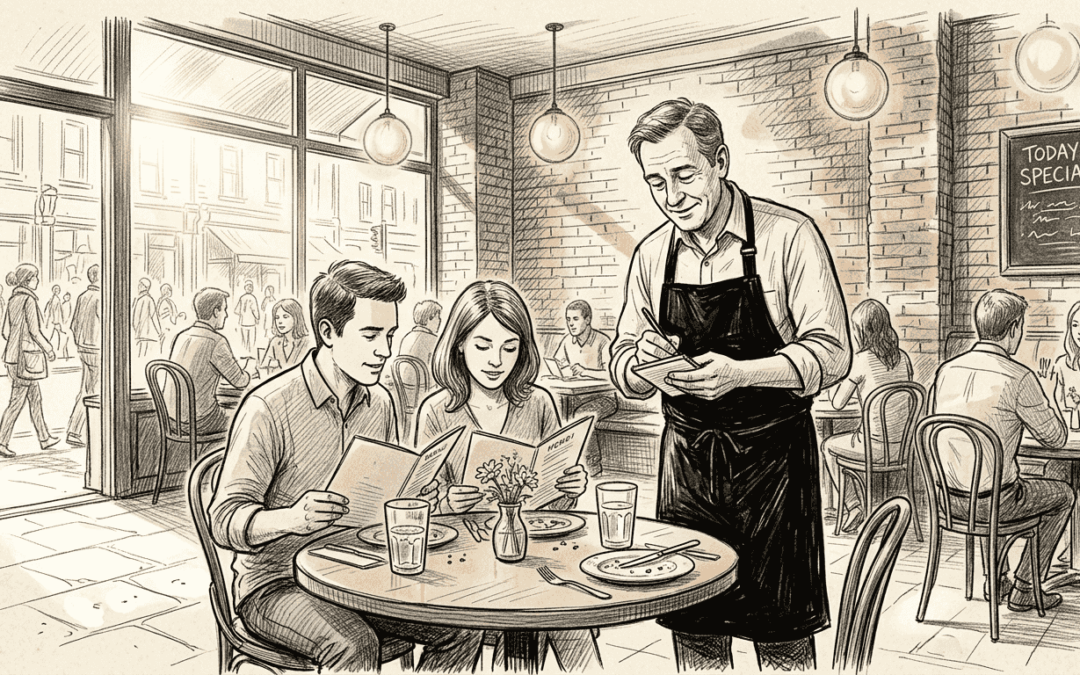
Choosing between table ordering and counter service shapes every aspect of your hospitality venue’s operations. Many managers assume counter service delivers faster turnarounds, but modern table ordering systems can actually reduce table turnover time by seven minutes whilst boosting average spend per head by 18%. This guide examines both models through operational data, financial impacts, and POS technology capabilities to help you select the service approach that maximises efficiency and delights your guests.
Table of Contents
- Understanding Table Ordering And Counter Service Models
- Efficiency And Customer Experience: Comparing Operational Impacts
- Cost, Revenue And Spend Implications: Which Model Drives Profitability?
- Choosing The Right POS System For Your Service Model
- Why Choose eZeepos For Your Hospitality POS Needs?
- Frequently Asked Questions About Table Ordering Vs Counter Service
Key takeaways
| Point | Details |
|---|---|
| Table ordering saves time | Reduces table turnover by 7 minutes, increasing revenue potential through faster service cycles |
| Counter service faces queue challenges | Works well for simple orders but suffers bottlenecks during peak periods affecting customer satisfaction |
| Digital ordering boosts spend | Table ordering increases average spend per head by 18% through suggestive selling and easy add-ons |
| Hybrid systems offer flexibility | Modern POS platforms support both models, letting venues adapt service style to different times or areas |
| Accuracy drives satisfaction | Digital systems achieve 99.1% order accuracy, reducing waste and improving guest experience significantly |
Understanding table ordering and counter service models
Table ordering and counter service represent fundamentally different approaches to hospitality operations. Table ordering allows guests to browse menus, place orders, and settle bills without leaving their seats. Staff take orders at the table using handheld devices or guests use QR codes to order directly from their phones. Table service POS systems offer features like table mapping, seat-based ordering, and split bill handling, focusing on front-of-house workflow optimisation.
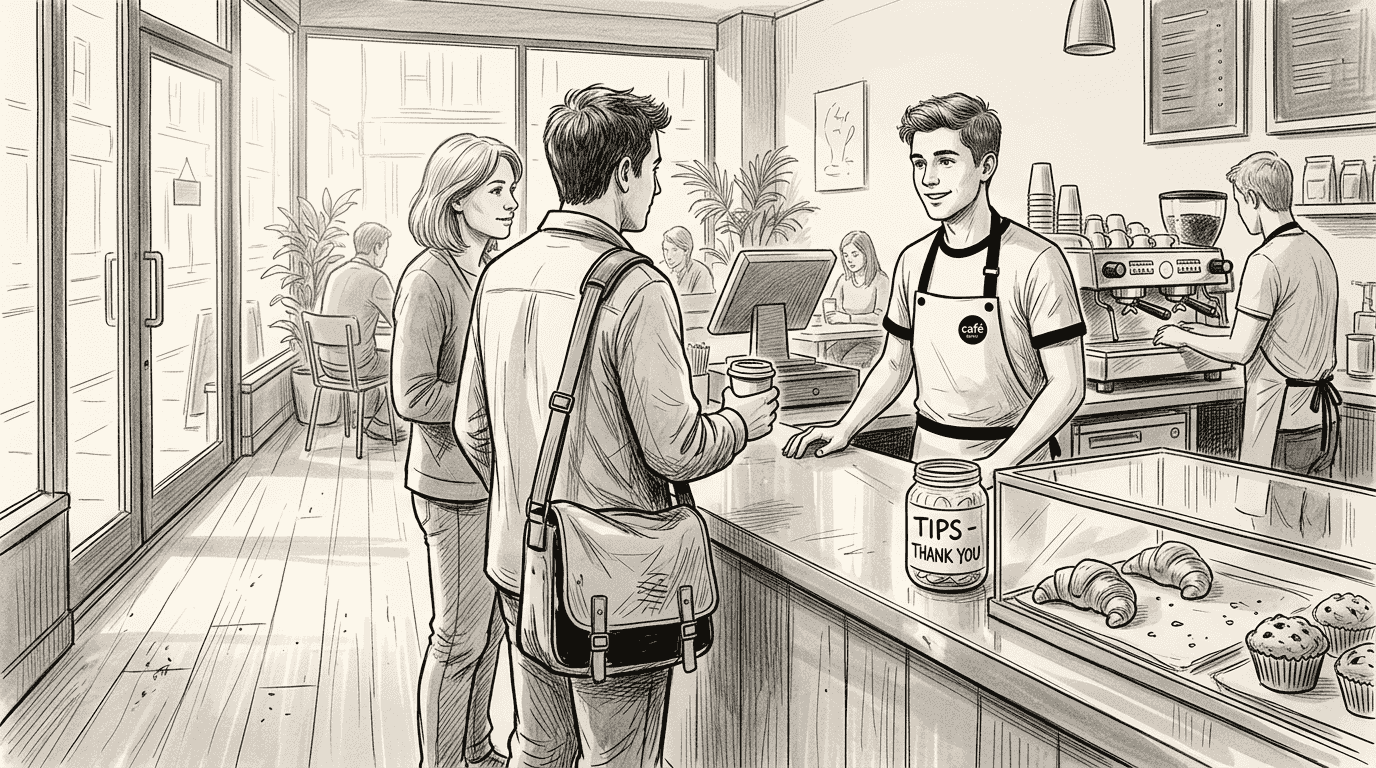
Counter service requires customers to queue at a designated point, place their order, pay immediately, then either collect their items or have them brought to their table. This model suits quick-service restaurants, takeaways, and busy cafés where speed matters. The POS setup emphasises rapid order entry, instant payment processing, and clear kitchen communication.
Each model demands different POS capabilities. Table ordering systems need robust table management, course timing controls, and flexible payment splitting. Counter service platforms prioritise transaction speed, queue management, and streamlined order workflows. Modern solutions increasingly support both approaches within a single system.
Key characteristics of table ordering include:
- Guests remain seated throughout the ordering and payment process
- Staff use mobile devices or customers scan QR codes for digital menus
- Orders route directly to kitchen screens, reducing miscommunication
- Payment happens at the table via card readers or mobile wallets
- Ideal for full-service restaurants, gastropubs, and casual dining venues
Counter service characteristics differ significantly:
- Customers queue at a fixed point to order and pay
- Orders process quickly through touchscreen terminals
- Collection points or table numbers coordinate food delivery
- Best suited for cafés, quick-service restaurants, and takeaway operations
- Reduces staffing needs but can create bottlenecks during rushes
The choice between models affects everything from staff allocation to kitchen workflow. Table ordering demands more front-of-house personnel but allows for personalised service and upselling opportunities. Counter service POS systems reduce labour costs but require careful queue management to maintain customer satisfaction during busy periods.
Efficiency and customer experience: comparing operational impacts
Operational efficiency differs dramatically between service models, with surprising data challenging conventional assumptions. Daisy Green saves 7 minutes per table by using pay-at-table and split-the-bill features, demonstrating how digital table ordering accelerates service cycles. Those seven minutes compound across dozens of tables daily, creating significant revenue opportunities through increased turnover.
Counter service theoretically offers speed advantages for simple transactions. A customer ordering a coffee and pastry can complete the entire process in under two minutes. However, this efficiency collapses during peak periods when queues form. Long queues and slow service negatively impact restaurant revenue and customer retention, with frustrated guests often abandoning queues or choosing competitors.
Customer experience metrics reveal clear preferences. UK diners increasingly value convenience and control over their dining experience. Table ordering with Order & Pay technology lets guests browse menus at their own pace, customise orders without pressure, and split bills seamlessly. This autonomy particularly appeals to younger demographics comfortable with digital interfaces.
Staff workload shifts significantly between models. Counter service concentrates pressure at the till point, with team members juggling order-taking, payment processing, and customer queries simultaneously. Table ordering distributes tasks more evenly, allowing staff to focus on hospitality rather than transaction processing. Digital ordering systems handle routine tasks, freeing your team to address special requests and build guest relationships.
Key efficiency benefits of table ordering include:
- Reduced table turnover time through faster payment processing
- Elimination of queue-related bottlenecks and customer frustration
- Staff can serve more tables with less transactional burden
- Real-time order tracking improves kitchen coordination and timing
- Guests control their pace, reducing perceived wait times
Counter service maintains advantages in specific scenarios. Quick grab-and-go transactions suit customers wanting minimal interaction. The model works brilliantly for takeaway-focused venues where dwell time should be minimal. However, venues mixing dine-in and takeaway often struggle with queue management, particularly when counter staff must also prepare drinks or package orders.
Pro Tip: Track your peak-hour queue lengths and average wait times for two weeks. If queues regularly exceed five people or wait times surpass three minutes, consider systems that streamline operations through hybrid service models combining counter ordering with table delivery.
Cost, revenue and spend implications: which model drives profitability?
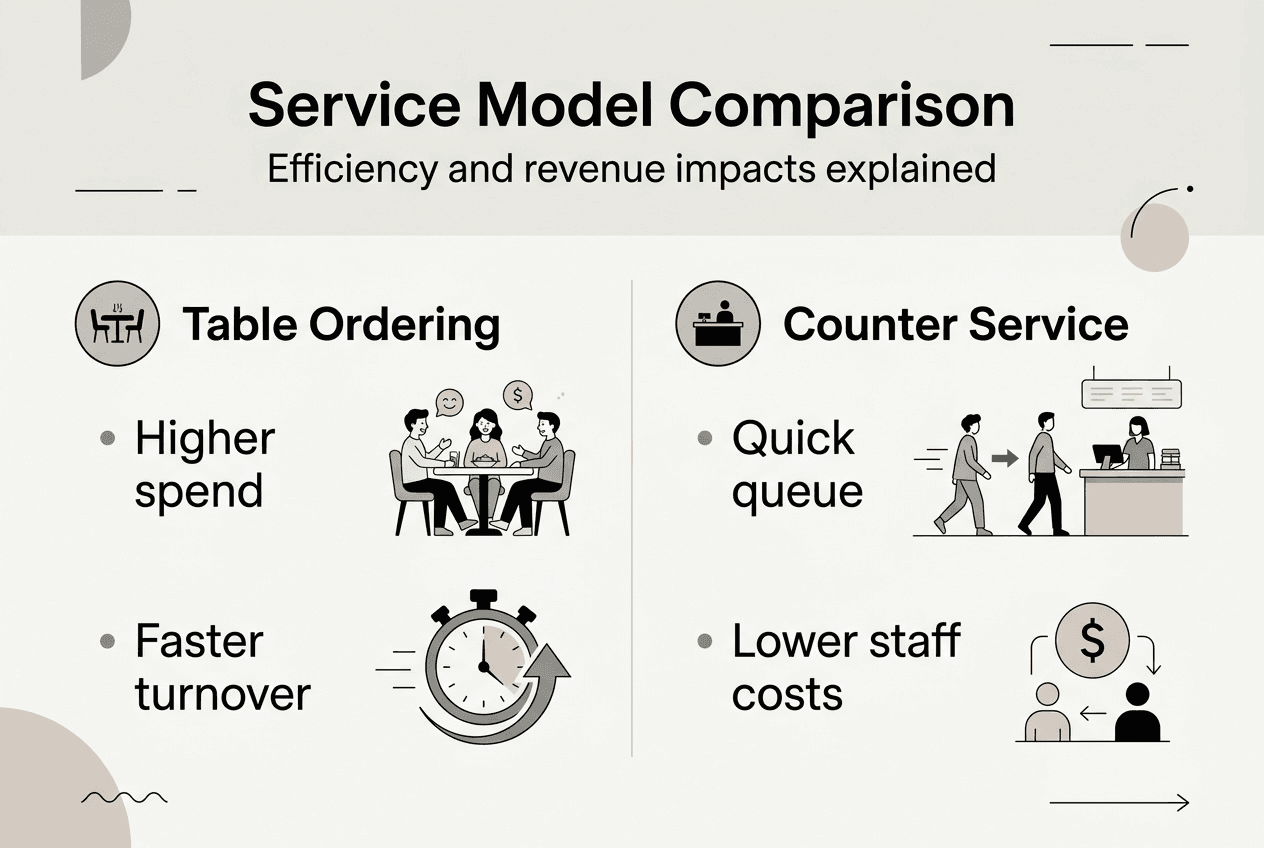
Financial performance varies significantly between service models, with table ordering delivering measurable revenue advantages. Table ordering systems increase average spend per head by 18% compared to counter service due to suggestive selling and ease of ordering add-ons. Digital menus can highlight premium options, suggest pairings, and display appealing imagery that encourages impulse purchases impossible at a busy counter.
Order accuracy directly impacts profitability through reduced waste and improved satisfaction. Order success rates with digital table ordering reach 99.1%, reducing errors and boosting satisfaction. Counter service relies on verbal communication and manual entry, creating opportunities for mistakes that cost money in remakes and damage customer relationships.
Table turnover calculations reveal hidden revenue potential. A venue with 20 tables turning 3 times during a lunch service generates 60 covers. Saving seven minutes per table through digital ordering enables an additional half-turn during the same period, adding 10 covers daily. Over a year, that compounds to 3,650 extra covers without expanding capacity or extending hours.
Counter service offers lower labour costs but sacrifices upselling opportunities. A customer at a till rarely adds dessert or premium drinks when they’re conscious of the queue behind them. Table ordering removes this pressure, with guests happily browsing full menus and adding items throughout their visit.
Key financial metrics comparison:
| Metric | Table Ordering | Counter Service |
|---|---|---|
| Average spend increase | +18% per head | Baseline |
| Table turnover time saved | 7 minutes per table | No improvement |
| Order accuracy rate | 99.1% | 92-95% typical |
| Upselling success | High (digital prompts) | Low (queue pressure) |
| Labour cost per cover | Moderate | Lower |
| Revenue per square metre | Higher (faster turns) | Lower (fixed capacity) |
The mathematics favour table ordering for venues prioritising revenue per cover and maximising existing space. A restaurant generating £25 average spend per head increases that to £29.50 with an 18% lift. Across 200 weekly covers, that’s an additional £900 weekly or £46,800 annually from the same customer base.
Counter service maintains viability for high-volume, low-margin operations where speed trumps spend. Coffee shops selling £3 drinks with 30-second transactions can’t justify the complexity of table service. However, any venue with average transactions above £10 should seriously consider the revenue potential of table ordering technology.
Pro Tip: Calculate your current revenue per available seat hour (total revenue divided by seats multiplied by opening hours). Compare this against industry benchmarks to identify whether faster turnover or increased spend offers better growth opportunities for your specific operation.
Choosing the right POS system for your service model
Selecting the appropriate POS technology determines whether your chosen service model succeeds or frustrates staff and customers alike. The choice of POS system depends on service style, menu complexity, and payment structure of the restaurant, making careful evaluation essential before committing to a platform.
Table service POS systems must handle complex workflows including seat-based ordering, course timing, and split payments. These platforms integrate with handheld devices or customer-facing QR ordering, routing orders directly to kitchen display systems. Look for features like table mapping that shows real-time status, modifier management for customisation requests, and flexible payment splitting that handles individual items or percentage-based divisions.
Counter service platforms prioritise transaction speed and queue management. The interface should allow staff to build orders quickly using visual menus, process payments in seconds, and print or display order numbers for collection. Integration with kitchen screens remains crucial, but the focus shifts to order sequencing and preparation time estimates that keep queues moving.
Hybrid systems offer the flexibility many modern venues require. You might run counter service during breakfast rushes, then switch to table ordering for lunch and dinner. Multi-site POS solutions support different service modes across locations or even different areas within a single venue, giving you operational agility as customer patterns evolve.
Key features for table ordering POS:
| Feature | Benefit | Critical For |
|---|---|---|
| Table mapping | Visual overview of service status | Full-service restaurants |
| Seat-based ordering | Individual tracking within groups | Fine dining, groups |
| Pay-at-table | Faster turnover, better experience | All table service venues |
| Split billing | Handles complex group payments | Casual dining, bars |
| Course timing | Coordinates kitchen workflow | Multi-course operations |
Counter service POS essentials:
| Feature | Benefit | Critical For |
|---|---|---|
| Quick order entry | Reduces queue wait times | High-volume cafés |
| Integrated payments | Single-step transactions | Quick-service restaurants |
| Order tracking | Coordinates collection points | Food courts, takeaways |
| Menu customisation | Handles modifications efficiently | Build-your-own concepts |
| Kitchen routing | Separates food and drink prep | Multi-station operations |
Evaluation checklist for selecting your POS system:
- Assess your peak-hour transaction volume and complexity
- Identify whether speed or spend per customer drives profitability
- Consider your customer demographic and technology comfort level
- Evaluate staff technical skills and training time available
- Determine integration needs with existing accounting or inventory systems
- Review hardware requirements and upfront investment
- Confirm ongoing support availability and response times
- Test the interface during a realistic service simulation
Modern hospitality POS platforms increasingly blur the lines between service models, offering modular features you can activate as needed. This flexibility proves invaluable for venues experimenting with different approaches or adapting to seasonal demand patterns.
Pro Tip: Request a working demonstration during your actual service hours, not a sanitised sales presentation. Watch how the system handles your specific menu complexity, modification requests, and payment scenarios. The best POS on paper often reveals usability issues under real-world pressure.
Why choose eZeepos for your hospitality POS needs?
Optimising your service model requires technology that adapts to your unique operation whilst remaining intuitive for staff and customers.
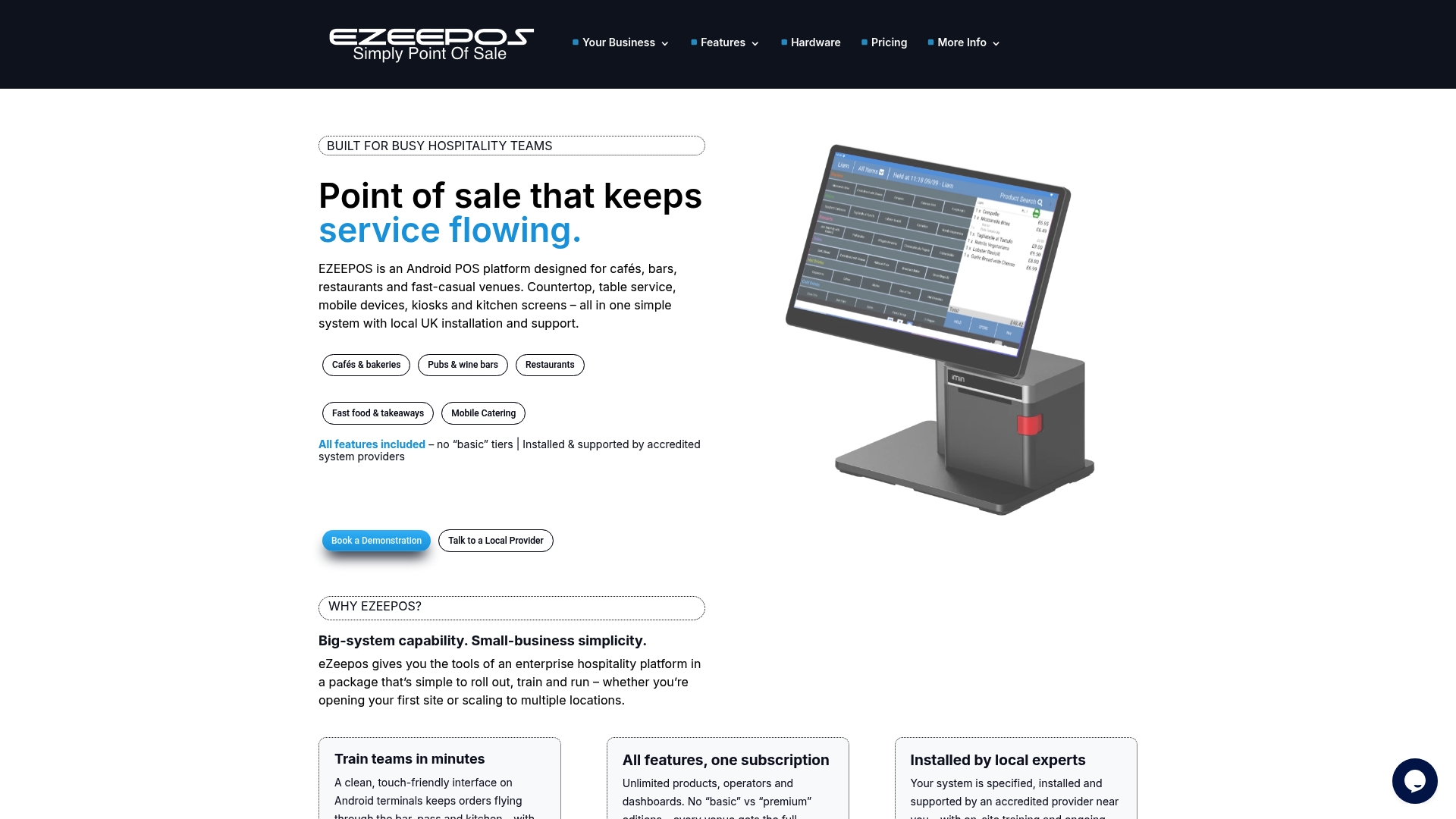
eZeepos delivers comprehensive POS solutions designed specifically for UK hospitality venues navigating the choice between table ordering and counter service. The platform supports both models seamlessly, with features like pay-at-table, split billing, rapid order entry, and robust reporting that provide the operational intelligence you need. Whether you’re running a busy café requiring lightning-fast counter transactions or a full-service restaurant maximising table turnover through digital ordering, eZeepos scales to your requirements. The system’s intuitive interface reduces training time whilst powerful back-office tools give you real-time visibility into performance metrics that matter. UK venues trust eZeepos to enhance speed, accuracy, and guest experience across diverse service styles. Hospitality operators achieving measurable success appreciate the seamless integrations, local support, and flexibility that make adapting to changing customer expectations straightforward. Explore how different POS system types can transform your operation and position your venue for sustainable growth.
Frequently asked questions about table ordering vs counter service
Which service model is best for small cafés?
Small cafés typically benefit from counter service for quick transactions under £10, but should consider hybrid approaches if average spend exceeds £15 or if seating turnover is slow. Table ordering makes sense when you want to increase dwell time and encourage additional purchases like pastries or premium drinks throughout the visit.
How does digital table ordering affect staff workload?
Digital table ordering reduces transactional burden on staff, allowing them to focus on hospitality rather than order-taking and payment processing. Team members spend less time walking to tills and more time engaging with guests, though initial training requires investment to build confidence with the technology.
Can counter service POS handle complex orders effectively?
Modern counter service POS systems manage complex orders with modifier screens and customisation options, but the queue pressure often discourages customers from making detailed requests. For menus with extensive customisation or build-your-own concepts, table ordering removes time pressure and improves order accuracy.
Is pay-at-table technology suitable for older customer demographics?
Pay-at-table works well across all age groups when staff offer assistance and alternative payment methods remain available. Many older customers appreciate the convenience of settling bills without waiting for staff, though providing both digital and traditional options ensures everyone feels comfortable.
How quickly can a venue implement a new POS system for table ordering?
Implementation timelines range from 48 hours for cloud-based systems with minimal hardware to several weeks for complex multi-site installations. Staff training typically requires one to two weeks for basic competency, with full proficiency developing over the first month of live operation.
Does table ordering increase total service time compared to counter service?
Table ordering actually decreases total service time by eliminating queue waits and allowing parallel processing of multiple orders. Whilst individual transactions may take slightly longer, the overall guest experience from arrival to departure is faster because payment processing happens seamlessly without requiring staff intervention at a fixed till point.
Recent Comments