
TL;DR:
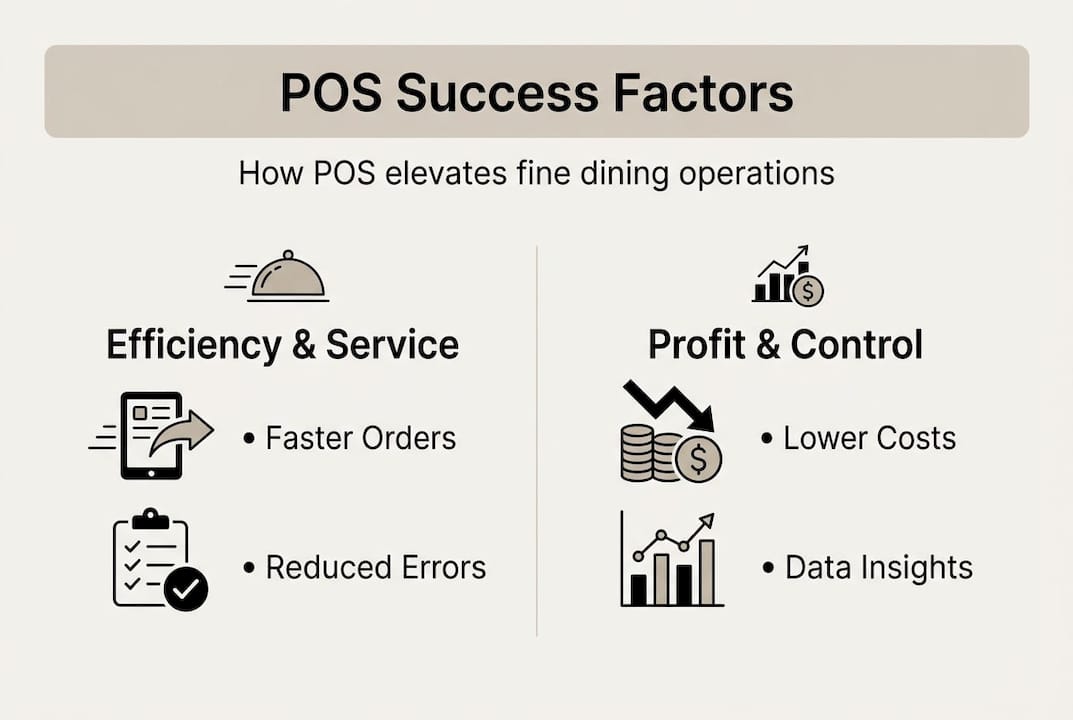
- Modern POS systems can enhance fine dining by improving efficiency, accuracy, and guest experience discreetly.
- Integrated POS solutions help reduce costs, waste, and errors while increasing table turnover and revenue.
- The best POS for fine dining is invisible to guests, reliable, elegant, and supported by local experts.
Fine dining has always been about theatre. The precision of service, the choreography of a well-timed course, the quiet confidence of staff who anticipate every need. Many operators assume that introducing point of sale technology into this environment would break the spell. But mobile POS drives 84% higher orders in UK venues, and service times can fall by 40% with the right system in place. The truth is, the best POS for fine dining is the one your guests never notice. This article explores how a well-chosen POS system can sharpen your operations, protect your margins, and elevate the guest experience without a single visible compromise.
Table of Contents
- Why fine dining needs a specialised POS
- Key benefits: Efficiency, accuracy, and guest service
- Inventory and cost control with integrated POS
- Choosing the right POS setup: Hardware, software, and integration
- Perspective: The art of invisible tech in hospitality
- Elevate your fine dining experience with advanced POS solutions
- Frequently asked questions
Key Takeaways
| Point | Details |
|---|---|
| Invisible POS integration | The best fine dining POS systems deliver seamless service without disrupting the luxury ambiance. |
| Proven efficiency gains | Advanced POS streamlines orders, improves accuracy, and can boost revenue and guest satisfaction significantly. |
| Cost and waste reduction | Integrated inventory features help cut food costs and wastage, protecting your margins. |
| Choose resilient systems | Hybrid POS setups offer maximum reliability, especially important for high-end UK venues. |
Why fine dining needs a specialised POS
Not all restaurants face the same operational pressures. A quick-service café needs speed above all else. A fine dining venue needs something far more nuanced: precision, discretion, and personalisation at every touchpoint. Generic POS solutions are built for volume, not for the intricate service choreography that defines a Michelin-calibre experience. That mismatch is where problems begin.
Fine dining operations demand that technology supports the service rather than interrupting it. Guests expect staff to be present and attentive, not distracted by clunky screens or slow software. A POS for fine dining must handle complex menu structures, multi-course ordering, bill splitting across large tables, and real-time communication with the kitchen, all without drawing attention to itself.
As fine dining service standards make clear, POS must automate workflows without disrupting the invisible service aesthetic. Handheld devices used clumsily can actually breach protocol in top-tier venues. The hardware must be elegant, the software must be intuitive, and the entire system must feel like a natural extension of your team rather than a piece of office equipment.
Here are the features that genuinely matter in a fine dining POS:
- Silent or near-silent hardware that does not intrude on ambient atmosphere
- Tableside ordering controls that allow staff to manage orders without returning to a fixed terminal
- Custom menu flows that reflect tasting menus, seasonal changes, and dietary requirements
- Advanced table management including covers, seating plans, and course pacing
- Bill splitting and flexible payment options that handle complex group dining
- Detailed reporting that gives managers real-time insight into performance
- Integration with kitchen display systems so communication is instant and accurate
“The goal is not to digitise your restaurant. The goal is to serve your guests better. Technology should be the infrastructure, not the experience.”
Pro Tip: When evaluating hardware, prioritise low-profile tablet or handheld options with long battery life. A device that dies mid-service or requires a visible charging cable is a liability in a fine dining environment.
Key benefits: Efficiency, accuracy, and guest service
With the right POS in place, the improvements to your service and profitability are not subtle. They are measurable, significant, and often immediate.
Mobile and tablet-based POS systems allow your team to take orders tableside, process payments at the table, and communicate directly with the kitchen in real time. This eliminates the back-and-forth between the floor and a fixed terminal, which is where errors and delays typically accumulate. Fewer steps mean fewer mistakes, and fewer mistakes mean happier guests and lower comping costs.
The data from UK implementations is striking. Mobile POS benchmarks show table turnover improving by 20 to 25%, order errors falling by 27%, and revenue increasing by 15% across venues that adopt modern systems. These are not marginal gains. For a fine dining restaurant operating on tight margins with high ingredient costs, a 15% revenue uplift is transformational.
| Metric | Without modern POS | With modern POS |
|---|---|---|
| Table turnover improvement | Baseline | +20 to 25% |
| Order error rate | Higher | Reduced by 27% |
| Service time | Baseline | Reduced by up to 40% |
| Revenue impact | Baseline | +15% |
| Order volume | Baseline | Up to 84% more orders |
For guest experience specifically, the gains are just as compelling. Tableside payment means guests are never left waiting awkwardly for the bill. Custom order notes captured at the table ensure allergies and preferences are recorded accurately. You can explore mobile POS case studies to see how venues have implemented these changes in practice, and mobile POS explained offers a clear breakdown of how the technology actually works in a hospitality setting.
Service time reduced by up to 40%. That single figure represents the difference between a guest who leaves relaxed and one who felt rushed or ignored during the billing process.
Inventory and cost control with integrated POS
Beyond guest-facing improvements, POS systems can fundamentally change how you manage your back of house. In fine dining, where a single premium ingredient can cost more than an entire casual dining dish, inventory control is not a nice-to-have. It is a financial necessity.
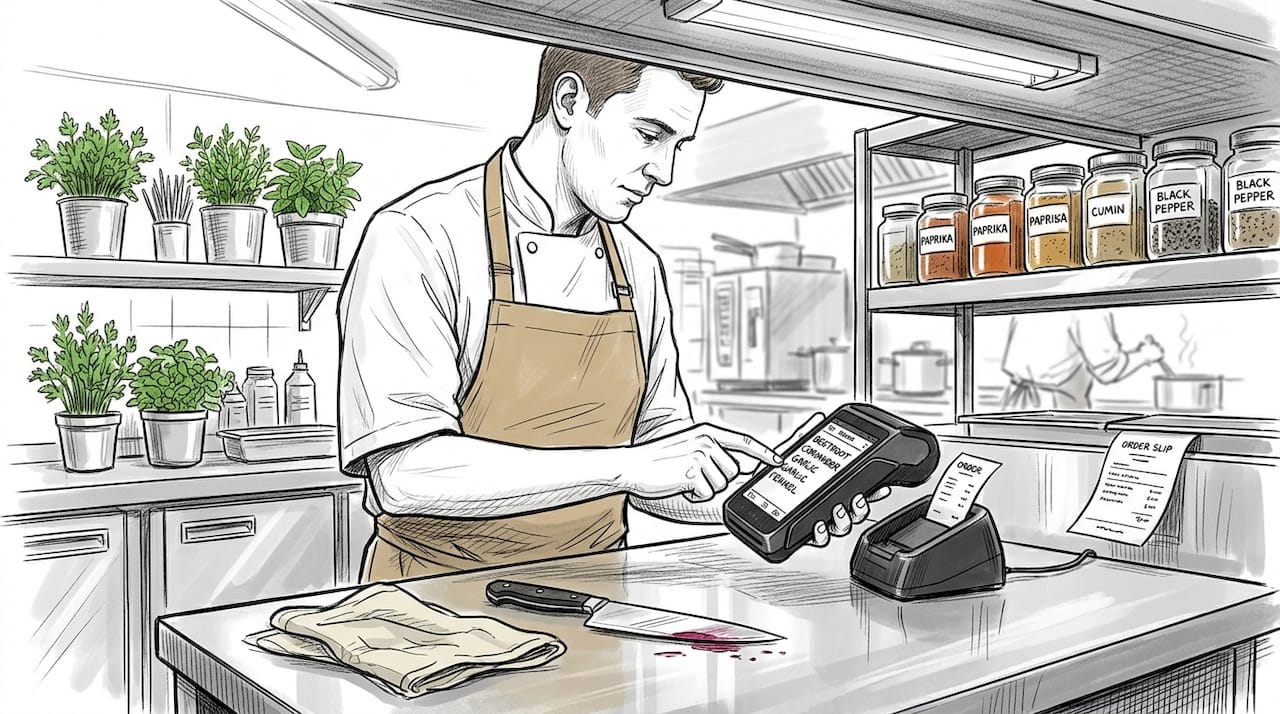
Fine dining margins are notoriously thin. Waste is the enemy. A bottle of aged Burgundy poured incorrectly, a portion of hand-dived scallops over-ordered for a quiet Tuesday, a truffle allocation that runs out before the weekend. These are not abstract problems. They are the daily reality of running a high-end kitchen, and they compound quickly.
POS-integrated inventory systems can reduce food costs by 15 to 25% and cut waste by up to 25% through real-time tracking and analytics. That level of control comes from connecting your sales data directly to your stock levels, so you always know what you have, what you are using, and what you need to order.
Here is a practical approach to implementing POS-enabled inventory management:
- Map every ingredient to a menu item so that each sale automatically deducts from your stock count
- Set low-stock alerts for premium ingredients so your team is notified before a shortage occurs
- Review daily waste reports to identify patterns and adjust ordering accordingly
- Use demand forecasting tools within your POS to anticipate covers and plan purchasing
- Integrate with your suppliers where possible so reordering can be triggered automatically
- Audit your stock weekly and reconcile against POS data to catch discrepancies early
For a broader view of procurement and quality standards, considering how you source materials, including restaurant textile procurement for your table settings, alongside ingredient sourcing, reflects the same discipline that POS-enabled inventory brings to the kitchen.
“Operators who implement integrated POS inventory management typically recover their system costs within the first year through waste reduction alone.”
Pro Tip: Use your POS analytics to identify which dishes have the highest ingredient cost relative to their sale price. These are your margin risks. Adjusting portion guidance or pricing based on real data is far more effective than guesswork.
Choosing the right POS setup: Hardware, software, and integration
After understanding what POS can do, the next challenge is selecting the system that actually fits your venue. The market is crowded, the feature lists are long, and the sales pitches are convincing. But for fine dining, the decision comes down to three things: reliability, elegance, and support.
The core choice most operators face is between cloud-based, locally installed, or hybrid POS systems. Each has genuine trade-offs worth understanding.
| System type | Advantages | Risks for fine dining |
|---|---|---|
| Cloud-based | Remote access, automatic updates, scalable | Dependent on internet; outages can disrupt service |
| Local installation | Works offline, fast response times | Requires on-site maintenance; updates are manual |
| Cloud/local hybrid | Resilient, combines uptime with offline capability | Slightly more complex to configure initially |
For high-end venues, the hybrid approach is typically the strongest choice. As best POS systems for fine dining guidance confirms, cloud/local hybrid setups reduce downtime risk while keeping local installation at the core of operations. Internet outages happen. Your service cannot stop because of them.
When evaluating any system, use this checklist:
- Does it integrate with your kitchen display screens?
- Can it connect to your CRM for guest preference tracking?
- Does it support your preferred payment providers?
- Is training straightforward for new staff?
- What does local UK support look like when something goes wrong?
That last point matters more than most operators realise. Local POS support from accredited UK providers means a real person can assist you quickly, not a ticket system with a 48-hour response window. And cloud POS benefits are only worth having if the system is backed by genuine human expertise.
Pro Tip: Prioritise uptime and support over feature lists. A POS with 200 features that goes down during a Saturday dinner service is worse than a simpler system that never fails.
Perspective: The art of invisible tech in hospitality
We have covered the practical steps and the measurable gains. But there is a subtler truth worth sitting with. The finest fine dining operators we have seen succeed with technology share one thing in common: they never let the technology become the story.
The operators who struggle are usually the ones who led with the feature list. They invested in the most talked-about system, trained staff on its capabilities, and then watched guests notice the devices rather than the food. Technology in fine dining should be like good plumbing. Essential, invisible, and only noticed when it fails.
The best fine dining POS systems are not the ones with the most impressive dashboards. They are the ones that your team uses confidently, your guests never see, and your managers rely on without thinking twice. The future of fine dining technology belongs to systems that disappear into the service, not those that announce themselves.
Our strong view is this: choose the system your team will actually use well over the one that looks impressive in a demo. Operational elegance beats technical complexity every time.
Elevate your fine dining experience with advanced POS solutions
You now have a clear picture of what a high-performance POS can achieve in a fine dining environment. The next step is finding the right system and support to make it real in your venue.
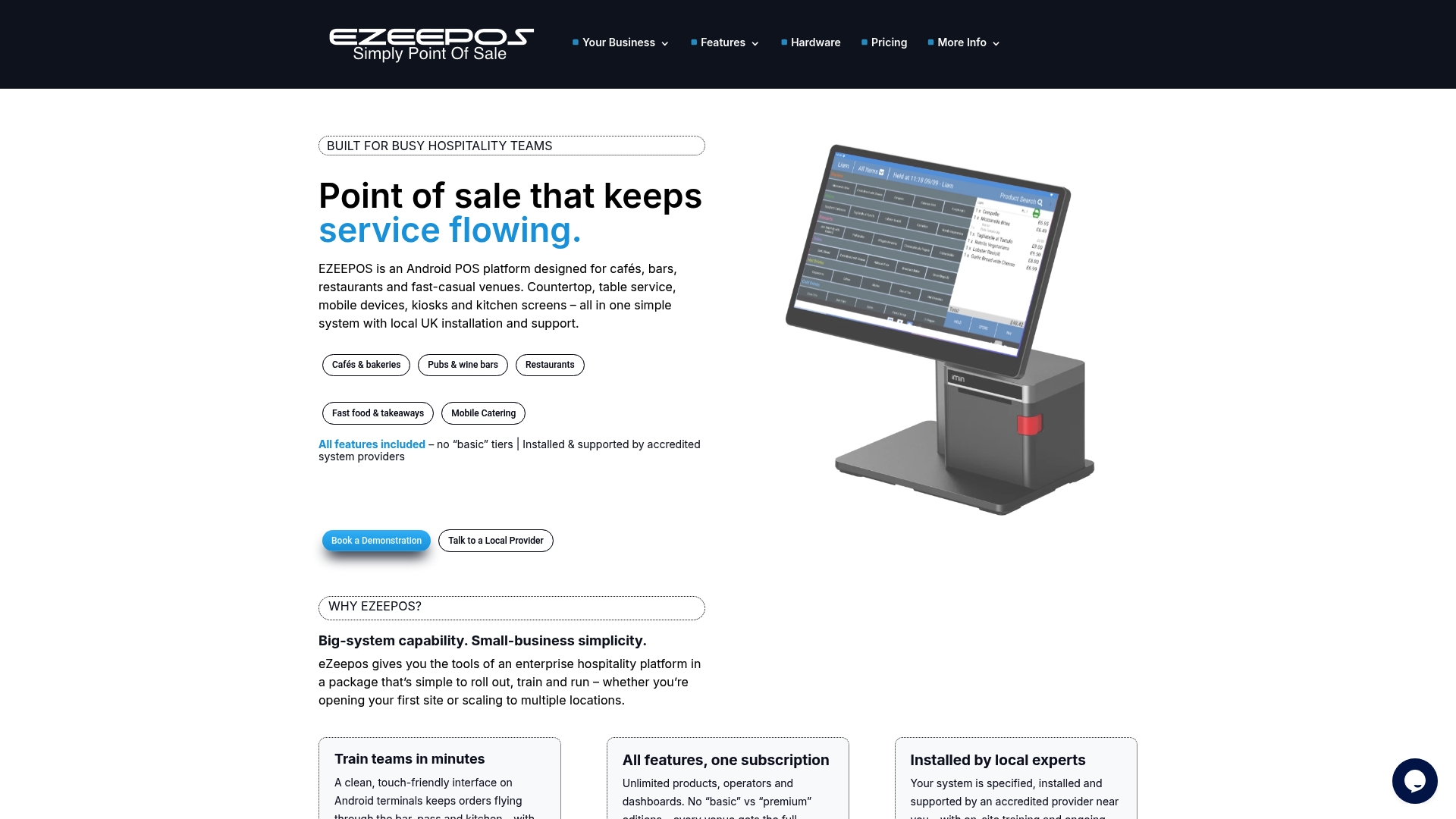
At Ezee POS, we work with UK hospitality venues to implement POS solutions that genuinely fit the demands of fine dining. Whether you are starting from scratch or replacing a system that is holding you back, our accredited local providers offer hands-on installation and ongoing support. Explore what is hospitality POS to understand your options, review POS benefits for hospitality for a full picture of what modern systems deliver, or browse hospitality POS successes to see how venues like yours have transformed their operations.
Frequently asked questions
What makes a POS suitable for fine dining compared to other restaurants?
A fine dining POS must offer discreet, highly customisable service flows, tableside controls, and seamless integration without distracting from the guest experience. As fine dining service standards confirm, preserving the invisible service aesthetic is non-negotiable.
How can a POS system help reduce costs in a fine dining restaurant?
With real-time inventory and waste tracking, a POS can cut food costs by 15 to 25% and reduce waste by up to 25%, making it one of the most effective cost-control tools available to fine dining operators.
Does mobile POS really speed up fine dining service?
Yes. Mobile POS reduces service time by up to 40% and improves table turnover by 20 to 25%, without compromising the quality or discretion of the guest experience.
Should fine dining venues choose cloud or local POS setups?
High-end venues benefit most from a cloud/local hybrid system, which combines the resilience of local installation with the flexibility of cloud access and UK-based support.
Recent Comments