
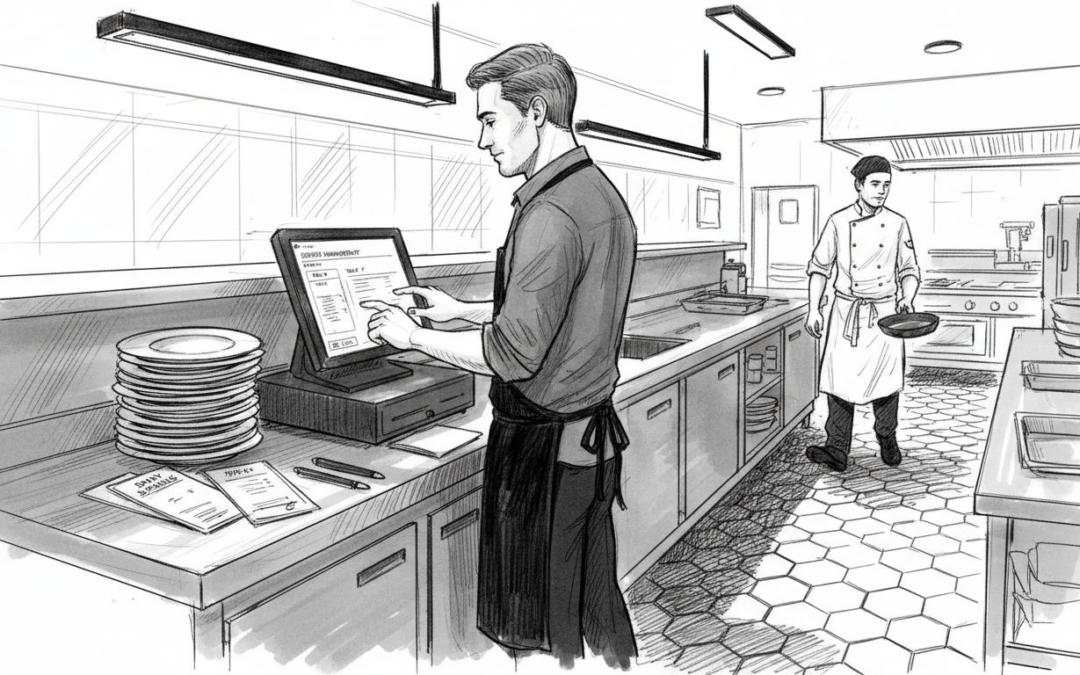
Running a café or restaurant in the UK often means juggling payment processing, inventory tracking, and staff scheduling all at once. Finding a reliable solution is crucial as modern POS systems now offer comprehensive digital platforms that combine hardware and cloud-based software. These tools deliver real-time data to improve efficiency, secure transactions, and ensure compliance with UK data protection regulations. Discover how the right POS system simplifies business workflows and supports exceptional customer experiences.
Table of Contents
- Defining Pos Systems In Catering Businesses
- Types Of Pos Solutions For Hospitality Venues
- Core Features Powering Modern Catering Operations
- Enhancing Customer Experience And Service Modes
- Compliance, Data Security, And Staff Training Implications
Key Takeaways
| Point | Details |
|---|---|
| Importance of Modern POS Systems | POS systems have evolved to be essential tools for catering businesses, integrating various operations beyond payment processing. |
| Diverse POS Solutions Available | Different types of POS systems cater to the varying operational needs of hospitality venues, enhancing service efficiency. |
| Core Features for Business Efficiency | Modern POS systems offer advanced features like real-time inventory tracking and analytics, aiding in informed decision-making. |
| Security and Compliance Considerations | Ensuring data security and compliance with regulations is crucial, requiring ongoing staff training and robust system features. |
Defining POS Systems in Catering Businesses
In the dynamic landscape of UK hospitality, Point of Sale (POS) systems have become essential digital tools that transform how catering businesses manage transactions, operations, and customer interactions. These sophisticated platforms go far beyond simple payment processing, representing comprehensive technological solutions designed to streamline complex business workflows.
A modern POS system in catering represents a strategic digital infrastructure that integrates multiple operational components. Comprehensive digital solutions for UK venues combine advanced hardware and cloud-based software to manage critical business functions seamlessly. These systems enable venues to:
- Process financial transactions efficiently
- Track inventory in real-time
- Schedule staff shifts accurately
- Manage customer engagement strategies
- Generate detailed performance reports
The technological ecosystem of a catering POS system typically includes specialised hardware like touchscreen terminals, mobile devices, receipt printers, and kitchen display screens. These components work harmoniously with cloud-based software platforms that provide instantaneous data synchronisation and remote management capabilities.
Moreover, these systems are not merely transactional tools but strategic assets that deliver actionable business intelligence. They capture granular data about sales patterns, customer preferences, and operational performance, empowering catering business owners to make informed decisions quickly.
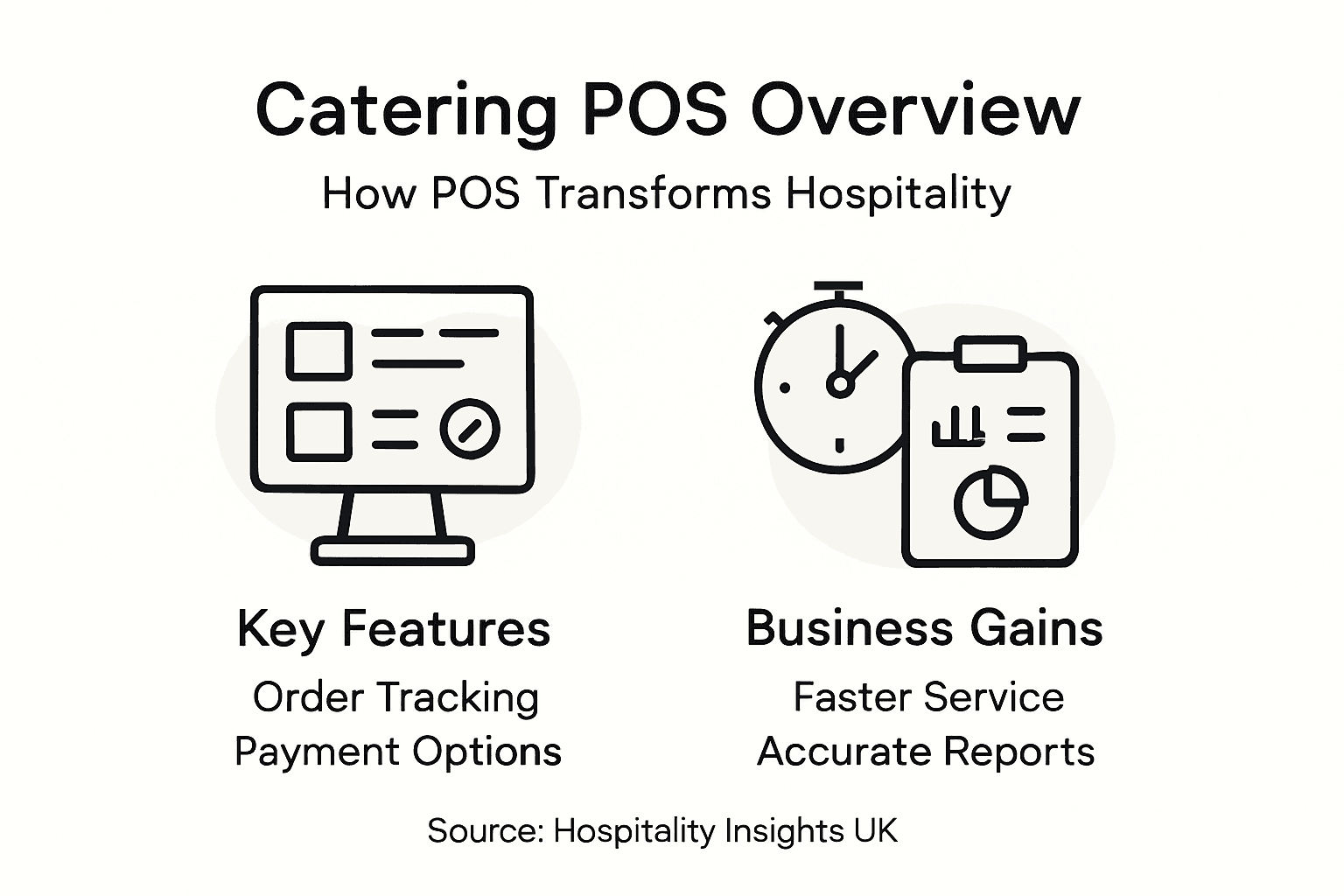
Pro tip: When selecting a POS system for your catering business, prioritise solutions that offer seamless integration, real-time reporting, and scalable features tailored to hospitality environments.
Types of POS Solutions for Hospitality Venues
In the ever-evolving UK hospitality sector, businesses have access to diverse Point of Sale (POS) systems designed to meet specific operational requirements. Types of hospitality POS systems range from comprehensive enterprise solutions to specialised platforms tailored for different venue configurations.
The primary categories of POS solutions for hospitality venues include:
- Counter Service POS: Ideal for cafés, quick-service restaurants, and takeaway establishments
- Table Service POS: Designed for full-service restaurants and dining venues
- Mobile POS: Perfect for food trucks, outdoor catering, and events
- Self-Service Kiosk POS: Enabling customer-led ordering and payment processes
- Cloud-Based POS: Offering remote management and real-time data synchronisation
Each POS system type offers unique features to address specific operational challenges. Counter service systems prioritise speed and efficiency, while table service solutions focus on detailed order management and customer interaction tracking. Mobile POS systems provide flexibility for businesses with dynamic service environments, allowing staff to process transactions directly at the point of interaction.
Here’s a quick comparison of POS system types and their ideal usage in UK hospitality:
| POS System Type | Best For | Core Advantage |
|---|---|---|
| Counter Service | Cafés, takeaways | Fast transactions |
| Table Service | Full-service restaurants | Enhanced order management |
| Mobile POS | Food trucks, outdoor events | Maximum staff mobility |
| Self-Service Kiosk | Fast food, casual venues | Reduces queue times |
| Cloud-Based POS | Multi-site enterprises | Central remote management |
Modern hospitality POS solutions are increasingly sophisticated, integrating advanced functionalities like inventory management, staff scheduling, customer relationship management, and detailed financial reporting. These systems transform traditional transaction processing into strategic business intelligence platforms that support data-driven decision-making.
Pro tip: Select a POS system that matches your specific venue type and can scale with your business growth, ensuring seamless operational adaptability.
Core Features Powering Modern Catering Operations
In today’s competitive UK hospitality landscape, Point of Sale (POS) systems have evolved into sophisticated operational platforms that do far more than process transactions. Multi-channel payment solutions have transformed how catering businesses manage their day-to-day operations, integrating multiple critical functions into a single intelligent system.
The core features that define modern catering POS systems include:
- Inventory Management: Real-time stock tracking and automated reordering
- Payment Processing: Seamless multi-channel transaction capabilities
- Staff Management: Scheduling, performance tracking, and role-based access
- Reporting and Analytics: Comprehensive financial and operational insights
- Customer Relationship Management: Loyalty programme integration and personalised marketing
These sophisticated systems go beyond traditional transaction recording, offering businesses unprecedented insights into their operational performance. Inventory management features, for instance, allow precise stock control, helping venues reduce waste and optimise purchasing. Staff management tools enable efficient scheduling, performance tracking, and streamlined communication across team members.
Modern catering POS platforms have become intelligent business ecosystems that integrate multiple functions. They provide real-time data access, enabling businesses to make swift, informed decisions about menu pricing, inventory management, and staffing strategies. The ability to generate detailed reports and analyse performance metrics gives hospitality venues a competitive edge in a rapidly changing market.

The table below summarises how core POS features drive business value:
| Feature | Operational Benefit | Business Impact |
|---|---|---|
| Inventory Management | Accurate stock levels | Minimises waste, reduces costs |
| Payment Processing | Trusted, fast payments | Improves cash flow, boosts reputation |
| Staff Management | Optimised schedules | Increases efficiency, reduces error |
| Reporting & Analytics | Real-time performance insights | Enables better decision-making |
| Customer Management | Loyalty and targeted promotions | Drives repeat business and spend |
Pro tip: Choose a POS system with comprehensive integration capabilities to ensure smooth data flow across all your business operations.
Enhancing Customer Experience and Service Modes
In the contemporary UK hospitality sector, Point of Sale (POS) systems have become instrumental in transforming customer interactions and service delivery. Modern service modes enable businesses to create personalised, efficient experiences that meet increasingly sophisticated customer expectations.
The primary service modes enabled by advanced POS technologies include:
- Table Service: Comprehensive order management with tableside payment
- Counter Service: Rapid transaction processing for high-volume venues
- Self-Service Kiosk: Empowering customers with independent ordering
- Mobile Ordering: Flexible transaction capabilities across different environments
- Hybrid Service: Combining multiple ordering and payment approaches
These diverse service modes allow hospitality venues to adapt their operational strategies dynamically. Table service systems, for instance, enable detailed order tracking and personalised customer interactions, while counter service platforms prioritise speed and efficiency. Self-service kiosks provide customers with greater autonomy, reducing queuing times and minimising staff workload.
Advanced POS systems integrate multiple technologies to create seamless customer experiences. Digital ordering platforms, integrated loyalty programmes, and personalised marketing tools enable venues to build deeper connections with their customers. By capturing detailed interaction data, businesses can refine their services, create targeted promotions, and develop more responsive customer engagement strategies.
Pro tip: Select a POS system that offers multiple service modes to provide maximum flexibility and meet diverse customer preferences.
Compliance, Data Security, and Staff Training Implications
In the UK hospitality sector, Point of Sale (POS) systems represent more than technological tools—they are critical platforms for ensuring operational integrity and regulatory compliance. Comprehensive data security standards have become fundamental to protecting business and customer interests in an increasingly digital landscape.
Key compliance and security considerations include:
- GDPR Compliance: Protecting customer personal data
- PCI DSS Regulations: Securing payment transaction processes
- Encryption Technologies: Safeguarding sensitive transaction information
- Regular Software Updates: Maintaining system security protocols
- Access Control Management: Limiting system permissions strategically
Effective staff training emerges as a critical component in maintaining these complex security frameworks. Hospitality businesses must develop comprehensive training programmes that educate team members about system functionalities, data protection protocols, and potential cybersecurity risks. Understanding how to navigate POS systems securely reduces the likelihood of human error and potential data breaches.
Modern POS platforms integrate multiple layers of security, including multi-factor authentication, role-based access controls, and automated compliance monitoring. These advanced features help businesses maintain rigorous standards while providing flexibility for staff operations. By implementing robust training programmes and selecting systems with sophisticated security architectures, hospitality venues can protect their operational integrity and customer trust.
Pro tip: Invest in ongoing staff training and choose POS systems with comprehensive security features to minimise compliance risks and protect your business.
Discover How EZEEPos Streamlines Your Catering Operations for UK Hospitality
The article emphasises the need for robust POS systems that integrate multi-channel payment processing, inventory management, and adaptable service modes to thrive in the fast-paced UK hospitality market. If you seek to overcome challenges like inefficient staff scheduling, complex order management, and the demand for seamless customer experiences, EZEEPos offers a tailored solution designed specifically for busy catering businesses. Our specialised Android-based platform supports diverse environments such as cafés, mobile catering, and quick-service venues, ensuring your operations are smooth and scalable.
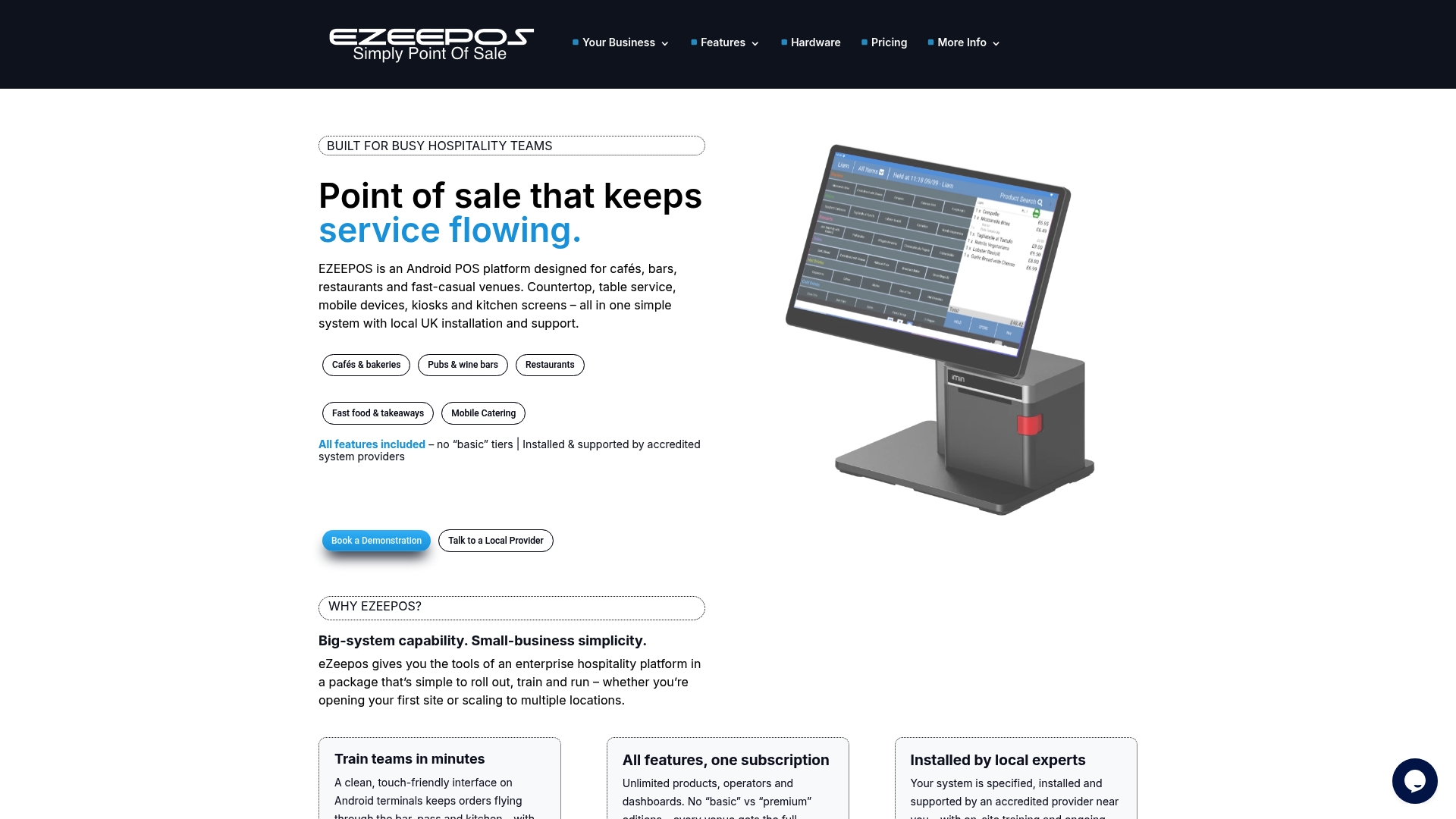
Explore our Add On Modules – EZEEPos Solution to enhance your system with extra features like loyalty programmes or detailed reporting. Benefit from trusted hardware integrations with EFT Terminals – EZEEPos Solution for secure, fast payments. Ready to transform your venue with a unified system that manages sales, staff, inventory, and customer engagement? Visit EZEEPos today to start your journey towards effortless management and superior customer satisfaction.
Frequently Asked Questions
What is a POS system in catering?
A Point of Sale (POS) system in catering is a comprehensive digital tool that streamlines transactions and operations, including payment processing, inventory management, staff scheduling, and customer engagement.
How can a POS system improve customer experience in catering?
A POS system can enhance customer experience by offering various service modes, such as table service, counter service, and self-service kiosks, which cater to different customer preferences and improve overall service efficiency.
What features should I look for in a catering POS system?
Key features to consider include inventory management, payment processing capabilities, staff management tools, detailed reporting and analytics, and customer relationship management features, all of which contribute to effective operational management.
How does a mobile POS differ from a traditional POS system?
A mobile POS provides flexibility by allowing staff to process transactions anywhere within the venue, enhancing customer service and transaction speed, while traditional POS systems are typically stationary at a counter or terminal.
Recent Comments