
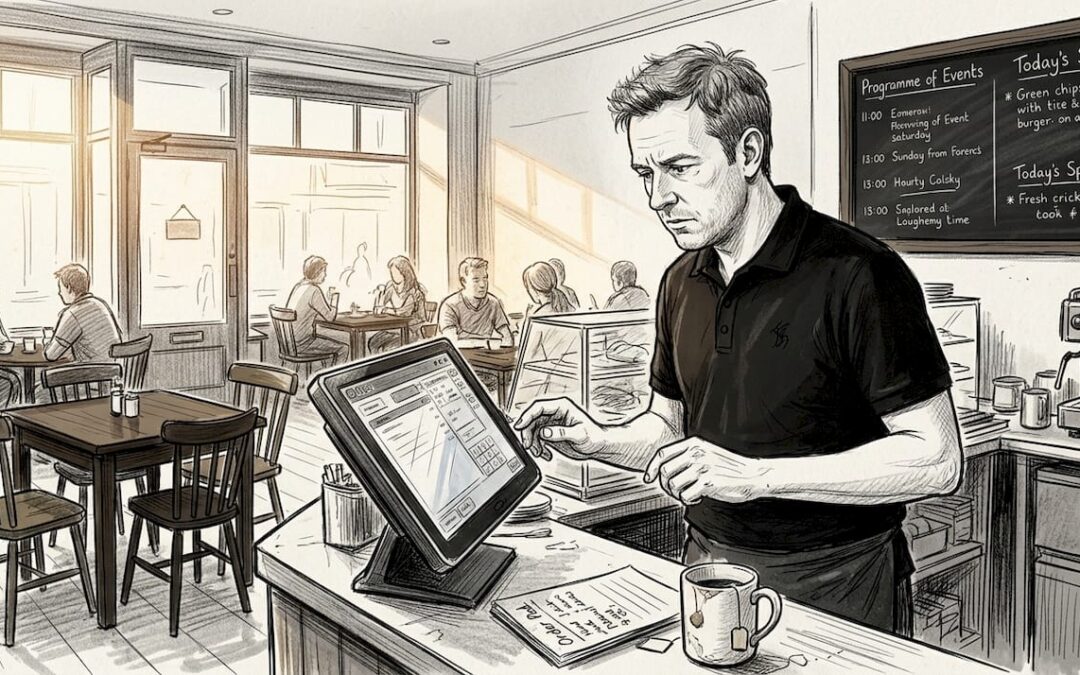
A single POS failure during a busy Friday evening service can cost your venue thousands before the night is over. UK venues can lose up to £8,000 per day during system downtime, yet many operators still assume that a cloud-based subscription is all the protection they need. The reality is more nuanced. This article examines the true risks of POS outages, the critical differences between local and cloud support models, and the practical steps you can take to protect your revenue, your team, and your guests.
Table of Contents
- Understanding the risks of POS system failure
- Cloud vs local POS support: Key differences for UK venues
- The real value: Fast onsite response and reduced downtime
- Beyond break-fix: Training, menu programming, and ongoing optimisation
- How to evaluate and choose the right local POS partner
- Explore robust local POS solutions for hospitality venues
- Frequently asked questions
Key Takeaways
| Point | Details |
|---|---|
| Minimise costly downtime | Local support slashes the time and financial impact of unexpected POS failures for hospitality venues. |
| Boost operational efficiency | Expert local providers offer bespoke training and programming to combat productivity loss in hospitality businesses. |
| Better reliability for UK venues | On-premise systems deliver business continuity by working independently of internet quality. |
| Tailored, ongoing support | Local POS partners go beyond repairs, continuously optimising menus, staff skills, and systems. |
| Smart partner selection | Choosing the right local POS expert ensures custom solutions, smooth integration, and future-ready service. |
Understanding the risks of POS system failure
When your POS goes down, the damage spreads fast. Orders stop flowing to the kitchen, card payments fail, queues build, and guests leave. The financial and reputational fallout can linger long after the system comes back online.
Hospitality businesses face significant downtime costs, with some venues losing up to £8,000 in a single day. For a busy bar or restaurant, even a two-hour outage during peak service can wipe out the evening’s profit margin entirely. That is not a theoretical risk. It happens regularly across the UK.
The disruptions that follow a POS failure are wide-ranging:
- Lost orders and missed covers
- Delayed food and drink service
- Inability to process card or contactless payments
- Staff confusion and breakdown in communication between front-of-house and kitchen
- Negative guest experiences that translate into poor reviews
- Manual workarounds that introduce errors and slow everything down
Fast resolution is not a luxury in hospitality. It is a necessity. A remote support team working from a call centre cannot physically inspect your hardware, swap a faulty component, or reconfigure your network on the spot. Understanding the cloud POS benefits is useful, but it must be weighed against the very real limitations of remote-only support. The POS system benefits you actually experience depend heavily on the quality of support behind the technology.
Cloud vs local POS support: Key differences for UK venues
Not all POS support models are built the same. The architecture you choose shapes how your venue performs under pressure, particularly when connectivity is unreliable or when you need hands-on help quickly.
On-premise POS operates independently of internet connectivity, providing reliability in areas with poor broadband. This is a significant advantage for rural pubs, festival sites, and venues in older buildings where Wi-Fi is inconsistent.
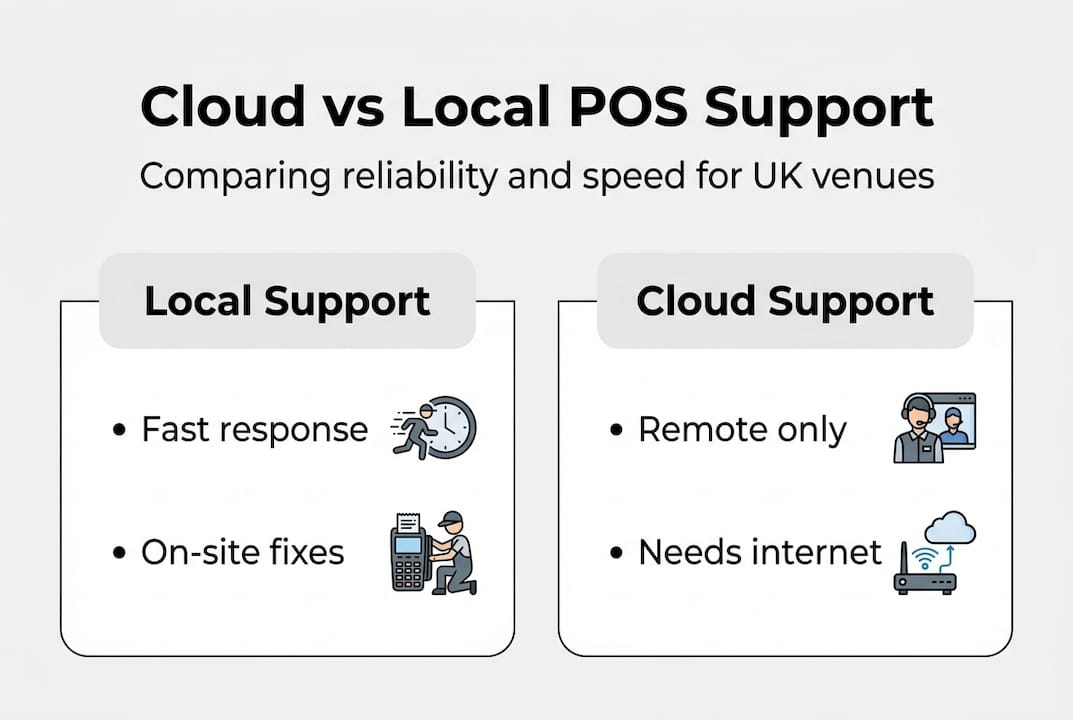
| Feature | Local/on-premise support | Cloud-only support |
|---|---|---|
| Internet dependency | Low | High |
| On-site response | Available | Rarely available |
| Customisation for UK VAT | Deep and flexible | Often template-based |
| Offline functionality | Full | Limited or none |
| Response speed | Minutes to hours | Hours to days |
| Data control | Venue-held | Provider-held |
Cloud systems have genuine strengths, particularly for multi-site reporting and remote access to data. However, for venues where service continuity is non-negotiable, local support provides a resilience that cloud-only models simply cannot match.
“The question is not whether cloud or local is better in isolation. It is which model keeps your specific venue trading when things go wrong.”
When defining hospitality POS requirements, many operators focus on features and pricing tiers. They overlook the support infrastructure entirely. Reviewing the available POS system types before committing to a provider is essential.
Pro Tip: Ask any prospective POS provider what happens to your system if your broadband drops for four hours on a Saturday night. The answer will tell you everything you need to know about their support model.
The real value: Fast onsite response and reduced downtime
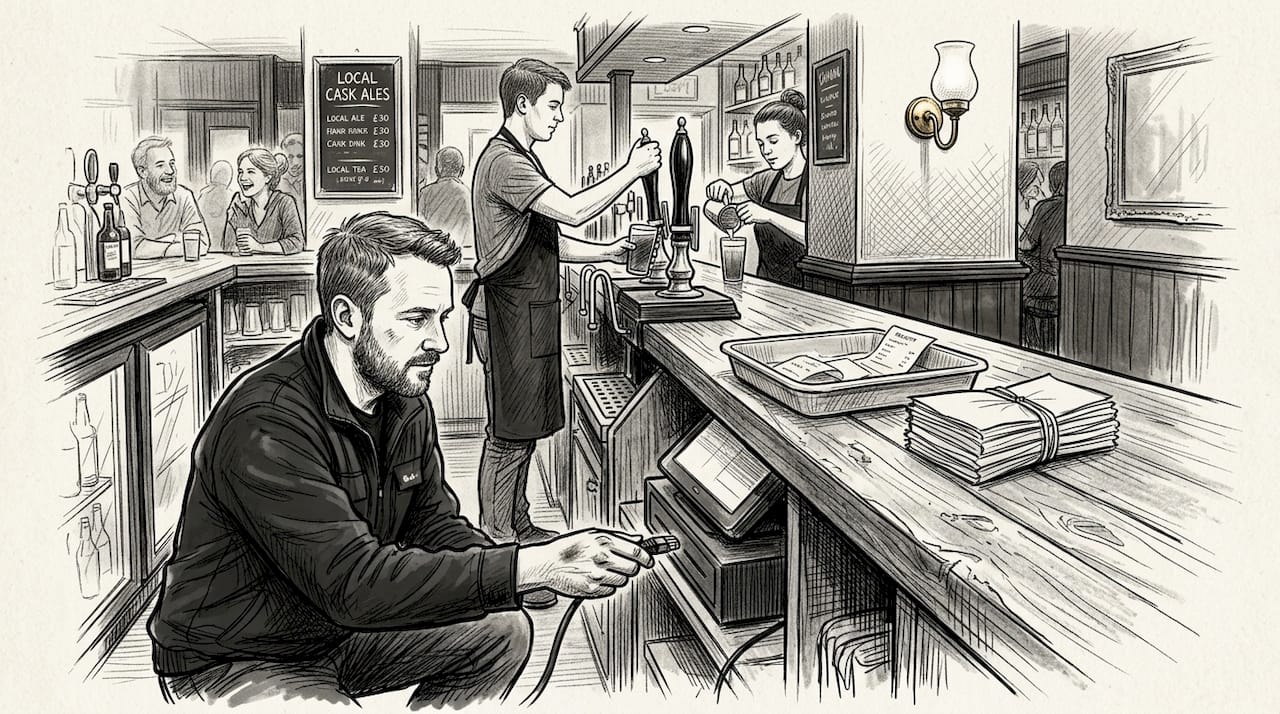
Speed matters enormously in hospitality. A remote support agent who asks you to restart your router while a queue of guests waits at the bar is not a solution. A local engineer who arrives within the hour is.
Managed local IT support reduces unplanned outages by up to 60% through proactive monitoring and quick on-site resolution. That figure represents real money saved and real service maintained.
| Support model | Average response time | Estimated revenue protected per incident |
|---|---|---|
| Remote/cloud only | 4 to 24 hours | Low |
| Local managed support | Under 2 hours | High |
| On-site dedicated engineer | Under 1 hour | Very high |
Here is how a well-structured local support process typically works:
- Proactive monitoring detects anomalies before they become failures
- Remote diagnostics identify whether the issue can be resolved without a visit
- On-site dispatch is triggered immediately when remote resolution is not possible
- Hardware replacement or reconfiguration is carried out on location
- Follow-up check confirms full system stability before the engineer leaves
- Incident report is shared with the venue for future reference
For venues focused on restaurant success, this kind of structured response is transformative. Even avoiding a single major outage per year can justify the entire cost of a local support contract. If you are setting up mobile POS for outdoor or event catering, local support becomes even more critical given the unpredictable environments involved.
Pro Tip: When negotiating a support contract, ask for a defined escalation path in writing. Confirm the maximum response time for on-site visits and what compensation applies if that threshold is missed.
Beyond break-fix: Training, menu programming, and ongoing optimisation
The best local POS partners do not just show up when something breaks. They help you get more from your system every single day.
Local providers offer customised configurations, ongoing training, and menu reprogramming to enhance operations and reduce costly inefficiencies. This is not a minor benefit. Poor systems and processes cost the hospitality sector an estimated £2.7 billion per year across the UK.
“Venues that invest in ongoing POS optimisation, not just installation, consistently outperform those that treat their system as a set-and-forget tool.”
The ongoing support activities that make the biggest difference include:
- Menu reprogramming when your offering changes seasonally or for special events
- Staff training sessions that reduce errors and speed up service
- Promotional setup for happy hours, meal deals, and loyalty schemes
- Reporting configuration so managers get the data they actually need
- Integration updates as payment providers and third-party platforms evolve
- Workflow reviews to identify bottlenecks in your order and payment process
Effective staff management with POS is only possible when your team genuinely understands the system. High staff turnover in hospitality makes this a recurring challenge. A local provider who can deliver refresher training quickly and in person is worth considerably more than a help article buried in a support portal.
Taking time to properly set up your POS workflow with expert guidance from the outset prevents the kind of operational drift that quietly erodes profitability over months.
How to evaluate and choose the right local POS partner
Choosing a POS partner is one of the most consequential operational decisions you will make. The wrong choice costs you in downtime, frustration, and missed revenue. The right choice pays dividends for years.
Local and on-premise POS excels in reliability, customisation for UK VAT and workflows, and direct venue control. But the technology is only as good as the partner delivering it.
Here is a structured approach to evaluating prospective providers:
- Confirm response time guarantees in writing, including on-site visit commitments
- Request UK-specific references from venues similar to yours in size and service style
- Verify training provision including initial setup, staff onboarding, and ongoing refreshers
- Check UK compliance capability covering VAT configuration, GDPR data handling, and licensing requirements
- Assess integration expertise with your preferred payment gateways and booking platforms
- Ask about hardware support including whether loan equipment is available during repairs
- Review the contract terms for exit clauses, upgrade paths, and support escalation procedures
Understanding the full range of hospitality POS system types available will help you ask sharper questions during the evaluation process. You should also confirm that your provider can integrate with leading restaurant payment gateways to ensure seamless transactions across all service points.
Do not be swayed by low upfront costs alone. A provider who charges less but takes six hours to respond on a busy Saturday evening is not a bargain. Calculate the true cost of their support model against the revenue you stand to lose.
Explore robust local POS solutions for hospitality venues
If the risks of inadequate POS support have become clear, the next step is finding a solution built specifically for the demands of UK hospitality. Not a generic retail system adapted for food service, but a platform designed from the ground up for venues like yours.
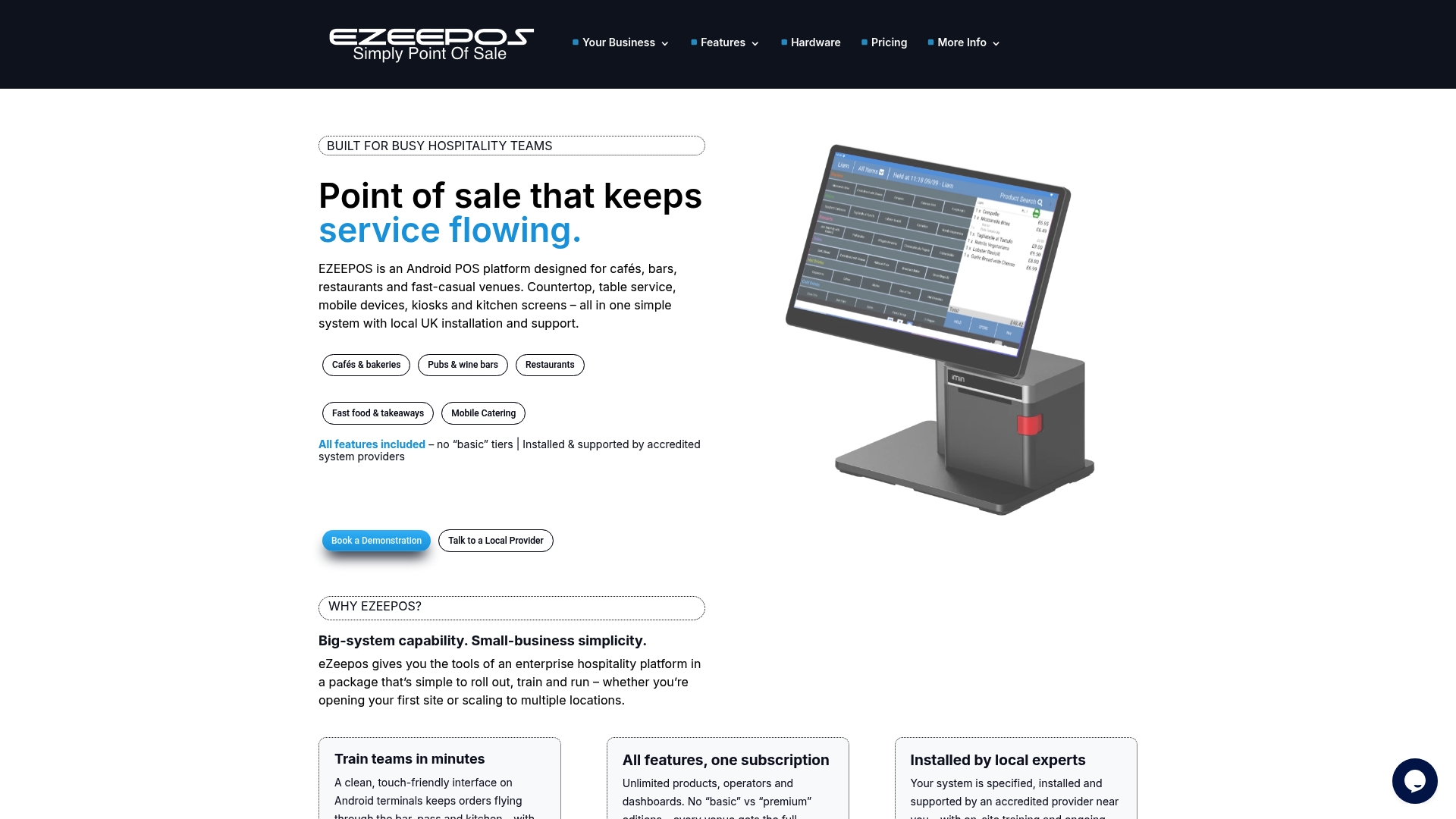
eZeepos delivers exactly that. With local UK installation, accredited support providers, and full feature access without tiered pricing, it is built to keep your venue trading confidently. The platform supports everything from counter service and table ordering to self-service kiosks and kitchen screens, all within a unified POS platform that scales with your business. Explore hospitality POS insights to understand how the right system and the right local partner can transform your day-to-day operations. Get in touch to arrange a tailored demonstration for your venue.
Frequently asked questions
What makes local POS support more reliable than cloud-only systems?
On-premise POS operates independently of internet connectivity, so your venue keeps trading even when your broadband fails. Cloud-only systems depend entirely on a stable connection, which is not always guaranteed in UK hospitality environments.
Can local POS support really reduce downtime costs?
Yes. Proactive monitoring and rapid on-site response reduce unplanned outages by up to 60%, which translates directly into protected revenue and fewer disrupted services.
How does local POS support help optimise hospitality operations?
Beyond repairs, local providers deliver customised training and menu programming that tackle the inefficiencies behind the £2.7 billion annual loss the sector experiences from poor systems and processes.
What should I look for in a local POS partner?
Prioritise guaranteed response times, UK-specific references, staff training provision, and proven customisation for UK VAT and operational workflows. These factors separate a genuine partner from a basic reseller.
Recommended
- Defining Hospitality POS – Why It Matters for UK Venues
- Point of Sale System Explained: Vital Benefits for UK Hospitality
- Why Hospitality POS Matters for UK Restaurants
- Unified POS platforms: 5 benefits for UK hospitality venues
- Local Coffee Supplier Benefits | Devon Roasted | Support Loca
Recent Comments