

TL;DR:
- Effective staff management directly impacts guest satisfaction and venue profitability.
- Using digital tools streamlines scheduling, communication, and performance tracking in hospitality.
- Building a positive team culture and investing in staff development create a competitive advantage.
Staff management in hospitality is far more than drawing up a rota and hoping for the best. Many venue owners treat it as a background task, something to sort out between service rushes and supplier calls. Yet the way you recruit, train, schedule, and support your team shapes every single guest interaction. Get it right and you build a venue that runs smoothly, retains great people, and earns loyal customers. Get it wrong and you face a revolving door of staff, inconsistent service, and shrinking margins. This guide covers practical, evidence-based strategies to help UK hospitality managers take genuine control of their teams.
Table of Contents
- Why staff management matters for UK hospitality venues
- Key components of effective staff management
- Digital tools transforming staff management
- Proven strategies for building a high-performing team
- Why staff management is hospitality’s true competitive edge
- How UK venues can streamline staff management with integrated POS
- Frequently asked questions
Key Takeaways
| Point | Details |
|---|---|
| Staff management drives success | Effective staff management boosts guest experience, loyalty, and profitability for UK hospitality venues. |
| Digital tools make the difference | Modern POS and management software streamline rota planning, communication, and team oversight. |
| Engaged teams perform better | Ongoing support, training, and recognition increase staff motivation and retention. |
| Implementation brings results | Adopting structured management frameworks and digital solutions leads to smoother operations. |
Why staff management matters for UK hospitality venues
The UK hospitality sector is one of the most demanding environments for people management. Demand shifts wildly between a quiet Tuesday lunch and a packed Saturday evening. Roles range from front-of-house servers and bartenders to kitchen porters and delivery drivers, each with different skill sets, contracts, and expectations. Add in seasonal fluctuations, zero-hours arrangements, and a workforce that skews younger and more transient, and you have a genuinely complex management challenge.
These pressures are not abstract. Ineffective staff management directly affects venue profitability and guest satisfaction, creating a chain reaction that touches everything from table turnover to online reviews. A team that feels unsupported delivers inconsistent service. Inconsistent service drives negative feedback. Negative feedback reduces bookings. It really is that direct.
UK hospitality also faces a persistent staffing crisis. According to UKHospitality, the sector has consistently reported vacancy rates well above the national average, with tens of thousands of unfilled roles at any given time. Venues that invest in managing staff efficiency gain a measurable edge simply by holding onto the people they already have.
“The venues that outperform their competitors are rarely the ones with the fanciest fit-out. They are the ones where every member of staff knows their role, feels valued, and has the tools to do their job well.”
Poor staff management creates a cascade of consequences that compound quickly:
- Higher recruitment and training costs as turnover accelerates
- Inconsistent guest experiences that damage brand reputation
- Compliance risks around working time regulations and pay records
- Lower team morale, which feeds further turnover
- Reduced upselling and service quality during peak periods
Understanding these risks is the first step. Knowing how to address them systematically is where most venues need support. Exploring hospitality technology examples shows how forward-thinking venues are already closing this gap.
Now that we have addressed why staff management cannot be overlooked, let us define what effective staff management looks like in a modern hospitality setting.
Key components of effective staff management
Effective staff management is not a single action. It is a set of interlocking practices that, when working together, create a team that performs consistently and grows over time. The core components are recruitment and onboarding, training, scheduling, communication, staff engagement, and performance reviews.
Recruitment sets the foundation. Hiring for attitude and training for skill is a well-worn phrase in hospitality, but it holds up. A candidate who is genuinely enthusiastic about service will outperform a technically skilled but disengaged one almost every time. Structured onboarding, with clear expectations and a buddy system, reduces early drop-off significantly.
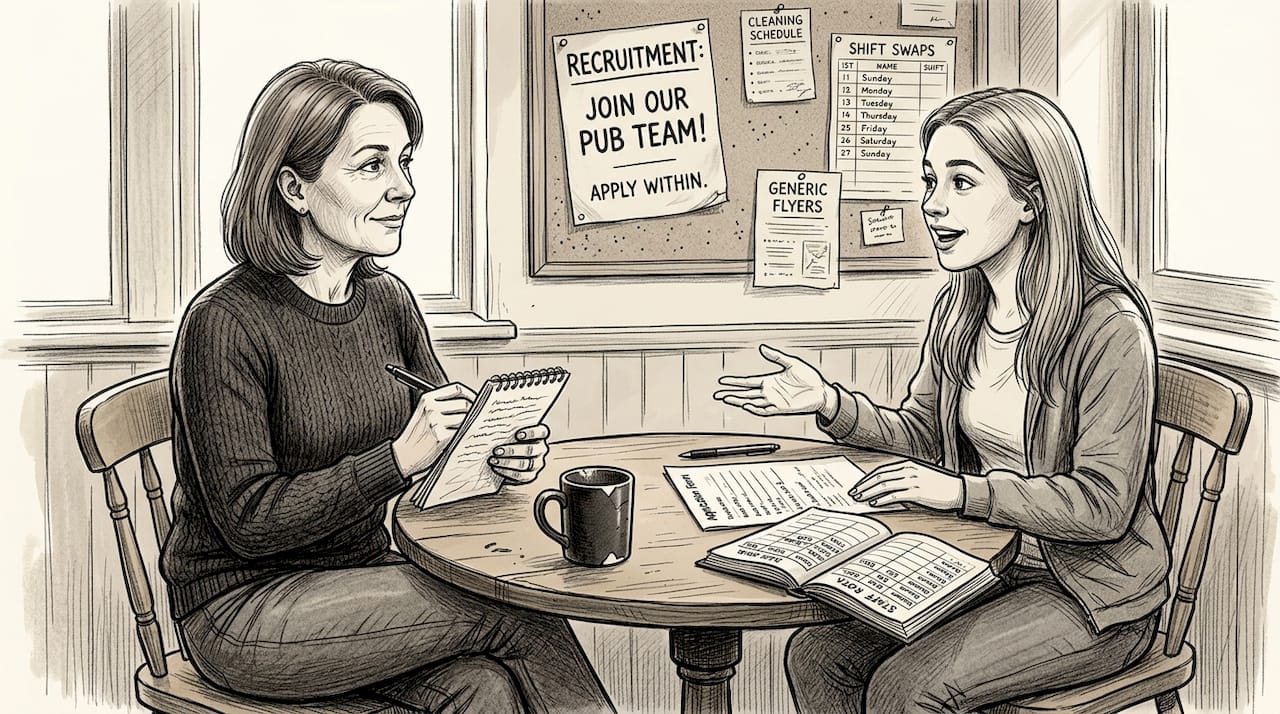
Scheduling is where many venues lose ground. Digital tools can streamline rota creation and communication across teams, replacing the chaos of group chats and paper sheets with clear, accessible schedules. When staff know their shifts in advance, they plan better, show up more reliably, and feel more respected.
| Approach | Traditional management | Tech-supported management |
|---|---|---|
| Rota creation | Manual, paper or spreadsheet | Automated, cloud-based |
| Communication | Verbal or group chat | Centralised app or POS |
| Performance tracking | Informal or annual | Ongoing, data-driven |
| Training records | Paper files | Digital, searchable |
| Compliance monitoring | Ad hoc | Automated alerts |
Structured performance reviews do not need to be formal or intimidating. A simple monthly check-in, focused on what is going well and where support is needed, builds trust and surfaces problems before they become resignations. Here is a practical approach:
- Set clear, measurable expectations during onboarding
- Schedule brief monthly one-to-ones with every team member
- Use data from your POS or scheduling system to ground the conversation
- Celebrate specific wins, not just general praise
- Agree on one development goal for the next period
Pro Tip: Ask your team what would make their shifts easier. The answers are often simple and inexpensive to act on, and the act of asking itself boosts engagement considerably.
For more structured approaches, staff management system tips offer practical frameworks that work across different venue types.
With a clear understanding of the components, it is important to know which tools can help you implement these strategies effectively.
Digital tools transforming staff management
The right digital tools do not replace good management. They free managers up to actually do it. When you are not manually calculating hours or chasing people about shift swaps, you have time to coach, motivate, and develop your team.
Key tools worth considering include smart scheduling platforms, time-tracking software, mobile communication apps, and integrated POS systems with built-in staff management features. POS systems with staff management features can reduce rota errors and free managers’ time, turning what was once a two-hour weekly task into a fifteen-minute one.
| Feature | Basic scheduling tool | Integrated POS system |
|---|---|---|
| Rota creation | Yes | Yes |
| Time and attendance | Sometimes | Yes |
| Sales performance by staff | No | Yes |
| Payroll export | Sometimes | Yes |
| Real-time reporting | No | Yes |
The signs that your venue would benefit from digital staff tools are often hiding in plain sight:
- Managers spending more than two hours per week on scheduling
- Frequent missed shifts or last-minute cover requests
- No visibility of individual staff performance during service
- Payroll errors or disputes over hours worked
- New staff taking longer than two weeks to feel confident in their role
Exploring the types of hospitality POS available helps you match the right system to your venue’s specific service style, whether that is table service, counter service, or a mix of both.
Pro Tip: When selecting a digital tool, involve at least one team member from the floor in the decision. Their buy-in during selection makes adoption far smoother, and they will often spot practical issues that managers miss.
Linking your scheduling and time-tracking tools to your back office creates a single source of truth for labour costs, hours worked, and team performance, making reporting straightforward and accurate.
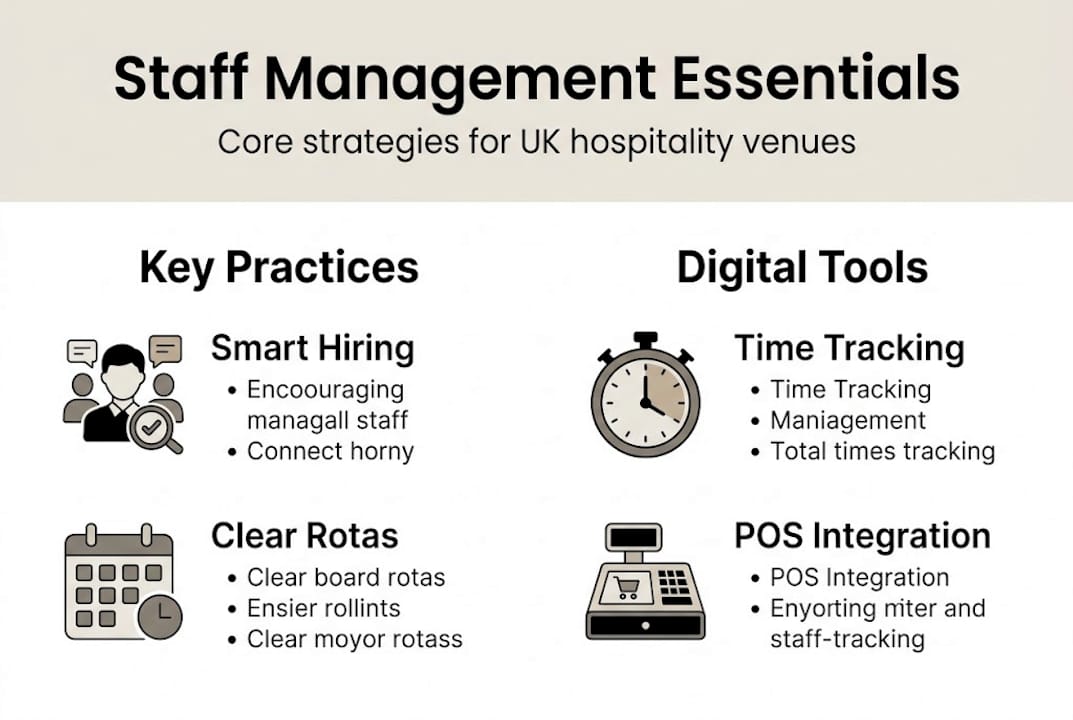
Once the tools are in place, the challenge is maximising their impact with smart, practical strategies.
Proven strategies for building a high-performing team
Tools and processes only go so far. The culture you build around them is what determines whether your team genuinely performs or simply goes through the motions. High-performing hospitality teams share a few consistent traits: they feel accountable, they feel recognised, and they see a future at your venue.
Well-supported staff are more likely to stay and deliver exceptional guest service, which directly reduces the cost and disruption of turnover. Cross-training is one of the most underused tools for achieving this. When a server understands basic bar work, or a kitchen porter can step in as a runner during a rush, your team becomes genuinely resilient rather than fragile.
“Guest satisfaction scores in venues with structured staff development programmes consistently outperform those without, often by a significant margin.”
Building a culture of accountability and recognition does not require a large budget. Follow these steps:
- Define clear standards for every role, written down and accessible
- Recognise great performance publicly and specifically, not just in private
- Address underperformance quickly and constructively, not punitively
- Create a visible progression pathway, even in small venues
- Review team culture quarterly, not just when something goes wrong
Low-cost initiatives that genuinely lift morale include:
- Shared pre-shift meals or team briefings that build camaraderie
- Staff suggestion boxes with visible follow-through on ideas
- Flexible shift swapping with manager approval built into your scheduling tool
- Celebrating work anniversaries and personal milestones
- Honest, two-way feedback rather than one-directional instruction
Connecting good inventory management to your wider operations also reduces the stress your team faces during service, because they are not scrambling for stock or guessing what is available.
Now that the key strategies and tools are clear, let us consider what most advice leaves out about staff management in the hospitality sector.
Why staff management is hospitality’s true competitive edge
Most conversations about competitive advantage in hospitality focus on location, concept, or technology investment. These matter, but they are visible and replicable. A competitor can open nearby, copy your menu, or install the same POS system. They cannot easily replicate the culture you have built with your team.
The venues we see consistently outperforming in the UK are not always the ones with the biggest budgets. They are the ones where managers treat staff management as a strategic priority rather than an administrative chore. They invest time in their people before they invest money in their fit-out. The compounding returns are remarkable. Lower turnover means lower recruitment costs. Better-trained staff means higher average spend per cover. Engaged teams mean fewer service failures and stronger reviews.
Most guides focus on the mechanics: rotas, reviews, compliance. What they underplay is the emotional intelligence required to manage a diverse, often pressured hospitality team well. Understanding what motivates your staff individually, not as a group, is where the real gains are. Explore how UK hospitality innovation is being driven by people-first thinking, not just technology.
Pro Tip: Spend one shift per month working alongside your team rather than managing from a distance. The insights you gain about daily friction points are worth more than any survey.
How UK venues can streamline staff management with integrated POS
Putting these strategies into practice is far easier when your technology works with you rather than against you.
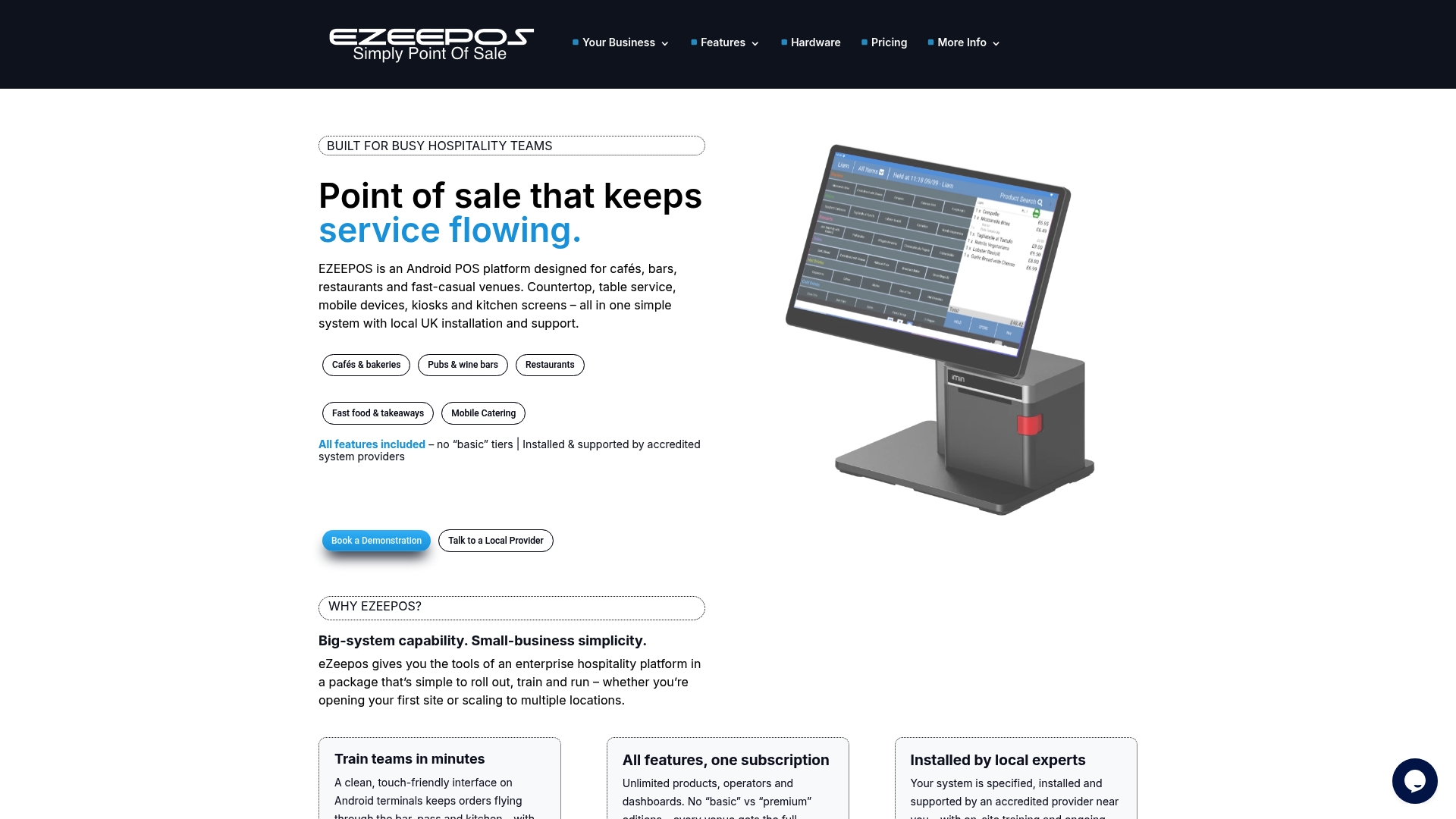
An integrated POS system for UK hospitality brings scheduling, time tracking, sales performance, and reporting into one place, giving managers a clear picture of how their team is performing without hours of manual admin. At ezeepos.co.uk, we work with UK venues to implement POS solutions that genuinely simplify staff management from day one. Whether you run a busy café, a multi-room bar, or a fast-casual restaurant, our systems are built for the realities of UK hospitality. Explore efficient POS operations or get in touch with our team for tailored advice on the right setup for your venue.
Frequently asked questions
What is the most common staff management mistake in hospitality?
Relying solely on paper rotas and verbal communication leads to confusion, poor accountability, and coverage gaps. Manual scheduling causes rota errors and missed shifts that digital systems prevent reliably.
How can digital tools help manage hospitality staff?
Digital tools streamline rota creation, track hours, centralise communication, and provide performance insights that paper systems simply cannot match. Digital software simplifies staff scheduling, tracking, and reporting for hospitality venues of all sizes.
Which staff management tasks benefit most from automation?
Rota creation, availability tracking, payroll calculations, and shift swaps are made easier and more accurate with automation. Automated staff management reduces errors and saves managers significant time each week.
What are signs my venue needs better staff management systems?
High turnover, frequent rota disputes, and inconsistent service quality signal it is time to upgrade your approach. High turnover often indicates underlying staff management issues that better systems can address directly.
Can integrated POS solutions help with staff management?
Yes, modern POS systems come with built-in staff management features to automate scheduling and reporting in one platform. POS solutions simplify staff scheduling and performance tracking without requiring separate software subscriptions.
Recent Comments