
TL;DR:
- Technology adoption in UK hospitality improves cost efficiency, guest experience, and operational insight.
- AI, automation, and unified POS systems deliver measurable benefits even for small independent venues.
- Success relies on setting goals, staff involvement, and incremental implementation rather than immediate perfection.
Technology is reshaping UK hospitality faster than most venue owners realise, and the benefits are no longer reserved for large hotel chains or national restaurant groups. From AI-powered maintenance systems delivering 35% cost reductions to self-service kiosks cutting queue times in independent cafés, the return on investment is tangible and achievable at almost any scale. If you manage a bar, restaurant, café, or any other hospitality venue in the UK, 2026 is the year to stop watching from the sidelines. This guide breaks down the most important technology trends shaping the industry, explains how each one works in practice, and gives you clear, actionable steps to move forward with confidence.
Table of Contents
- Setting the stage: Why technology matters more in 2026
- Top hospitality technology trends shaping UK venues
- AI and automation: How smart tech reduces costs and improves service
- Unified POS and mobile ordering: Enhancing the guest journey
- A real-world take: What we’ve learnt about tech adoption in UK hospitality
- Take your venue to the next level with the right technology
- Frequently asked questions
Key Takeaways
| Point | Details |
|---|---|
| AI reduces operating costs | AI-driven maintenance and automation cut costs dramatically for UK venues. |
| Unified POS boosts efficiency | Modern POS platforms streamline service and improve both operations and guest satisfaction. |
| Incremental upgrades work best | Small, manageable tech changes deliver faster, more sustainable results than major overhauls. |
| Smart tech is accessible | Even smaller venues can now afford and adopt leading-edge hospitality technology. |
Setting the stage: Why technology matters more in 2026
The pressure on UK hospitality venues has never been greater. Staff shortages continue to bite, energy and food costs remain elevated, and guests now expect seamless, personalised experiences as standard. These are not temporary problems. They are structural shifts that make technology adoption less of a competitive advantage and more of a survival strategy.
The good news is that the evidence for investment is compelling. Hotels deploying AI-powered computerised maintenance management systems have recorded 35% maintenance savings alongside dramatically lower complaint volumes. Those results translate directly to the bottom line, and they are not confined to luxury properties with vast budgets.
One of the most persistent myths in the industry is that advanced technology is only accessible to big chains. In reality, cloud-based platforms, modular POS systems, and subscription pricing models have made enterprise-grade tools available to independent operators. A family-run pub in Leeds or a café group in Bristol can now access the same calibre of data, automation, and guest insight that was once the exclusive domain of global brands. You can explore how this plays out across different venue types in these hospitality tech examples.
Here is what UK venue managers consistently highlight as the most valued technology benefits in 2026:
- Reduced labour costs through automation and smarter scheduling
- Real-time inventory visibility to cut waste and over-ordering
- Faster, more accurate guest service at every touchpoint
- Data-driven decisions replacing gut-feel management
- Fewer human errors in order taking, billing, and stock control
“The venues seeing the strongest results in 2026 are not those spending the most on technology. They are the ones deploying the right tools with clear goals and staff buy-in from the outset.”
Understanding where these POS trends 2026 are heading gives you a real strategic edge. Let’s look at the specific trends driving change right now.
Top hospitality technology trends shaping UK venues
The technology landscape in UK hospitality has matured considerably. What were once experimental pilots are now proven, widely adopted solutions. Here are the key trends defining 2026.
| Technology trend | Example application in UK venues |
|---|---|
| AI-powered maintenance | Predictive fault detection in hotel HVAC and kitchen equipment |
| Unified POS platforms | Single system managing orders, payments, and stock across all areas |
| Mobile and table ordering | Guests ordering via QR code or app directly from the table |
| Self-service kiosks | Fast-casual venues reducing counter queues by 40% |
| IoT integration | Smart sensors monitoring fridge temperatures and energy consumption |
| Cloud-based back office | Real-time reporting accessible from any device, anywhere |
These are not distant concepts. Each one is being used today by venues across the UK, from Michelin-starred restaurants to motorway service cafés. The documented impact of AI maintenance tools alone, with 60% fewer complaints reported in detailed case studies, illustrates how quickly results can materialise.
The immediate benefits venue operators report most frequently include:
- Lower operational costs through reduced waste and smarter staffing
- Richer guest data enabling personalised offers and loyalty programmes
- Staff freed from repetitive tasks to focus on guest interaction
- Faster service times and fewer order errors
Before you invest in any new platform, review a proper restaurant tech checklist to ensure you are covering every operational area. It is also worth familiarising yourself with the full range of automation tools available to hospitality operators today, and if any terminology feels unfamiliar, a good tech terminology guide will bring you up to speed quickly.
Pro Tip: Always prioritise scalable solutions that integrate with your existing systems. A brilliant kiosk that cannot talk to your POS creates more problems than it solves.
AI and automation: How smart tech reduces costs and improves service
Artificial intelligence in hospitality is not about robots replacing your front-of-house team. It is about giving your operation the intelligence it needs to run more reliably, with fewer surprises and lower costs.
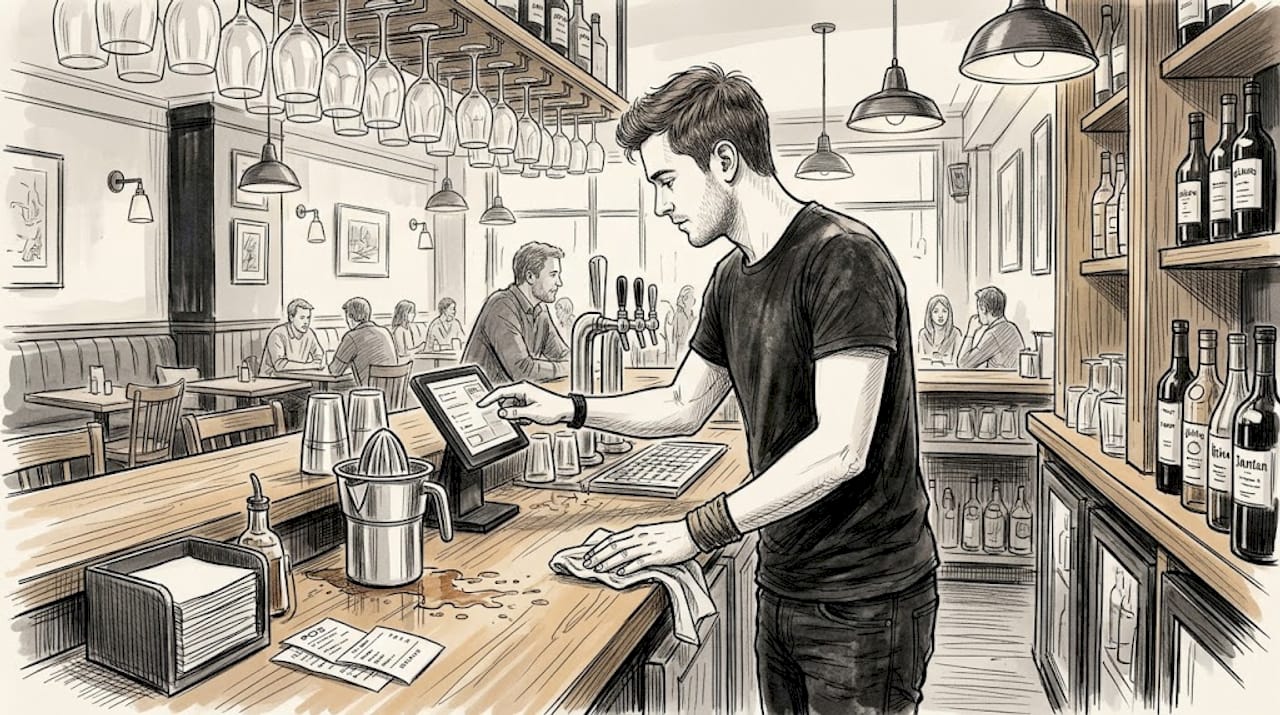
The numbers speak clearly. Case data shows venues using AI-driven maintenance systems achieve 35% lower maintenance costs, primarily because problems are identified before they become expensive failures. A faulty chiller caught early costs a fraction of a full breakdown during a Friday evening service.
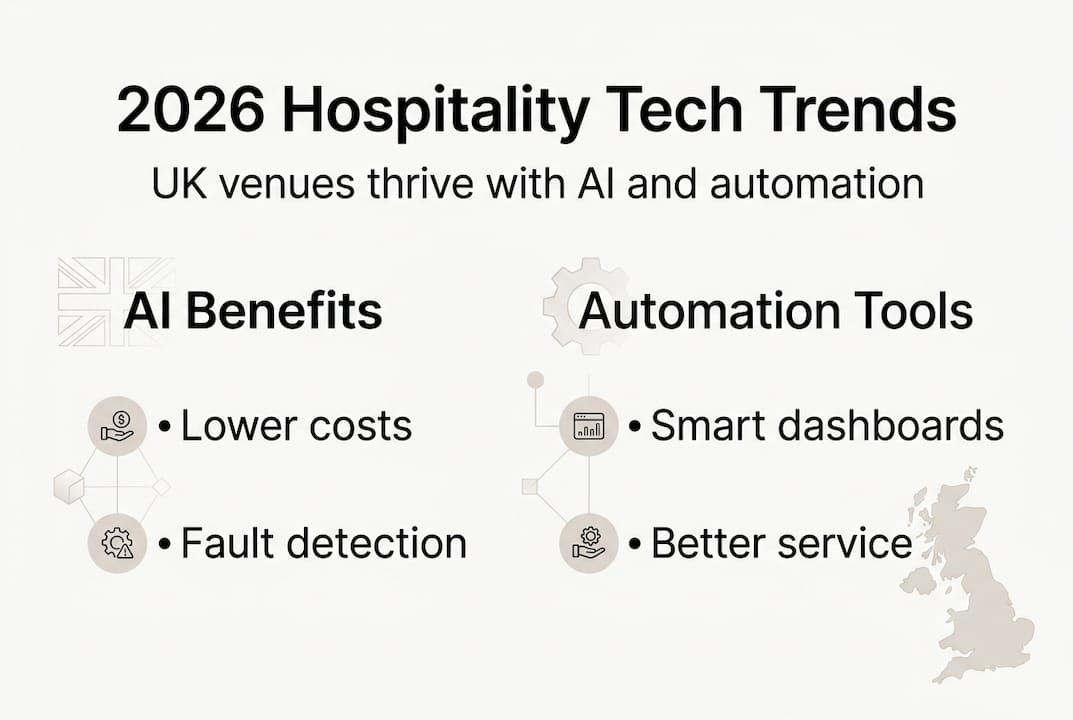
Beyond maintenance, automation is transforming POS, inventory, and guest communication. Automated stock alerts stop over-ordering. Scheduled reporting means managers spend less time compiling spreadsheets and more time on the floor. Automated upselling prompts within ordering platforms increase average transaction values without requiring any additional staff effort.
Here is a simple framework for deploying automation in your venue:
- Audit your pain points. Identify the three areas where your team loses the most time or makes the most errors.
- Research modular solutions. Look for platforms that address those specific issues without requiring a complete system overhaul.
- Pilot with one team or one area. Test the tool in a controlled environment before rolling it out across the venue.
- Measure results consistently. Track the same metrics before and after implementation so you can demonstrate ROI clearly.
- Expand incrementally. Once one automation delivers results, apply the same approach to the next pain point.
The right hospitality automation tools will come with clear analytics built in, so you can see exactly what is working. Pairing these with strong inventory management gives you control over two of your biggest cost centres simultaneously.
Pro Tip: Prioritise systems with smart analytics dashboards. The ability to spot trends over weeks and months is where the real optimisation happens, not just in the initial setup.
Unified POS and mobile ordering: Enhancing the guest journey
The guest experience in 2026 is shaped long before anyone sits down at a table. It begins with how quickly they can order, how accurately that order is fulfilled, and how effortlessly they can pay. Unified POS and mobile ordering are the twin engines driving improvements across all three.
A unified POS system brings sales, inventory, staff management, and reporting into a single platform. Instead of reconciling data from three separate systems at the end of the night, your team works from one real-time source of truth. That consolidation alone reduces errors significantly and gives managers genuine insight into what is selling, when, and at what margin.
| Feature | Traditional POS | Unified or mobile POS |
|---|---|---|
| Order management | Till-based only | Table, counter, kiosk, and mobile |
| Inventory tracking | Manual or separate system | Real-time, integrated |
| Reporting | End-of-day exports | Live dashboards, any device |
| Guest personalisation | Limited | Order history, preferences, loyalty |
| Staff training | System-specific | Single platform, faster onboarding |
Mobile ordering via QR codes or dedicated apps has moved from novelty to expectation. Guests who can order at their own pace, without flagging down a member of staff, consistently report higher satisfaction. For operators, that same mechanism captures accurate order data, reduces miscommunication, and can prompt personalised recommendations automatically.
Practical tips for maximising integration and guest experience:
- Ensure your POS connects directly to your kitchen screens to eliminate paper tickets
- Use guest order data to inform menu decisions and promotional offers
- Choose a platform that supports multiple service modes without requiring separate logins
- Train staff on the full system, not just the functions relevant to their role
Considering a POS system upgrade in 2026? Make sure you also evaluate how your back office efficiency will benefit from the change. The back office is where the data from every transaction is turned into actionable intelligence.
A real-world take: What we’ve learnt about tech adoption in UK hospitality
After working closely with venues across the UK, one pattern stands out more than any other: the biggest barrier to successful technology adoption is not budget. It is expectation management.
Most owners approach a new system expecting an immediate, total transformation. When the first fortnight involves teething issues, some staff resistance, and a learning curve, they conclude the technology has failed. It has not. It is simply behaving like every significant operational change in history.
The venues that achieve the strongest outcomes share three habits. They set specific, measurable goals before they invest. They involve frontline staff in the selection process, so the people using the system daily have genuine ownership of it. And they resist the temptation to implement five new tools simultaneously.
Incremental upgrades consistently outperform wholesale overhauls. One well-integrated change, properly embedded, delivers more lasting value than a complex multi-system rollout that overwhelms the team. If you want a practical starting point, a structured venue tech checklist will help you prioritise the upgrades with the greatest immediate impact for your specific operation.
Take your venue to the next level with the right technology
The trends covered in this article are not theoretical. They are delivering real results for UK hospitality venues right now, and the tools to access them are more practical and affordable than ever before.
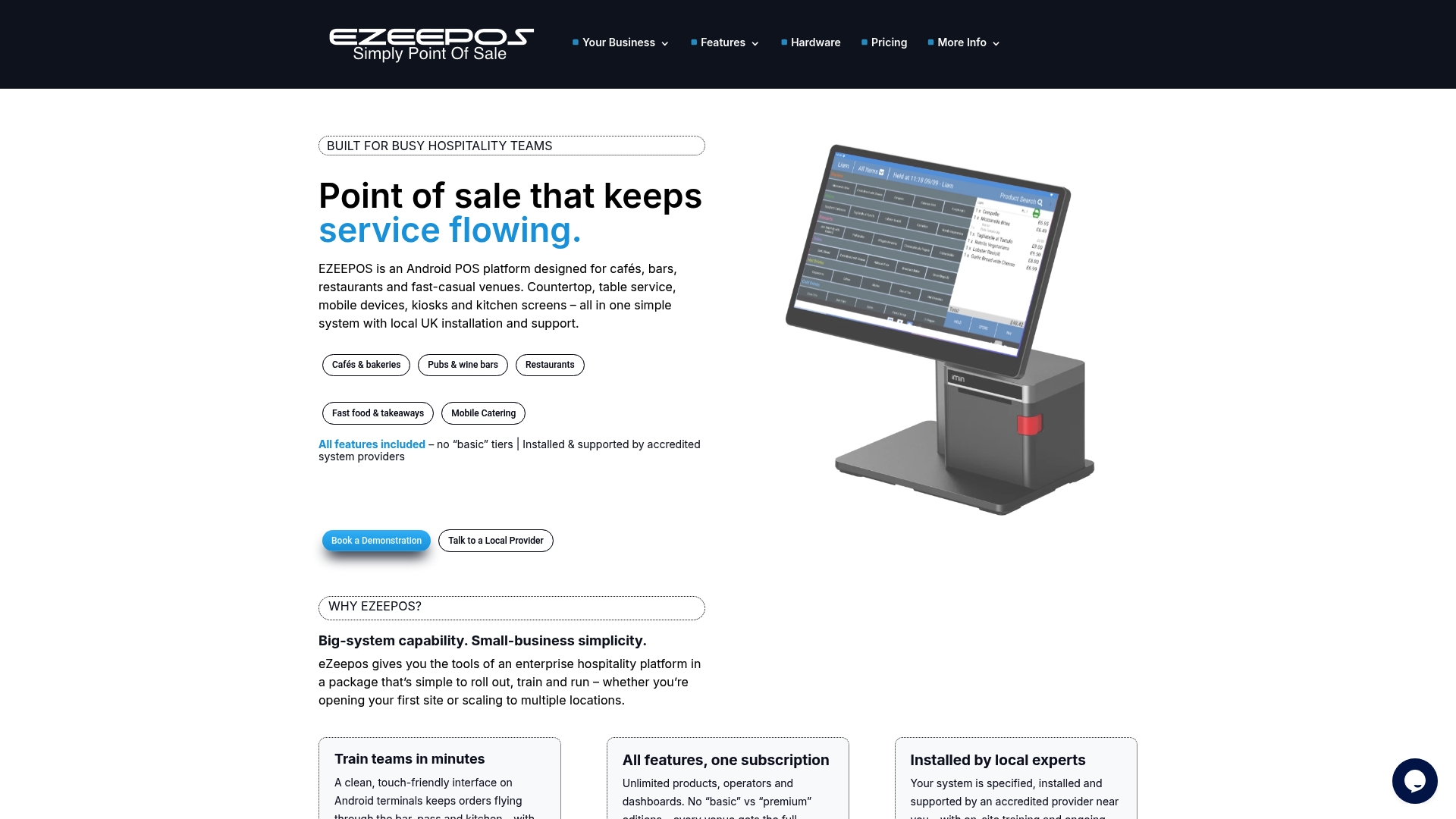
At EZEEPos, we work with cafés, restaurants, bars, and fast-casual venues across the UK to implement hospitality POS systems that are genuinely built for the demands of busy service environments. Our platform covers every service mode, from table ordering to self-service kiosks, with full unified POS benefits and no tiered pricing surprises. Local installation, hands-on training, and ongoing UK-based support mean you are never left to figure it out alone. Visit EZEEPos to explore our solutions or get in touch to arrange a demonstration tailored to your venue.
Frequently asked questions
What is the biggest ROI technology for UK hospitality venues in 2026?
AI-driven maintenance platforms deliver the greatest measurable return, with documented results including 35% cost reduction and significantly fewer guest complaints compared to venues using reactive maintenance alone.
How much does it cost to implement smart technology in a small UK venue?
Modular and subscription-based solutions mean many meaningful upgrades start from a few hundred pounds per month, making enterprise-grade tools genuinely accessible to independent operators.
Are unified POS systems really suitable for independent restaurants or cafés?
Absolutely. Modern unified POS platforms are designed for operators of all sizes, and independent venues often see the sharpest efficiency gains because they are replacing fragmented, manual processes with a single, integrated system.
How quickly can UK venues see tangible benefits from automation?
Most venues notice measurable service and staff improvements within the first few weeks of deployment, with broader cost savings, consistent with the 60% complaint reduction seen in documented case studies, becoming clear within a few months.
Recent Comments