
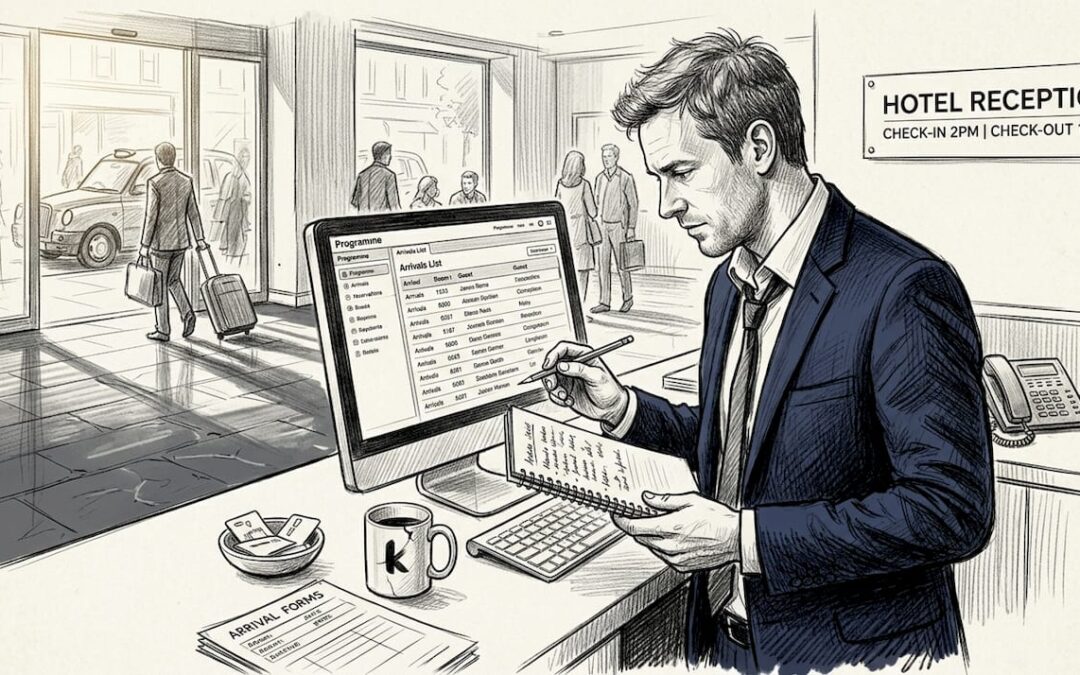
Choosing the right automation tools for your hospitality venue can feel overwhelming. With countless platforms promising efficiency gains and improved guest experiences, UK venue owners face a difficult selection process. This article cuts through the noise by presenting evaluated examples of leading hospitality automation tools, clear selection criteria, and practical guidance tailored specifically for UK cafés, restaurants, hotels, and quick-service environments. You’ll discover how to match automation solutions to your operational needs, budget, and venue type with confidence.
Table of Contents
- Key takeaways
- How to evaluate hospitality automation tools for UK venues
- Top hospitality automation tools and their features
- Comparing hospitality automation tools: ROI, features and fit
- Which automation tool suits your venue type and budget?
- Discover hospitality automation solutions tailored for UK venues
- Frequently asked questions
Key Takeaways
| Point | Details |
|---|---|
| Evaluation criteria | Assess integration with your existing systems, ROI benchmarks, data security and vendor credibility, ideally using a weighted scoring matrix to compare options. |
| Leading tools and benefits | Guestwise delivers AI powered marketing and guest services with over 30 percent conversion increases through personalised communications. |
| Energy savings payback | Control HQ materially reduces heating energy by around 64 percent and delivers payback in under 18 months for UK hotels. |
| Unified platform and data flow | Mews combines property management and POS for seamless data flow, contributing to 91 percent hotel recommendations. |
How to evaluate hospitality automation tools for UK venues
Selecting automation tools requires a systematic approach focused on your venue’s specific operational challenges. Start by examining integration capabilities with your existing technology stack. For UK venues, targeted automation integrating existing systems prevents costly overhauls and minimises disruption during implementation. A tool that cannot communicate with your current POS, booking system, or inventory management platform creates data silos and manual workarounds that negate efficiency gains.
ROI benchmarks provide essential context for investment decisions. Evaluate realistic benefits rather than vendor promises by examining case studies from similar UK venues. Consider both direct cost savings and indirect benefits like improved guest satisfaction or reduced staff turnover. Data security and vendor credibility matter significantly in hospitality, where customer payment information and personal data require robust protection under UK regulations.
Prioritise automation in specific operational areas where pain points are most acute. Common targets include:
- Reservation management and booking oversight
- Marketing campaigns and guest engagement
- Energy consumption and environmental controls
- Invoice processing and financial reconciliation
- Point of sale operations and payment processing
- Kitchen order management and fulfilment tracking
Ease of use and customer support quality determine whether your team will actually adopt the technology. Request demonstrations, trial periods, and references from current UK customers. Verify that the vendor provides local support during UK business hours rather than offshore call centres with limited hospitality expertise.
Pro Tip: Create a weighted scoring matrix listing your top five operational priorities, then rate each automation tool against these criteria before making investment decisions.
Top hospitality automation tools and their features
Guestwise delivers AI-powered marketing automation and guest services specifically designed for hospitality venues. The platform automates marketing campaigns, guest engagement, and concierge services with 30%+ conversion increases by personalising communications based on guest preferences and behaviour patterns. Hotels and restaurants use Guestwise to handle enquiries, recommend local attractions, and upsell services without manual intervention. The system learns from each interaction, continuously improving response quality and relevance.
Control HQ tackles energy efficiency through occupancy-based heating control systems. The technology saves 64% heating energy in pilot implementations by adjusting room temperatures based on actual occupancy rather than fixed schedules. Sensors detect when guests enter or leave rooms, triggering immediate heating adjustments that maintain comfort whilst eliminating waste. UK hotels with significant heating costs see payback periods under 18 months, making this amongst the fastest-returning automation investments available.
Mews integrates property management and POS functionality into a unified platform favoured by high-volume venues. The system automates check-ins, payments, and operations with 91% hotel recommendations thanks to its seamless data flow between front desk, restaurant, and back office functions. Guests can check in via mobile apps, order room service through tablets, and settle bills without visiting reception. Staff access real-time inventory, booking, and financial data from any device, enabling informed decisions during busy service periods.

Cevitr Digital Worker automates reservation oversight and finance tasks that typically consume significant administrative time. The platform prevents £400,000 in incorrect commissions by automatically checking booking confirmations against rate agreements and flagging discrepancies before payments are processed. It handles invoice matching, expense categorisation, and compliance checks with accuracy levels exceeding manual processes. Large hotel groups use Cevitr to standardise financial controls across multiple properties whilst reducing back-office headcount requirements.
Each tool targets distinct operational areas:
- Guestwise focuses on revenue generation through enhanced marketing and guest engagement
- Control HQ prioritises cost reduction via energy efficiency improvements
- Mews streamlines operations by connecting previously separate systems
- Cevitr ensures financial accuracy and prevents costly booking errors
When evaluating these platforms, consider how their core strengths align with your venue’s most pressing challenges. Quick service chains require different automation priorities than fine dining establishments, making feature relevance more important than feature quantity.
Comparing hospitality automation tools: ROI, features and fit
ROI performance varies significantly across automation categories. AI concierge systems deliver 20x returns whilst energy control tools offer fastest payback through measurable utility savings. Guestwise achieves the highest conversion uplift amongst AI marketing platforms, with some UK venues reporting 35% increases in direct booking revenue within six months of implementation. The platform’s ability to personalise guest communications at scale creates compounding benefits as customer databases grow.
Control HQ provides the most predictable ROI through quantifiable energy savings. Venues with high heating costs and variable occupancy patterns see returns within 12 to 18 months, after which the system generates pure profit through reduced utility bills. The technology requires minimal ongoing management once installed, making it particularly attractive for operators seeking passive efficiency gains.
| Tool | Primary benefit | Typical ROI timeline | Best venue fit | Integration complexity |
|---|---|---|---|---|
| Guestwise | Marketing automation, 30%+ conversion uplift | 6-12 months | Hotels, restaurants with marketing budgets | Moderate – requires CRM integration |
| Control HQ | Energy savings, 64% heating reduction | 12-18 months | Hotels, large venues with high heating costs | Low – standalone sensors |
| Mews | Operational integration, 91% satisfaction | 8-15 months | High-volume hotels, multi-service venues | High – replaces existing PMS/POS |
| Cevitr | Financial accuracy, prevents £400k errors | 3-9 months | Hotel groups, complex booking operations | Moderate – connects to existing finance systems |
Mews excels in high-volume venues requiring tight coordination between departments. The platform’s unified data model eliminates the manual reconciliation required when separate systems manage bookings, dining, and payments. However, implementation complexity and change management requirements make Mews better suited to established operations with dedicated IT resources rather than independent cafés or small restaurants.
Cevitr delivers exceptional value for venues processing large volumes of bookings with complex commission structures. The platform’s accuracy in identifying rate discrepancies and commission errors provides immediate financial protection that often exceeds the subscription cost. Hotel groups managing relationships with multiple online travel agencies benefit most from Cevitr’s automated oversight capabilities.
Selection criteria should prioritise:
- Alignment between tool strengths and your operational weaknesses
- Integration requirements matching your technical capabilities
- ROI timelines fitting your investment horizon
- Vendor support quality and UK market presence
- Scalability as your venue grows or adds locations
Pro Tip: Calculate your current cost of manual processes in staff hours before evaluating automation ROI to establish a realistic baseline for comparison.
Many UK venues achieve best results by combining complementary tools rather than seeking all-in-one solutions. A hotel might deploy Control HQ for energy management, Guestwise for marketing, and maintain existing POS infrastructure rather than forcing every function into a single platform.
Which automation tool suits your venue type and budget?
Hotels with complex booking operations benefit most from Mews PMS/POS integration or Cevitr’s financial oversight capabilities. These platforms handle the intricate coordination required when managing room inventory, dining reservations, event bookings, and ancillary services simultaneously. Cevitr particularly suits hotel groups where standardised financial controls across multiple properties justify the implementation investment.
Energy-focused venues see fastest returns with Control HQ occupancy-based heating systems. Properties with significant floor space, variable occupancy patterns, and high heating costs achieve payback within 18 months through utility savings alone. The technology requires minimal staff training and operates autonomously once configured, making it ideal for operators prioritising passive efficiency gains over active management tools.
Restaurants and quick-service venues gain substantial value from Guestwise marketing automation combined with robust POS systems. The ability to personalise guest communications, automate booking confirmations, and drive repeat visits through targeted campaigns generates measurable revenue increases. Streamlined POS operations remain foundational, with automation layered on top rather than replacing core transaction processing.
Start small with targeted automation before scaling to comprehensive systems. Cautious adoption due to data concerns suggests phased implementation focusing on specific pain points first. Prove ROI in one operational area before expanding automation across your entire venue. This approach minimises risk whilst building staff confidence in new technologies.
Budget considerations should account for:
- Initial licensing or purchase costs
- Implementation and integration expenses
- Ongoing subscription or maintenance fees
- Staff training requirements and temporary productivity dips
- Potential hardware upgrades needed for compatibility
Many vendors offer tiered pricing based on venue size, transaction volumes, or feature requirements. Independent cafés might access enterprise-grade automation through scaled-down packages, whilst large hotel groups negotiate volume discounts across multiple properties. Request detailed pricing including all implementation costs before committing to avoid budget surprises during deployment.
Discover hospitality automation solutions tailored for UK venues
Implementing the right automation tools transforms hospitality operations, but selecting platforms that integrate seamlessly with your existing infrastructure remains essential. EZEEPos provides comprehensive POS solutions designed specifically for UK hospitality venues, from independent cafés to multi-site restaurant groups. The platform supports various service styles including table ordering, counter service, self-service kiosks, and mobile catering whilst maintaining unified reporting and control.
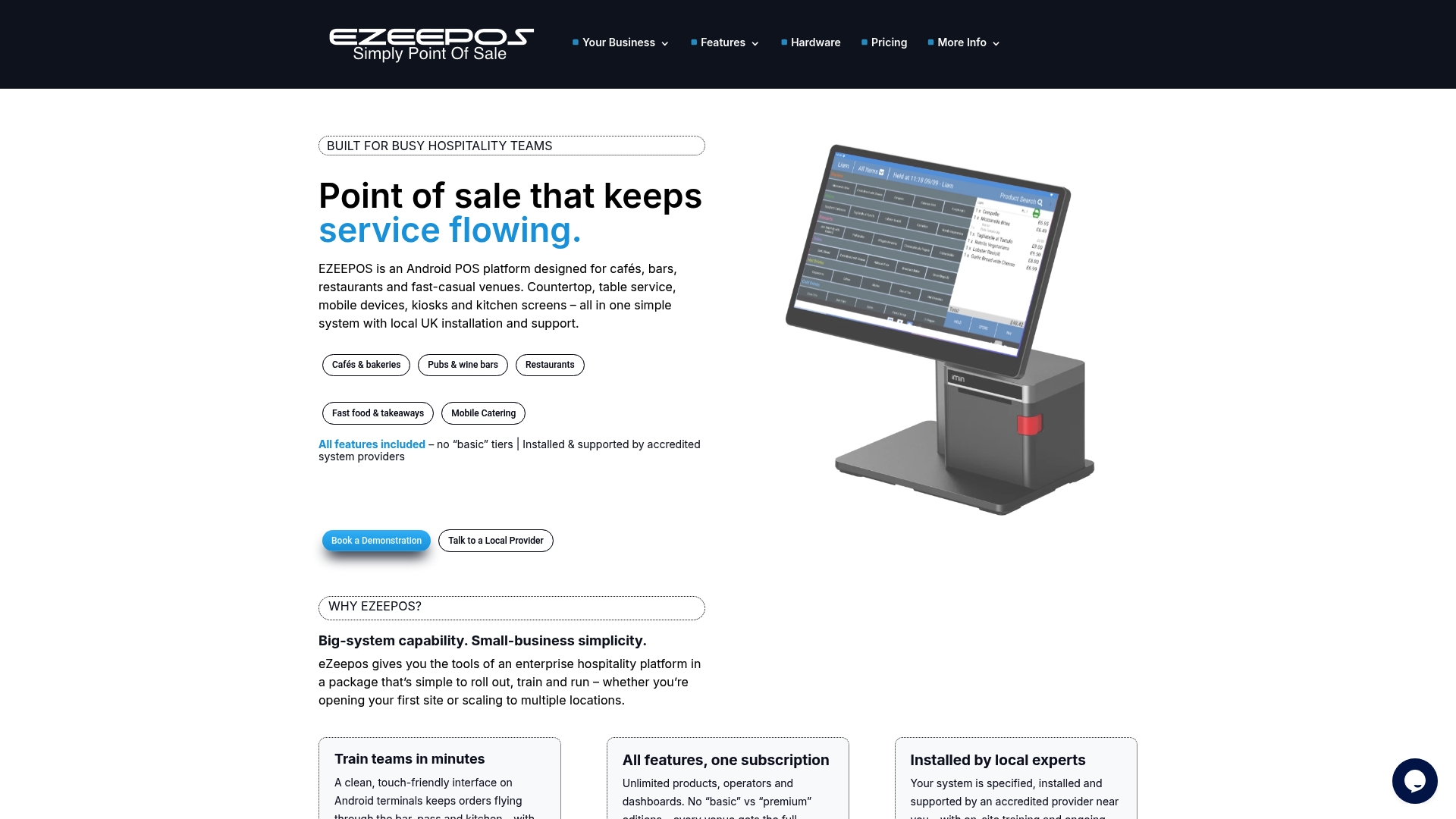
Our inventory management resources help you optimise stock control and reduce waste, whilst quick service chain solutions deliver the speed and reliability high-volume venues demand. Every system includes local UK installation and ongoing support from accredited providers who understand hospitality operations. Discover how integrated technology can enhance efficiency, improve guest experiences, and provide the operational foundation for successful automation implementation.
Frequently asked questions
What are hospitality automation tools?
Hospitality automation tools are software platforms and systems that handle repetitive operational tasks without manual intervention. They manage functions like booking confirmations, marketing campaigns, energy controls, payment processing, and financial reconciliation. These tools improve efficiency, reduce errors, and free staff to focus on guest service rather than administrative work.
How do I choose the right automation tool for my venue?
Assess your venue’s size, service style, and operational complexity first. Identify your most time-consuming manual processes or costliest inefficiencies. Evaluate tools based on integration with existing POS systems, realistic ROI timelines, and vendor support quality. Start with targeted automation addressing specific pain points before expanding to comprehensive platforms.
Can automation tools improve energy efficiency in hospitality venues?
Automation significantly reduces energy costs through intelligent control systems. Occupancy-based heating controls save up to 64% energy by adjusting temperatures based on actual room usage rather than fixed schedules. These systems offer quick payback periods whilst reducing carbon footprints, making them amongst the most financially attractive automation investments for UK venues.
What are the common challenges when implementing hospitality automation?
Data security concerns slow adoption as venues worry about customer information protection and system reliability. AI tools risk over-promising without strict operational procedures, creating gaps between vendor claims and actual performance. Staff training requires dedicated time and resources to ensure smooth transitions. Integration complexity with legacy systems can extend implementation timelines and increase costs beyond initial estimates.
How long does it take to see ROI from hospitality automation?
ROI timelines vary by tool type and venue characteristics. Energy control systems deliver returns within 12 to 18 months through measurable utility savings. Marketing automation platforms show conversion improvements within 6 to 12 months as guest databases grow. Financial oversight tools can prevent costly errors immediately, sometimes covering annual costs with a single caught discrepancy. Operational integration platforms require 8 to 15 months as efficiency gains compound across multiple departments.
Recommended
- Examples of hospitality technology to boost UK venues in 2026
- 7 Examples of Hospitality Software for UK Cafés and Restaurants
- How to Set Up Mobile POS for UK Hospitality Venues
- Restaurant technology checklist for UK venues 2026
- Restaurant Reservations & Table Management App | MyMenu | MyResApp | Restaurant Booking
Recent Comments