
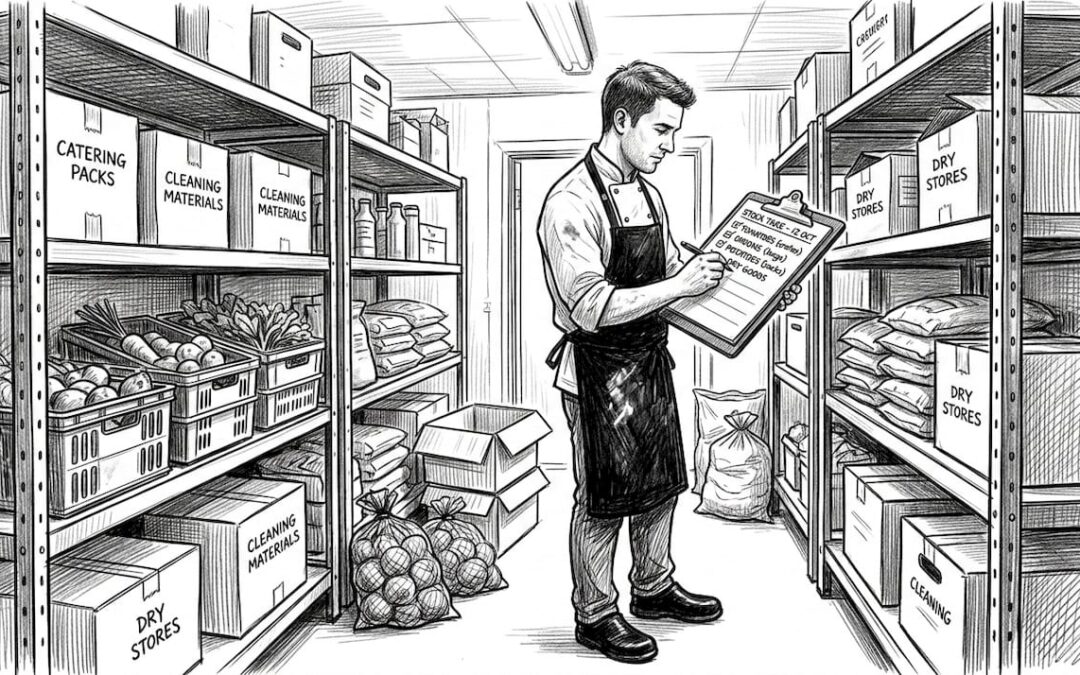
Many hospitality venue owners believe inventory management is simply about counting stock at the end of each week. This misconception overlooks the powerful role that strategic inventory control plays in driving profitability, reducing waste, and enhancing guest satisfaction. Effective inventory management transforms your venue’s operations by connecting every aspect of your supply chain to real-time sales data, enabling smarter decisions that directly impact your bottom line. This guide explores the comprehensive benefits of inventory management for UK hospitality venues and shows you how integrated systems can revolutionise your approach to stock control, ordering, and operational efficiency.
Table of Contents
- Key takeaways
- Why inventory management is essential for UK hospitality venues
- Core benefits of inventory management in hospitality operations
- How integrated POS systems enhance inventory management efficiency
- Practical steps for implementing effective inventory management in your venue
- Discover eZeePOS solutions for streamlined inventory management
- Frequently asked questions
Key Takeaways
| Point | Details |
|---|---|
| Real time stock visibility | Integrating the POS with inventory tracking provides live stock data to support data driven ordering decisions. |
| Waste reduction potential | Effective inventory control can cut waste by up to 25 per cent in hospitality venues. |
| Automated reorder alerts | POS linked alerts automate reorders based on actual consumption rather than estimates. |
| Weekly physical audits | Regular counts verify system accuracy and help identify losses from spillage theft or incorrect portioning. |
| Perishable stock rotation | Managing use by dates and rotating stock reduces waste and protects quality. |
Why inventory management is essential for UK hospitality venues
Hospitality venues face unique inventory challenges that set them apart from retail businesses. You’re managing perishable goods with short shelf lives, coordinating multiple suppliers with varying delivery schedules, and responding to fluctuating demand patterns that shift by day, season, and even weather conditions. Without proper inventory management, these complexities quickly translate into financial losses.
Common issues plague venues that rely on outdated or manual inventory methods. Overstocking ties up capital in ingredients that may spoil before use, whilst stockouts disappoint customers and damage your reputation. Inaccurate data leads to poor purchasing decisions, and the time spent on manual counts diverts staff from revenue-generating activities. These problems compound over time, creating a cycle of inefficiency that’s difficult to break without systematic intervention.
Effective inventory management balances supply with demand to minimise loss whilst maintaining the availability guests expect. Modern approaches integrate your POS system with inventory tracking, creating a closed loop where every sale automatically updates stock levels. This real-time visibility eliminates guesswork and provides the foundation for data-driven ordering decisions.
Managing perishable goods requires particular attention in hospitality settings. Fresh produce, dairy, meat, and prepared items have strict use-by dates that demand careful rotation and monitoring. Coordinating deliveries from multiple suppliers adds another layer of complexity, especially when each vendor operates on different schedules and minimum order requirements. Without a unified system tracking all these moving parts, waste becomes inevitable.
POS integration transforms inventory management from a reactive task into a proactive strategy. When your point of sale system communicates directly with inventory software, you gain instant visibility into usage patterns, identify fast-moving items, and spot anomalies that might indicate theft or wastage. This connection enables automated reorder alerts based on actual consumption rather than estimates.
Pro tip: Conduct weekly inventory audits even with digital tracking systems in place. Physical counts verify system accuracy, uncover discrepancies early, and help identify unseen losses from spillage, theft, or incorrect portioning that automated systems might miss.
Core benefits of inventory management in hospitality operations
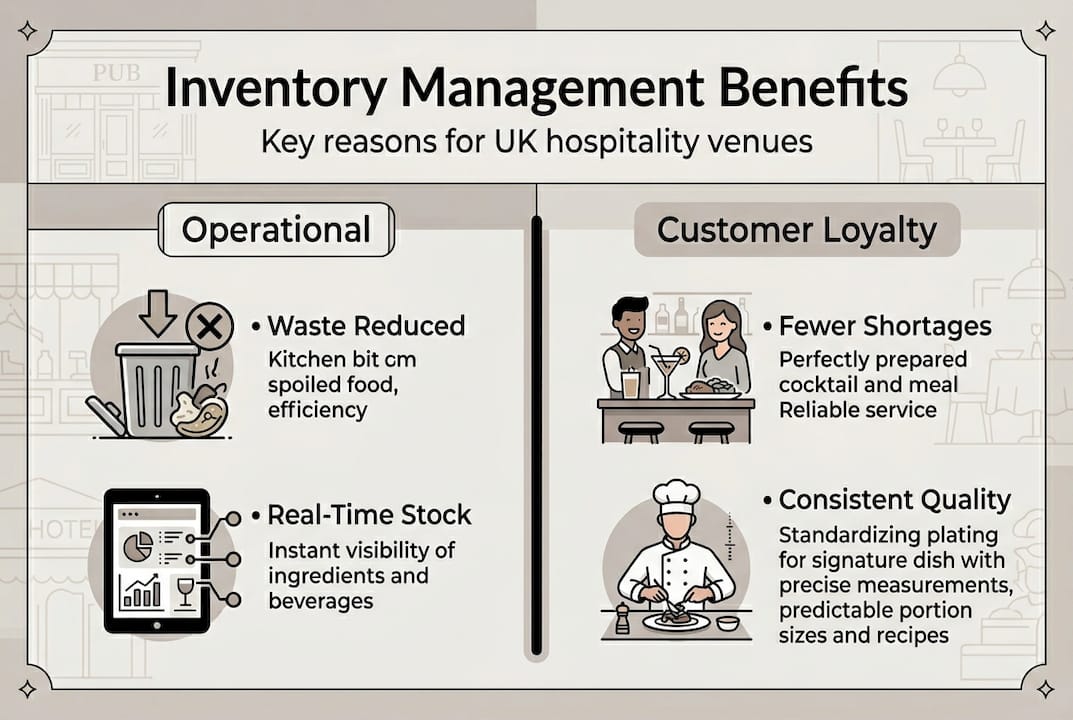
Waste reduction stands as the most immediate and measurable benefit of effective inventory management. Research shows that proper inventory control can reduce waste by up to 25% in hospitality venues. This dramatic improvement comes from better demand forecasting, optimised ordering quantities, and systematic rotation practices that ensure older stock gets used first. The environmental benefits align with growing consumer expectations for sustainability, whilst the cost savings flow directly to your bottom line.
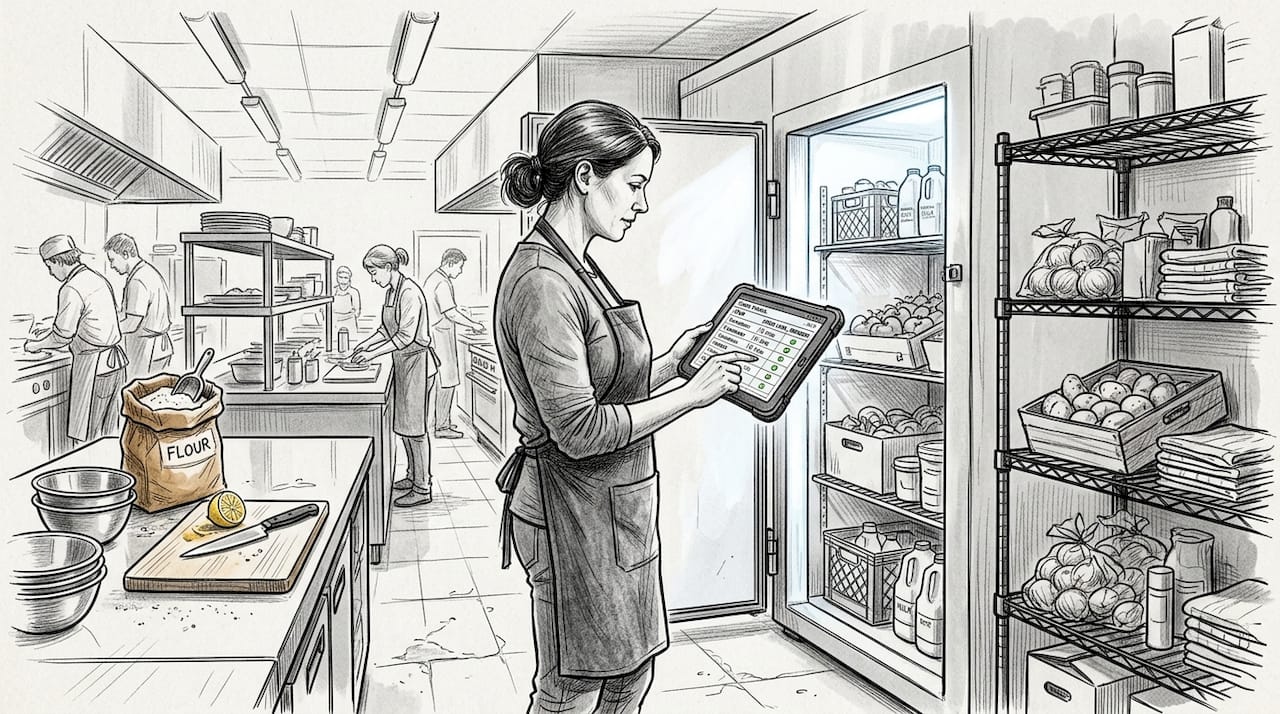
Accurate stock levels prevent the dual problems of over-ordering and emergency purchases. When you maintain optimal inventory based on actual usage patterns, you avoid tying up capital in excess stock that may deteriorate. Equally important, you eliminate the need for expensive last-minute orders from alternative suppliers who charge premium prices for immediate delivery. This balance requires visibility into current stock levels, historical usage data, and upcoming demand forecasts.
Improved product availability directly enhances guest satisfaction and drives repeat business. Nothing frustrates customers more than discovering their preferred menu item is unavailable. Consistent availability builds trust and encourages return visits, whilst stockouts create negative experiences that guests share through reviews and word of mouth. Proper inventory management ensures you can reliably deliver the experience guests expect.
Inventory data informs strategic decisions beyond simple stock control. Menu engineering uses ingredient costs and usage patterns to identify high-margin items worth promoting and low-performers that drain resources. Pricing strategies become more accurate when you understand true ingredient costs including waste factors. Seasonal menu planning benefits from historical data showing which items sell well during different periods.
Key operational advantages include:
- Reduced staff time spent on manual counting and reconciliation tasks
- Earlier detection of theft, spillage, or portioning inconsistencies
- Better cash flow management through optimised purchasing schedules
- Improved supplier negotiations based on accurate usage data
- Enhanced ability to cost menu items accurately including waste factors
Venues implementing comprehensive inventory management systems report waste reductions of 25% alongside significant improvements in stock accuracy and ordering efficiency.
How integrated POS systems enhance inventory management efficiency
The connection between your POS and inventory systems creates a powerful automation loop that eliminates manual data entry and reduces human error. Every transaction at the point of sale triggers automatic stock deductions based on recipe specifications, providing real-time visibility into current inventory levels. This integration means your stock counts update continuously throughout service rather than requiring end-of-day reconciliation.
Unified POS platforms deliver significant operational benefits by connecting front-of-house sales with back-office inventory management. When these systems work together seamlessly, you gain a complete picture of your operation from ingredient purchasing through to customer payment. This visibility enables smarter decisions across every aspect of your business.
| Feature | Manual inventory | Integrated POS inventory |
|---|---|---|
| Stock updates | End of day or weekly | Real-time with each sale |
| Accuracy | 75-85% typical | 95-98% typical |
| Time required | 4-8 hours weekly | 30-60 minutes weekly |
| Ordering basis | Estimates and memory | Actual usage data |
| Variance detection | Discovered during counts | Immediate alerts |
| Recipe costing | Manual calculation | Automatic updates |
Real-time stock alerts prevent supply shortages before they impact service. When inventory levels drop below predetermined reorder points, automated notifications prompt timely ordering. These alerts account for supplier lead times, ensuring new stock arrives before you run out. The system can also flag unusual consumption patterns that might indicate portion control issues or theft.
Cloud-based back office access extends inventory management beyond your physical venue. You can monitor stock levels, review usage reports, and approve purchase orders from anywhere with internet access. This flexibility proves invaluable for multi-site operators managing inventory across several locations, but single-venue owners also benefit from the ability to handle administrative tasks outside busy service periods.
Integration with supplier systems takes efficiency further by enabling electronic ordering directly from your inventory platform. When stock reaches reorder points, the system can generate purchase orders automatically or with single-click approval. Some advanced integrations even transmit orders directly to supplier systems, eliminating phone calls and email exchanges whilst creating clear audit trails.
Pro tip: Choose a POS system designed specifically for hospitality rather than adapting retail solutions. Hospitality-specific platforms understand recipe management, ingredient tracking, and the complexity of managing both food and beverage inventory with different measurement units and shelf lives.
Practical steps for implementing effective inventory management in your venue
Begin with a comprehensive stock audit to establish an accurate baseline for your inventory system. Count every item in storage areas, walk-in fridges, bar stock, and prep areas, recording quantities and values. This initial audit provides the foundation for all future tracking and reveals discrepancies between assumed and actual stock levels. Many venues discover significant variances during this first count, highlighting problems that have gone unnoticed.
Step-by-step inventory control processes improve tracking accuracy and reduce waste through systematic approaches. Following a structured methodology ensures consistent results and makes it easier to train new staff on inventory procedures. The investment in establishing proper processes pays dividends through reduced losses and better decision-making.
- Conduct your initial full stock audit across all storage locations and categories
- Establish reorder points for each item based on historical sales data and supplier lead times
- Set up recipe specifications in your POS system linking menu items to ingredient quantities
- Create a regular counting schedule with daily spot checks on high-value or fast-moving items
- Implement first-in-first-out (FIFO) rotation procedures with clear labelling and dating systems
- Configure automated alerts for reorder points, unusual variances, and approaching expiry dates
- Schedule weekly or fortnightly full counts to verify system accuracy and identify discrepancies
- Review usage reports monthly to identify trends, optimise ordering, and adjust reorder points
- Train all staff on inventory procedures including proper portioning, waste recording, and rotation
- Conduct quarterly process reviews to refine procedures and incorporate lessons learned
Use POS insights to monitor daily usage patterns and identify anomalies requiring investigation. Sudden spikes in ingredient consumption might indicate portion control problems, whilst unexplained shortfalls could signal theft or recording errors. Regular review of these reports helps you spot issues early before they become significant financial problems.
Staff training forms a critical component of successful inventory management. Your system is only as effective as the people using it, so invest time in teaching proper procedures for recording waste, following recipes, rotating stock, and conducting counts. Create simple reference guides and checklists that staff can consult during busy periods when it’s easy to skip steps.
Continuous improvement keeps your inventory management effective as your business evolves. Review processes periodically to identify bottlenecks, update reorder points based on changing demand patterns, and incorporate new menu items into your tracking system. Seasonal variations require particular attention, as usage patterns shift significantly between busy and quiet periods.
Discover eZeePOS solutions for streamlined inventory management
Managing inventory effectively requires tools designed specifically for the unique demands of hospitality operations. eZeePOS point of sale software delivers comprehensive inventory management integrated seamlessly with your sales system, providing the real-time visibility and control UK hospitality venues need to reduce waste and boost profitability.
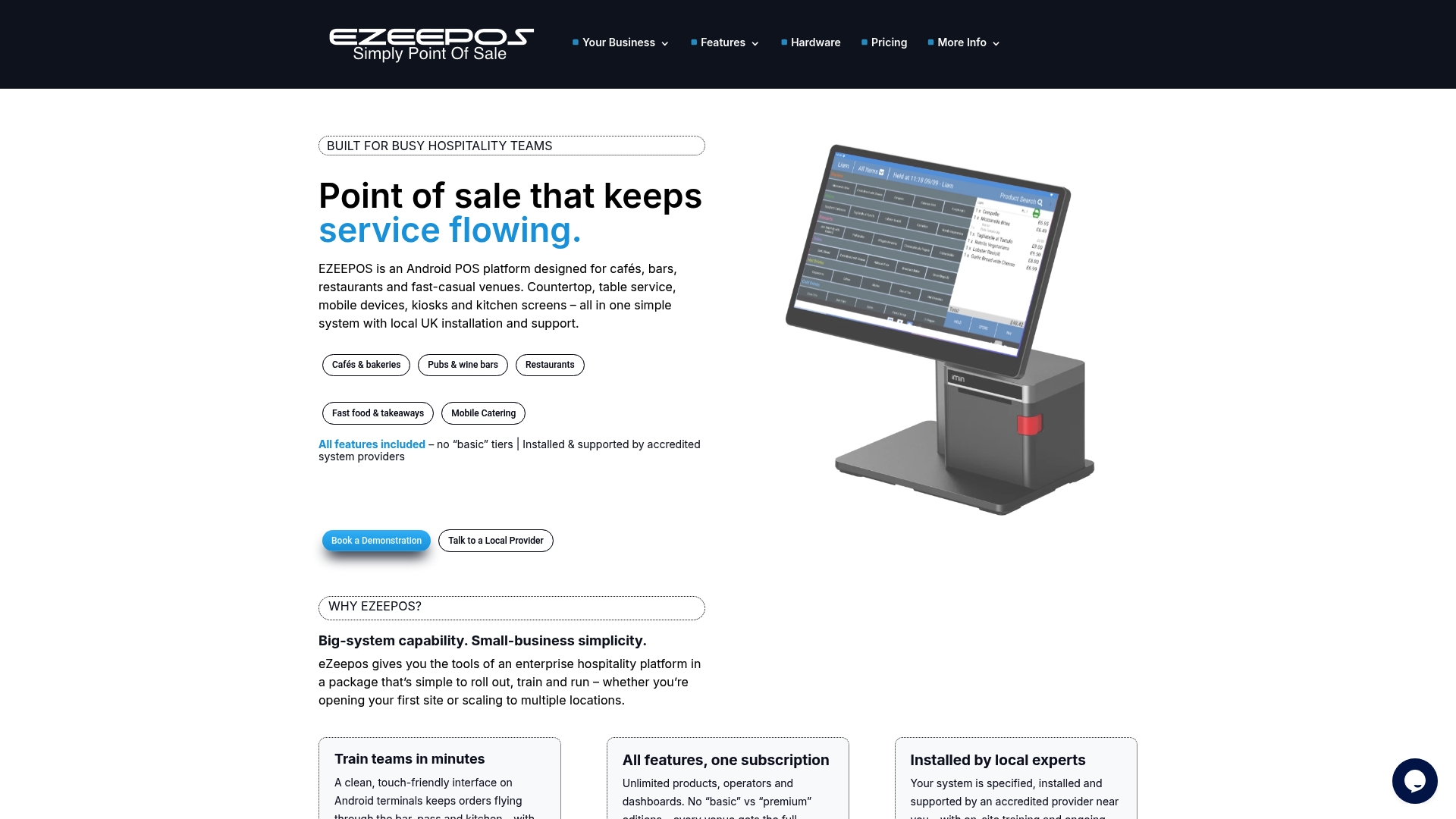
Our unified POS platform connects every aspect of your operation from front-of-house service through to back-office inventory control and reporting. This integration means stock levels update automatically with each transaction, eliminating manual data entry whilst providing instant visibility into current inventory across all categories. Cloud-based access lets you monitor stock and review reports from anywhere, whilst local UK support ensures you get help when you need it.
Explore our detailed hospitality inventory management guide to discover advanced strategies for reducing waste, optimising ordering, and leveraging inventory data for better business decisions. eZeePOS combines enterprise-level functionality with straightforward operation, helping busy hospitality venues achieve professional inventory control without complexity.
Frequently asked questions
What challenges do hospitality venues face with inventory management?
Hospitality venues deal with perishable goods that have short shelf lives and require careful rotation to prevent waste. Managing multiple suppliers with different delivery schedules and minimum order requirements adds complexity, whilst fluctuating demand patterns make accurate forecasting difficult. Manual tracking methods prove inadequate for the volume and variety of items most venues stock, leading to inaccurate data that undermines purchasing decisions.
How can POS systems improve my inventory accuracy?
POS systems integrated with inventory management automatically deduct ingredients based on recipe specifications with every sale, eliminating manual recording errors. Real-time updates provide continuous visibility into current stock levels rather than relying on periodic counts. Automated alerts notify you when items reach reorder points or when usage patterns deviate from normal ranges, enabling proactive management rather than reactive responses.
What are quick wins to reduce waste through inventory management?
Implement first-in-first-out (FIFO) rotation with clear date labelling to ensure older stock gets used before newer deliveries. Regular stock audits and systematic tracking help identify waste sources and portion control issues. Configure automated alerts for approaching expiry dates so you can plan specials or menu adjustments to use ingredients before they spoil. Demand forecasting based on historical sales data prevents over-ordering whilst maintaining adequate stock levels.
How often should I review and update my inventory processes?
Conduct monthly reviews of your inventory procedures to identify inefficiencies and adjust reorder points based on actual usage patterns. Seasonal variations require particular attention, so review processes at the start of each season to accommodate changing demand. Weekly spot checks on high-value items and daily monitoring of fast-moving stock help maintain accuracy between full counts. Quarterly comprehensive reviews allow you to incorporate lessons learned and refine your overall approach to inventory management.
Recent Comments