
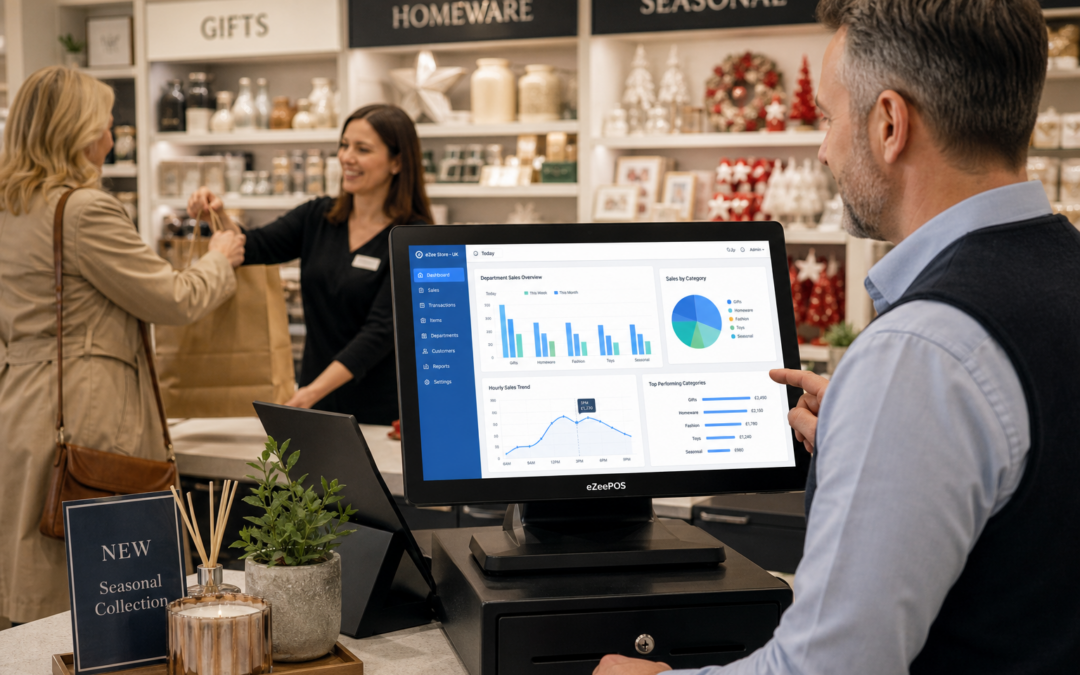
For retailers with more than one department, day-to-day trading can become difficult to read without the right information. A strong EPOS system does more than process sales: it helps you understand what is happening across different areas of the business, from giftware and clothing to food, seasonal items and homeware.
That matters because multi-department retail often brings very different buying patterns under one roof. A product range that performs well in one area may be slower in another. Busy periods may vary by department. Staff may also need different levels of visibility depending on their role. With better reporting, it becomes easier to join those dots and manage the business with more confidence.
If you are looking at eZeePOS or exploring options on www.ezeepos.co.uk, reporting is one of the most practical features to review. It can help independent retailers keep track of sales without relying on spreadsheets, guesswork or the same generic totals for every section of the shop.
Why multi-department reporting is different
A single-department store can often get by with basic sales totals. A multi-department store usually needs more detail. If you run a garden centre with gifts, plants and a cafe section, or a farm shop with groceries, home items and seasonal products, you will want to see how each area is performing on its own.
Good EPOS reporting can help you answer questions such as:
- Which department is busiest on weekdays versus weekends?
- Which areas deliver the strongest average transaction values?
- Do certain product types sell better at specific times of year?
- Are some departments relying too heavily on discounting?
- Where should you focus staff attention during peak periods?
That kind of visibility can make planning easier and reduce the amount of time spent trying to piece together performance from separate reports or manual notes.
What useful reporting should show
Sales by department
Department-level sales reports make it easier to see which areas are contributing most to turnover. For a shop with several product categories, that can be especially helpful when you are deciding where to allocate space, staffing and promotional effort.
Busy times and trading patterns
Understanding when sales happen is just as important as knowing what sells. A well-set-up EPOS system can reveal busy periods by day, week or season. For a multi-department business, this can show whether some areas need extra cover at specific times while others can run more lightly staffed.
Product performance
Small independent retailers often carry a broad range of products. Reporting can highlight bestsellers, slower lines and items that may need a different approach. It is not just about volume; it is also about seeing which categories bring repeat custom and which ones create useful add-on sales.
Staff and till performance
In a larger retail setup, owners may want a clearer idea of how tills are being used and how sales are distributed through the day. This can help support better rota planning and make it easier to spot unusual patterns that deserve a closer look.
What multi-department retailers gain from clearer reporting
For businesses with several departments, reporting is not only about numbers. It is about making day-to-day decisions that are easier to defend and quicker to act on.
Clearer reporting can help with:
- Buying decisions: focus stock buying on departments that perform well.
- Merchandising: place high-performing categories where customers notice them most.
- Staff planning: match rotas to the times and departments that need them.
- Promotions: understand whether offers are creating useful sales or just reducing margin.
- Seasonal planning: prepare more confidently for peaks such as school holidays, Christmas or spring trading.
For many owners, the biggest benefit is simply having a clearer view of the business. Instead of relying on a feeling that one area is busy or another is underperforming, you can compare real figures and act accordingly.
How EPOS reporting supports better conversations with staff
Multi-department businesses often depend on teams working across different roles. Managers, supervisors and till staff may all need some level of visibility, but not necessarily the same level of detail. A practical EPOS setup can help make those conversations more focused.
For example, a manager can review trends before opening, while floor staff can concentrate on serving customers and keeping the tills moving. At the end of the day, reporting can help explain what happened clearly and consistently. That is often more useful than relying on memory or handwritten notes.
It can also help when training staff. If one department regularly sees longer queues or more questions, it may indicate that layout, signage or till setup needs attention. Reporting will not solve every issue on its own, but it gives you a better starting point.
Keeping reporting practical rather than overwhelming
One common mistake is to collect more information than the business actually uses. For multi-department retail, the aim should be practical reporting that is easy to read and relevant to the way the shop works.
That usually means:
- focusing on a small number of useful reports
- reviewing them on a regular schedule
- comparing the same periods each week or month
- using clear department names that staff understand
- linking reports to actual decisions, not just record keeping
If the reports are too complicated, they can end up ignored. The best EPOS reporting is the kind that helps you make one or two sensible changes that improve trading.
Choosing EPOS software that suits a mixed retail business
If your shop has several departments, the reporting needs of the business should be part of the decision when choosing a new system. A modern touchscreen till setup should not just process sales quickly; it should also make data easier to understand at the end of the day.
That is where a solution like eZeePOS can be a practical fit for independent UK retailers. It is designed for businesses that want a clearer operational picture without adding unnecessary complexity. If you are planning a system for a mixed retail environment, it is worth exploring how the software handles reporting, category views and day-to-day management before making a final choice.
For businesses considering a wider EPOS review, it can be useful to look at how software, support and reporting all work together. The right balance can make a big difference to how smoothly a multi-department store runs.
Making better decisions from the till data you already have
Most retailers already capture a lot of valuable information through their till system. The challenge is turning that information into something useful. Better EPOS reporting gives multi-department businesses a clearer way to do that.
Whether you want to understand busy periods, compare departments or keep closer track of overall performance, reporting can help the business feel more organised and less reactive. Over time, that can support steadier trading and more confident planning.
If you would like to see how eZeePOS could support your retail setup, visit www.ezeepos.co.uk to learn more.
Contact YCR Distribution at sales@ezeepos.co.uk or call 01924 438238.
Recent Comments