
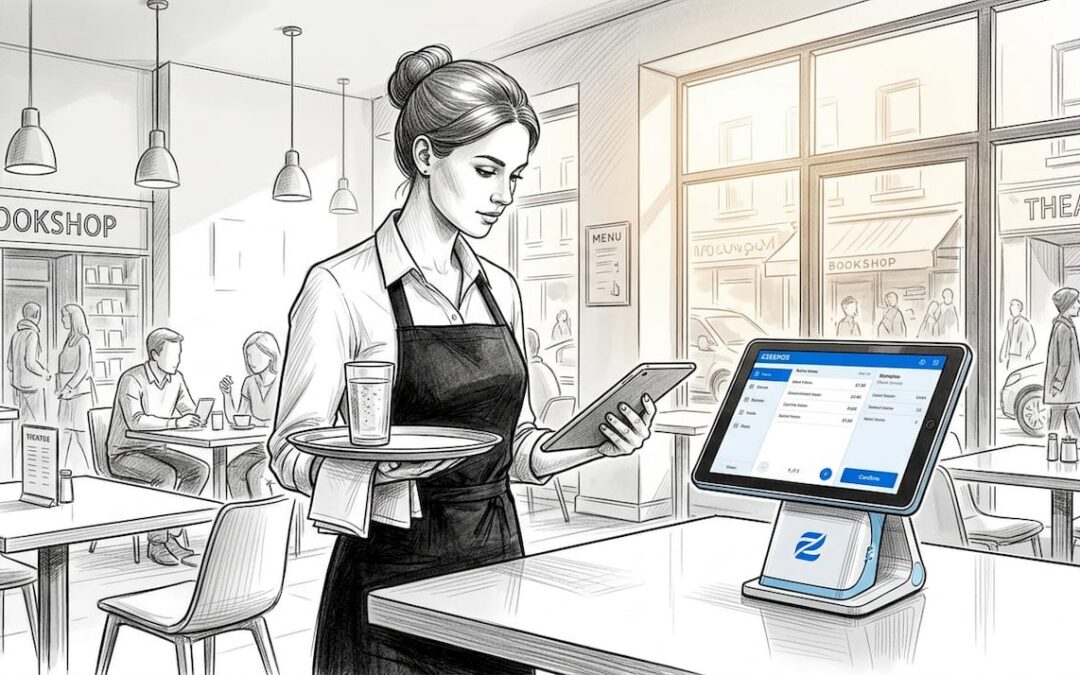
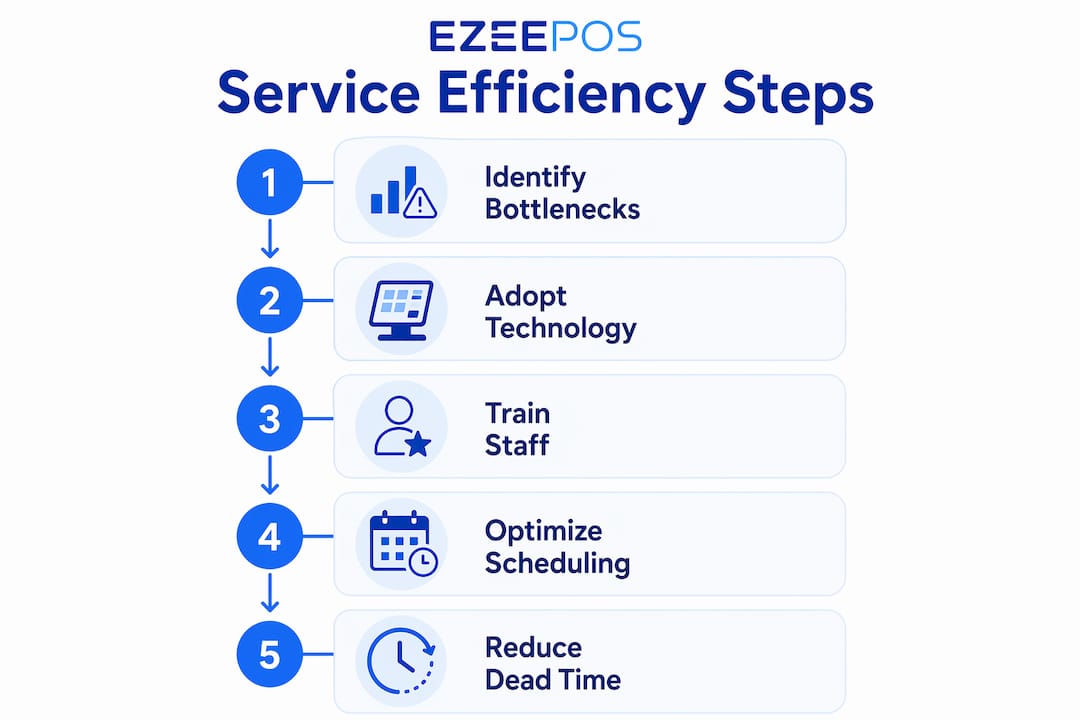
How to improve table service efficiency
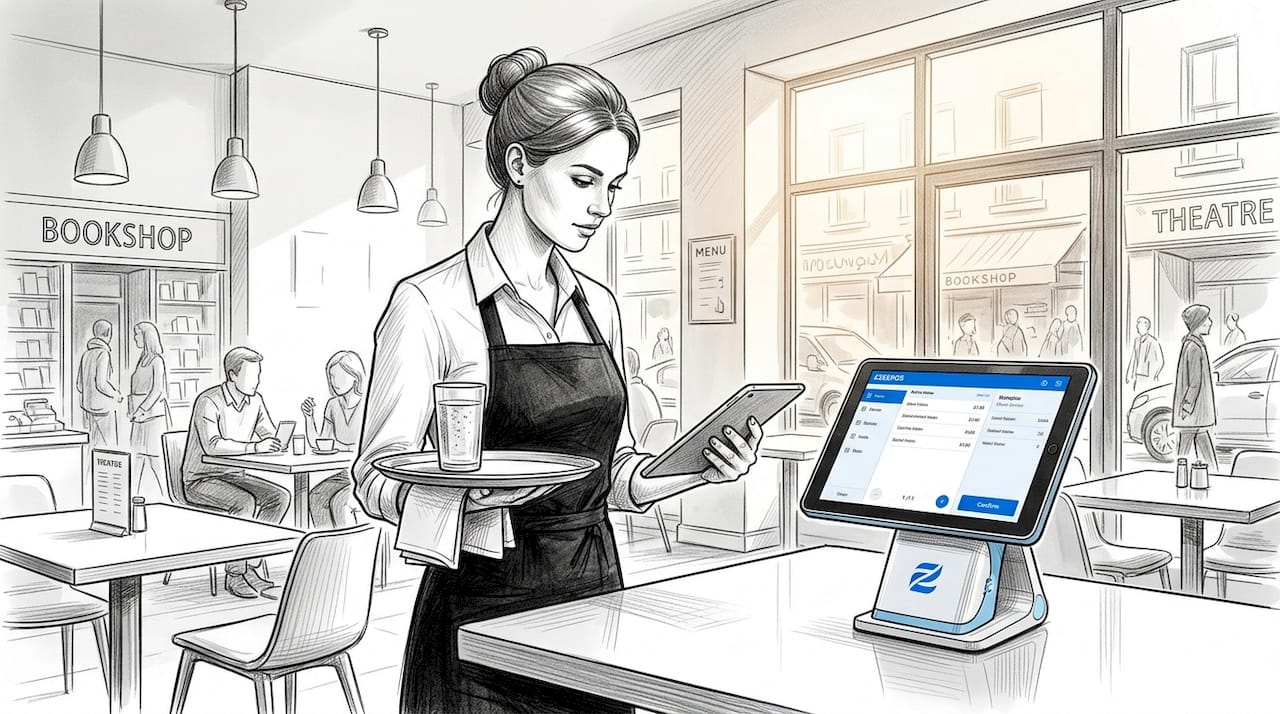
Table service efficiency is defined as the systematic reduction of idle time across every stage of a guest’s visit, from seating through to payment and table reset. Operators who address dead time in these four phases consistently achieve higher table turnover without compromising the dining experience. Dead time in seating, ordering, payment, and resets is the single greatest drag on revenue in a full-service restaurant. The tools that make the biggest difference include Kitchen Display Systems (KDS), integrated point of sale platforms, and tableside payment terminals. This article gives you a practical, data-driven framework for improving table service efficiency across every phase of service.
What are the main bottlenecks that reduce table service efficiency?
Dead time accumulates in predictable places, and most operators underestimate how much of it there is. Mapping each phase against a clock reveals where the biggest losses occur and where to focus first.
| Service phase | Typical time lost | Primary cause |
|---|---|---|
| Pre-arrival and seating | 5 to 10 minutes | Disorganised reservation management, slow host response |
| Order taking | 3 to 5 minutes | Menu indecision, server unavailability, manual relay to kitchen |
| Check and payment | 10 to 15 minutes | Server trips back and forth, card machine retrieval |
| Table reset | 5 to 10 minutes | No dedicated busser, no standard reset procedure |
Payment processing is the largest single delay, accounting for up to 15 minutes per cover in traditionally managed venues. That figure alone represents a full additional turn in a busy dinner service. The reset phase is the second most costly, yet it is also the most controllable with basic procedural changes.
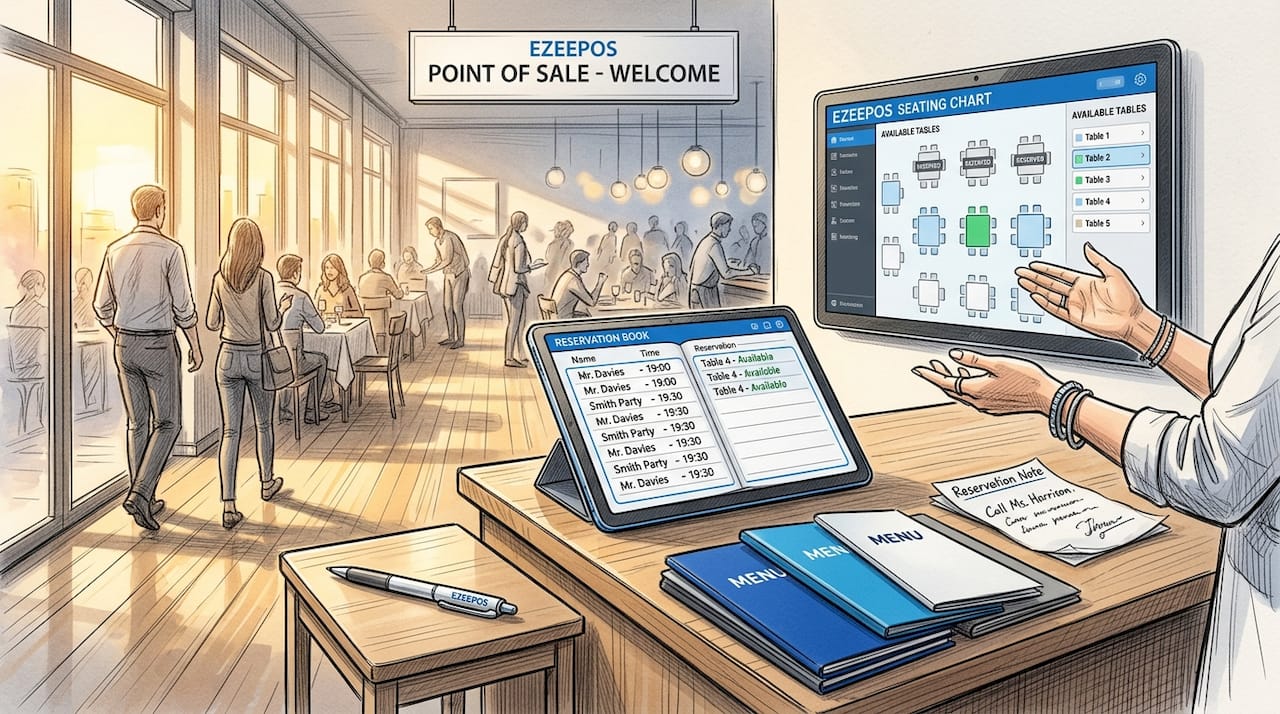
Seating delays are often invisible because they happen before the guest is in the system. A host managing a full floor without real-time table status data will seat parties reactively rather than proactively, adding minutes to every turn. Order-taking delays compound when servers must physically walk tickets to the kitchen or shout orders across a pass.
The most useful diagnostic approach is to treat these phases as a funnel. Identify which stage loses the most time in your specific venue, then fix that stage before moving to the next. For most full-service restaurants, the check and payment phase and the reset phase deliver the fastest gains when addressed first.
How can technology improve table service efficiency?
Technology does not replace skilled front-of-house staff. It removes the friction in handoffs between people and systems, which is where most service delays originate.
Kitchen Display Systems reduce order errors at source
KDS routes POS orders instantly to kitchen stations, eliminating the verbal relay and paper ticket systems that cause miscommunication. When a server enters an order at the table, the relevant station sees it within seconds. This removes the need for a server to visit the pass, reduces mid-service interruptions, and cuts the error rate on complex orders. Ezeepos integrates kitchen order screens directly with its POS platform, so front-of-house and back-of-house operate from a single source of truth.
Tableside payment terminals cut departure time dramatically
Tableside terminals reduce payment time from 8 to 12 minutes down to 2 to 3 minutes. Guests insert their card and complete the transaction at the table, removing the two or three server trips that traditional payment requires. This single change can recover 10 minutes per cover during peak service, which translates directly into additional table turns.
Automated table pacing optimises the entire floor
Automated table pacing reduces guest wait times by 35% and can increase table turns from 1.8 to 2.3 per dinner service. The system uses real-time data from the POS, kitchen capacity, and guest flow to predict when a table will be free and time the next seating accordingly. Guest satisfaction scores remain stable at 4.6 out of 5.0 compared to 4.5 under manual pacing, which confirms that faster service does not mean a worse experience when the pacing is managed intelligently.
- Connect your POS, KDS, and reservation system to a single platform so data flows without manual input
- Use tableside payment devices that integrate with your POS to avoid reconciliation errors
- Implement table status tracking so hosts see real-time floor status without walking the room
- Choose a KDS that displays ticket times so kitchen staff can self-manage pace without chef intervention
Pro Tip: Choosing technology that integrates natively rather than through third-party workarounds is the most important decision you will make. Disconnected systems create new handoff failures that cancel out the efficiency gains.
What operational and staff training strategies boost table service efficiency?
Technology creates the conditions for efficiency. Staff training and operational structure determine whether those conditions are used well.
Use data-driven scheduling to match labour to demand
Data-driven staff scheduling based on historical sales reduces overtime costs and aligns your team with actual demand patterns. A venue running the same rota every week regardless of covers, events, or seasonal trends will always be either over-staffed or under-staffed. Both states reduce efficiency. Over-staffing creates confusion about task ownership. Under-staffing creates bottlenecks at every service phase. Ezeepos provides POS-driven scheduling tools that use your own sales data to recommend shift patterns.
Standardise procedures and train to measurable outcomes
- Define standard operating procedures for every service phase, including greeting time, order entry, check delivery, and reset sequence.
- Train new servers against these procedures using role-play scenarios before they take a live section.
- Set KPIs for each procedure, such as time from seating to first contact, order accuracy rate, and table turn time.
- Review KPI data weekly and use it to identify which staff members need additional coaching and which procedures need revision.
- Cross-train staff across roles so a server can bus a table and a busser can run food, removing single points of failure during peak service.
KPIs like table turnover rate and order accuracy connect training directly to business outcomes. Without measurement, training becomes a one-off event rather than a continuous improvement cycle. The data tells you whether the training is working and where the next bottleneck has appeared.
Pro Tip: Empower servers with real-time table status information from your POS. When a server can see which tables are approaching the end of their meal, they can proactively deliver the check without being asked, cutting payment dead time by several minutes per cover.
How to effectively reduce dead time in seating, payment, and table reset
The three phases where dead time is most controllable are seating, payment, and reset. Each responds to specific procedural changes that do not require capital investment beyond what most venues already have.
| Process | Traditional approach | Optimised approach | Typical time saving |
|---|---|---|---|
| Seating | Host seats on arrival, checks paper floor plan | Real-time POS table status, staggered reservations | 3 to 5 minutes per turn |
| Payment | Server collects card, processes at fixed terminal, returns receipt | Tableside terminal, guest completes payment independently | 8 to 12 minutes per turn |
| Table reset | Server clears and resets between other tasks | Dedicated busser, timed reset procedure under 2 minutes | 3 to 8 minutes per turn |
Staggering reservations at 15 to 20 minute intervals rather than booking multiple parties on the hour prevents simultaneous seating rushes that overwhelm the host and kitchen at the same time. Matching party sizes to table configurations at the point of booking, rather than on arrival, removes the awkward renegotiation that delays seating.
Pre-bussing is one of the most underused practices in table management. Removing finished plates and glasses during the meal, rather than waiting for the table to clear entirely, shortens the reset window and signals attentiveness to the guest. Table reset time can be cut in half with a dedicated busser following a timed sequence: clear dishes in 30 seconds, wipe the surface in 30 seconds, reset silverware and napkins in 30 seconds, and conduct a final check in 15 seconds. That is a complete reset in under two minutes.
Proactive check delivery is the single highest-impact behavioural change a server can make. Delivering the check when the guest appears to be finishing, rather than waiting to be asked, removes the most common source of payment delay. When combined with a tableside terminal, the entire payment phase can be completed in under three minutes.
Key takeaways
Improving table service efficiency requires eliminating dead time in the payment, reset, and seating phases through technology, standardised procedures, and data-driven staff management.
| Point | Details |
|---|---|
| Payment is the biggest delay | Tableside terminals cut payment time from up to 12 minutes down to 2 to 3 minutes per cover. |
| KDS removes kitchen handoff errors | Routing orders instantly to kitchen stations eliminates verbal relay and reduces mid-service mistakes. |
| Reset procedures double throughput | A timed busser sequence completes a full table reset in under two minutes, cutting typical reset time in half. |
| Scheduling must follow demand data | Aligning staff shifts with historical sales patterns prevents both over-staffing and under-staffing during service. |
| KPIs connect training to outcomes | Measuring table turnover rate and order accuracy turns training from a one-off event into a continuous improvement cycle. |
Where efficiency meets hospitality: a practitioner’s view
The operators I respect most are the ones who understand that efficiency is about removing friction, not telling staff to move faster. Those are fundamentally different instructions. One changes the system. The other just increases stress and turnover.
What I have observed consistently is that the venues with the best service times are not the ones with the most technology. They are the ones where technology and human judgement work together. Automation augments professional hosts by surfacing data they cannot see, such as predicted turn times and kitchen capacity, so they can make better decisions. The host still reads the room. The system just gives them better information to work with.
The uncomfortable truth about staff training is that most of it does not stick because there is no measurement attached to it. You train a server on check delivery timing, and three weeks later they are back to waiting to be asked. The only way to make training permanent is to measure the outcome, share the data with the team, and coach against it regularly. Staff performance KPIs are the critical link between training and real-world results.
My advice to any operator reading this is to start with a stopwatch, not a software purchase. Time your payment phase for one week. If it is averaging more than five minutes, that is your first fix. Once you have solved that, time your resets. Work through the phases in order of impact, and only then decide which technology investments are justified by the data you have collected.
— John
How Ezeepos helps you put this into practice
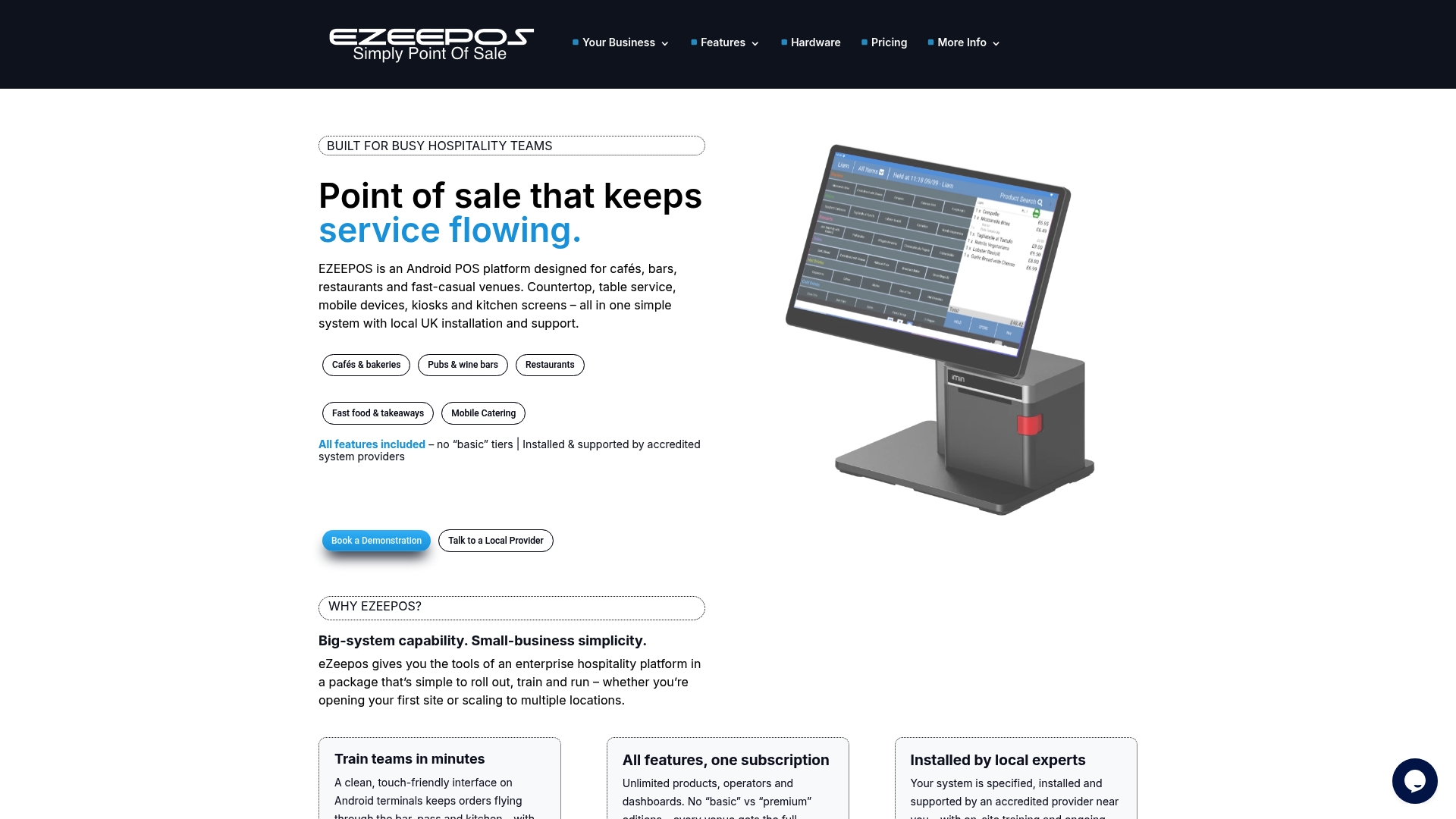
Ezeepos is built specifically for UK hospitality venues that need to reduce service dead time without adding operational complexity. The platform connects your Kitchen Display System directly to your POS so orders reach the kitchen the moment they are entered, with no verbal relay and no paper tickets. Tableside payment integration removes the back-and-forth that costs you 10 minutes per cover during peak service. Real-time table status tracking gives your host team the floor visibility they need to seat proactively rather than reactively. If you are ready to see how a unified POS platform can reduce dead time across every service phase, explore what Ezeepos offers UK venues today.
FAQ
What is table service efficiency?
Table service efficiency is the reduction of idle time across the seating, ordering, payment, and reset phases of a guest’s visit. The goal is to increase table turnover and revenue without rushing the dining experience.
How much time is typically lost in the payment phase?
Payment processing typically takes 8 to 12 minutes in traditionally managed venues. Tableside payment terminals reduce this to 2 to 3 minutes per cover.
How does a Kitchen Display System improve service speed?
A KDS routes orders from the POS directly to the relevant kitchen station the moment they are entered. This removes verbal relay, reduces errors, and cuts the time between order entry and kitchen acknowledgement.
What KPIs should restaurants track to measure service efficiency?
Table turnover rate and order accuracy are the two most direct measures of service efficiency. Tracking these KPIs links staff training and scheduling decisions to measurable business outcomes.
How can you reduce table reset time without hiring more staff?
Introducing pre-bussing during the meal and a standardised timed reset sequence allows a single busser to complete a full reset in under two minutes. This approach cuts reset time in half compared to unstructured clearing by servers.
Recent Comments