
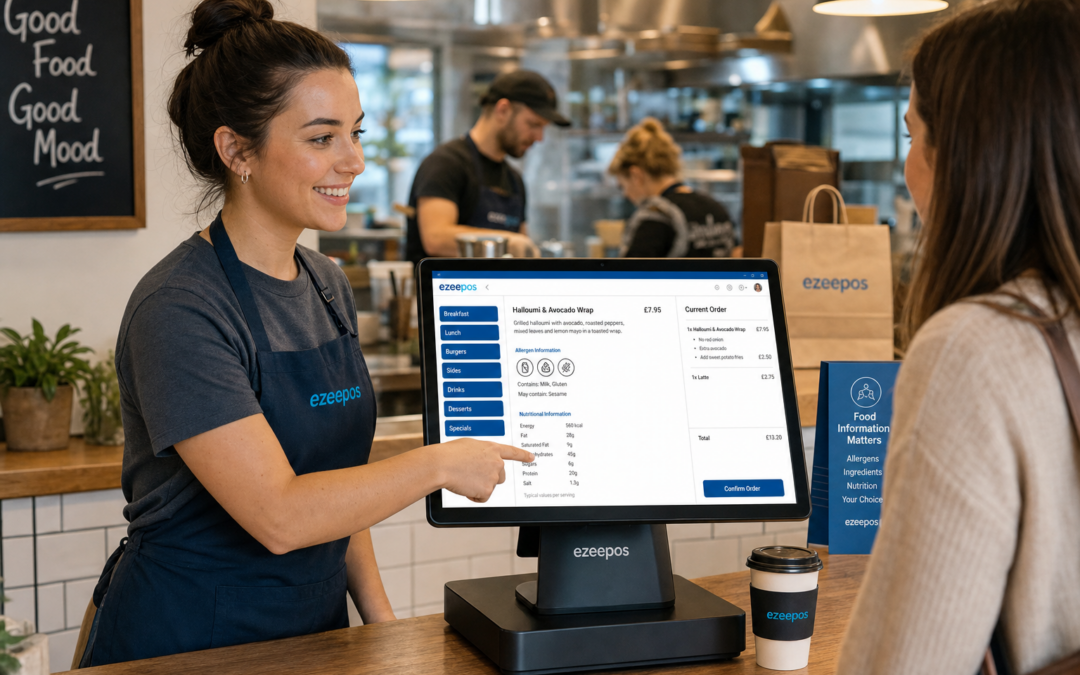
Why food information matters at the till
In busy hospitality businesses, the till is often where small misunderstandings turn into bigger problems. A customer may ask about ingredients, an order may need a simple change, or a staff member may need to confirm what is included in a dish before sending it to the kitchen. When that information is unclear, service slows down and mistakes become more likely.
That is where a well-organised EPOS setup can help. For cafes, restaurants and takeaways, food information is not just a back-office detail. It is part of everyday service, from taking orders accurately to helping staff answer questions with confidence. If you are looking at how a modern system could support your business, eZeePOS is one practical option designed for UK retail and hospitality businesses.
What food information should be easy to see?
The best till setups make it easier for staff to access the details they need without breaking the flow of service. That can include:
- dish names and menu categories
- allergen information
- ingredient notes
- customisation options and modifiers
- meal combinations or set menus
- special requests such as no onions, extra sauce or swap fries for salad
When this information is stored clearly in the EPOS system, staff do not need to rely on memory or paper notes. They can take the order once, check the details and move the customer along more smoothly.
Fewer questions, faster service
In a quiet cafe, staff may have time to ask the kitchen before confirming a customer request. During a lunch rush or evening service, there is usually less room for delays. A clear EPOS menu structure helps the team find the right item quickly and keep the queue moving.
That does not only help speed. It also helps confidence. Staff are more likely to give a clear answer when the information is easy to find on screen. Customers notice that too, especially when they are asking about allergens or dietary requirements.
How EPOS can support allergen awareness
Allergen handling is one of the most important reasons to keep food information organised. Hospitality businesses in the UK need to be careful, and while EPOS software does not replace proper staff training or legal responsibilities, it can make the process more manageable.
A good system helps by presenting food and drink items in a structured way. That means staff can quickly see relevant menu details, identify items that need extra checking and pass clearer information to the kitchen. It is especially useful in businesses with changing menus, daily specials or a wide mix of hot and cold items.
For example, a takeaway might offer several burgers with different sauces and toppings. A restaurant might run a lunch menu alongside a separate evening menu. A cafe might have cakes, sandwiches and hot meals with different ingredients. In each case, clear EPOS food information helps reduce confusion.
Keeping menu changes under control
Many hospitality businesses do not serve the same menu all day. Some change dishes seasonally, while others adjust recipes or add specials regularly. If those changes are not reflected clearly in the till, staff can easily select the wrong item or miss key information.
With a modern EPOS setup, menu updates can be easier to manage. Items can be grouped logically, special requests can be added in a consistent way, and staff can work from the same up-to-date screen rather than a mixture of printed notes and verbal reminders.
Why food information matters in takeaways
Takeaways often face a slightly different challenge. Orders can come in quickly, customers may be in a hurry, and the team may be handling both walk-in and phone orders at the same time. In that environment, clear menu information is vital.
When items are easy to identify and order notes are organised properly, staff can prepare tickets more accurately and reduce the chance of sending out the wrong meal. This is especially useful for businesses that deal with repeat custom, multiple sizes, meal deals or build-your-own options.
For busy independent takeaways, EPOS can help make the order process more predictable. That means less back-and-forth at the counter, fewer interruptions in the kitchen and a better experience for the customer waiting to collect their food.
How it helps restaurants and cafes serve better
Restaurants and cafes often need to balance speed with a more personal service style. Customers may expect recommendations, ingredient checks and flexible menu choices. Having food information organised inside the EPOS system supports all of that without making the experience clunky.
For table service businesses, information at the till can also help staff pass cleaner notes to the kitchen. If a dish needs a substitution or a customer has a dietary request, the order can be entered in a consistent format. That makes the handover easier and helps the kitchen understand exactly what is needed.
In cafes, where staff often serve a mix of drinks, sandwiches, snacks and daily specials, this can be even more useful. A clear layout reduces pressure during busy periods and helps new starters learn the menu more quickly.
Making training easier for new staff
Food information inside EPOS is also valuable for training. New starters do not need to memorise every dish straight away if the till helps them find the right item and understand the menu structure. That can make onboarding simpler and reduce mistakes during the first few weeks.
For independent businesses with smaller teams, that matters. Staff may need to cover different roles, support the kitchen, take payments and answer customer questions all in the same shift. A system that keeps details clear can make the whole operation feel more organised.
Supporting consistent customer service
Customers are more likely to return when service feels calm and accurate. They want reassurance that their order has been understood properly, especially if they are asking about food content or making a special request. Clear menu information helps staff give that reassurance without hesitation.
It also supports consistency across the team. If one person takes the order in the morning and another serves it later, both should be working from the same information. That consistency is one of the simplest ways EPOS can improve day-to-day hospitality service.
Bringing food information and EPOS together
For UK cafes, restaurants and takeaways, food information is not just about compliance or admin. It is about helping staff work more confidently, helping customers feel better informed and keeping service moving in a busy environment. A practical EPOS system can bring those pieces together in one place.
If your current till setup makes menu handling awkward, or staff are still relying on printed notes and memory, it may be worth looking at a more organised approach. eZeePOS is designed to help hospitality businesses manage everyday service more clearly, from the counter to the kitchen.
To learn more, visit www.ezeepos.co.uk and see how a modern EPOS setup could support your business.
Contact YCR Distribution at sales@ezeepos.co.uk or call 01924 438238.
Recent Comments