
TL;DR:
- Payment integrations reduce errors, fraud, and admin time in UK hospitality venues.
- Fully integrated systems sync transactions in real time, improving speed and accuracy.
- Different integration types suit various venue sizes and service styles, from standalone to fully integrated.
Payment mismatches, manual reconciliation errors, and slow card terminals are costing UK hospitality venues more than most owners realise. Every time a member of staff punches in an amount manually at a standalone terminal, there is a real chance of a discrepancy. Automatic payment matching reduces these errors and the admin time that comes with them, freeing your team to focus on guests rather than spreadsheets. In this guide, we walk through the key types of payment integrations, compare them side by side, and share six practical UK hospitality examples to help you choose the right fit for your venue.
Table of Contents
- What makes an effective payment integration?
- The most common payment integration types in UK hospitality
- Six practical examples of payment integrations for UK hospitality
- Comparison table: Which payment integration is right for your venue?
- Tailoring your payment integration: recommendations by business type
- Why payment integration pays off faster than most venue owners realise
- Discover the best POS integrations for your venue with EzeePOS
- Frequently asked questions
Key Takeaways
| Point | Details |
|---|---|
| Choose automation | Automatic payment integration saves time and reduces costly errors for UK venues. |
| Integration type matters | Integrated, semi-integrated and standalone methods each suit different hospitality environments. |
| Extra profits and less stress | The right integration can boost profits and cut admin work—even for small businesses. |
| Check compatibility first | Ensure your new payment solution will work with your existing POS and processes. |
What makes an effective payment integration?
At its core, a payment integration connects your point of sale system directly to your card payment terminal. When a customer pays, the amount flows from the till to the terminal automatically, no manual entry required. That single change removes a surprisingly large source of daily friction.
For UK hospitality operators, the most effective integrated payment processing does several things well:
- Real-time syncing so the terminal always reflects the exact till total
- Automatic amount matching that eliminates the need for staff to type figures
- Contactless and mobile wallet support to keep queues moving
- Fraud reduction controls built into the transaction flow
- Automated reporting that feeds directly into your end-of-day reconciliation
- Compatibility with your existing or planned POS hardware
The performance gains are significant. Integrated processing can reduce fraud by 60% and cut manual processing time by 95%. That is not a marginal improvement; it is a wholesale change to how your back office operates.
When evaluating options, think beyond the price tag. Consider how well a solution works with your current till setup, how easy it is for new staff to learn, and what level of ongoing support is included. Unified POS platforms that bundle payments, stock, and reporting into one system tend to deliver the fastest return.
Pro Tip: Before committing to any payment integration, ask the provider for a terminal compatibility checklist specific to your current till model. Incompatible hardware is the number one cause of delayed rollouts.
The most common payment integration types in UK hospitality
Not all integrations are built the same. Understanding the three main types helps you match the right solution to your venue’s workflow.
- Directly integrated terminals are physically and digitally connected to the POS. The till sends the payment amount to the terminal the moment the order is confirmed. This is the gold standard for speed and accuracy.
- Semi-integrated systems use a middleware layer to pass data between the POS and terminal. They offer more flexibility with hardware choices but add a layer of complexity to setup and troubleshooting.
- Standalone (non-integrated) terminals operate independently from the till. Staff key in the amount manually. There is no automatic data exchange.
The risk with standalone setups is stark. Standalone terminals risk mismatches in over 90% of contactless UK transactions; integrated systems prevent these errors entirely.
“In a busy Friday night bar service, a staff member entering £47.50 instead of £74.50 is not a hypothetical. It happens constantly with standalone terminals. Integrated systems remove that risk at the source.”
For a pub taking 300 card transactions on a Saturday, even a 1% error rate means three mismatches per shift. Multiply that across a week and the admin fallout is considerable. Reviewing contactless payment examples from UK venues shows just how quickly errors accumulate in high-volume environments.
The case for going fully integrated is compelling, and understanding why integrated POS matters for compliance, audit trails, and guest experience makes the decision even clearer for most operators.
Six practical examples of payment integrations for UK hospitality
Here are six real-world scenarios showing how different UK venue types benefit from payment integrations.
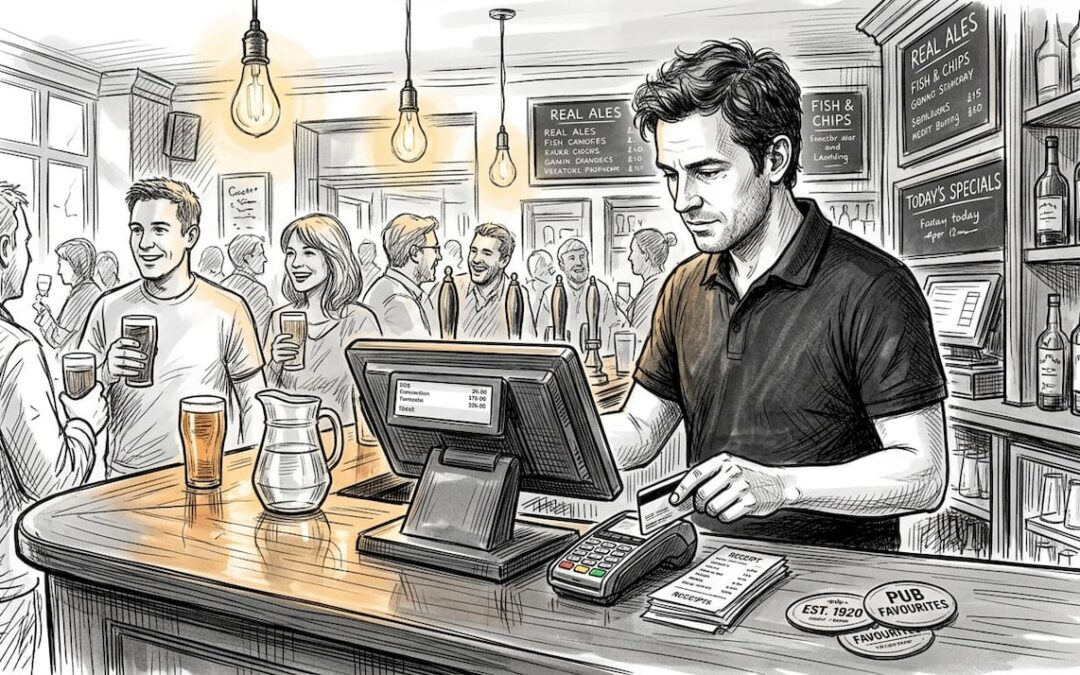
- Bar service: A busy city-centre bar connects its Android POS terminals directly to countertop card readers. Bartenders tap to confirm orders and the payment amount transfers instantly. No manual entry, no discrepancies during peak hours.
- Table-side ordering: A mid-range restaurant equips servers with handheld POS tablets. Guests order and pay at the table without the bill-fetching delay. Tips are recorded automatically and reconciled at close.
- Self-serve kiosk: A fast-casual eatery installs self-service kiosks with integrated payment modules. Guests build their order and pay in one uninterrupted flow, reducing counter staff requirements during lunch peaks.
- Mobile pop-up: A street food trader uses a mobile POS with a Bluetooth card reader. Orders and payments sync to a cloud back office in real time, giving the owner full visibility even across multiple market pitches.
- Drive-thru: A quick-service restaurant integrates its drive-thru intercom system with a fixed POS and terminal at the window. Payment is authorised before the customer reaches the collection point, cutting service time significantly.
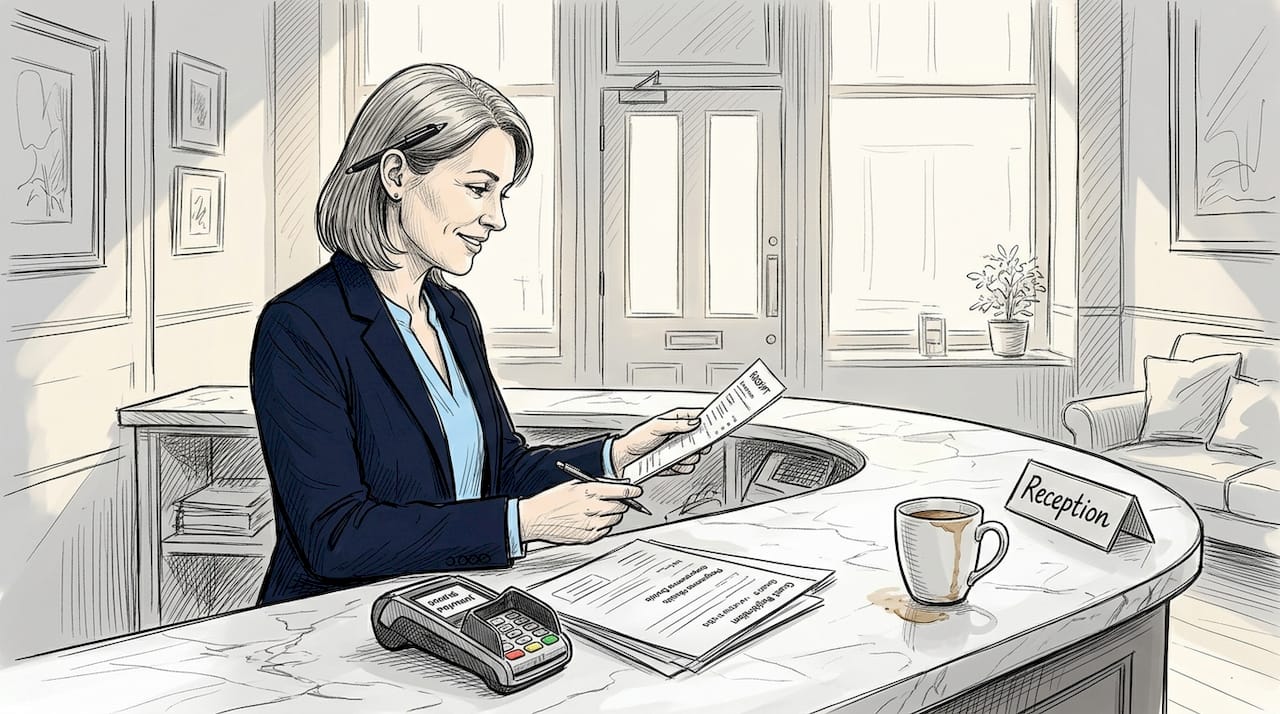
- Hotel front desk: A boutique hotel connects its POS to a card terminal and property management system. Guests settle food and drink tabs directly at check-out with no manual cross-referencing between systems.
| Venue type | Integration used | Key benefit | Admin time saved |
|---|---|---|---|
| City bar | Direct terminal | No entry errors | Up to 3 hrs/week |
| Table restaurant | Handheld POS | Faster table turns | Up to 5 hrs/week |
| Fast casual kiosk | Self-service module | Fewer counter staff needed | Up to 8 hrs/week |
| Mobile caterer | Mobile POS + Bluetooth | Real-time cloud visibility | Up to 2 hrs/week |
| Drive-thru | Fixed integrated terminal | Faster throughput | Up to 4 hrs/week |
| Hotel front desk | POS + PMS link | Unified guest billing | Up to 6 hrs/week |
Venues like Tottington Manor and Good Hotel demonstrate that integrating payments with POS saves hours of admin and measurably boosts profits.
Pro Tip: Set your integrated system to auto-generate daily reconciliation reports. You will never need to manually match card receipts to till totals again.
Comparison table: Which payment integration is right for your venue?
Choosing the right integration type depends on your venue size, service style, and budget. Here is a direct comparison.
| Integration type | Best for | Pros | Cons | Admin saving | Fraud risk |
|---|---|---|---|---|---|
| Directly integrated | Bars, cafés, fast food | Highest accuracy, fastest | Higher upfront cost | Very high | Very low |
| Semi-integrated | Medium restaurants, hotels | Hardware flexibility | More complex setup | High | Low |
| Standalone terminal | Very small or temporary venues | Low cost, simple setup | High error and fraud risk | Minimal | High |
Matching the integration to your business model matters enormously. Consider these factors:
- Small bar or café: A directly integrated terminal is almost always the right choice. Speed and accuracy outweigh the slightly higher setup cost.
- Large restaurant: Semi-integrated or fully integrated systems work well, particularly when combined with table management and kitchen screens.
- Fast food or quick service: Self-serve kiosks with integrated payments eliminate bottlenecks and reduce labour costs at peak times.
- Hotel: A system that links POS, payment terminal, and property management software gives guests a seamless experience and staff a single source of truth.
Integrated payment processing can yield up to 2% extra gross profit and save 10 hours of admin per week. Those numbers add up quickly when you consider the full year. Reviewing the range of POS system types available helps you understand which hardware and software combinations suit your current setup.
Tailoring your payment integration: recommendations by business type
Generic advice only goes so far. Here are practical recommendations based on the type of hospitality business you run.
- Quick-service and fast food venues: Prioritise directly integrated terminals and self-serve kiosks. Speed is everything. Every second saved per transaction adds up to dozens of extra covers during a lunch rush.
- Full-service restaurants: Invest in handheld POS devices with integrated card readers for table-side payments. Combine with a kitchen display system to keep orders flowing without paper tickets.
- Mobile caterers and pop-ups: Choose a cloud-based mobile POS with a portable Bluetooth card reader. Make sure the system works offline and syncs when connectivity is restored.
- Nightclubs and late bars: Look for a system that handles high transaction volumes quickly and supports pre-authorisation for tabs, reducing end-of-night disputes.
- Hotels with food and beverage: A fully integrated system linking your POS, payment terminal, and property management software is non-negotiable for accurate guest billing.
Compatibility checks are essential when integrating new terminals with legacy or existing POS tills. If you are upgrading from an older system, build a clear roadmap with your provider before purchase, not after. Explore efficient POS tips to understand how to plan that transition without disrupting daily service.
Why payment integration pays off faster than most venue owners realise
There is a persistent myth in UK hospitality that upgrading to an integrated payment system is expensive, time-consuming, and only worth it for larger venues. We would push back on that firmly.
The hidden costs of staying with standalone terminals are rarely counted properly. Think about the time your staff spend manually entering amounts, chasing mismatches, and reconciling end-of-day reports. Add the fraud exposure from unmatched transactions. These costs exist whether you measure them or not.
Venues reported admin savings and faster payback than expected after integrating payments. Tottington Manor is a good example: admin relief came quickly, and the team found they had more time to spend on guests rather than paperwork.
There is also the unmeasured upside. Happier staff who are not chasing errors. Guests who pay faster and leave with a better impression. The integrated POS impact on team morale and guest experience is real, even if it does not appear directly in your P&L. Reassess your payback timeline with all of these factors included and integration looks like a much faster win than most owners initially expect.
Discover the best POS integrations for your venue with EzeePOS
Finding the right payment integration does not have to be complicated. EzeePOS works with UK hospitality venues of every size and style to recommend tailored solutions that match your service model, budget, and existing setup.
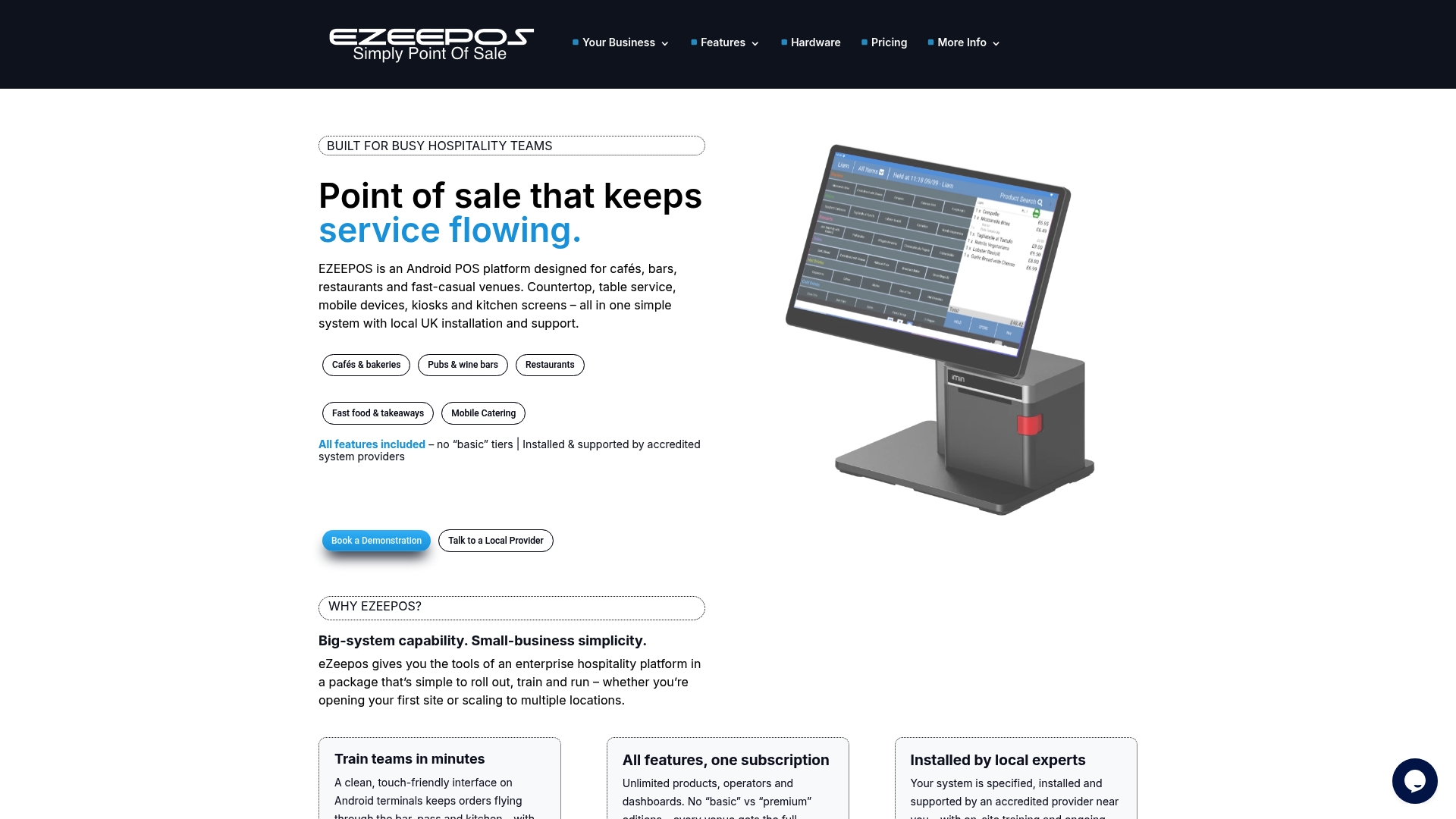
From POS system options for venues through to full installation and ongoing support, the team at EzeePOS guides you through every step. Whether you run a single café or a multi-site restaurant group, there is a payment integration that fits. Learn about POS benefits and book a free consultation to see exactly how much time and money you could save.
Frequently asked questions
What is meant by payment integration in hospitality?
Payment integration means connecting your POS tills and payment terminals so that transactions sync automatically, removing the need for manual entry and reducing reconciliation errors at the end of each shift.
How does payment integration reduce fraud in UK venues?
Because the till and terminal must always match, there is no opportunity for amounts to be altered between order confirmation and card payment. Integrated systems reduce fraud by up to 60% by closing the loopholes that standalone setups leave open.
Which payment integration is best for small bars or cafés?
A directly integrated card terminal connected to the POS is the best choice for smaller venues because it combines accuracy, speed, and simplicity without the complexity of middleware layers.
Can I use multiple payment integrations in one venue?
Yes. Many UK venues combine fixed integrated terminals at the bar with mobile POS devices for table service, giving flexibility across different service areas without sacrificing accuracy or reporting consistency.
Recent Comments