

TL;DR:
- Integrated payment processing links terminals, tills, inventory, and reporting for seamless operations.
- Switching to integrated systems significantly reduces processing time, errors, and fraud risks.
- Benefits include faster service, improved security, staff productivity, and higher guest satisfaction.
Most venue owners assume payment processing is simply about accepting cards. It is not. The gap between a basic card machine and a truly integrated payment system is the difference between running a tight, profitable operation and haemorrhaging time, money, and staff goodwill every single shift. UK hospitality venues are under more pressure than ever, with rising costs, higher guest expectations, and wafer-thin margins. The good news is that integrated payment processing directly addresses all three. This article explains what it is, what it does, and how to choose the right solution for your venue.
Table of Contents
- What is integrated payment processing?
- How integrated payment processing transforms hospitality operations
- Key benefits: efficiency, security, and guest experience
- How to choose and implement the right integrated payment solution
- What most UK venues get wrong about payment integration
- Take the next step with integrated payment solutions
- Frequently asked questions
Key Takeaways
| Point | Details |
|---|---|
| Integration boosts efficiency | Connecting payments to your POS cuts admin, speeds service, and reduces human error for UK venues. |
| Lower fraud and costs | UK venues using integrated payments report up to 60% less fraud and see gross profits rise. |
| Improved guest experience | Faster, hassle-free payments lead to happier customers and more repeat business. |
| Rapid, measurable impact | Case studies show time savings of 10 hours a week and profits up by 2% soon after integration. |
What is integrated payment processing?
Integrated payment processing means your payment terminal, till, inventory system, and reporting tools all talk to each other automatically. When a guest pays, the transaction flows directly from the point of sale into your accounts, stock records, and end-of-day reports without anyone typing a single number manually.
Contrast that with a standard setup. A member of staff takes a card payment on a standalone terminal, then manually keys the same amount into the till. At closing, someone reconciles both systems by hand. Every step in that chain is a chance for a mistake, a delay, or a shortfall that nobody can explain the next morning.
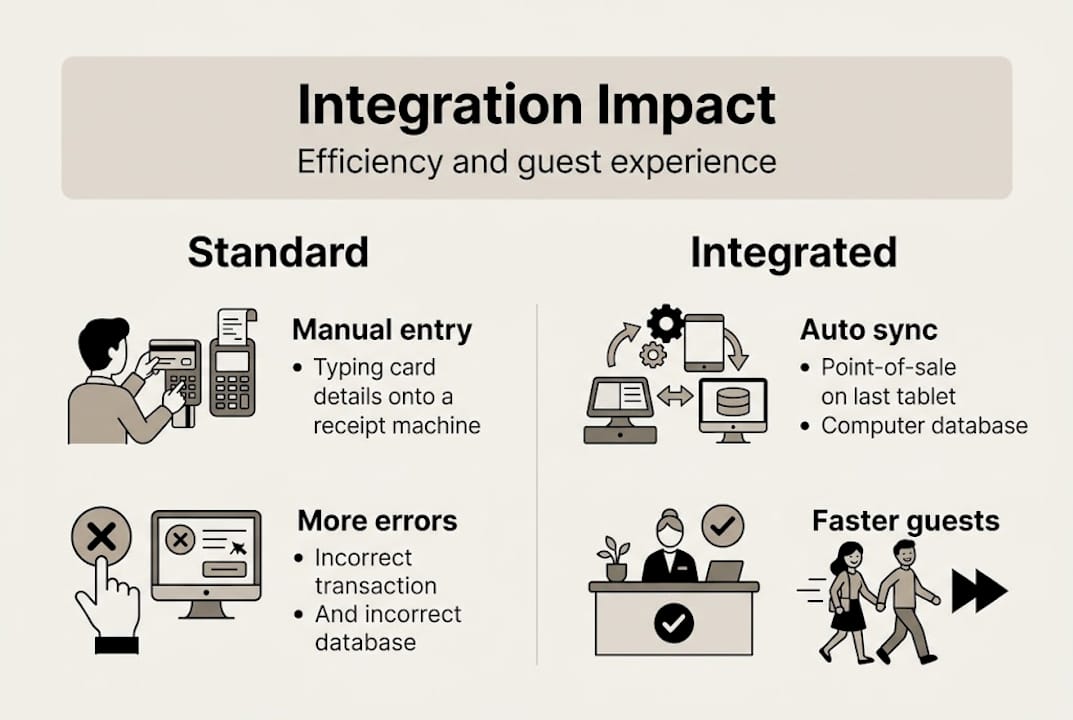
For hospitality specifically, the stakes are high. You have high transaction volumes, frequent staff turnover, and a service environment where speed is everything. A table of six wanting to split the bill does not want to wait while your team juggles two separate systems. Neither do you want to discover a discrepancy in your Friday night takings at 11pm on a Saturday.
A fully integrated system connects:
- Your till and payment terminal, so amounts match automatically
- Inventory records, so stock levels update with every sale
- Staff management tools, so tips and gratuities are tracked accurately
- Cloud-based reporting, so you can see real-time data from anywhere
- Accounting software, so end-of-day reconciliation happens in seconds
The results speak for themselves. As one UK case study shows, venues that switched to integrated payment processing achieved a 95% reduction in processing time compared to their previous manual approach. That is not a marginal improvement. That is a fundamental shift in how a venue operates.
“Tottington Manor reduced payment processing time by 95% after integrating their POS and payment systems, freeing staff to focus on guests rather than admin.”
Understanding the integrated POS benefits available to UK venues is the first step. The next is seeing what happens in practice when you make the switch. If you are exploring credit card integration options, the operational case becomes even clearer.
How integrated payment processing transforms hospitality operations
Now that the basics are clear, here is what actually happens when a venue switches to integrated payment processing.
Before integration, a typical evening service involves parallel systems that never quite align. Staff enter amounts twice, managers chase discrepancies, and the end-of-night reconciliation can take the better part of an hour. After integration, payments flow through one connected system. The till updates, the stock adjusts, and the report is ready before the last chair goes up.
Here are the specific operational improvements venues report most often:
- Faster table turnaround. Payments complete in seconds rather than minutes, meaning more covers per service.
- Fewer errors at close. Automated reconciliation removes the manual mismatch between terminal totals and till records.
- Staff productivity gains. Teams spend less time on admin and more time serving guests.
- Accurate real-time reporting. Managers see live sales data rather than waiting for a morning summary.
- Simplified multi-site management. One dashboard covers all locations, making it far easier to spot trends or problems.
The numbers from real UK venues are striking. Good Hotel saved 10 hours per week in admin time after switching to an integrated system. Bankside saw a measurable lift in average guest spend, and early adopters of integrated solutions recorded a 2% gross profit gain, which is significant in an industry where margins are already tight.
It is also worth noting that over 90% of UK hospitality transactions are now completed by card or contactless. That figure makes a standalone terminal not just inefficient but genuinely risky. If the vast majority of your revenue flows through card payments and those payments are not integrated with your other systems, you are flying blind on a significant portion of your business data.
For multi-site operators, why integration matters becomes even more apparent. Consolidating data across venues without integration requires manual exports, spreadsheet merging, and a lot of guesswork. With integration, everything is visible in one place, in real time.
Key benefits: efficiency, security, and guest experience
Having seen the operational changes, let us break down exactly why integrated solutions are superior for UK venues.
| Feature | Integrated system | Non-integrated system |
|---|---|---|
| Payment reconciliation | Automatic, real-time | Manual, error-prone |
| Fraud risk | Significantly reduced | Higher, harder to trace |
| Staff training time | Shorter, one system | Longer, multiple tools |
| Reporting accuracy | Live and precise | Delayed and approximate |
| Guest experience | Faster, smoother | Slower, more friction |
| Gross profit visibility | Immediate | End-of-day at best |
Security is one of the most underrated advantages. Integrated systems create a clear, auditable trail for every transaction. There is no gap between what the terminal recorded and what the till shows, which is exactly where fraud tends to hide. UK venues using integrated systems saw up to 60% less fraud compared to those still running separate systems. Early adopters also recorded a 2% gross profit improvement, which compounds quickly across a busy venue.
Guest experience is the other side of the coin. Faster payments mean shorter queues. Accurate orders mean fewer complaints. When your payment system connects to your kitchen screens and inventory, the whole service flows more smoothly. Guests notice, and they come back.
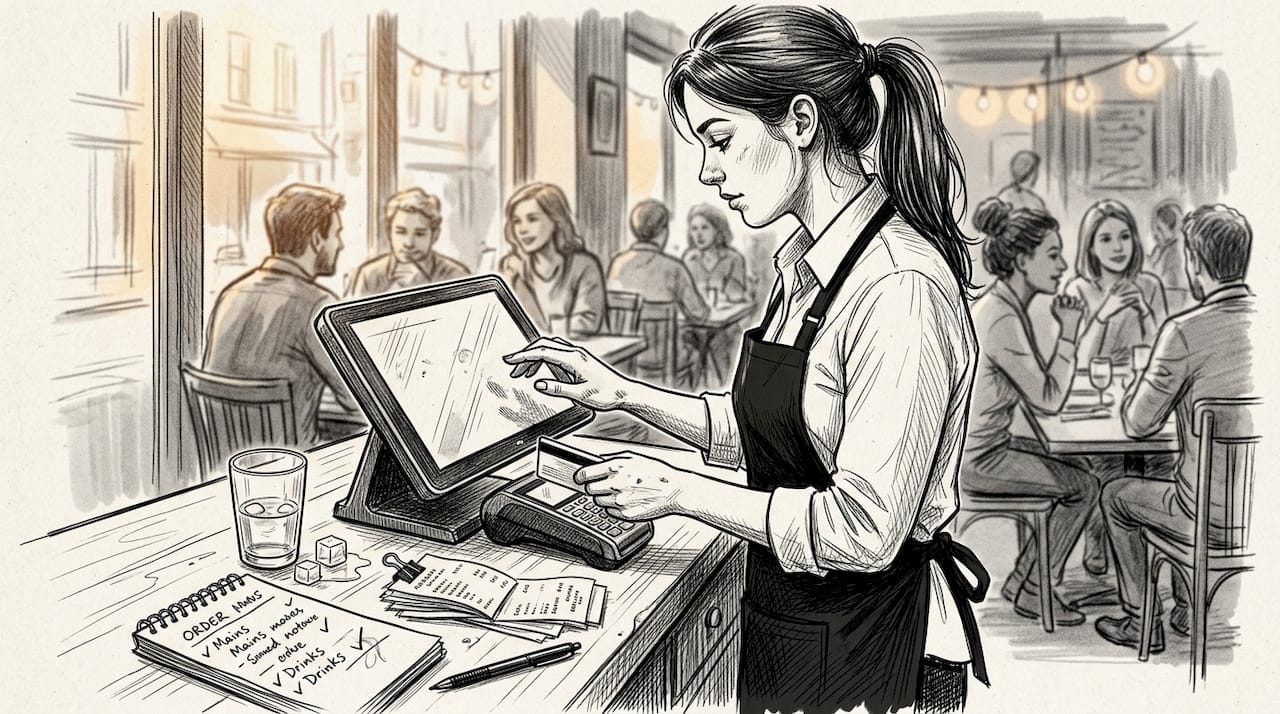
Pro Tip: Most operators underestimate how much integrated payments improve upselling. When your team is not distracted by manual payment steps, they have more time and mental space to suggest an extra round or a dessert. That attention adds up.
The POS hospitality benefits extend well beyond the till. Think about your online reviews. Faster service, fewer mistakes, and smoother payments all feed directly into the guest experience that drives four and five-star ratings.
How to choose and implement the right integrated payment solution
With benefits in mind, here is how to ensure you choose the right integrated solution for your specific hospitality venue.
Start with compatibility. Your new payment system must work with your existing POS hardware or be part of a unified platform that replaces it cleanly. Patchwork solutions that bolt together incompatible tools often create more problems than they solve.
When speaking to providers, ask these questions:
- Does the system integrate directly with my current till or do I need to replace it?
- What reporting does it produce and how is it accessed?
- How is the system secured and what is the PCI compliance status?
- What does local support look like and how quickly can issues be resolved?
- Can I see real UK venue case studies with measurable results?
Here is a benchmark table based on results from UK venues that have made the switch:
| Metric | Before integration | After integration |
|---|---|---|
| Admin hours per week | 10 or more | Near zero |
| Payment processing time | Standard | 95% faster |
| Fraud incidents | Baseline | Up to 60% fewer |
| Gross profit margin | Baseline | Up to 2% higher |
| Average guest spend | Baseline | Measurably higher |
Pro Tip: Involve both your front-of-house and back-of-house teams before you commit to any system. FOH staff will tell you where the payment friction is during service. BOH and management will highlight the reporting and reconciliation pain points. A system that solves both is the right one.
For a successful roll-out, book a live demo with real transaction scenarios, not just a slideshow. Run a trial shift before going fully live. Build in a staff training session and keep it short, because the best systems are intuitive enough that training takes an hour, not a day. Exploring integrating card payments with your POS is a practical starting point.
What most UK venues get wrong about payment integration
Here is an uncomfortable truth: most UK hospitality operators evaluate payment systems by comparing transaction fees. That is the wrong question. A 0.1% difference in processing fees is almost irrelevant compared to the operational savings, fraud reduction, and profit gains that come from a properly integrated system.
The second mistake is assuming that integration is a one-time setup job. It is not. The real value comes from using the data your integrated system generates. Very few venues actually leverage their payment and sales data to make decisions about staffing, menu pricing, or promotional timing. The system gives you the intelligence. Most operators leave it sitting unused.
The third issue is cross-team buy-in. Too many upgrades stall not because of cost but because the manager chose a system without consulting the staff who will use it daily. When FOH teams feel ownership of the tool, adoption is faster and the benefits arrive sooner. The real integration insights are not just technical. They are organisational.
A properly integrated payment system is one of the few investments in hospitality that pays back in multiple directions at once: time, money, security, and guest satisfaction.
Take the next step with integrated payment solutions
Ready to transform your venue’s transactions? eZeepos offers a unified, Android-based POS platform built specifically for UK hospitality venues, with integrated payment processing at its core. Whether you run a café, bar, restaurant, or multi-site operation, the platform connects your till, terminal, kitchen screens, and reporting into one seamless system.
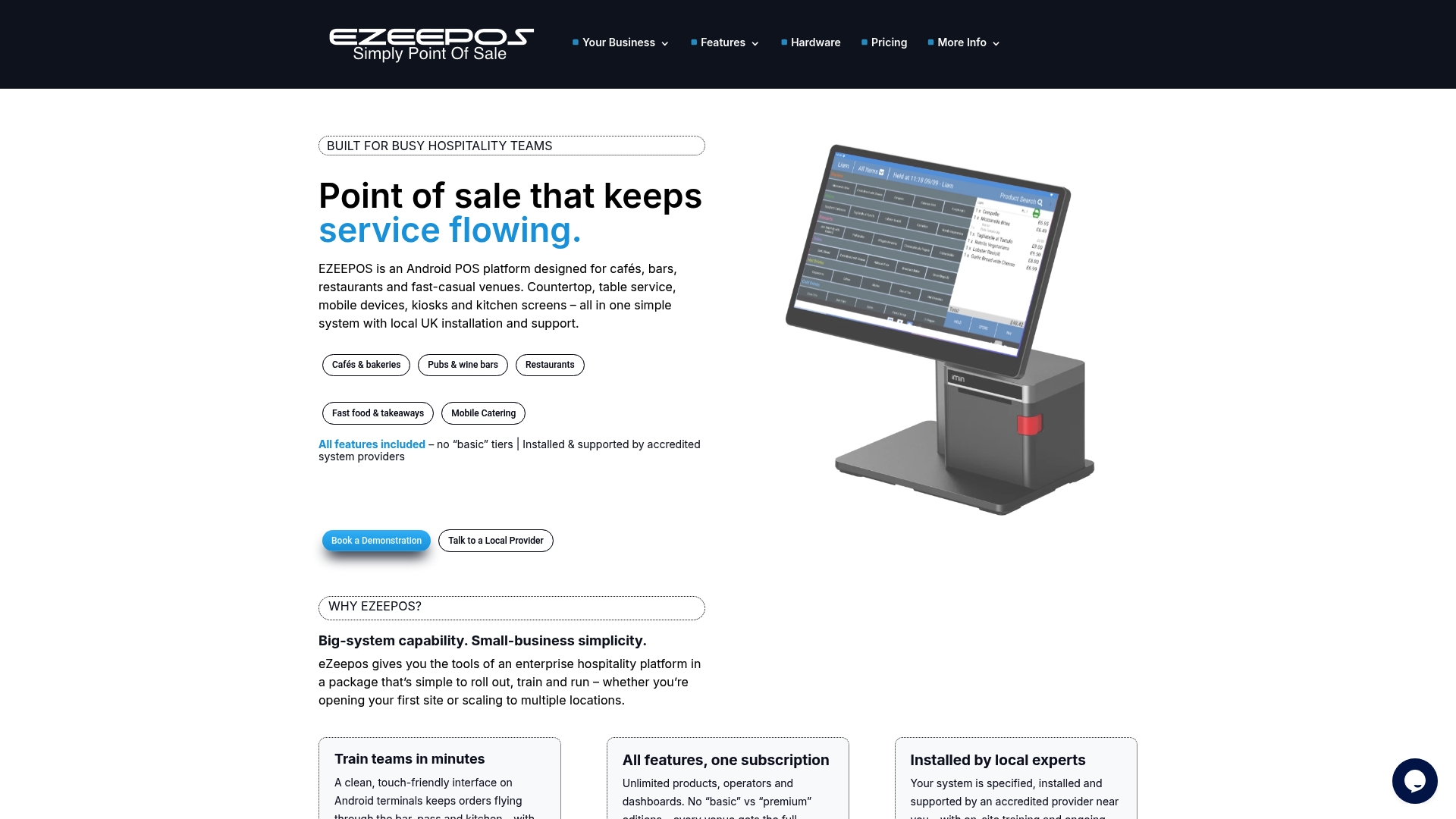
The unified POS platform benefits are tangible: less admin, faster service, better data, and happier guests. If you are considering upgrading your POS, now is the time to see what a fully integrated solution looks like in practice. Visit eZeepos to book a demo with a local UK accredited provider and find out how quickly your venue could see results.
Frequently asked questions
How does integrated payment processing differ from standard card machines?
Integrated systems connect directly to your till and reporting tools, eliminating manual entry and reducing errors. Venues using integrated systems have seen a 95% reduction in processing time compared to standalone terminals.
Can integrated payment processing really reduce fraud in my venue?
Yes. UK venues using integrated systems recorded up to 60% less fraud because every transaction is automatically matched and auditable, leaving no gap for discrepancies to hide.
What quick wins can I expect after switching?
Most venues notice faster payments, significantly less end-of-day admin, and a lift in average guest spend almost immediately. Real UK venues saved 10 hours of admin per week and recorded a 2% gross profit improvement.
How do I know which system is right for my venue?
Compare providers on UK-based support, hardware compatibility, security credentials, and verified ROI from real hospitality venues rather than focusing solely on transaction fees.
Recent Comments