
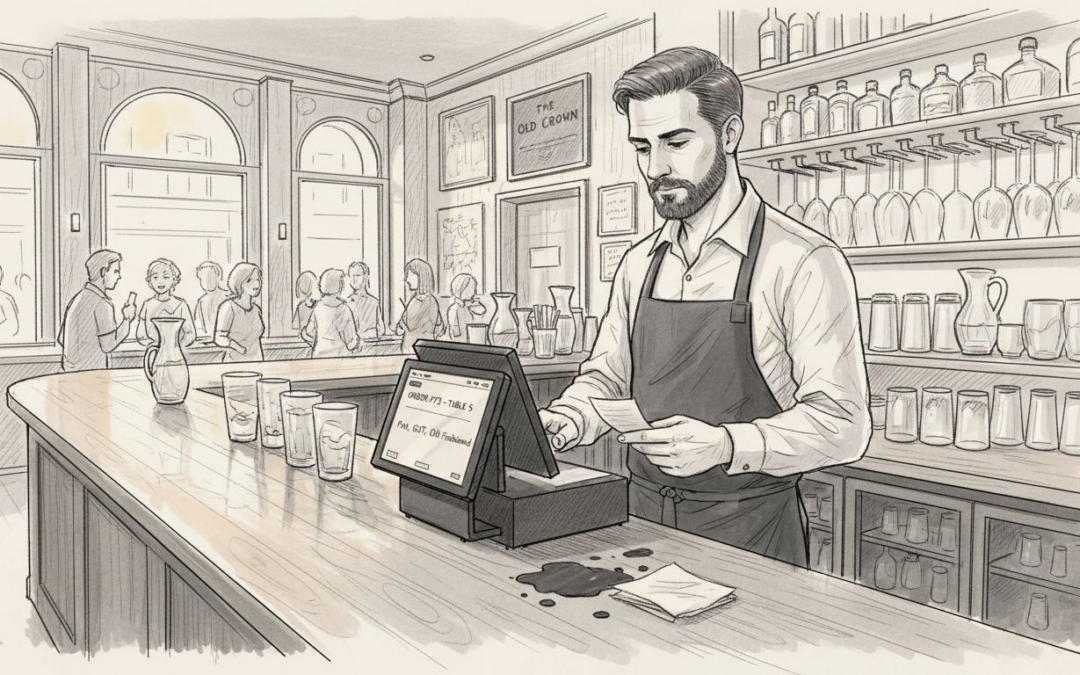
Choosing the right hospitality technology in 2026 can feel overwhelming for UK venue owners and managers. With countless solutions promising operational improvements and better guest experiences, knowing where to start is challenging. This article cuts through the complexity by presenting clear examples of proven hospitality technologies, from point of sale systems to AI-driven platforms, along with practical criteria to guide your selection decisions.
Table of Contents
- How To Choose The Right Hospitality Technology: Key Selection Criteria
- Point Of Sale (POS) Technologies In Hospitality
- AI-Driven Hospitality Technologies
- Cloud-Based Hospitality Management Solutions
- Kitchen Automation And Robotics
- Summary Comparison Table Of Hospitality Technology Types
- Situational Recommendations: Matching Technology To Venue Needs
- Discover eZee POS Solutions Tailored For UK Hospitality Venues
- FAQ
Key takeaways
| Point | Details |
|---|---|
| Clear selection criteria matter | Integration capabilities, user experience, security, scalability and measurable ROI separate effective technology investments from costly mistakes. |
| Five core technology categories drive results | POS systems, AI solutions, cloud platforms, kitchen automation and sustainability tech each address specific operational challenges and guest experience goals. |
| Match technology to venue profile | Quick service venues need flexible POS, hotels benefit from AI and cloud integration, whilst restaurants gain from kitchen automation depending on volume and service style. |
| Start with integration and support | Technologies that seamlessly connect with existing systems and offer local UK support deliver faster adoption and clearer returns. |
How to choose the right hospitality technology: key selection criteria
Before exploring specific technology examples, you need clear criteria to evaluate solutions properly. The wrong technology wastes money and frustrates staff, whilst the right choice transforms operations.
Integration capabilities should top your list. Your new technology must connect seamlessly with existing payment systems, inventory management and customer databases. Hospitality technology investments that prioritise data security, scalability, and ease of use have higher adoption success and clearer ROI. Isolated systems create data silos and duplicate work.
User experience determines whether your team actually uses the technology. If staff struggle with complex interfaces or guests find self-service kiosks confusing, the technology fails regardless of its features. Look for intuitive designs requiring minimal training time.
Security and scalability protect your long-term investment. Payment data breaches damage reputations and trigger regulatory penalties. Choose solutions with robust encryption and compliance certifications. Equally important, select platforms that grow with your business without requiring complete replacement.
Cost effectiveness extends beyond purchase price. Calculate total ownership costs including hardware, software licences, training, ongoing support and upgrade fees. Compare these against measurable benefits like faster table turns, reduced labour costs or increased average transaction values.
Pro Tip: Run pilot programmes before full deployment. Test new technology in one location or during specific shifts to identify issues and refine processes before wider rollout.
Training and support determine implementation success. Even brilliant technology fails without proper staff training and responsive technical support. Prioritise vendors offering comprehensive onboarding, ongoing education and local UK assistance. When evaluating defining hospitality POS options, confirm support availability matches your operating hours.
Point of sale (POS) technologies in hospitality
POS systems form the operational backbone of hospitality venues. Modern solutions extend far beyond simple payment processing to manage orders, inventory, staff scheduling and detailed analytics.
Android POS platforms offer exceptional flexibility for UK venues. These systems run on familiar mobile devices, tablets and dedicated countertop terminals, adapting to various service styles. A café might use tablets for tableside ordering, whilst a quick service restaurant deploys countertop terminals and self-service kiosks simultaneously.
Unified software and hardware reduce operational complexity. When your POS, kitchen display screens, payment terminals and back office reporting share a single platform, data flows seamlessly. Order accuracy improves, inventory updates happen in real time, and managers access comprehensive reports without manual data entry.
Local UK installation and dedicated support prove invaluable during busy service periods. When technical issues arise, waiting hours for overseas support costs revenue and frustrates guests. Vendors providing accredited UK installers and responsive local assistance resolve problems faster.
These systems suit diverse venue types remarkably well. Cafés benefit from quick order entry and integrated loyalty programmes. Bars manage complex drink recipes and modifiers efficiently. Mobile catering operations appreciate portable POS solutions connecting to cloud platforms. Quick service venues deploy multiple hardware configurations across counter service, kiosks and kitchen screens.
Pro Tip: Avoid tiered pricing models that limit features based on subscription level. Choose types of hospitality POS systems offering full functionality without artificial restrictions, ensuring you access every tool as your needs evolve.
Practical implementation considerations include payment integration breadth, offline functionality during internet disruptions, and customisation options matching your specific service workflows. When you setup mobile POS solutions, confirm they handle split bills, table transfers and complex menu modifications smoothly. Understanding the importance of hospitality POS extends beyond transactions to encompass operational efficiency, data insights and guest satisfaction improvements that drive profitability.
AI-driven hospitality technologies
Artificial intelligence transforms guest interactions and operational decision making in ways impossible just years ago. UK venues adopting AI technologies gain competitive advantages through personalisation, efficiency and data-driven insights.

AI chatbots enable 24/7 guest interaction handling, freeing staff for higher-value tasks and improving response times. Virtual assistants answer common questions about amenities, hours and booking policies instantly. They handle reservation modifications, provide local recommendations and process simple service requests without human intervention. When complex issues arise, they route guests to appropriate staff members with full conversation context.
Personalised upselling and customised experiences directly increase revenue. AI analyses guest history, preferences and behaviour patterns to suggest relevant room upgrades, dining experiences or additional services. These recommendations feel helpful rather than pushy because they align with demonstrated interests. A guest who previously enjoyed spa treatments receives timely offers for new wellness services, whilst business travellers see promotions for meeting room upgrades.
Predictive analytics enhance operational maintenance and pricing strategies significantly. Integrated AI-driven systems can increase RevPAR by 10-15% and reduce administrative costs by 30%. Machine learning algorithms identify equipment maintenance needs before failures occur, preventing costly emergency repairs and service disruptions. Dynamic pricing models adjust room rates and menu prices based on demand forecasts, competitor analysis and historical booking patterns.
AI technologies deliver measurable financial impact through revenue optimisation and cost reduction whilst simultaneously improving guest satisfaction scores and operational efficiency metrics that drive long-term competitiveness.
Implementation success requires quality data and thoughtful integration. Start with specific use cases like reservation management or maintenance scheduling rather than attempting comprehensive AI deployment immediately. Monitor performance metrics closely and refine algorithms based on results. Consider exploring hospitality software examples that incorporate AI capabilities alongside core operational functions for streamlined adoption.
Cloud-based hospitality management solutions
Cloud platforms unify disparate systems into cohesive management environments, particularly valuable for multi-venue operations requiring centralised oversight with location-specific flexibility.
Open APIs integrate property management systems, POS platforms and customer relationship management tools seamlessly. Data flows automatically between systems, eliminating manual transfers and associated errors. When a guest makes a restaurant reservation through your website, the information populates both your PMS and POS systems immediately, ensuring front desk and dining staff access identical customer details.
Real-time dashboards enable quick decision making across multiple venues. Managers monitor sales performance, inventory levels, staff scheduling and guest feedback from any location. Identify underperforming products, adjust staffing based on actual traffic patterns, and respond to operational issues before they escalate. Consolidated reporting reveals trends invisible when viewing individual venue data separately.
These platforms support multi-property chains and brand management requirements effectively. Maintain consistent pricing, menus and service standards across locations whilst accommodating local variations. Corporate teams access aggregated data for strategic planning, whilst site managers retain operational control over their specific venues.
Commercial strategy alignment becomes achievable when sales, marketing and operations teams share unified data. Loyalty programmes track guest behaviour across all properties. Marketing campaigns target specific customer segments based on comprehensive purchase history. Revenue management decisions incorporate occupancy data, booking patterns and competitive intelligence from every location.
- Centralised inventory management reduces waste and optimises purchasing across venues
- Unified staff training and scheduling improves consistency and reduces administrative burden
- Consolidated guest profiles enable personalised service regardless of which property guests visit
- Integrated financial reporting simplifies accounting and provides clear performance visibility
- Scalable architecture supports business growth without platform replacement
| Feature | Benefit | Implementation Consideration |
|---|---|---|
| Open API integration | Seamless data flow between PMS, POS and CRM systems | Verify compatibility with existing software before committing |
| Real-time analytics | Immediate visibility into operations across all venues | Ensure reliable internet connectivity at each location |
| Cloud storage | Accessible from anywhere with automatic backups | Confirm data security and compliance certifications |
| Multi-property support | Manage multiple venues from single dashboard | Evaluate user permission controls for different staff levels |
Hospitality technology that prioritises integration and scalability yields clearer ROI and adoption success. When exploring options, understanding why use cloud POS and reviewing specific cloud POS benefits helps clarify which cloud POS systems match your operational requirements and growth plans.
Kitchen automation and robotics
Kitchen technology directly impacts food quality, service speed and labour efficiency. Modern automation options range from digital displays to robotic assistants, each addressing specific operational challenges.
Kitchen display systems replace paper tickets with digital screens showing orders in real time. Chefs see complete order details, special requests and timing requirements clearly. Visual and audio alerts prevent forgotten items. As dishes complete, staff mark them finished digitally, updating front of house systems automatically. This reduces errors significantly and speeds food delivery.
Robotic food delivery and cleaning ease staff workloads in high-volume environments. Autonomous serving robots transport dishes from kitchen to table, freeing waitstaff for guest interaction and complex service tasks. Cleaning robots handle repetitive sanitisation duties during quiet periods. Whilst robots cannot replace skilled culinary staff, they augment teams effectively.
Automation improves consistency and guest satisfaction measurably. Digital timers ensure proper cooking durations. Automated ingredient dispensers maintain recipe accuracy. Kitchen analytics identify bottlenecks in food preparation workflows, enabling process improvements. Guests receive their orders faster and with greater accuracy, reducing complaints and increasing positive reviews.
| Technology Type | Primary Function | Best Venue Fit | Implementation Cost | Labour Impact |
|---|---|---|---|---|
| Kitchen display systems | Digital order management replacing paper tickets | All venue types, especially fast casual and restaurants | Moderate | Reduces errors, speeds service |
| Robotic food delivery | Autonomous transport from kitchen to table | High-volume restaurants and hotels | High | Frees servers for guest interaction |
| Automated cleaning robots | Floor sanitisation and basic cleaning tasks | Large venues with significant floor space | High | Reduces cleaning labour hours |
| Ingredient dispensers | Precise automated measuring and mixing | Quick service venues with standardised recipes | Moderate | Improves consistency, reduces waste |
Pro Tip: Combine selective robotics with human oversight for optimal results. Use automation for repetitive, high-volume tasks whilst preserving skilled staff for creative cooking and guest interaction that build your reputation.
Implementation requires careful workflow analysis. Map current kitchen processes to identify bottlenecks and repetitive tasks suitable for automation. Consider physical space constraints and staff training requirements. Review kitchen screens efficiency data to understand potential time savings. Start with kitchen order screens as a foundational automation step before advancing to more complex robotics.
Summary comparison table of hospitality technology types
Comparing technology categories side by side clarifies their distinct strengths and ideal applications, helping you match solutions to specific venue needs efficiently.
| Technology Type | Core Strength | Ideal Venue Type | Operational Benefit | Guest Experience Impact | Integration Requirement | Scalability |
|---|---|---|---|---|---|---|
| POS systems | Transaction processing and order management | All hospitality venues | Streamlines sales, inventory and reporting | Faster service, accurate orders | High; must connect payment, kitchen, back office | Excellent; supports growth easily |
| AI technologies | Personalisation and predictive analytics | Hotels and multi-venue groups | Reduces admin costs, optimises pricing | 24/7 assistance, tailored recommendations | Moderate; needs quality data access | Good; algorithms improve with data |
| Cloud platforms | Centralised multi-venue management | Chains and growing operations | Real-time visibility, unified reporting | Consistent service across properties | High; unifies PMS, POS, CRM | Excellent; designed for expansion |
| Kitchen automation | Order accuracy and preparation speed | Fast casual and high-volume restaurants | Reduces errors, speeds output | Faster food delivery, fewer mistakes | Moderate; links to POS and displays | Good; modular additions possible |
| Sustainability tech | Energy and waste reduction | Eco-conscious venues and hotels | Lower utility costs, regulatory compliance | Appeals to environmentally aware guests | Low; often standalone initially | Good; expands with venue needs |
This comparison reveals that POS systems provide universal value across all venue types, serving as the operational foundation. AI and cloud technologies deliver greatest impact for larger operations managing multiple properties or seeking sophisticated guest personalisation. Kitchen automation suits high-volume venues where speed and consistency drive competitiveness. Sustainability technologies address both cost reduction and guest expectations around environmental responsibility.
Decision makers should evaluate their most pressing operational challenges first. Venues struggling with order accuracy benefit immediately from kitchen displays. Operations lacking centralised visibility need cloud platforms. Establishments seeking competitive differentiation through guest experience should prioritise AI capabilities.
Situational recommendations: matching technology to venue needs
Practical technology selection depends on your specific venue profile, service style and strategic priorities. These situational recommendations simplify decision making by matching proven solutions to common scenarios.
- Quick service and mobile catering operations: Deploy flexible POS systems supporting multiple hardware configurations including tablets, countertops and mobile devices. Prioritise offline functionality and fast transaction processing. Add kitchen display screens to improve order accuracy during peak periods.
- Hotels and multi-property groups: Implement AI-driven chatbots for guest services and cloud platforms unifying PMS, POS and CRM data across properties. Focus on personalisation capabilities and centralised analytics enabling corporate oversight with location autonomy.
- Full-service restaurants: Combine tableside POS tablets with kitchen automation including display screens and order management systems. Add AI-powered reservation and waitlist management to optimise seating and reduce guest wait times.
- Fast casual and high-volume venues: Invest in comprehensive kitchen automation including display systems, automated ingredient dispensers and potentially robotic delivery. Pair with robust POS supporting self-service kiosks to handle peak demand efficiently.
- Independent cafés and bars: Start with Android-based POS offering full features without tiered pricing. Add cloud back office capabilities for remote management and reporting. Consider customer-facing displays and integrated loyalty programmes to build repeat business.
Strategic priorities guide technology selection beyond venue type:
- Labour shortage mitigation: Prioritise automation reducing repetitive tasks and self-service technologies enabling guests to order independently
- Rapid expansion plans: Select cloud platforms and scalable POS systems designed for multi-venue deployment and centralised management
- Guest experience differentiation: Focus on AI personalisation, mobile ordering and contactless payment options that convenience-oriented guests expect
- Operational cost reduction: Implement kitchen automation reducing waste, cloud analytics identifying inefficiencies, and energy management systems lowering utilities
- Regulatory compliance: Choose platforms with robust data security, payment compliance certifications and audit trail capabilities simplifying inspections
Successful implementation combines appropriate technology selection with phased deployment, comprehensive training and ongoing performance measurement. Start with foundational systems like POS and cloud management, then layer additional capabilities as staff adapt and operational benefits become clear.
Discover eZee POS solutions tailored for UK hospitality venues
If you’re ready to implement proven hospitality technology that addresses the operational challenges and guest experience priorities discussed throughout this article, eZee POS offers comprehensive solutions designed specifically for UK venues.
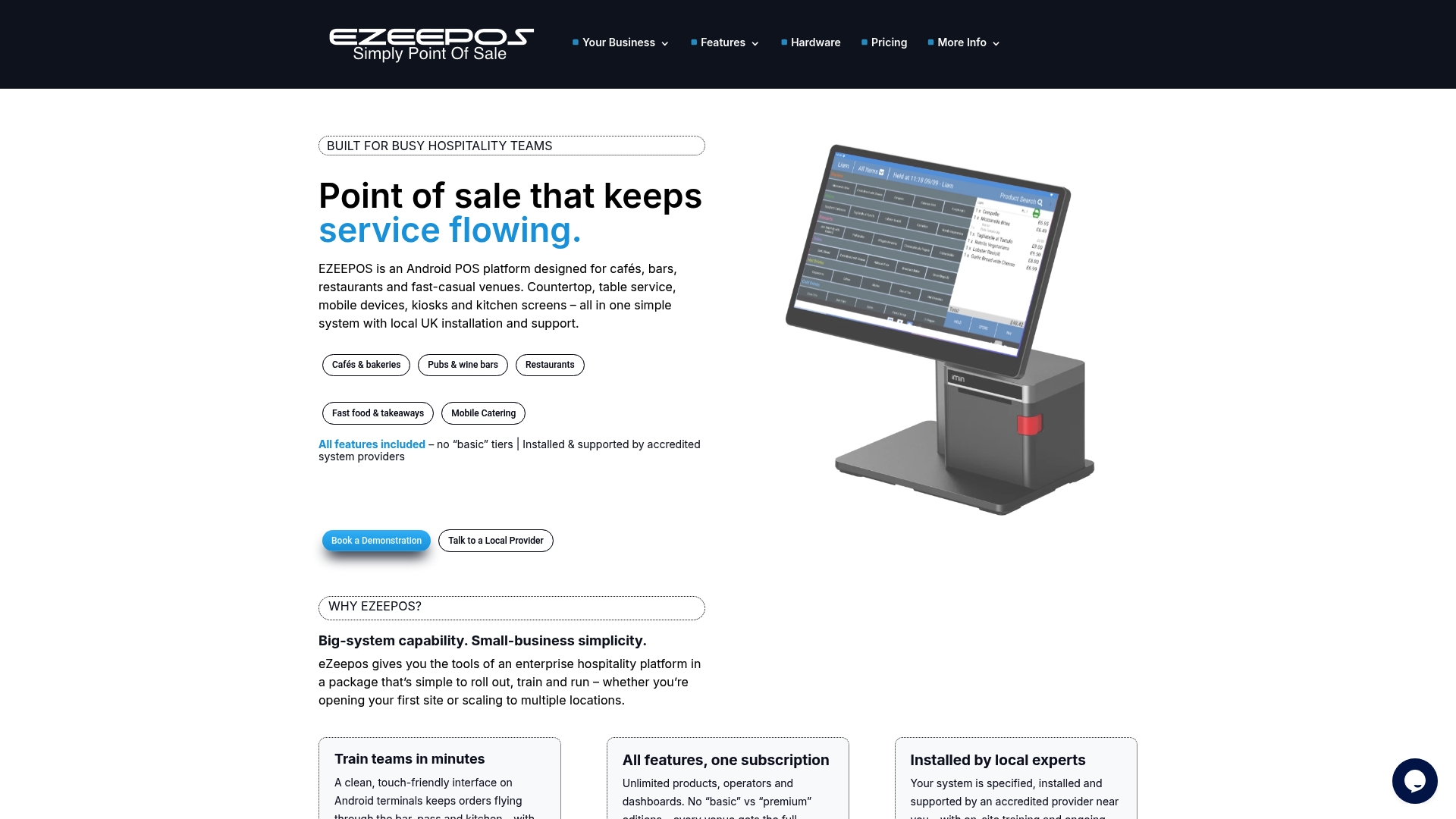
Our eZee POS software delivers robust Android-based POS systems combining mobile flexibility with countertop reliability, supporting cafés, bars, restaurants, quick service venues and mobile catering operations effectively. Cloud technology solutions integrate seamlessly, providing real-time analytics and centralised management capabilities ideal for growing hospitality businesses. Local UK installation, comprehensive training and ongoing human support from accredited providers ensure smooth implementation and responsive assistance when you need it.
Pro Tip: Take advantage of full feature access without tiered pricing restrictions, ensuring your technology investment adapts to evolving operational needs without costly upgrades or feature limitations.
Explore how Android POS platforms tailored for UK hospitality venues can transform your operations, improve guest satisfaction and deliver measurable returns on your technology investment.
FAQ
What key features should a UK hospitality POS system have?
Seamless integration with payment processors, property management systems and customer relationship platforms is essential for efficient operations. Mobile and countertop hardware flexibility allows venues to adapt the system to various service styles including tableside ordering, counter service and self-service kiosks. Local UK support with responsive technical assistance and comprehensive training ensures staff adopt the technology successfully and issues resolve quickly without lengthy overseas support delays.
How do AI technologies improve guest engagement in hospitality?
AI-powered chatbots and virtual assistants provide instant responses to common guest questions around the clock, handling reservation modifications and service requests without human staff intervention. Personalisation engines analyse guest history and preferences to suggest relevant upgrades and additional services that increase revenue whilst feeling helpful rather than pushy. Predictive analytics identify operational patterns enabling proactive service delivery and dynamic pricing that optimises revenue per available room whilst maintaining competitive positioning.
What benefits do cloud management platforms bring to multi-venue operations?
Real-time data visibility across all properties enables managers to identify performance issues, adjust staffing and respond to operational challenges immediately rather than waiting for end-of-day reports. Centralised dashboards consolidate information from property management, point of sale and customer relationship systems into unified views eliminating manual data compilation. Scalable architecture supports business growth by adding new venues to existing platforms without replacing core systems or losing historical data continuity.
Are kitchen automation solutions suitable for all hospitality venues?
Kitchen automation delivers greatest value for fast casual restaurants and high-volume venues where order accuracy and preparation speed directly impact guest satisfaction and operational capacity. Smaller establishments with lower transaction volumes may find basic kitchen display systems provide sufficient benefits without justifying robotic solutions. Implementation decisions should weigh current bottlenecks, available kitchen space, staff training capacity and expected return on investment based on service volume and complexity.
Recent Comments