
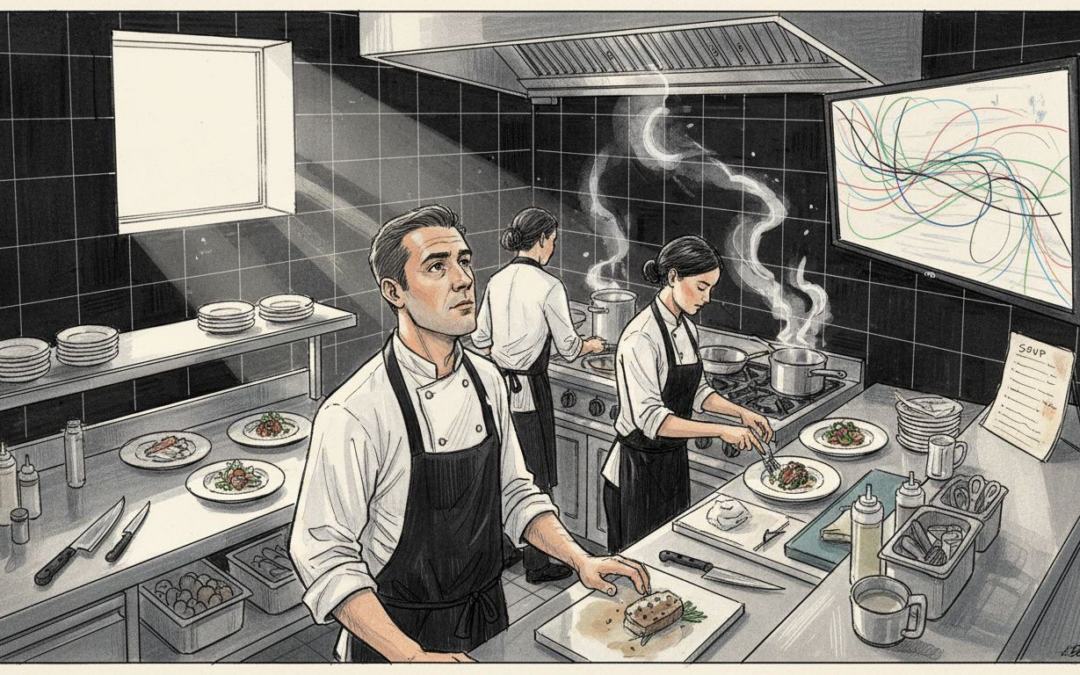
Confusion about kitchen order screens is common among british restaurant managers, yet these digital solutions are reshaping how kitchens communicate. With over 60 percent of restaurant errors linked to poor order management, adopting advanced screens can mean the difference between chaos and consistency. As the demand for efficient communication in british hospitality grows, understanding how modern kitchen screens support seamless coordination and faster service gives managers a clear edge in a competitive market.
Table of Contents
- Defining Kitchen Order Screens And Misconceptions
- Types Of Kitchen Order Screens In Restaurants
- How Kitchen Screens Integrate With Pos Systems
- Operational Impact On Communication And Efficiency
- Costs, Challenges, And Common Missteps
Key Takeaways
| Point | Details |
|---|---|
| Streamlined Communication | Kitchen order screens enhance communication, reduce errors, and improve workflow efficiency in restaurant environments. |
| Variety of Screen Types | Different screen models exist, such as fixed wall displays, tablet-based systems, and touchscreen panels, each catering to specific operational needs. |
| Integration with POS Systems | Successful integration with POS systems enhances order accuracy and efficiency by automating information transfer directly to kitchen staff. |
| Mitigation of Challenges | Strategic planning, staff training, and hardware selection are crucial to overcoming common challenges associated with kitchen order screen implementation. |
Defining Kitchen Order Screens and Misconceptions
Kitchen order screens represent a sophisticated technological solution designed to streamline communication and efficiency within professional restaurant environments. These digital displays transform traditional paper-based order management by providing real-time, visual representations of incoming food preparation requests directly to kitchen staff. Unlike antiquated manual systems, kitchen order screens enable precise tracking, immediate updates, and seamless coordination across different kitchen stations.
Many restaurant managers harbour misconceptions about these systems, believing they are overly complex or disruptive to existing workflows. In reality, kitchen order management technology represents a straightforward yet powerful tool that dramatically reduces communication errors and waiting times. These screens display critical information such as order details, preparation time, special dietary requirements, and table numbers, ensuring that every team member has instantaneous access to accurate meal preparation instructions.
The fundamental purpose of kitchen order screens extends beyond mere digital display. They serve as intelligent communication hubs that integrate multiple operational elements including order routing, prioritisation, and performance tracking. By transforming raw order data into actionable visual information, these systems help kitchens maintain consistent food quality, reduce preparation times, and minimise human error. Modern screens can also provide real-time analytics, allowing management to understand kitchen performance metrics and identify potential bottlenecks in food service processes.
Pro tip: When implementing kitchen order screens, start with a gradual rollout and provide comprehensive staff training to ensure smooth technological adoption and maximum operational efficiency.
Types of Kitchen Order Screens in Restaurants
Kitchen order screens in modern UK restaurants come in diverse configurations, each designed to address specific operational needs and service styles. The primary categories include wall-mounted displays, tablet-based systems, and standalone touchscreen panels. These technological solutions are engineered to provide seamless communication between front-of-house staff and kitchen teams, transforming traditional order management processes.
The most common types include fixed wall displays, which are permanently mounted in kitchen preparation areas and offer large, easily readable interfaces for multiple staff members. Kitchen order display systems typically feature colour-coded order tracking, enabling chefs to quickly identify priority items, special dietary requirements, and table assignments. Tablet-based screens represent another innovative category, offering mobility and flexibility for smaller establishments or kitchens with limited wall space. These portable devices allow kitchen staff to move freely while maintaining real-time order visibility.
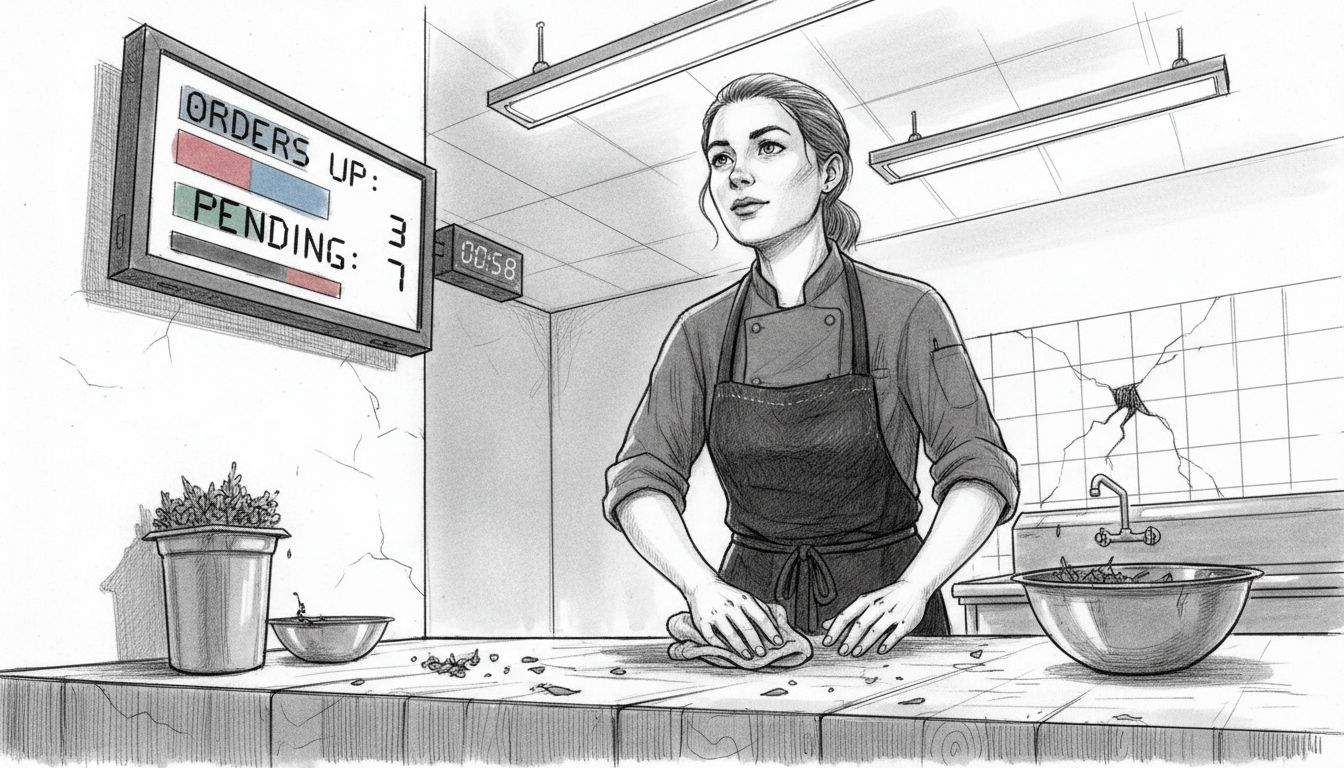
Advanced kitchen order screen systems often integrate additional functionalities beyond basic order display. Some sophisticated models include performance analytics, temperature monitoring, inventory tracking, and staff communication tools. These comprehensive systems go beyond simple order management, providing restaurant managers with detailed insights into kitchen efficiency, preparation times, and potential workflow bottlenecks. Touchscreen panels with intuitive interfaces enable staff to update order statuses, mark items as complete, and communicate special instructions with minimal manual intervention.
Here’s a comparison of the main types of kitchen order screens used in restaurants:
| Type of Screen | Key Benefits | Ideal For |
|---|---|---|
| Fixed Wall Display | Large, clear visibility | High-volume commercial kitchens |
| Tablet-Based System | Mobility, flexible placement | Small venues, space-limited kitchens |
| Touchscreen Panel | Quick order updates, interaction | Operations needing rapid status changes |
Pro tip: Select a kitchen order screen system that matches your specific restaurant layout and service style, ensuring seamless integration with existing operational workflows.
How Kitchen Screens Integrate with POS Systems
The integration between kitchen order screens and point-of-sale (POS) systems represents a technological breakthrough in restaurant management, creating a seamless communication channel between front-of-house and back-of-house operations. Integration with POS systems enables restaurants to transform their traditional order processing workflows, eliminating manual data entry and reducing potential human errors.
Modern POS systems automatically transmit order details directly to kitchen screens, ensuring that every menu item, special instruction, and modification is accurately communicated in real-time. This synchronisation allows kitchen staff to receive precise information about customer orders, including specific dietary requirements, table numbers, and preparation priorities. The digital handoff eliminates misunderstandings that traditionally occurred with handwritten order tickets, creating a more efficient and transparent kitchen environment.
The technological integration goes beyond simple order transmission. Advanced POS and kitchen screen systems now offer comprehensive data analytics, tracking key performance metrics such as order preparation times, kitchen staff productivity, and menu item popularity. These intelligent systems can generate detailed reports that help restaurant managers make informed decisions about staffing, menu optimisation, and operational efficiency. By connecting front-of-house sales data with kitchen production capabilities, restaurants can create a more streamlined and responsive dining experience.
Pro tip: Invest in a POS system with robust kitchen screen integration that provides real-time reporting and supports multiple service modes to maximise operational flexibility.
Operational Impact on Communication and Efficiency
Kitchen display systems fundamentally transform restaurant communication dynamics, replacing traditional manual processes with intelligent digital workflows. Kitchen communication systems dramatically reduce communication errors by providing real-time visual guidance that eliminates misunderstandings and streamlines operational processes across kitchen stations.
The technological innovation enables precise task routing and prioritisation, allowing kitchen staff to manage complex orders with unprecedented efficiency. Digital screens automatically highlight critical information such as special dietary requirements, allergen warnings, and specific preparation instructions, ensuring that each team member receives accurate, immediate guidance. This systematic approach reduces preparation times, minimises ingredient waste, and creates a more coordinated kitchen environment where staff can focus on culinary excellence rather than deciphering handwritten tickets.
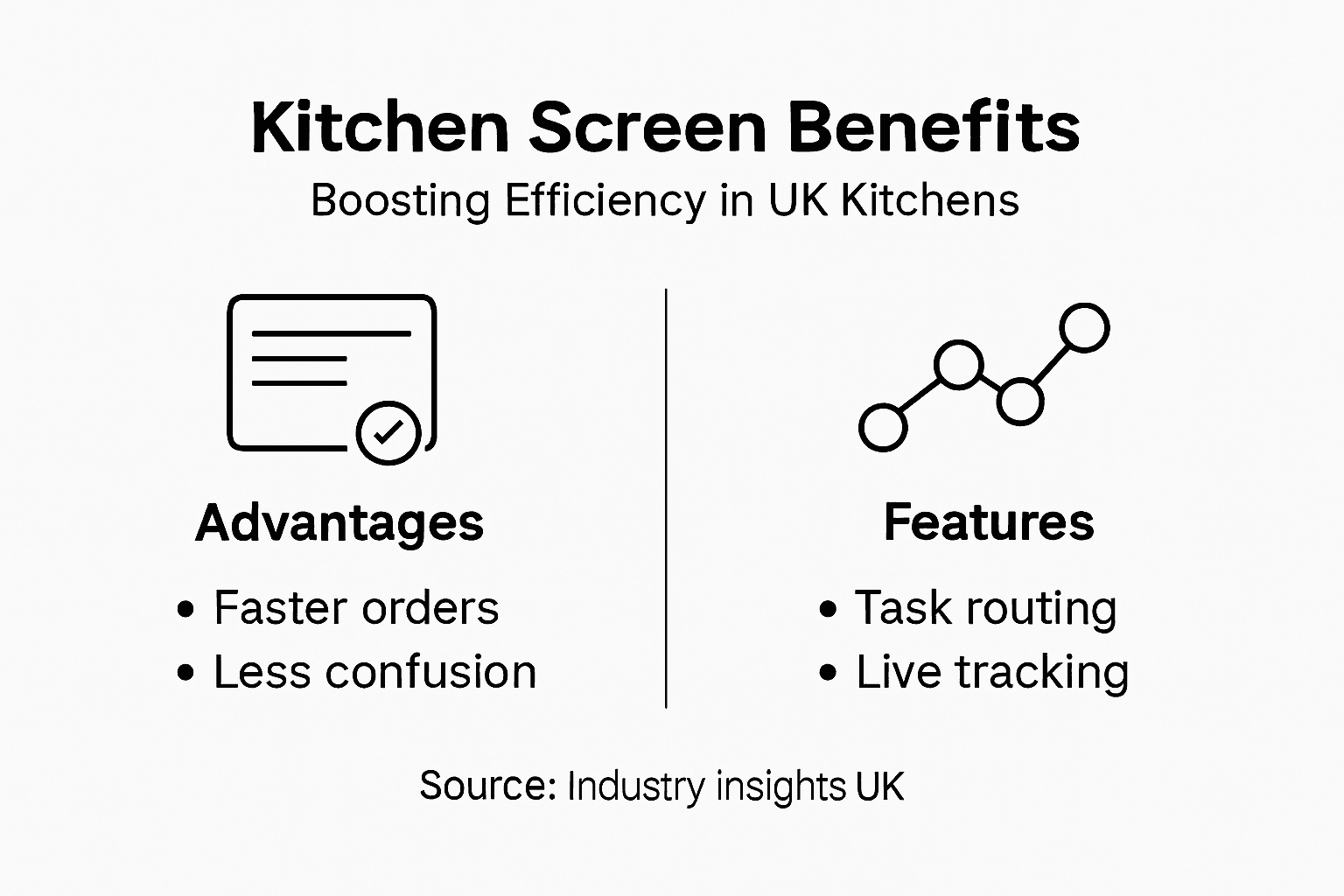
Moreover, these advanced systems provide comprehensive performance tracking capabilities that transform kitchen management. Managers can now analyse detailed metrics including individual staff productivity, average preparation times, order complexity, and potential bottlenecks. The granular insights enable data-driven decision-making, allowing restaurants to optimise staffing, refine training programmes, and continuously improve operational workflows. By creating a transparent, measurable kitchen ecosystem, these technologies empower restaurant leadership to make strategic improvements that directly impact service quality and customer satisfaction.
Pro tip: Implement a comprehensive staff training programme that focuses on maximising the potential of your kitchen display system, ensuring every team member understands its full operational capabilities.
Costs, Challenges, and Common Missteps
Implementing kitchen order screens requires careful consideration of potential challenges and financial implications that can significantly impact a restaurant’s operational effectiveness. The initial investment extends beyond software procurement, encompassing hardware selection, staff training, and potential system integration complexities that demand strategic planning and budgetary allocation.
Kitchen hardware reliability represents a critical concern for restaurant managers, particularly in high-temperature, grease-intensive kitchen environments. Commercial-grade touchscreens must withstand extreme conditions, including frequent temperature fluctuations, direct moisture exposure, and aggressive cleaning protocols. Restaurants frequently underestimate the importance of selecting robust, purpose-built hardware designed specifically for culinary settings, which can result in frequent equipment failures and unexpected maintenance expenses.
Restaurant owners often encounter several common missteps when implementing kitchen order screen systems. These include inadequate staff training, choosing incompatible hardware, overlooking system scalability, and failing to establish comprehensive technical support mechanisms. The most successful implementations involve gradual rollout strategies, comprehensive employee education programmes, and selecting flexible systems that can adapt to evolving operational requirements. Financial considerations extend beyond initial purchase costs, encompassing potential productivity gains, reduced error rates, and long-term operational efficiency improvements.
Consider these common challenges and mitigation strategies when implementing kitchen order screens:
| Challenge | Typical Consequence | Mitigation Strategy |
|---|---|---|
| Inadequate staff training | Operational errors | Invest in comprehensive training |
| Hardware not kitchen-suitable | Frequent breakdowns | Choose commercial-grade equipment |
| Poor system scalability | Difficult upgrades | Select flexible, upgradable systems |
| Lack of technical support | Longer downtime | Arrange for robust support contracts |
Pro tip: Conduct thorough hardware testing and request extended warranty options when selecting kitchen order screen systems to mitigate potential operational disruptions.
Revolutionise Your Kitchen Workflow with EZEEPos
Managing kitchen order screens effectively is key to eliminating communication errors and enhancing operational efficiency in busy UK hospitality venues. If you are seeking a reliable and scalable solution to integrate your kitchen screens seamlessly with your POS system, EZEEPos offers a powerful Android-based platform tailored specifically to your needs. Our system supports multiple service styles and hardware options that adapt perfectly to your kitchen environment, helping you overcome challenges like hardware durability and staff training while boosting productivity.
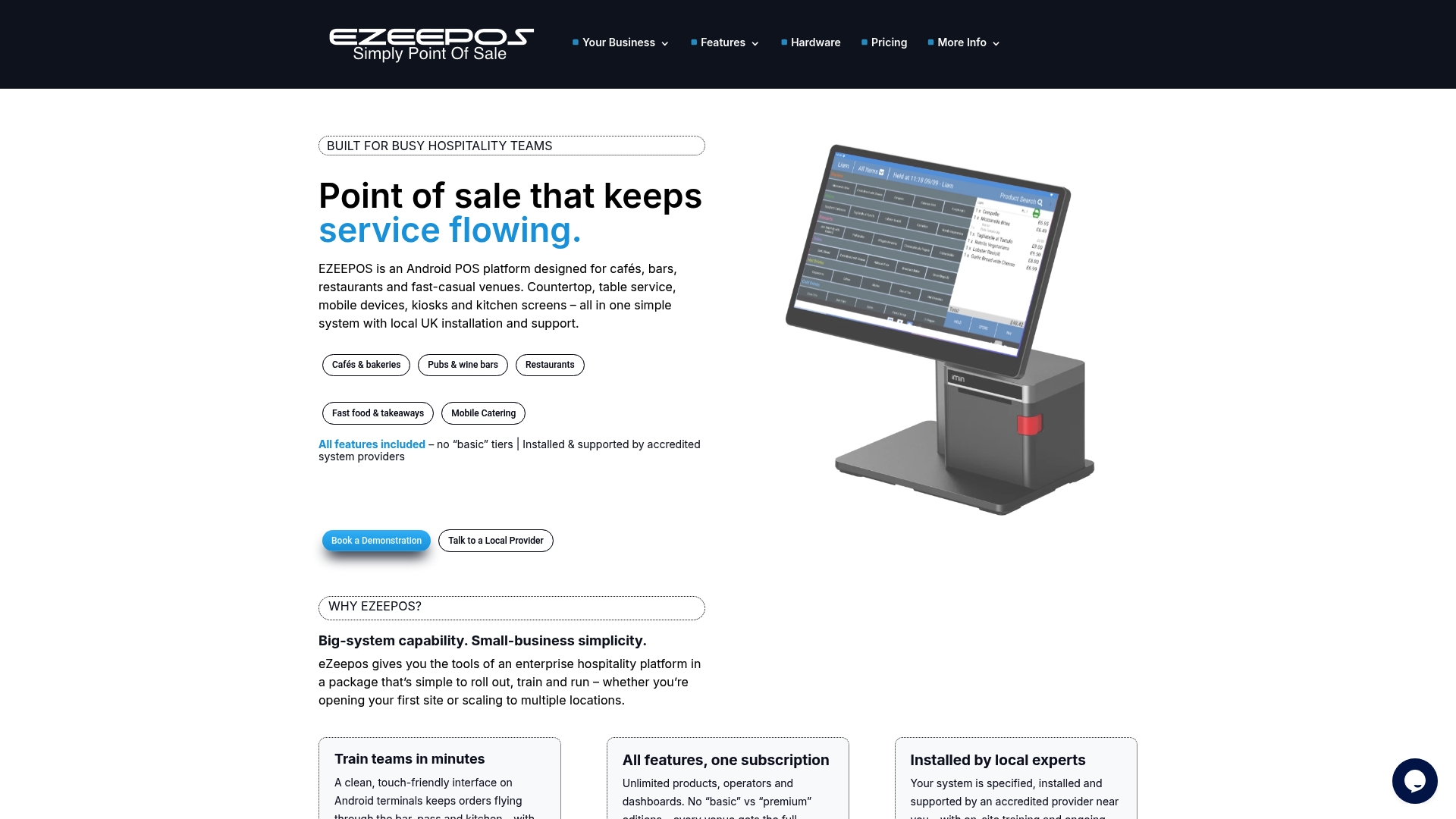
Discover how EZEEPos can transform your kitchen operations today by exploring our Hospitality solutions. Get in touch via https://ezeepos.co.uk to schedule a demonstration and start optimising order accuracy and staff efficiency now. For enhanced payment convenience, learn more about our integrated EFT terminals to complete your seamless point-of-sale experience.
Frequently Asked Questions
What are kitchen order screens and how do they improve restaurant operations?
Kitchen order screens are digital displays that enhance communication in restaurant kitchens by transforming traditional paper-based order management into real-time visual representations. They provide immediate access to order details, reducing errors and increasing efficiency in food preparation.
How do kitchen order screens integrate with POS systems?
Kitchen order screens integrate with point-of-sale (POS) systems to streamline order processing. This integration ensures that order details, including modifications and special instructions, are transmitted directly to the kitchen, minimising misunderstandings and enhancing workflow efficiency.
What types of kitchen order screens are available for restaurants?
The main types of kitchen order screens include fixed wall displays, which offer clear visibility, tablet-based systems for mobility, and touchscreen panels that allow quick updates and interactions. Each type serves specific operational needs and space considerations.
What are the common challenges faced when implementing kitchen order screens?
Common challenges include inadequate staff training, selecting unsuitable hardware, scalability issues, and lack of technical support. To mitigate these, restaurants should invest in thorough employee education, choose equipment designed for kitchen environments, and ensure strong support channels are in place.
Recent Comments