
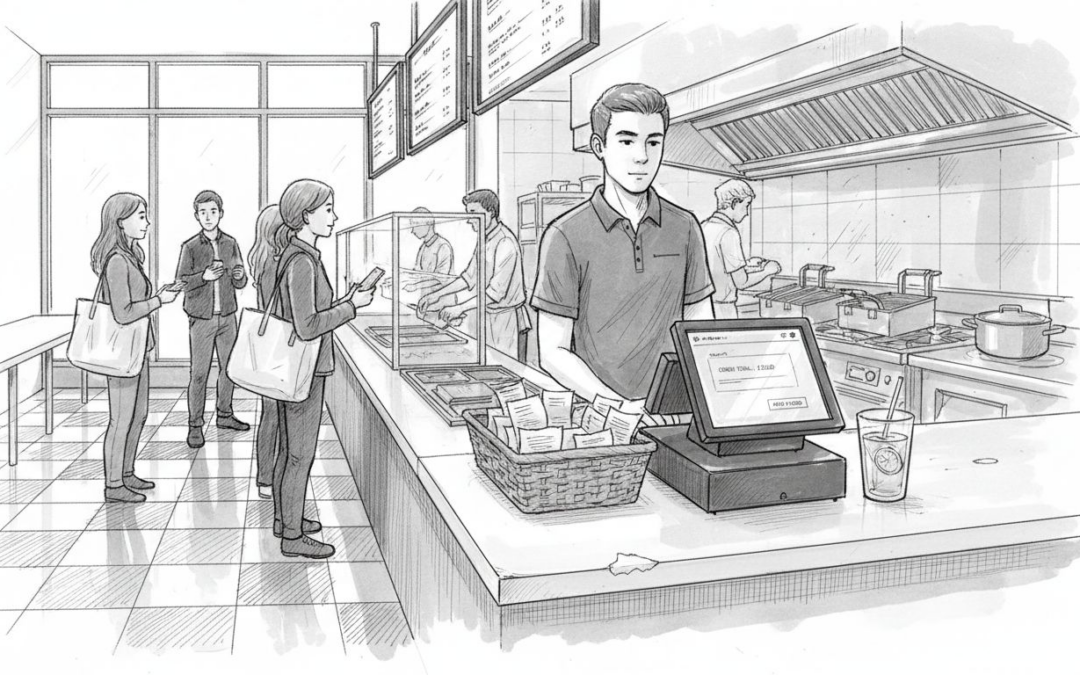
Every British quick-service restaurant faces the daily pressure of rapid order flow and staffing challenges. With staff turnover rates in hospitality reaching over 30 percent annually, finding efficient solutions that simplify operations and save training time is crucial for business survival. This overview reveals how specialised POS systems are reinventing the way restaurant owners and managers can control orders, inventory, and service speed in the demanding UK market.
Table of Contents
- What Quick-Service POS Means in Hospitality
- Key Types of Quick-Service POS Solutions
- Essential Features for Fast-Paced Environments
- Benefits for Staff, Service, and Profits
- Comparing Quick-Service POS with Alternatives
Key Takeaways
| Point | Details |
|---|---|
| Core Functionality | Quick-Service POS systems enhance efficiency through real-time inventory management and performance tracking. |
| Integration Flexibility | These systems support multiple service modes, including mobile ordering and self-service kiosks, allowing adaptability to customer needs. |
| Operational Benefits | The use of Quick-Service POS reduces administrative burdens and enhances staff productivity, leading to improved customer service and revenue potential. |
| Design Considerations | When selecting a POS system, prioritise intuitive interfaces and integration capabilities to ensure smooth operations across various restaurant formats. |
What Quick-Service POS Means in Hospitality
In the fast-paced world of hospitality, a Quick-Service Point of Sale (POS) system represents more than just a payment terminal – it’s the technological backbone that enables restaurants, cafés, and fast-casual eateries to operate with precision and efficiency. These specialised systems transform how food service businesses manage orders, track inventory, process payments, and streamline staff workflows.
Quick-Service POS solutions are specifically engineered to handle high-volume, rapid transaction environments where speed and accuracy are paramount. Unlike traditional restaurant management systems, these platforms are designed to support multiple service modes including counter service, table ordering, self-service kiosks, and mobile ordering. Comprehensive POS software for quick service chains can integrate various hardware configurations like countertop terminals, tablet interfaces, and kitchen display screens to create a unified operational ecosystem.
The core functionality of a Quick-Service POS extends far beyond simple transaction processing. These systems provide real-time inventory management, staff scheduling, performance tracking, and detailed sales reporting. By centralising critical business data, restaurant managers can make informed decisions quickly, reduce manual administrative tasks, and focus on delivering exceptional customer experiences. Modern Quick-Service POS platforms leverage cloud-based technologies to ensure data accessibility, security, and seamless updates across multiple restaurant locations.
Pro tip: When selecting a Quick-Service POS system, prioritise solutions that offer intuitive interfaces and comprehensive staff training resources to minimise operational disruption during implementation.
Key Types of Quick-Service POS Solutions
Quick-Service Point of Sale (POS) systems come in several distinct configurations, each designed to address specific operational needs within the hospitality sector. Specialised POS solutions enable businesses to optimise their service delivery, processing transactions with remarkable speed and accuracy across various restaurant formats.
The primary types of Quick-Service POS solutions include stationary terminals, mobile devices, self-service kiosks, and integrated kitchen display systems. Stationary terminals remain the traditional backbone of restaurant transaction processing, typically situated at primary service points like main counters. Mobile POS devices offer unprecedented flexibility, allowing staff to process orders and payments directly at customer tables or during peak service periods, reducing queue times and improving overall customer experience.
Self-service kiosks represent a growing trend in quick-service environments, enabling customers to place orders independently, customise meals, and complete transactions without direct staff interaction. These digital interfaces not only streamline order processing but also reduce labour costs and minimise human error. Fast food restaurant solutions can integrate these kiosks seamlessly with kitchen management systems, ensuring smooth communication between customer interfaces and food preparation areas.
Here’s how different Quick-Service POS types address operational needs:
| POS Type | Best Use Case | Core Advantage | Typical Challenge |
|---|---|---|---|
| Stationary Terminal | High-traffic front counter | Stable and reliable | Space requirement |
| Mobile Device | Table-side ordering, events | Flexible customer service | Battery life management |
| Self-Service Kiosk | Busy, modern venues | Reduced queuing and staffing | Initial customer education |
| Kitchen Display | Food preparation coordination | Real-time kitchen updates | Needs careful configuration |
Pro tip: When implementing a new Quick-Service POS system, conduct thorough staff training and choose a solution that offers comprehensive hardware and software integration to maximise operational efficiency.
Essential Features for Fast-Paced Environments
In the high-intensity world of quick-service hospitality, POS systems must deliver far more than basic transaction processing. Critical performance features are essential for maintaining operational efficiency and customer satisfaction during peak service hours.
The most crucial features include lightning-fast intuitive interfaces designed to minimise order input time. These interfaces replicate natural cashier-customer interactions, allowing staff to navigate menu items, customise orders, and process payments with remarkable speed. Advanced systems incorporate touch-screen technologies and configurable layouts that adapt to different restaurant workflows, enabling staff to input complex orders in mere seconds.

Multi-payment integration represents another fundamental requirement for modern quick-service environments. POS solutions must seamlessly accommodate diverse payment methods including contactless cards, mobile wallets, digital payments, and traditional cash transactions. Cafe EPOS solutions increasingly emphasise robust offline functionality, ensuring that transaction capabilities remain uninterrupted during potential network disruptions. This reliability prevents revenue loss and maintains smooth service during critical operational moments.
Pro tip: Select a POS system with modular design capabilities, allowing future software updates and hardware expansions without complete system replacement.
Benefits for Staff, Service, and Profits
Quick-Service POS systems deliver transformative advantages that extend far beyond simple transaction processing. Hospitality technology innovations are reshaping how restaurants operate, creating substantial improvements in staff productivity, customer experience, and overall business performance.
For staff, these advanced systems dramatically reduce administrative burdens and simplify complex operational tasks. Intuitive interfaces allow new team members to become proficient quickly, minimising training time and reducing potential errors. Automated inventory tracking, staff scheduling, and performance reporting free up valuable time, enabling employees to focus more on customer interaction and service quality rather than getting bogged down in manual paperwork.
From a service perspective, modern POS platforms enable unprecedented levels of operational efficiency. Rapid order processing, seamless payment integrations, and real-time kitchen communication streamline the entire service workflow. By reducing table turnover times and minimising potential friction points, restaurants can serve more customers without compromising quality, directly translating to increased revenue potential. These systems provide granular insights into sales patterns, popular menu items, and peak service times, allowing management to make data-driven decisions that optimise both staffing and menu strategies.
Pro tip: Regularly analyse your POS system’s performance metrics to identify operational bottlenecks and continuously refine your service approach.
Comparing Quick-Service POS with Alternatives
When evaluating point of sale systems, quick-service restaurants face distinct technological challenges that set them apart from traditional hospitality environments. Hospitality technology solutions demonstrate remarkable differences between specialised quick-service platforms and generic restaurant management systems.
Traditional restaurant management systems often struggle with the high-volume, rapid-transaction nature of quick-service venues. These legacy platforms typically feature complex interfaces designed for sit-down establishments, requiring multiple steps for order processing and payment. In contrast, Quick-Service POS solutions are engineered specifically for speed, with streamlined interfaces that enable staff to process orders in seconds. The key differentiator lies in their architectural design – prioritising transaction velocity, simplicity, and real-time operational insights over intricate table management or extensive menu customisation features.
The technological sophistication of modern quick-service POS platforms extends beyond basic transaction processing. Unlike alternative systems, these specialised solutions integrate seamlessly with mobile POS technologies, supporting diverse service modes including counter service, self-service kiosks, and mobile ordering. This versatility allows restaurants to adapt their service model dynamically, responding to changing customer preferences and operational requirements. Cloud-based management, instant reporting, and multi-location synchronisation further distinguish quick-service POS systems from more traditional restaurant management software.
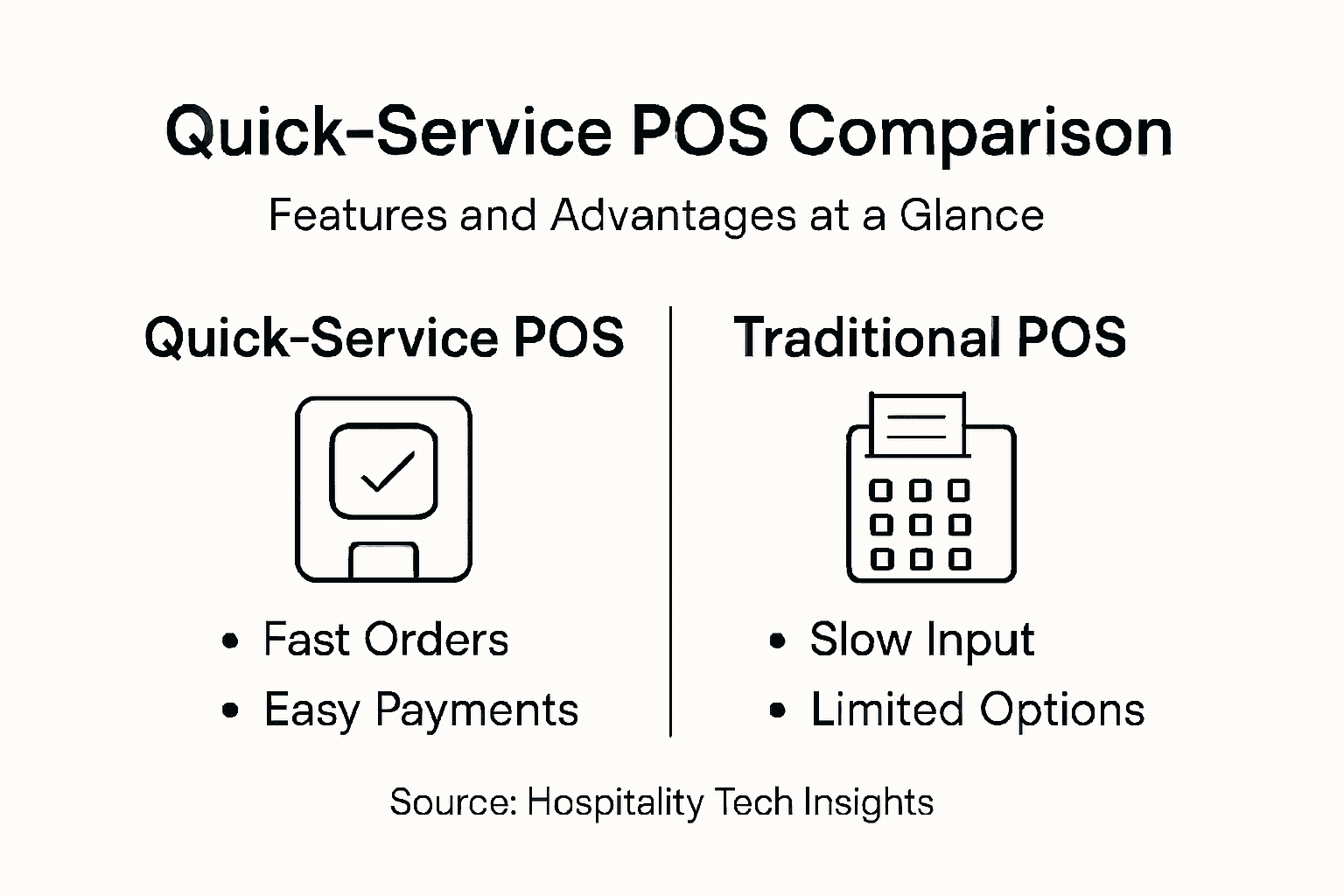
See how Quick-Service POS and traditional systems compare on key business factors:
| Aspect | Quick-Service POS | Traditional POS |
|---|---|---|
| Order Processing Speed | Extremely fast | Moderate |
| User Interface Design | Streamlined, simple | Complex, multi-step |
| Integration Flexibility | Supports mobile, kiosks | Often limited |
| Best Fit For | Fast-casual, high volume | Full-service restaurants |
Pro tip: Conduct a comprehensive workflow analysis before selecting a POS system to ensure it matches your specific operational requirements and service model.
Elevate Your Quick-Service Hospitality with EZEEPos Solutions
Handling the demands of fast-paced hospitality requires a point of sale system that moves as quickly as your business does. The article highlights key challenges such as rapid order processing, seamless integration across service modes, and user-friendly interfaces designed to reduce staff training time and operational errors. EZEEPos offers a specialised Android-based platform built specifically for quick-service venues, combining mobile POS, self-service kiosks, and kitchen display screens into one unified system. This ensures your team can deliver exceptional service without being slowed down by outdated or complex technology.
Discover how you can streamline sales, inventory, and staff management all while benefiting from local UK installation and ongoing human support. Take control of busy service environments with full access to essential features without confusing tiered pricing. Ready to experience the difference that a tailored Point Of Sale system can make for your business?
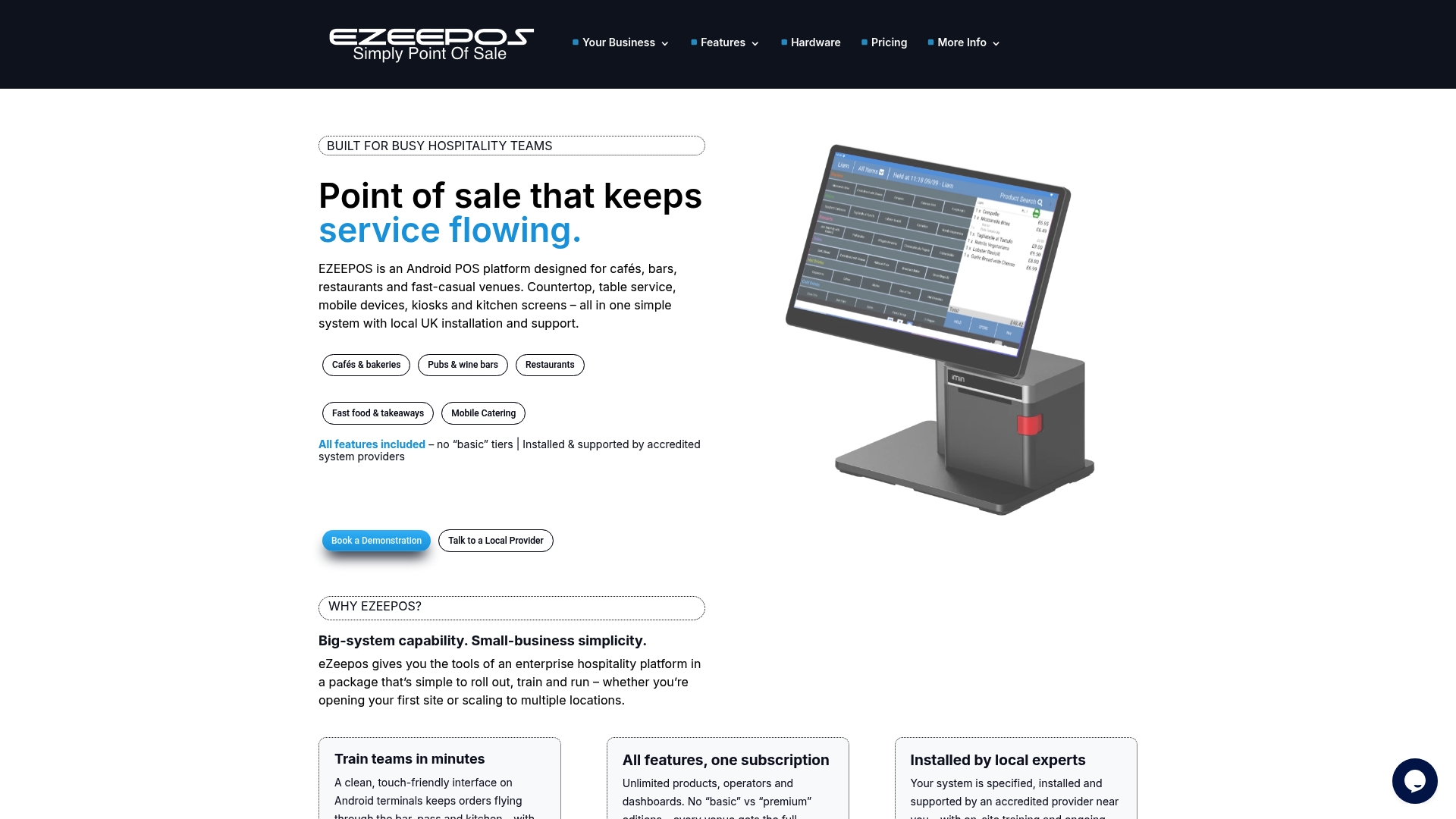
Explore faster, smarter hospitality solutions today by visiting EZEEPos. Enhance speed and accuracy in your operations with integrated hardware options and cloud-based support designed for your venue. Don’t let slow systems hold back your profits – act now to transform your quick-service experience.
Frequently Asked Questions
What is a Quick-Service POS system?
A Quick-Service POS system is a specialised point of sale solution designed for fast-paced hospitality environments, enabling efficient order management, payment processing, and operational tracking in restaurants and cafes.
How do Quick-Service POS systems improve customer service?
These systems enhance customer service by allowing for rapid order processing, flexible payment methods, and streamlined communication between staff and the kitchen, ultimately reducing wait times and improving the dining experience.
What features should I look for in a Quick-Service POS system?
Key features to consider include intuitive interfaces for quick training, multi-payment integration, offline functionality for uninterrupted service, and robust reporting and analytics capabilities to support data-driven decision-making.
How do Quick-Service POS systems differ from traditional restaurant management systems?
Quick-Service POS systems are designed for high-volume transactions with streamlined interfaces for speed, whereas traditional restaurant management systems often have complex interfaces better suited for full-service environments, requiring more steps for order processing.
Recent Comments