
Restaurant promotion creation process: a step-by-step guide
The restaurant promotion creation process is the systematic method of designing, scheduling, and managing campaigns that drive customer traffic and increase revenue. Done well, it protects your margins, aligns your team, and produces measurable results. Done poorly, it drains cash and confuses staff. This guide walks you through every stage, from setting goals and calculating margins to launching on platforms like Google Business Profile and DoorDash, then measuring what actually worked. Whether you run a single café or a multi-site restaurant group, the same disciplined approach applies.
What does the restaurant promotion creation process involve?
The restaurant promotion creation process is what the industry more formally calls promotional campaign planning. It covers four interconnected stages: strategy, design, execution, and evaluation. Most owners skip straight to the offer itself and wonder why results disappoint.
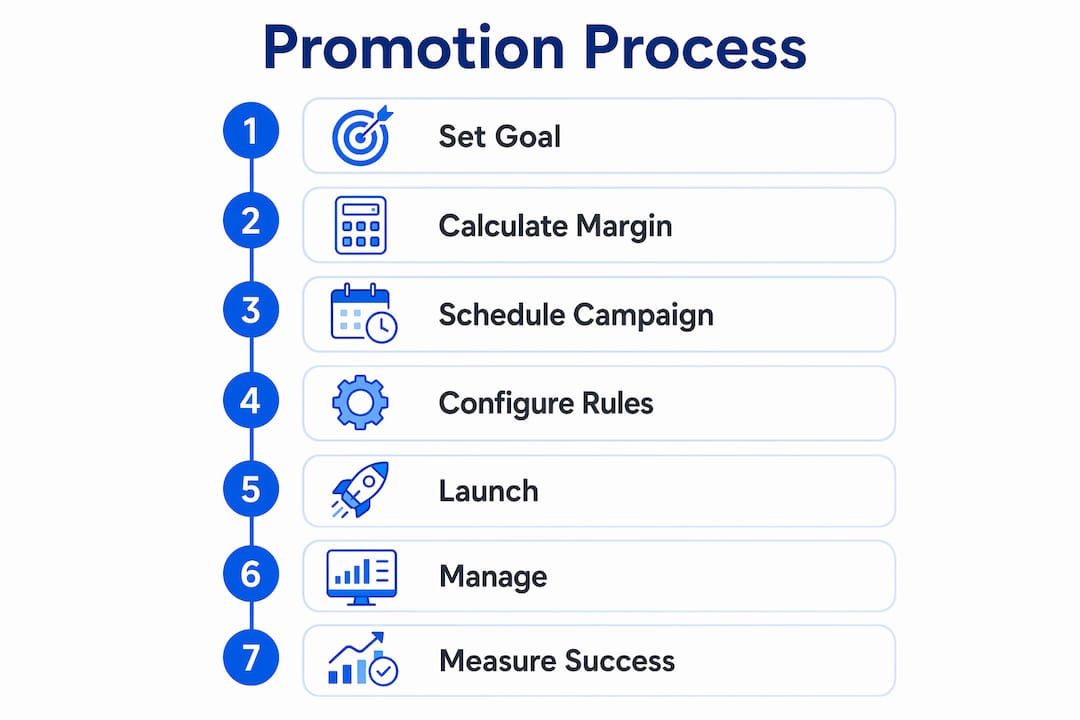
Effective promotions start with a clear goal targeting a specific business problem, such as filling slow Tuesday lunches or launching a new seasonal menu. Without that anchor, a promotion is just a discount with no direction. Defining the goal first shapes every decision that follows, from the type of offer to the channels you use.
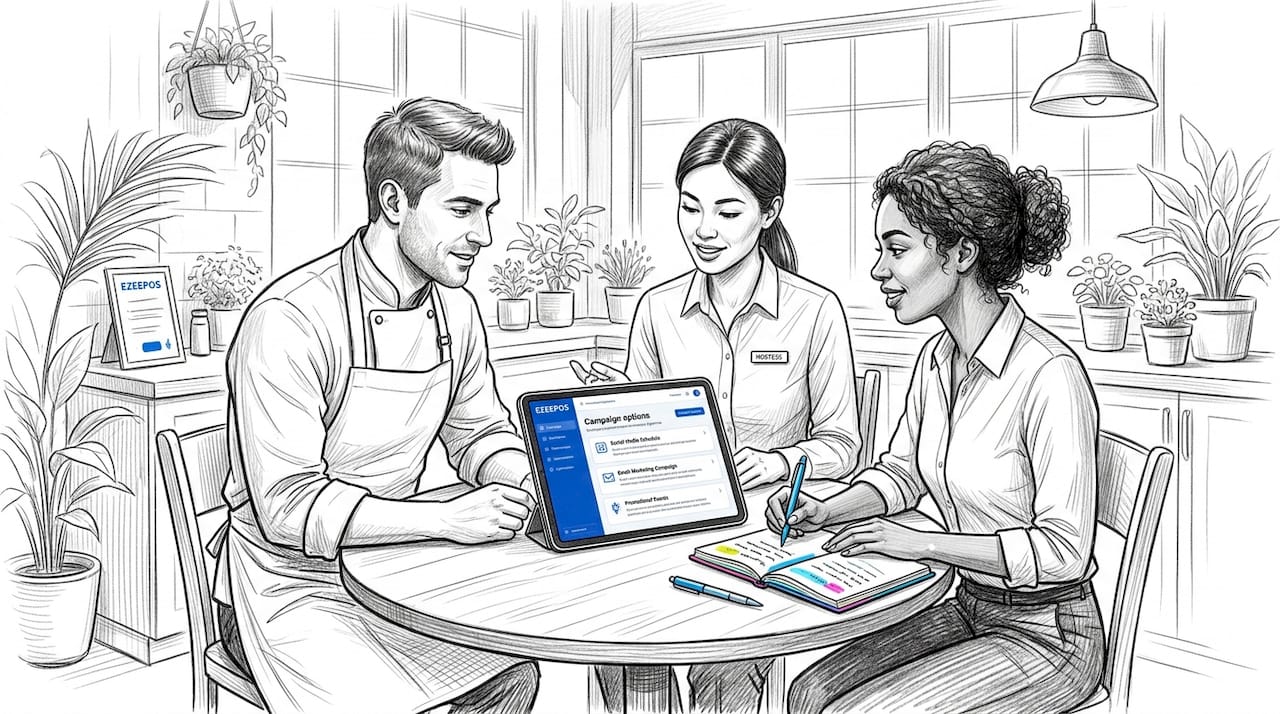
Margin calculation sits at the same level of importance as creativity. A buy-one-get-one offer on a dish with a 60% food cost can wipe out a week’s profit in a single service. Before any campaign goes live, you need to know the gross margin on every promoted item and set a redemption ceiling that keeps the promotion profitable.
What do you need in place before launching a promotion?
Strong preparation separates campaigns that pay off from those that cost money without return. Work through these prerequisites before you design a single offer.
Goal setting
Define one primary objective per campaign. Options include increasing covers on slow days, raising average spend per head, acquiring new customers via delivery platforms, or clearing slow-moving stock. A single focus makes measurement straightforward.
Audience identification
Identify who you are trying to reach. Regulars respond well to loyalty rewards. New customers in your postcode respond to Google Business Profile offers and delivery platform discounts. Families respond differently to students. Segment before you spend.
Margin calculation
Run the numbers on every item in the promotion. Calculate food cost percentage, set a maximum discount that still leaves a positive contribution margin, and decide on a redemption cap. Delivery platform free-delivery promotions can shift costs in ways that are not immediately obvious, so model the full financial picture including platform fees before committing.
Digital platform readiness
You need active, verified accounts on the platforms you plan to use. Google Business Profile must be claimed and up to date. Your delivery platform merchant portal must have current menus and pricing. Your POS system must be configured to track promotional redemptions separately from standard sales.
| Prerequisite | What to check |
|---|---|
| Goal clarity | One measurable objective defined in writing |
| Margin model | Food cost and discount ceiling calculated per item |
| Platform accounts | Google Business Profile and delivery portals verified |
| POS configuration | Promotional SKUs or discount codes set up and tested |
| Staff briefing schedule | Pre-launch huddle booked at least 48 hours before go-live |
Pro Tip: Run a soft test of your promotion rules on your POS before the campaign goes live. A five-minute check catches configuration errors that would otherwise cost you money on day one.
How do you design, schedule, and launch a restaurant promotion?
A structured design process prevents the most common errors: vague eligibility rules, wrong timing, and offers that cannot be executed consistently at the counter. Use a four-question framework to guide every promotion: what is the offer, when does it run, where and to whom does it apply, and how does it behave under edge cases?
Step 1: Choose the promotion type
Match the offer format to your goal. Common formats include:
- BOGO (buy one get one): strong for increasing covers and social sharing
- Percentage discount on a category: effective for menu launches or slow-moving items
- Fixed-price set menus: reliable for increasing average spend and simplifying service
- Loyalty stamp cards or digital rewards: best for driving repeat visits from existing customers
- Seasonal limited-time offers: create urgency and attract new customers during peak periods
Step 2: Set the schedule
Timing is not an afterthought. Seasonal campaigns require preparation to start six to eight weeks before the season, with multi-channel touchpoints planned across the full period. For shorter tactical promotions, a two-week lead time is the minimum for staff training, material production, and platform configuration.
Step 3: Configure eligibility and rules
Defining eligibility and redemption logic is typically more time-consuming than selecting the discount itself. Specify: which menu items are included, which are excluded, minimum order values, maximum uses per customer, and whether the offer stacks with other discounts. Eligibility and behavioural configurations must be prioritised to prevent the promotion behaving incorrectly across different order types or locations.
Step 4: Set up on digital platforms
For delivery platforms, DoorDash Smart Campaigns automate targeting and rules once you input locations, budget, promoted items, and duration. The system handles eligibility and usage limits, which reduces the manual configuration burden significantly. For local search, Google Business Profile offer posts require start and end dates, an offer title, and a call to action. Posts with images and coupon codes consistently outperform plain-text entries.
Step 5: Prepare in-store materials and staff communication
Point-of-purchase materials including table tents, QR code menus, and window signage improve redemption rates for in-house promotions. Pair these with a pre-service staff briefing. Short huddles and focused sales lines align execution at the exact moment customers make decisions. A staff member who can confidently describe the promotion converts more covers than any poster.
Pro Tip: Create a one-page promotion brief for your team that covers the offer in plain language, the start and end dates, which items are included, and two suggested upsell lines. Laminate it and post it in the kitchen and at the till.
How do you execute and manage a promotion during the campaign?
Launching a promotion is not the end of the process. The campaign period requires active management to maintain quality and catch problems before they compound.
Daily performance monitoring is non-negotiable. Check redemption numbers each morning against your projected cap. If a promotion is being redeemed faster than expected, you may need to adjust inventory orders or temporarily pause the offer on one channel. If redemption is far below target, the issue is usually visibility or staff confidence, both of which are fixable mid-campaign.
Inventory and staffing alignment must reflect the promotion’s expected uplift. A successful two-for-one on a specific dish can double demand for that item in a single service. Brief your kitchen team on projected volumes and adjust prep schedules accordingly. Running out of a promoted item damages trust more than not running the promotion at all.
Consistent cross-channel communication keeps the offer coherent. The same promotion should appear with identical terms on your in-store signage, your social media posts, your email list, and your delivery platform listing. Discrepancies between channels create customer complaints and erode confidence in your brand.
Resolving issues promptly protects the customer relationship. If a discount code fails at checkout or a staff member applies the wrong discount, have a clear resolution protocol. Empower front-of-house staff to correct errors on the spot rather than escalating every case to a manager.
Pro Tip: Assign one team member per shift as the promotion lead. Their job is to monitor redemptions, answer staff questions, and flag any operational issues before they reach the customer.
How do you measure success and improve future campaigns?
Measurement closes the loop and turns a one-off promotion into a learning asset for your next campaign. The metrics that matter most are gross margin per promoted item, total redemptions against your cap, new versus returning customer split, and average spend per head during the promotion period versus a comparable baseline period.
Email marketing campaigns tied to promotions achieve measurable sales lift within two weeks, with open rates near 39%. That means your email list is one of the most reliable channels for attributing sales directly to a specific campaign. Track which emails drove redemptions, not just opens.
| Metric | What it tells you |
|---|---|
| Gross margin per promoted item | Whether the discount was financially sustainable |
| Redemption rate vs. cap | Whether the offer was visible and compelling enough |
| New customer percentage | Whether the promotion attracted first-time visitors |
| Average spend per head | Whether upselling offset the discount cost |
| Repeat visit rate (30 days post-campaign) | Whether the promotion built lasting customer relationships |
Common pitfalls to avoid in your post-campaign review:
- Attributing all sales uplift to the promotion without accounting for seasonal variation
- Ignoring redemption data from individual channels, which hides which platform drove results
- Failing to document what worked so the next team member running a campaign starts from scratch
- Treating a failed promotion as a write-off rather than a data point
Pro Tip: Build a simple campaign log in a shared spreadsheet. Record the offer type, dates, channels, redemption count, and gross margin outcome for every promotion. After six months, patterns emerge that no single campaign review would reveal.
Key takeaways
A disciplined restaurant promotion creation process, covering goal setting, margin calculation, platform configuration, staff alignment, and post-campaign measurement, is what separates profitable campaigns from costly ones.
| Point | Details |
|---|---|
| Start with a single goal | Define one measurable objective before designing any offer or discount. |
| Calculate margins first | Set a redemption cap based on food cost and contribution margin before launch. |
| Configure rules precisely | Eligibility and behavioural settings prevent costly errors across channels and locations. |
| Align staff before launch | A pre-service briefing and one-page brief improve redemption rates and upsell success. |
| Measure and document everything | A campaign log turns each promotion into a reference point for future planning. |
Why most restaurant promotions underperform, and what I’ve seen actually fix them
After working with dozens of hospitality venues, the pattern is consistent. Owners spend 80% of their planning time on the creative, the poster design, the name of the deal, and about 20% on the operational mechanics. Then they wonder why the promotion either costs more than expected or fails to move the needle at all.
The single most underestimated step in the whole process is eligibility configuration. I have seen a well-intentioned BOGO offer apply to every item on the menu because nobody specified exclusions in the POS. The result was a profitable weekend turned into a loss-making one. Treating promotions as campaigns with structured rules, not one-off deals, is what prevents that kind of error.
The second thing I would push back on is the assumption that more channels equals more results. A promotion that is communicated clearly on two channels, in-store and email, with consistent messaging and trained staff, will outperform one scattered across five channels with no coherent brief. Depth beats breadth every time.
Technology matters here, but not in the way most people think. The value of a good POS system is not that it runs the promotion for you. It is that it gives you accurate data fast enough to make decisions during the campaign, not three weeks after it ends. That is the difference between a promotion you can steer and one you can only review in hindsight.
— John
How Ezeepos helps you run smarter restaurant promotions
Running a promotion across multiple service modes, table ordering, counter service, and self-service kiosks, creates real complexity. Ezeepos brings all of that into one place, so your promotional rules apply consistently whether a customer orders at the till or via a kiosk.
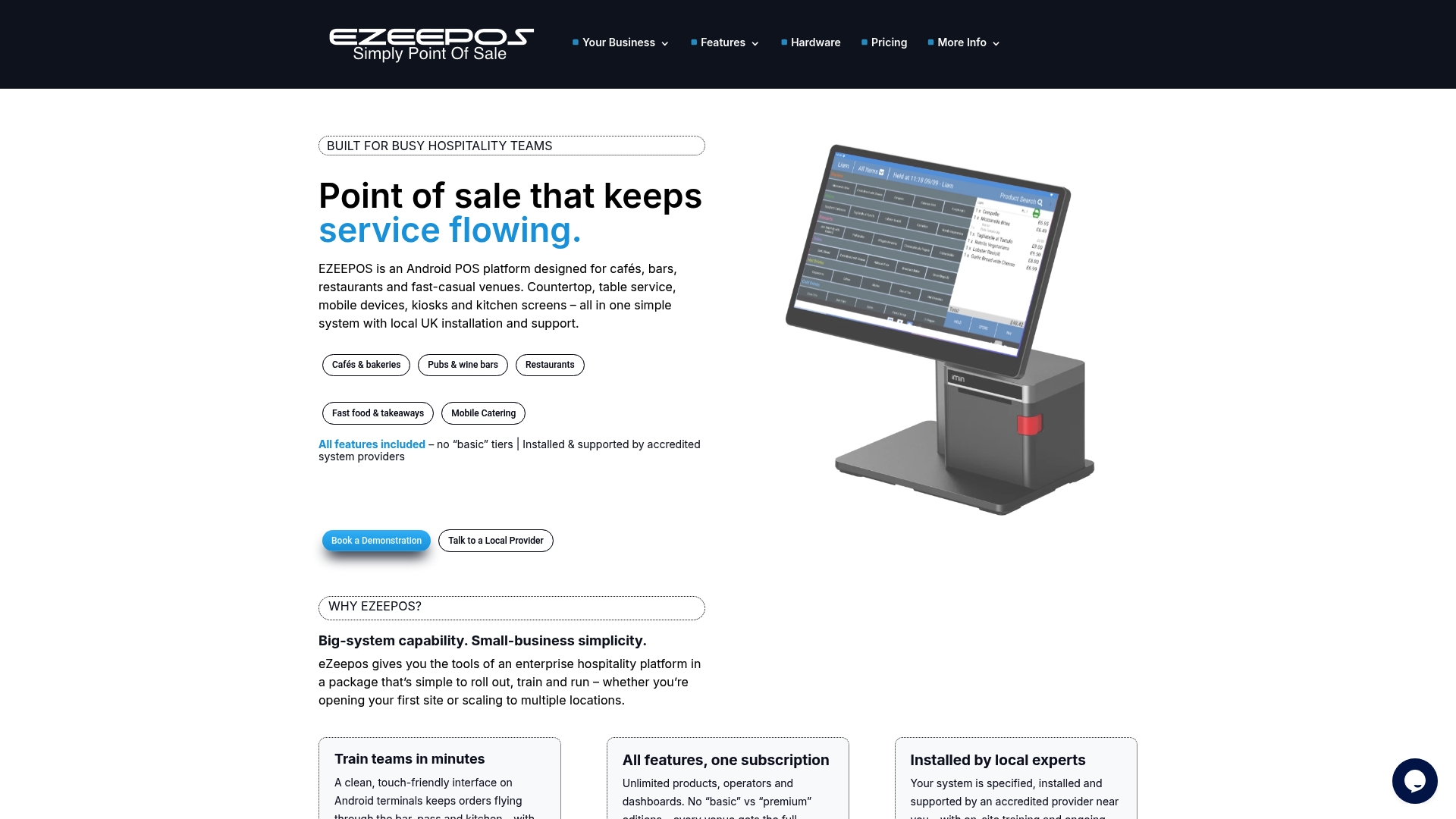
With Ezeepos, you can configure promotion rules and limits directly in the back office, track redemptions in real time, and give your team the clarity they need to execute without errors. The online ordering integration means your delivery and in-house promotions stay aligned without manual duplication. If you are ready to take the guesswork out of your next campaign, explore Ezeepos and see how the platform handles the operational side so you can focus on the strategy.
FAQ
What is the first step in creating a restaurant promotion?
The first step is defining a single, measurable goal, such as increasing covers on a slow day or launching a new menu item. Without a clear objective, every subsequent decision lacks direction and results become impossible to evaluate.
How far in advance should I plan a seasonal restaurant promotion?
Seasonal promotions require preparation to begin six to eight weeks before the season starts. This lead time covers platform configuration, staff training, material production, and multi-channel scheduling.
How do I protect my margins when running a discount promotion?
Calculate the food cost percentage for every promoted item, then set a maximum discount that still leaves a positive contribution margin. Apply a redemption cap in your POS to prevent the promotion running beyond what your margin model supports.
Which digital platforms should I use to promote my restaurant?
Google Business Profile offer posts and delivery platform merchant portals such as DoorDash are the two most effective starting points. Google Business Profile drives local search visibility, while delivery platforms reach customers already in a purchasing mindset.
How do I know if a restaurant promotion was successful?
Track gross margin per promoted item, total redemptions against your cap, new versus returning customer split, and average spend per head. Compare these figures against a baseline period of similar trading conditions to isolate the promotion’s actual impact.
Recent Comments