
Pizza shop staff training tips that cut turnover
TL;DR:
- Effective pizza shop training reduces turnover by implementing structured onboarding and ongoing micro-training. Building a career ladder, engaging staff with gamification, and leveraging POS technology enhance retention and operational consistency. Regular manager development and legal compliance integration are essential to maintaining a motivated, skilled team.
Running a pizza shop means you are constantly racing against the clock, and nothing slows you down faster than a revolving door of staff. The QSR turnover rate sits between 123% and 144% annually, with most departures happening in the first 90 days. That is not a staffing problem. It is a training problem. The right pizza shop staff training tips do not just teach people how to stretch dough or take orders. They build confidence, reduce mistakes, and make people want to stay. This article gives you the practical framework to make that happen.
Table of Contents
- Key takeaways
- 1. Build a structured onboarding schedule from day one
- 2. Use the micro-training method to prevent fatigue
- 3. Integrate legal compliance training from the start
- 4. Train your managers, not just your staff
- 5. Make training genuinely engaging
- 6. Build a clear career ladder with real rewards
- 7. Use your POS system as a training tool
- My honest take on pizza shop training
- How Ezeepos supports your pizza shop training
- FAQ
Key takeaways
| Point | Details |
|---|---|
| Structured onboarding cuts early turnover | A clear training timeline with mentors reduces first-90-day departures by 25% or more. |
| Legal compliance must be built into training | Food safety certifications and allergen awareness need to be scheduled from day one, not added as an afterthought. |
| Manager quality drives retention more than pay | Training your managers on people skills delivers a higher return than almost any other investment. |
| Gamification and micro-training improve engagement | Bite-sized learning sessions and a visible career ladder keep staff motivated and reduce training fatigue. |
| POS technology simplifies onboarding | A training-friendly POS system builds staff confidence faster and standardises service from the start. |
1. Build a structured onboarding schedule from day one
Most pizza employee training fails not because the content is wrong, but because there is no structure. New hires are handed an apron, shown the till, and left to figure the rest out. Structured onboarding programmes with clear timelines and mentors reduce first-90-day turnover by 25% or more, and operations with formal 12-month retention plans see turnover drop by 30 to 50 percentage points.
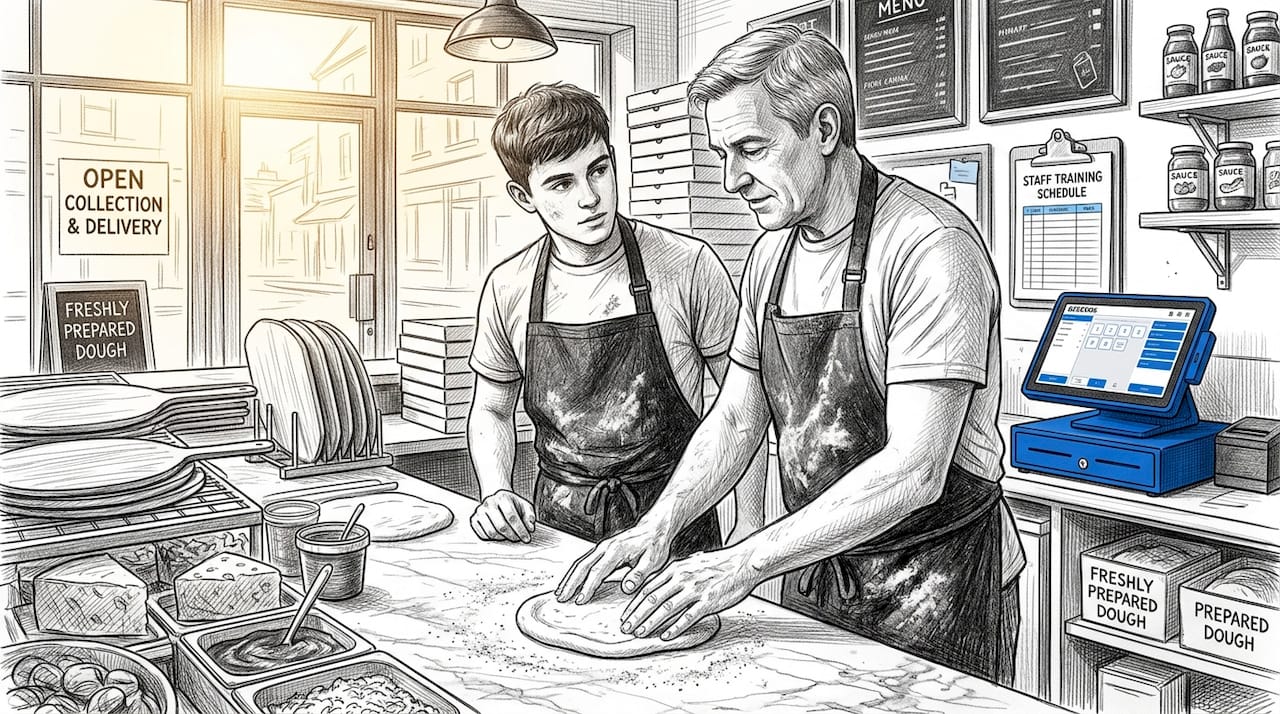
A practical approach runs across 5 to 10 days with progressively more complex tasks. Day one covers the basics: hygiene, safety, and a tour of the kitchen. Days two and three introduce the menu and the POS system. By the end of the first week, a new team member should be able to handle a basic order from start to finish with supervision.
Assign a senior team member as a mentor to each new hire. This takes pressure off management and gives the new person a go-to contact who understands the shop floor. Daily five-minute check-ins at the end of each shift help catch confusion before it becomes a habit.
Pro Tip: Focus each training session on a single skill rather than covering everything at once. This micro-training approach prevents overwhelm and makes it far easier to assess whether someone has actually understood what they were taught.
2. Use the micro-training method to prevent fatigue
One of the most overlooked pizza shop staff training tips is this: less is more. Handing a new employee a thick training manual on their first week is the fastest way to switch them off. Micro-training focused on one skill weekly prevents training fatigue, and tracking onboarding progress with digital checklists leads to 40 to 60% improved retention.
Break your training content into short, focused modules. One session covers upselling a meal deal. Another covers how to handle a complaint. A third covers allergen queries. Each module should take no longer than 15 to 20 minutes and end with a simple check that the person can demonstrate the skill.
Digital checklists work well here. They let you see at a glance who has completed what, and they make it easy to spot where someone is struggling before a service rush exposes the gap. This is not about bureaucracy. It is about targeted coaching at the right moment.
3. Integrate legal compliance training from the start
Food safety is not optional, and it cannot be treated as a box-ticking exercise tacked on at the end of induction. Food handler certification is legally required in many jurisdictions, with typical deadlines within 14 to 60 days of hire. In the UK context, the Food Standards Agency sets clear expectations around food hygiene training and allergen management that every pizza shop must meet.
Here is a quick reference for the main compliance areas to build into your training programme:
| Compliance area | Requirement | Frequency |
|---|---|---|
| Basic food hygiene certificate | Level 2 Award in Food Safety | On hire, renew every 3 years |
| Allergen awareness training | Natasha’s Law compliance | On hire, annual refresher |
| Food manager certification | Level 3 Award in Food Safety | Supervisors and managers |
| Health and safety induction | Manual handling, fire safety | On hire |
Key areas to cover in your compliance training include:
- Allergen identification across every pizza topping and base, including cross-contamination risks
- Personal hygiene standards: handwashing, uniform policy, illness reporting
- Safe food storage temperatures and date labelling procedures
- Record keeping for temperature checks and cleaning schedules
- What to do in the event of a customer allergen reaction
Keep digital copies of all certificates and set calendar reminders for renewals. A missed renewal is not just a compliance risk. It is a potential fine and a reputational problem you do not want.
4. Train your managers, not just your staff
Here is a truth most pizza shop owners discover too late. The quality of the direct manager relationship is the single most impactful driver of staff retention. You can have the best training content in the world, but if your shift manager is dismissive, inconsistent, or poor at giving feedback, people leave.
Investing in management development on people skills rather than just operational tasks yields the highest return on investment in retention. That means training managers on how to give constructive feedback without humiliating someone in front of the team, how to de-escalate a tense situation during a busy Friday night, and how to advocate for their staff when scheduling decisions are made.
Practical things that make a real difference:
- Rotate tasks fairly so the same people are not always stuck on the least desirable jobs
- Communicate schedule changes with as much notice as possible
- Be transparent about what growth opportunities exist and how to reach them
- Hold brief one-to-one check-ins, not just to address problems but to ask how someone is finding the role
Pro Tip: Run a short “stay interview” with any team member who has been with you for three months. Ask them what they enjoy, what frustrates them, and what would make them consider leaving. You will learn more in ten minutes than you would from an exit interview.
For more on hospitality staff management strategies that support retention in UK venues, Ezeepos has a dedicated resource worth reading alongside this one.
5. Make training genuinely engaging
Training for a pizzeria does not need to feel like a GCSE revision session. Blending education with entertainment, including gamification and characters, enhances training retention especially among younger staff. If your team is largely made up of people in their late teens and twenties, this matters more than you might think.
A few approaches that work well in practice:
- Create a friendly internal competition around order accuracy scores pulled from your POS system
- Use short video demonstrations for techniques like dough preparation rather than written instructions
- Group behaviours into memorable categories. Something like “food, feel, and flow” gives staff a simple mental framework to recall standards under pressure
- Award digital badges or printed certificates for completing each training module
- Celebrate milestones publicly, whether that is a shout-out in a team message or a small reward for completing the first month
The goal is to make progress visible. When people can see how far they have come, they are far more likely to keep going.
6. Build a clear career ladder with real rewards
One of the most underused training tips for pizzeria owners is the career ladder. Using career ladders with micro-promotions and small pay increases motivates staff and reduces the sense that there is nowhere to go. Certifications like “dough master” or “POS expert” validated by pay increases give people a concrete reason to invest in their own development.
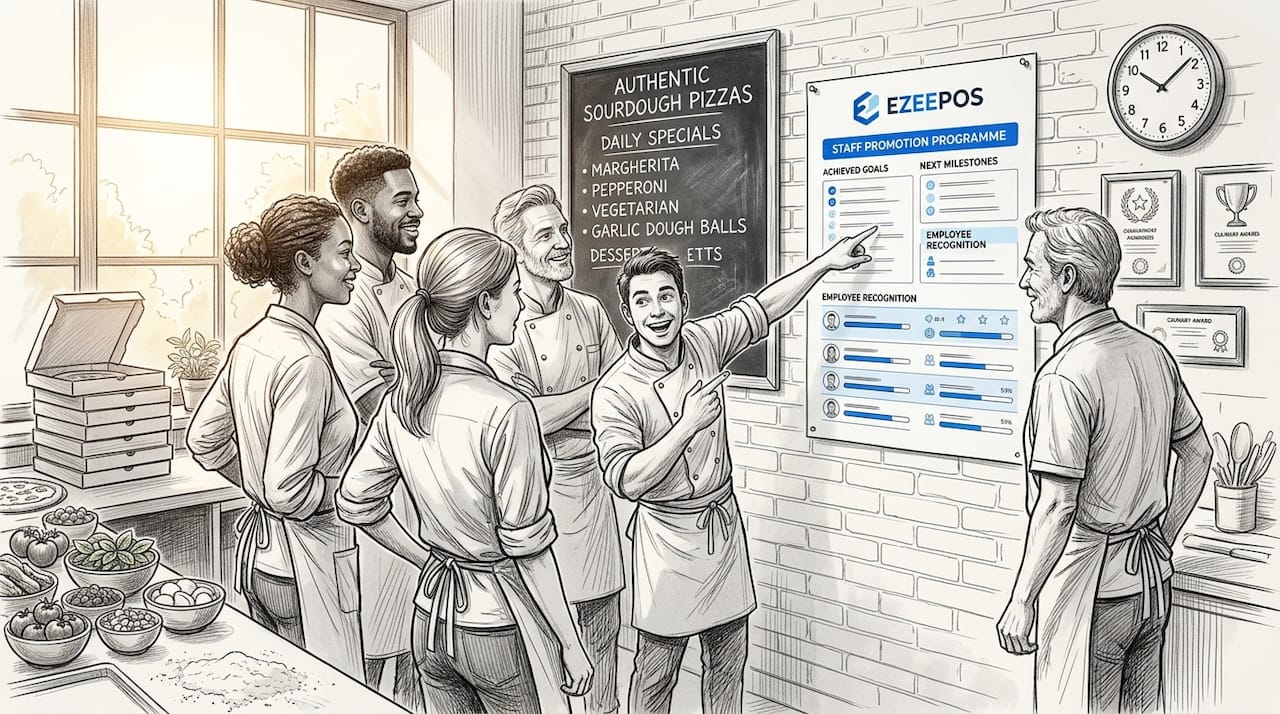
This does not require a complex HR system. A simple three or four level structure works well. Level one is a new team member still in training. Level two is a fully trained team member who can work independently. Level three is a senior team member who can mentor others. Level four is a shift leader with management responsibilities.
Rewarding milestones with certifications and pay raises in clear career ladders builds loyalty in fast-paced pizza shops. The key is that the criteria for each level are written down and shared with everyone from day one. Ambiguity kills motivation. Clarity builds it.
7. Use your POS system as a training tool
Most pizza shop owners think of their POS system as a till. The smarter ones use it as a training platform. POS systems with training-friendly interfaces help simplify staff onboarding and improve order accuracy from the first week.
A well-designed POS system lets new staff practise order-taking in a demo mode before they go live. It guides them through upselling prompts so they do not have to remember every deal. It flags allergen information at the point of order so compliance becomes part of the natural workflow rather than a separate mental task.
Connecting your POS with smart inventory management also teaches staff about ingredient levels and waste reduction without requiring a separate training session. When someone can see that running out of mozzarella at 7pm on a Saturday was preventable, they start to understand the operational logic behind the processes they follow.
For guidance on training staff on POS for smooth operations, the principles translate directly from food truck environments to pizza shops and are worth applying to your own onboarding schedule.
My honest take on pizza shop training
I have seen a lot of pizza shop owners treat training as something you do once and move on from. You run the induction, hand over the manual, and assume the job is done. It never is.
What I have observed in the shops that actually hold onto their staff is a different mindset entirely. Training is not an event. It is a system. The managers in those places check in regularly, not to catch people out, but because they genuinely want to know how their team is getting on. That consistency is what makes structured onboarding work in practice rather than just on paper.
The career ladder point is one I feel strongly about. I have watched staff who were ready to quit turn into long-term team members simply because someone took the time to explain what the next step looked like and how to get there. It costs very little to create that clarity. The cost of not doing it is far higher.
Simple digital tools, whether that is a checklist app or a POS with built-in training modes, remove the excuse that tracking progress is too complicated. If you can see where someone is struggling, you can fix it before it becomes a resignation.
— John
How Ezeepos supports your pizza shop training
If you are putting these pizza shop staff training tips into practice, having the right technology underneath your operation makes a significant difference.
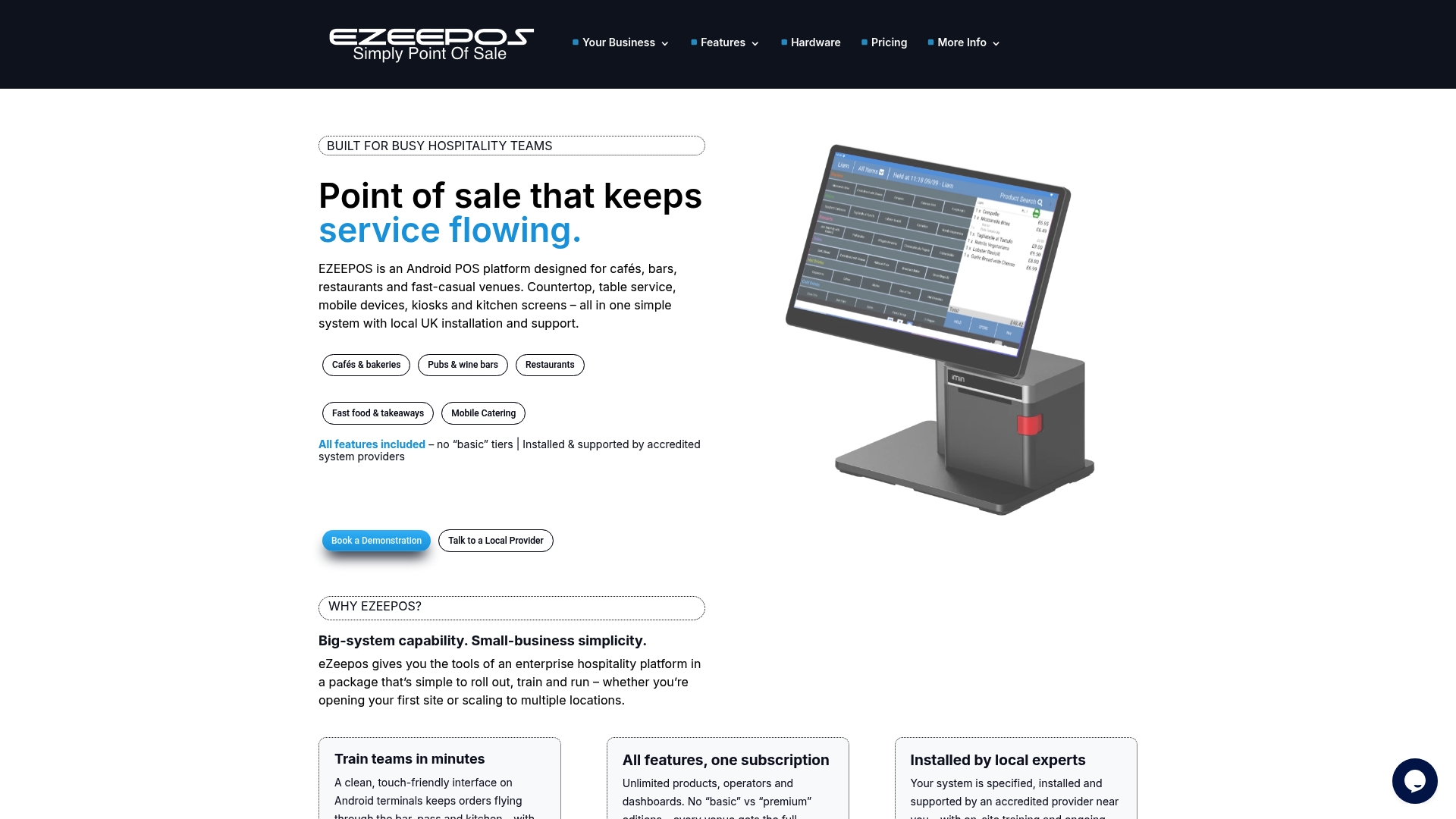
Ezeepos is built for exactly this kind of environment. The Android-based POS platform is designed to be picked up quickly by new staff, with an intuitive interface that reduces the time it takes to get someone working confidently on the till. It supports demo modes for training, allergen prompts at the point of order, and real-time inventory visibility that teaches staff about stock management as part of their daily routine. Whether you are looking at a POS system for your pizza shop or want to get a handle on stock and inventory control, Ezeepos gives you the tools to train smarter and run tighter operations from day one.
FAQ
How long should pizza shop staff training take?
A well-structured pizza shop onboarding programme typically runs 5 to 10 days for core skills, followed by ongoing micro-training sessions over the first 90 days. Operations with formal 12-month retention plans see significantly lower turnover than those with one-off inductions.
What food safety training is legally required for pizza shop staff in the UK?
UK pizza shop staff should complete a Level 2 Award in Food Safety in Catering, and supervisors should hold a Level 3 qualification. All staff must also receive allergen awareness training to comply with Natasha’s Law, with refreshers recommended annually.
How do you reduce staff turnover in a pizza shop?
The most effective approaches combine structured onboarding, regular manager check-ins, and a visible career ladder with clear progression criteria. Research shows that manager quality is the single biggest driver of whether staff stay or leave.
What is the best way to train new pizza shop employees on the POS system?
Start with a demo mode or supervised practice session before going live. A POS system with an intuitive interface and built-in upselling prompts reduces the cognitive load on new staff and helps them build confidence quickly without relying on constant manager supervision.
How does gamification help with pizza employee training?
Gamification makes progress visible and creates a sense of achievement that keeps staff engaged. Techniques like internal accuracy competitions, digital badges for completed modules, and public recognition of milestones have been shown to improve training retention, particularly among younger team members.
Recent Comments