

TL;DR:
- Running a UK mobile catering business requires balancing compliance, technology, and logistics to ensure smooth operations and growth. The best solutions are flexible, scalable, and support ongoing regulatory requirements while integrating modern technology for efficiency. Operators who adopt a modular approach and regularly reassess their tools achieve greater reliability, compliance, and customer satisfaction.
Running a food truck or mobile catering operation in the UK means juggling a remarkable number of moving parts at once. You need to serve customers quickly, keep food safe, stay on the right side of regulations, and still turn a profit at events ranging from muddy festivals to polished corporate functions. The market offers no shortage of tools, vehicles, and technology claiming to solve all of this at once, which makes choosing the right combination genuinely difficult. This article cuts through the noise with real examples, honest comparisons, and a clear framework for UK caterers ready to strengthen their operation in 2026.
Table of Contents
- What makes a great mobile catering solution?
- Case studies: Leading UK mobile catering examples
- Optimising operations: Technology and logistics innovations
- Regulatory compliance and certifications in mobile catering
- Why solution stacking beats ‘one-size-fits-all’ systems
- Finding the right solutions for your mobile catering business
- Frequently asked questions
Key Takeaways
| Point | Details |
|---|---|
| Evaluate core criteria | Choose solutions that balance compliance, efficiency, and customer service for best results. |
| Learn from UK leaders | Success stories like The Street Diner show how technology and logistics drive growth. |
| Prioritise compliance | Having up-to-date certifications and food safety protocols is non-negotiable for legal trading. |
| Adapt with modular tools | Stacking flexible solutions gives operators room to grow and adapt to new markets. |
| Tech boosts efficiency | Integrating modern POS and logistics systems streamlines operations and enhances the customer experience. |
What makes a great mobile catering solution?
With clarity on the main challenge, let’s define what separates the best solutions from the rest.
Not every mobile catering solution is built with the UK market in mind. Many products are imported concepts that ignore the specific demands of British event culture, local authority requirements, and weather conditions that can turn a summer festival into a soggy logistical challenge. The best solutions share a handful of qualities that go beyond flashy marketing.
Flexibility and scalability are non-negotiable. A single food truck serving a weekly market has entirely different needs from a 10-unit fleet deployed across a three-day music festival. The right solution grows with you rather than constraining you.
Compliance readiness is equally critical. Compliance expectations for UK mobile catering include documented gas safety for LPG setups and certified electrical work, and these are not optional extras. Any solution that does not actively support your compliance documentation process is a liability waiting to happen.
Technology integration ties everything together. From mobile catering technology that connects your point of sale to your kitchen, to payment systems accepting everything from contactless cards to digital wallets, modern tools directly affect your queue lengths and customer satisfaction scores.
Here are the core qualities to look for when evaluating any mobile catering solution:
- Full flexibility to adapt menus and service styles across different event types
- Built-in or easily integrated gas safety and electrical compliance tracking
- Scalable POS technology that works offline as well as online
- Real-time inventory management to prevent running out mid-service
- Fast payment processing with multiple customer-facing options
- Simple onboarding so new staff can learn the system within minutes
- Reporting tools accessible remotely via a cloud-based back office
Pro Tip: Prioritise systems that include built-in compliance checklists and digital temperature logging. Keeping these records in one place saves you enormous time when a local authority inspector arrives unannounced at your pitch.
Case studies: Leading UK mobile catering examples
With criteria in mind, here’s how top UK operators are putting these into practice.
Nothing illustrates good decision-making quite like real results. UK mobile caterers have been quietly building some genuinely impressive operations, and studying how they scaled gives you a practical roadmap rather than abstract advice.
The Street Diner is one of the clearest success stories in modern UK mobile catering. Based in Northumberland, the business grew from a single truck into a 14-strong fleet serving festivals, weddings, racecourses, and corporate events across the region. That growth was not accidental. It was driven by deliberate choices around vehicle standardisation, menu consistency, and the kind of operational systems that allow a fleet to function reliably without the owner standing over every unit.
The Street Diner’s model demonstrates several principles worth borrowing:
- Standardised setup across units so that staff can move between trucks without retraining
- Flexible menus that adapt to different event audiences and demographics
- Strong event partnerships that provide predictable forward bookings rather than relying on walk-up trade alone
- Centralised logistics for ingredient sourcing and vehicle preparation before each event
“Scaling a mobile catering fleet is less about the food and more about your systems. Once the operation runs reliably without constant intervention, growth becomes a matter of choosing the right events rather than surviving them.” This sentiment captures what separates operators who plateau from those who build genuine catering businesses.
The table below summarises how different operators have applied specific solutions to generate measurable results:
| Operator | Core solution | Key result |
|---|---|---|
| The Street Diner | Scalable fleet with standardised setups | Grew from 1 to 14 units, serving festivals, weddings, and racecourses |
| Regional BBQ caterers | Formalised logistics and thermal-retention systems | Reliable large-event service with consistent food quality |
| Urban street food operators | Mobile POS with contactless payments | Shorter queues, higher transaction volumes per hour |
| Wedding caterers | Table ordering and kitchen order screens | Reduced order errors and improved guest satisfaction |
For operators keen to replicate this kind of growth, investing in mobile POS event solutions that handle both small markets and large festival deployments without requiring a different system for each context is a meaningful competitive advantage.
Optimising operations: Technology and logistics innovations
The most successful operations rely on more than just food; they perfect the logistics and technology supporting their service.
Great street food can fail at a large event if the logistics behind it are disorganised. Temperature control, fleet scheduling, staff deployment, and ingredient replenishment all need to work as one joined-up system. The operators who master this tend to dominate their local event calendar because organisers trust them to deliver without drama.
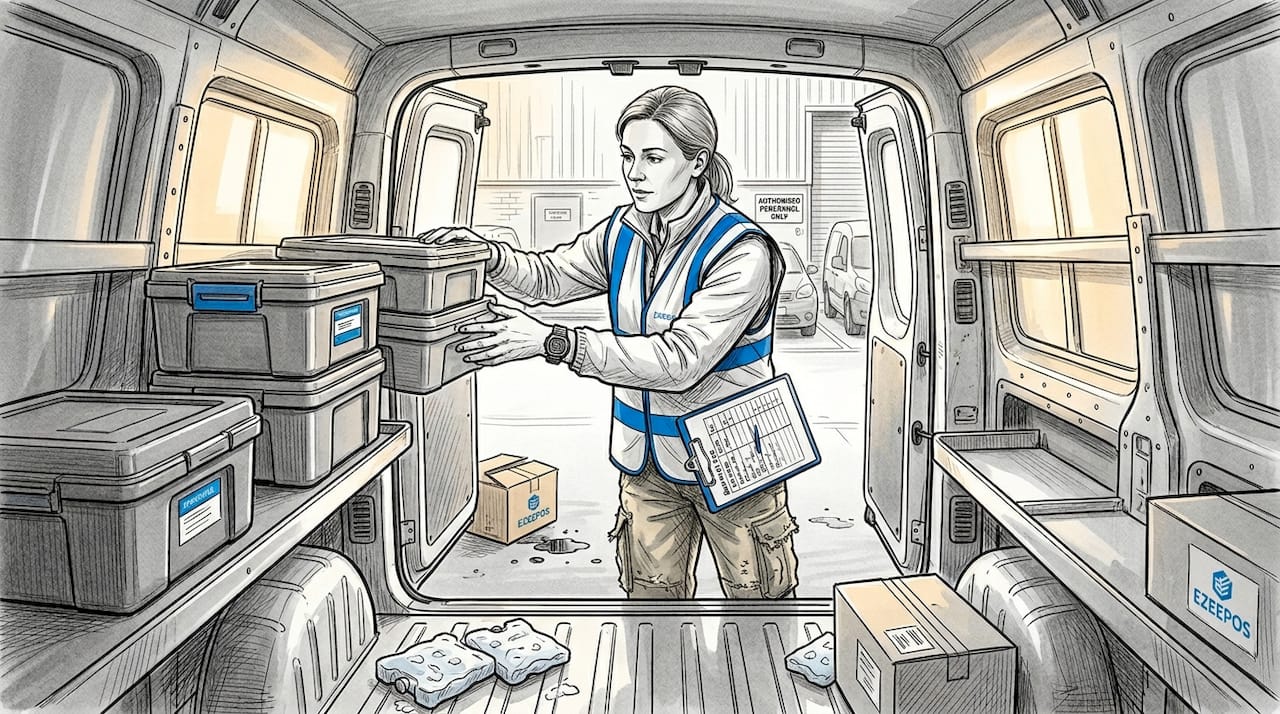
High-capacity mobile catering operations formalise logistics and use thermal-retention equipment to ensure food safety and quality at scale. This approach transforms what might otherwise be chaotic by giving each part of the operation a defined process and measurable standard.
Here is a practical numbered process for implementing logistics improvements in your mobile catering business:
- Map your current workflow from ingredient delivery to customer service, identifying every bottleneck and manual step
- Introduce thermal-retention containers for all hot-hold and cold-hold requirements, matching capacity to your largest typical event
- Adopt a real-time fleet tracking tool so you know where each vehicle is, when it departs, and whether it arrives on schedule
- Integrate your POS system with stock levels so you receive automatic alerts before running out of a menu item during peak service
- Create pre-event checklists covering vehicle checks, compliance documents, ingredient stock, and equipment testing
- Review performance data after every event to identify patterns in queue times, waste, and product popularity
The comparison below shows how different technology approaches perform against the key operational priorities for UK mobile caterers:
| Feature | Basic setup | Integrated solution |
|---|---|---|
| Order processing speed | Manual or basic till | POS with kitchen screen integration |
| Compliance tracking | Paper-based | Digital checklists with cloud storage |
| Stock visibility | End-of-day manual count | Real-time inventory alerts |
| Payment flexibility | Cash only or single card reader | Contactless, card, and app payments |
| Reporting | Weekly manual summary | Live dashboard accessible remotely |
| Staff management | Verbal scheduling | Digital rotas linked to event calendar |
Effective staff management systems are often the invisible glue holding a busy mobile operation together. When your team knows exactly who is doing what, and the technology supports rather than frustrates them, you spend far less time firefighting and far more time serving customers.
Pro Tip: Use modular solutions that allow you to scale up for a 5,000-person festival without adding complexity to your weekly market setup. The same POS, the same compliance tools, the same logistics framework should work at both ends of the scale spectrum. Discovering how to set up food truck POS correctly from the start saves you from costly workarounds later.
Regulatory compliance and certifications in mobile catering
No solution is complete without addressing compliance, the backbone of legal and safe trading.
Compliance in UK mobile catering is not a one-time box to tick. It is an ongoing cycle of inspections, renewals, and documentation that event organisers and local authorities will check before they allow you to trade. Getting this right protects your business. Getting it wrong can mean being turned away at the gate of a lucrative event.
Annual Gas Safe inspections, CP42 certificates, and electrical PAT testing are the three pillars of UK mobile catering compliance for any unit running gas equipment. Here is what each one means in practice:
- Gas Safe certificate: Issued by a registered Gas Safe engineer following an annual inspection of all LPG appliances and connections in your unit. Without this, most reputable events will not allow you to trade.
- CP42 certificate: A specific inspection document for mobile and portable gas appliances. This is separate from your standard Gas Safe paperwork and must be renewed annually.
- PAT testing (Portable Appliance Testing): Covers all electrical equipment in your unit. While the frequency varies by risk assessment, annual testing is the standard most event organisers require.
- Food hygiene rating: Issued by your local authority following an inspection of your food handling practices, storage, and personal hygiene standards.
- Public liability insurance: Not a certificate but equally non-negotiable. Most event organisers require minimum cover of £5 million.
Statistic to note: Most UK event organisers now require all compliance documents to be uploaded digitally before an operator confirms their pitch. Paper copies handed over on the day are increasingly being refused.
Here is a compliance checklist to keep your operation legal and pitches accessible:
- Renew Gas Safe and CP42 certificates every 12 months without exception
- Book PAT testing annually and after any significant electrical modifications
- Maintain your food hygiene rating at a minimum of 3, targeting 5
- Store all digital copies of documents in a cloud folder accessible from your phone
- Brief your team on where to find these documents if an inspector arrives
- Build renewal dates into your annual business calendar alongside event bookings
Knowing how to streamline order management alongside compliance gives you an operation that is both fast and audit-ready, which is a genuinely powerful combination in a competitive market.
Why solution stacking beats ‘one-size-fits-all’ systems
There is a common pattern among operators who struggle to grow beyond a certain point. They adopt a single all-in-one platform, assume it covers their needs, and then discover that it does some things brilliantly while creating frustrating limitations in other areas. When the business evolves, the system resists.
The more agile approach, and the one most successful UK mobile caterers quietly practise, is what we call solution stacking. This means deliberately choosing best-in-class tools for each function, a reliable POS for sales, a dedicated compliance tracker for certifications, a separate logistics layer for fleet and temperature management, and then ensuring these tools communicate with each other rather than operating in silos.
Fixed systems feel safe because they promise simplicity. But simplicity achieved by removing capability is a poor trade. When you need to add a payment type, adapt to new food hygiene guidance, or deploy across three simultaneous events, a rigid system becomes a ceiling rather than a foundation.
The operators with the strongest growth stories are consistently the ones who reassess their tool stack annually. Technology changes fast. Compliance requirements update. Customer expectations shift. An annual review of every tool in your stack, asking whether it still earns its place, keeps you ahead rather than behind.
Simplifying event sales does not require compromising on capability. The right combination of modular tools gives you simplicity at the point of service and full flexibility in the back office. That is the real definition of a smart mobile catering setup.
Pro Tip: Reassess your stack annually. Look at what your most reliable tools do well, what they lack, and what new solutions have emerged in the past 12 months. Operators who do this consistently outperform those who set and forget.
Finding the right solutions for your mobile catering business
The principles covered throughout this article point to a clear truth: the right technology partner makes an enormous difference to how efficiently and confidently you can grow. Choosing POS systems for caterers that are specifically built for mobile environments, rather than adapted from retail or restaurant contexts, gives you the speed, reliability, and compliance support your operation genuinely needs.
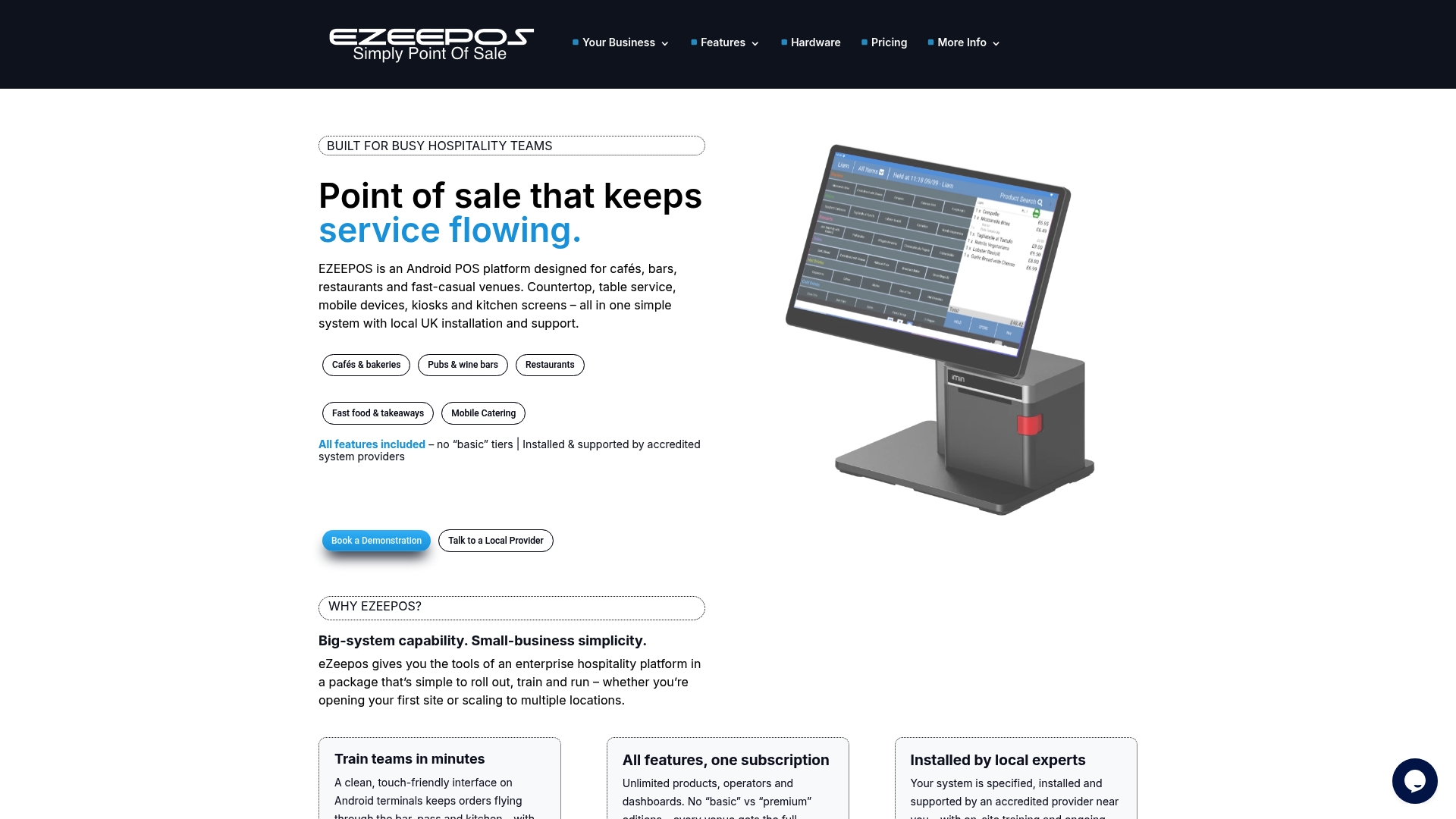
At eZeepos, we work with UK mobile caterers and food truck operators to put the right technology in place from the start. Our Android-based platform handles sales, orders, inventory, and reporting in a single system, with no tiered pricing and full feature access from day one. Whether you need a tablet-based POS for a single truck or kitchen order screens coordinating a multi-unit festival fleet, we provide local UK installation and human support from accredited providers who understand your environment. Talk to us about building a stack that fits where you are now and where you want to be.
Frequently asked questions
What key documents do I need for UK mobile catering compliance?
You’ll need annual Gas Safe and CP42 certificates for LPG setups, along with certified electrical PAT testing documents kept accessible at all times when trading.
How do mobile caterers maintain food temperature for safe service?
Most rely on thermal-retention transport and formalised logistics systems that keep food at safe temperatures from the preparation kitchen through to the point of service.
Which mobile catering solution is best for large events?
A combination of scalable fleet management, robust POS, and strong temperature control works best, as demonstrated by operators like The Street Diner who grew to 14 units serving large-scale events.
How can tech integration improve my mobile catering efficiency?
Using modern POS, digital compliance checklists, and real-time logistics tools significantly cuts customer wait times and reduces the manual workload on your team during busy service periods.
Recent Comments