
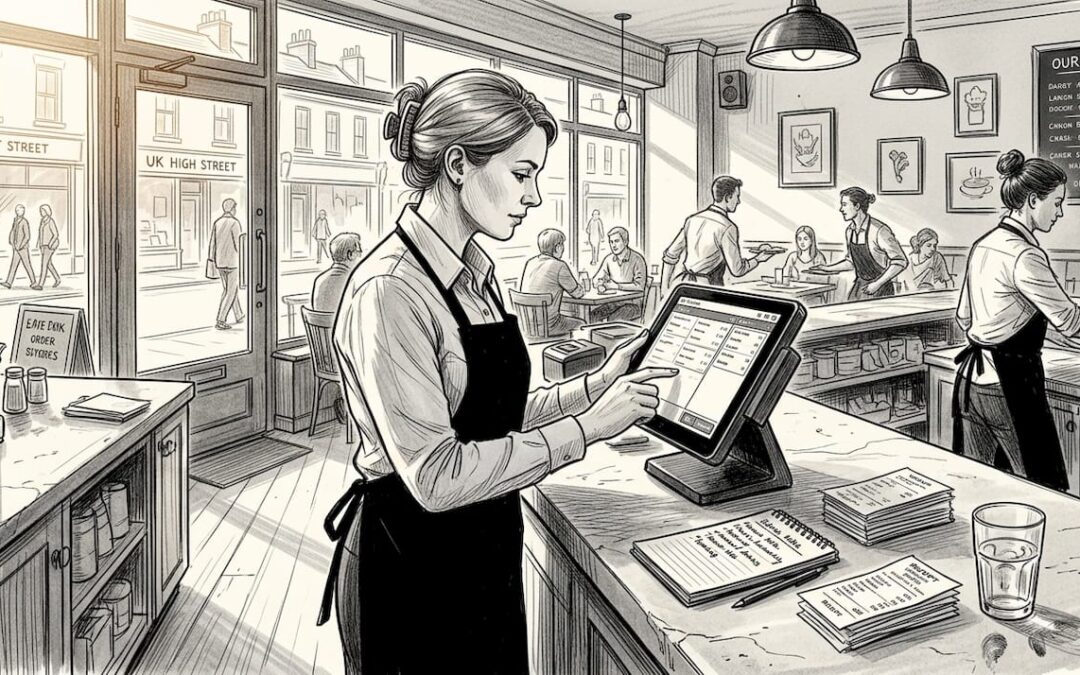
Nearly half of UK restaurant operators plan to upgrade their point of sale systems in 2026, and if you think a POS is just a glorified till, you are already behind. Modern systems handle security, AI-driven analytics, seamless integrations, and offline resilience, all from a single platform. The operators planning upgrades are not just chasing shiny technology. They are future-proofing their venues against rising guest expectations, tighter margins, and an increasingly competitive UK hospitality market.
Table of Contents
- The UK restaurant POS landscape in 2026
- Core technology trends transforming restaurant POS
- Choosing the right POS: enterprise vs SMB needs
- Practical steps to upgrade your POS for 2026
- Upgrade your POS with eZeepos solutions for UK hospitality venues
- Frequently asked questions
Key Takeaways
| Point | Details |
|---|---|
| UK POS market growth | The UK POS software market is expanding rapidly, with hospitality leading adoption and cloud POS now dominant. |
| Security and offline resilience | Modern POS solutions bring end-to-end encryption and offline modes, reducing breaches and improving service stability. |
| AI and integrations matter | Predictive AI and seamless integration with inventory, ordering, and payments are essential for future-proof operations. |
| POS choice by venue size | Large chains need governance while independents should favour simplicity and local support in their POS systems. |
| Upgrade for competitive edge | Upgrading your POS in 2026 ensures you stay ahead in guest experience, operational efficiency, and revenue. |
The UK restaurant POS landscape in 2026
The UK POS software market is growing fast, and the numbers make a compelling case for acting now rather than later. The market is on track to reach $1.49 billion by 2030, expanding at a compound annual growth rate of 9.4%. Restaurant-specific POS is growing even faster, with a 12.8% CAGR projected through to 2033. Hospitality is the primary engine driving this growth, not retail, not healthcare.
Cloud-based POS software now commands the largest share of the market, though fixed application installs still account for 54.9% of deployments. That split tells you something important: venues are moving towards cloud, but many still rely on legacy fixed systems that limit flexibility. Understanding the difference between POS system types is the first step to making a confident upgrade decision.
Here is a snapshot of where the UK restaurant POS market stands right now:
| Metric | Figure |
|---|---|
| UK POS software market value by 2030 | $1.49 billion |
| Market CAGR (2024 to 2030) | 9.4% |
| Restaurant POS CAGR to 2033 | 12.8% |
| Fixed application market share | 54.9% |
| Cloud POS market position | Largest share |
The cloud POS benefits for UK hospitality venues are well documented: real-time reporting, remote management, and automatic software updates without costly engineer visits. If your current system requires a technician every time you need a menu change, that alone is reason enough to reconsider.
Key drivers pushing UK venues towards POS upgrades in 2026:
- Rising guest expectations for faster, smoother service
- Demand for integrated ordering, payments, and loyalty in one system
- Pressure to reduce labour costs through smarter automation
- Regulatory requirements around data security and payment compliance
- Growth of off-premise revenue streams such as delivery and click-and-collect
The POS system benefits extend well beyond the counter. A modern system touches every part of your operation, from kitchen throughput to end-of-day reporting.
Core technology trends transforming restaurant POS
So what is actually changing inside these systems? The technology shifts happening right now are more significant than any previous generation of POS upgrades.
Security is the headline story. End-to-end encryption and PCI DSS compliance have reduced UK hospitality POS breaches by 40% since 2024. That is not a marginal improvement. It reflects a fundamental shift in how POS vendors approach data protection, moving security from an afterthought to a core architecture decision.
Cloud as the default is now settled. The debate is no longer cloud versus on-premise. It is cloud versus hybrid. A cloud POS transformation gives you flexibility and scalability, but hybrid models add a critical layer: offline resilience. If your broadband drops during a Saturday evening service, a hybrid system keeps trading. A pure cloud system without offline capability does not.
AI and predictive analytics are moving from marketing hype to practical tools. As restaurant tech experts note, the shift is from gimmicky AI features towards predictive analytics that actually help you manage stock, forecast demand, and reduce waste. Think automated reorder triggers and upsell prompts based on real purchasing patterns, not guesswork.
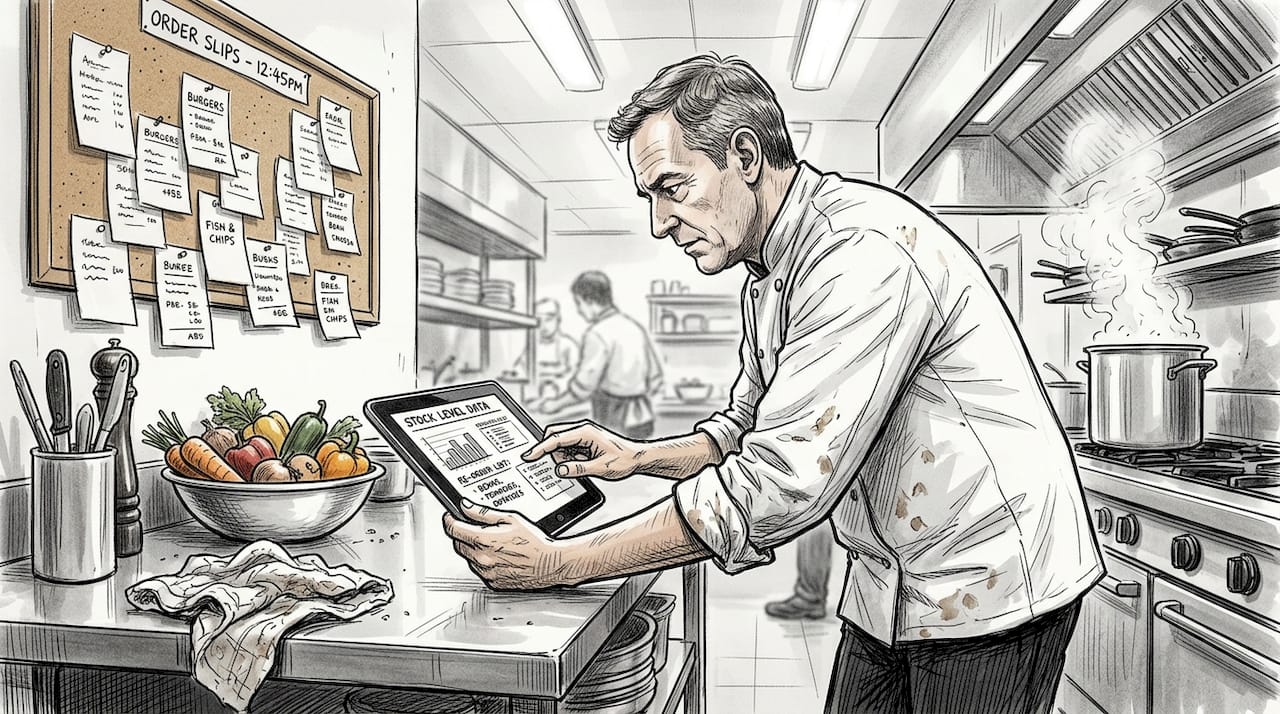
Integrations are now non-negotiable. An integrated POS connects your ordering, inventory, payments, and reporting into one coherent system. Venues running disconnected tools waste time reconciling data across platforms and miss the operational insights that drive better decisions. Explore hospitality tech examples to see how integrated systems are already transforming UK venues.
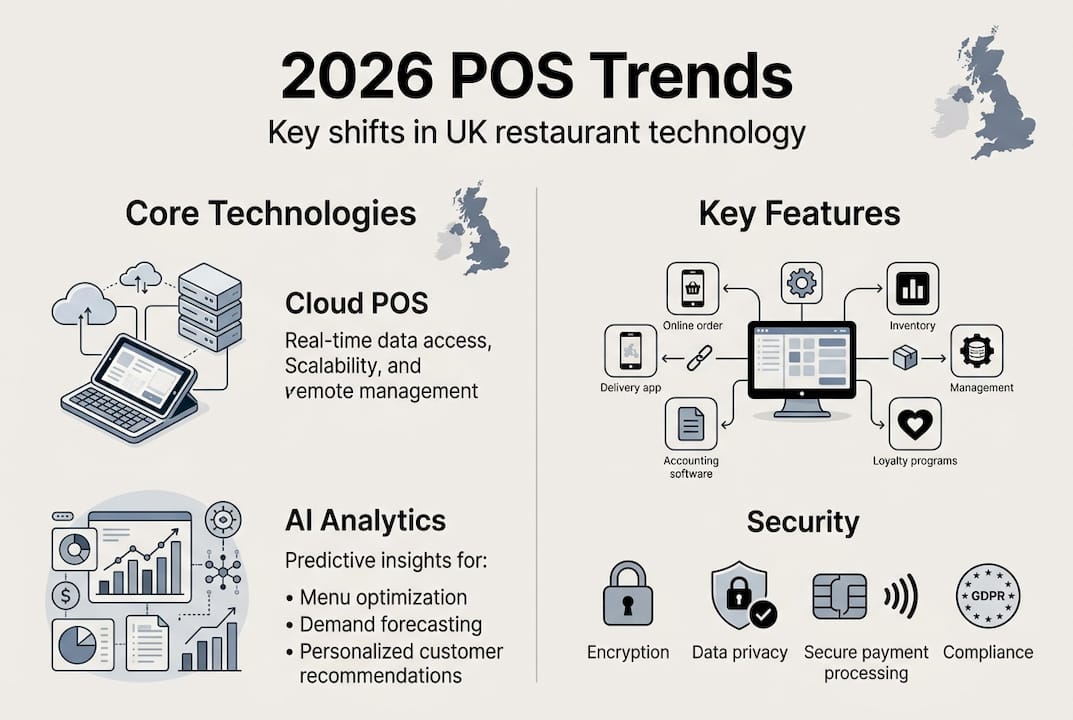
Here is how the key technology trends compare for 2026:
| Technology | Benefit | Risk if ignored |
|---|---|---|
| End-to-end encryption | Reduces breach risk significantly | Data liability and reputational damage |
| Cloud or hybrid POS | Flexibility and remote management | Inflexibility and high maintenance costs |
| AI predictive analytics | Smarter stock and demand forecasting | Waste, over-ordering, missed revenue |
| Full integrations | Unified data across all operations | Manual errors and reconciliation headaches |
| Offline resilience | Continuous trading during outages | Lost revenue and frustrated guests |
Pro Tip: When evaluating any POS solution, ask the vendor specifically how the system behaves when your internet connection drops. A robust offline mode is not optional for busy UK venues. It is essential.
“The venues that will thrive in 2026 are those treating their POS as an operational hub, not just a payment terminal. Security, integrations, and offline resilience are the three pillars every upgrade decision should be built around.”
Choosing the right POS: enterprise vs SMB needs
Not every venue needs the same solution, and this is where many upgrade decisions go wrong. The technology trends above apply broadly, but how you implement them depends entirely on your venue’s complexity.
Enterprise operators, such as multi-site restaurant groups and franchise networks, need governance and centralised control without slowing down individual locations. Think consistent menu management across 20 sites, centralised reporting, and franchise compliance tools. The risk for large groups is over-centralisation: locking stores into rigid workflows that kill local responsiveness.
Independent venues and SMBs have different priorities. Simplicity, affordability, and local support matter far more than enterprise governance features. Overcomplicating a POS for a single-site café or bar is a common and costly mistake. You end up paying for features you will never use while struggling with a system that is harder to train staff on.
The enterprise POS guide for UK hospitality breaks down exactly what large operators should look for, while local POS support remains one of the most underrated factors for independent venues making their first serious upgrade.
Common pitfalls to avoid when choosing your POS:
- Selecting a system based on price alone without assessing integration capability
- Choosing enterprise-grade complexity for a single-location operation
- Ignoring offline resilience because outages seem unlikely
- Underestimating staff training time when switching platforms
- Failing to check whether the vendor offers UK-based support
Pro Tip: Match your POS selection to your venue’s operational complexity, not just its physical size. A busy single-site bar with high transaction volumes may need more capability than a quiet multi-room restaurant with low footfall.
“The best POS system is not the most feature-rich one. It is the one your team will actually use confidently, every shift, without needing to call support.”
Practical steps to upgrade your POS for 2026
Knowing the trends is one thing. Acting on them is another. Here is a straightforward process for UK venue owners ready to move forward.
90% of operators now prioritise integrations when evaluating new POS systems, and 80% say they are ready to adopt new technology. The venues that move early gain a real advantage: they learn faster, negotiate better contracts, and build operational confidence before competitors catch up.
Follow this upgrade process:
- Audit your current system. List every integration gap, every manual workaround, and every moment your current POS slows service down.
- Define your must-have integrations. Payments, delivery platforms, inventory, loyalty. Know what you need before you speak to any vendor.
- Test offline modes. Ask every vendor to demonstrate exactly what happens when connectivity drops. Do not accept a vague answer.
- Evaluate support quality. UK-based, human support from accredited providers is worth paying for. Remote-only support from overseas teams is a false economy.
- Plan staff training. Build training time into your upgrade timeline. A system your team cannot use confidently is a system that will underperform.
- Pilot before full rollout. If you operate multiple sites, pilot the new system at one location before committing across the group.
Use the POS upgrade guide to structure your evaluation process, and review hospitality tech upgrade examples to see how other UK venues have approached similar transitions. For ongoing insights, the latest hospitality articles cover emerging trends as they develop through 2026.
Key checklist items before signing any POS contract:
- Confirmed offline trading capability
- Full integration with your existing payment provider
- Transparent pricing with no hidden tier upgrades
- UK-based installation and ongoing support
- Clear staff training provision from the vendor
Upgrade your POS with eZeepos solutions for UK hospitality venues
If the trends and steps above have clarified what your venue needs, the next question is who can actually deliver it in the UK market. That is where eZeepos comes in.
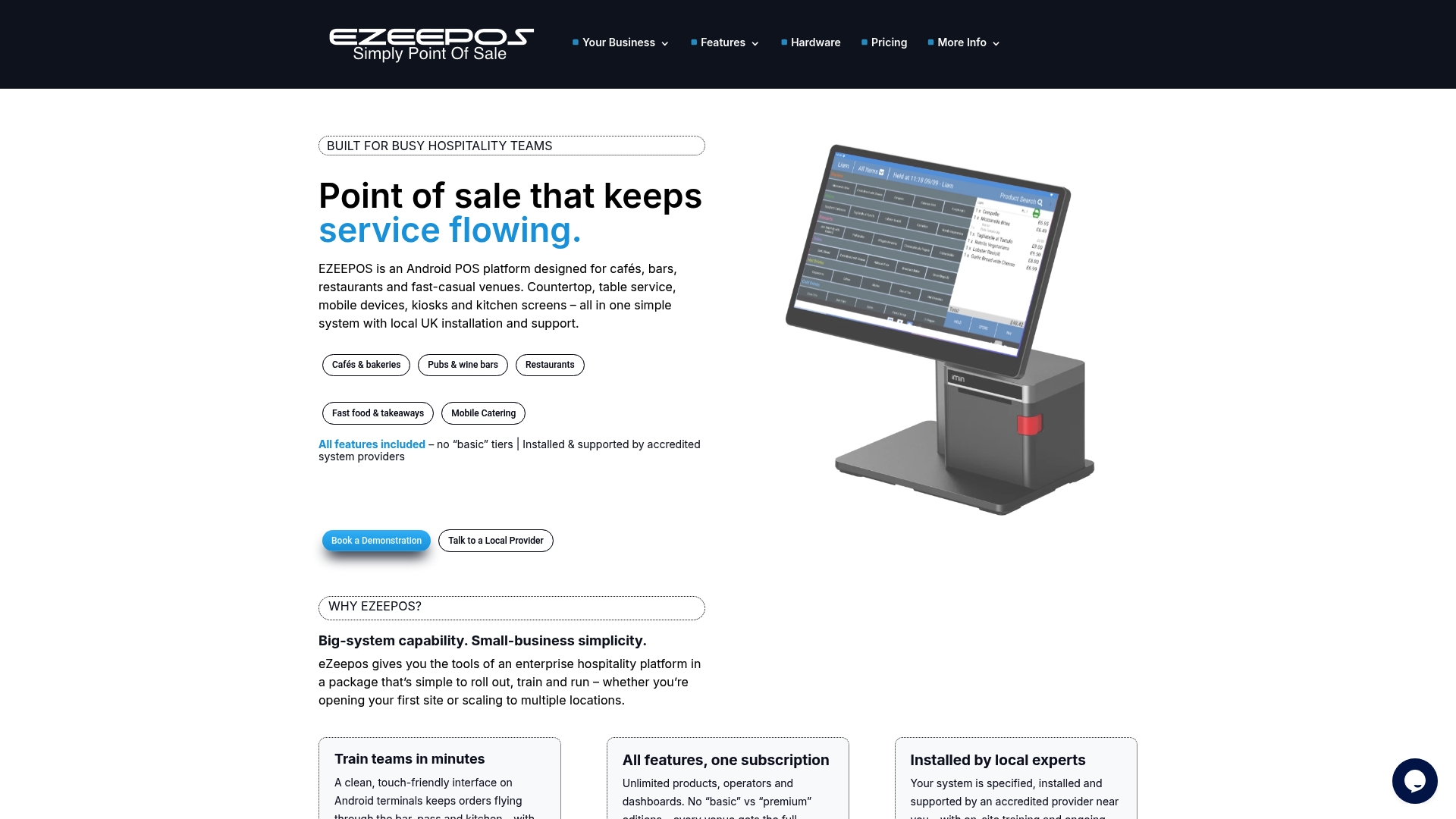
eZeepos is built specifically for UK hospitality venues, from busy city-centre bars to multi-site restaurant groups. The platform covers every service mode: table ordering, counter service, self-service kiosks, and mobile catering, all from a single Android-based system. There are no tiered pricing traps. Every venue gets full feature access from day one, with local UK installation and ongoing support from accredited providers. The POS upgrade benefits are tangible: faster service, better reporting, and a system your team can learn quickly. Explore the unified POS benefits to understand how a single integrated platform can replace the patchwork of disconnected tools holding your venue back.
Frequently asked questions
What is the most important restaurant POS trend in the UK for 2026?
Security and integrations lead the way, with cloud and offline resilience close behind. Venues that prioritise these features when upgrading will be best positioned for the year ahead.
How do I know if my venue needs a POS upgrade?
If your system lacks reliable integrations, strong security, or an offline trading mode, a 2026 upgrade is almost certainly overdue for your venue. Manual workarounds and reconciliation headaches are the clearest warning signs.
Should I choose cloud or hybrid POS for my restaurant?
Cloud POS dominates for flexibility and scalability, but hybrid systems are the smarter choice if offline resilience matters to your operation. For most busy UK venues, hybrid models offer the best of both worlds.
Do enterprise and independent venues need different POS solutions?
Yes. Enterprises need governance and centralised control across multiple sites, while independents benefit most from simple, affordable systems backed by local UK support.
Can upgrading my POS really improve guest experience and revenue?
Absolutely. Modern POS systems streamline ordering, speed up payments, and surface reporting insights that drive better decisions. Off-premise revenue through delivery and click-and-collect is now a key growth area that only an integrated POS can manage effectively.
Recent Comments