
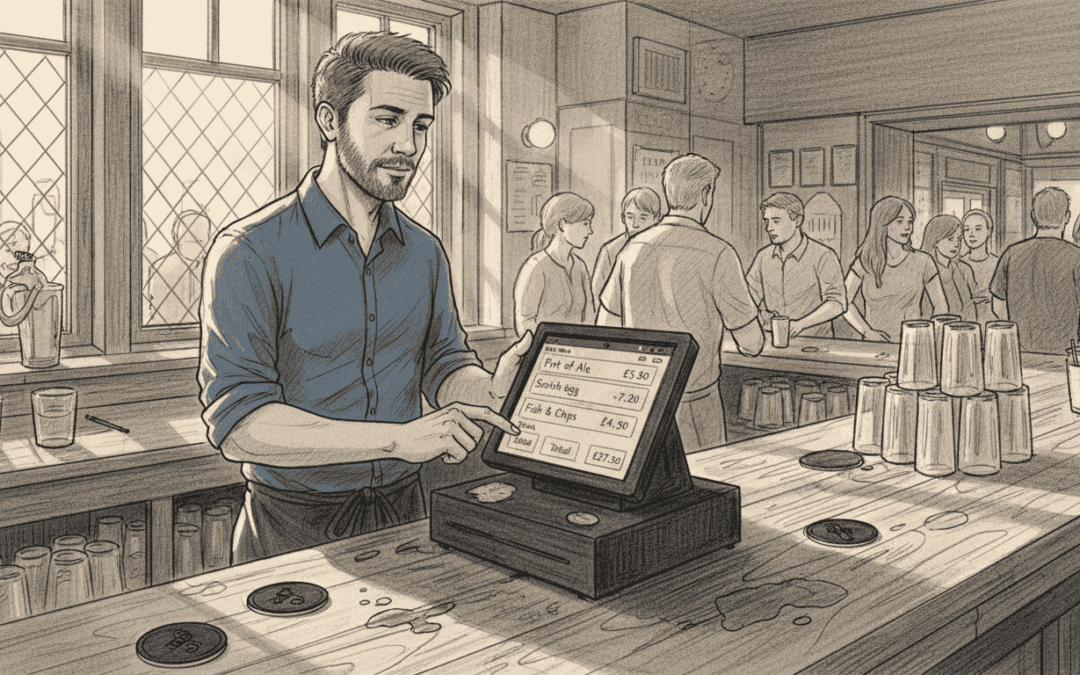
Running a busy café or restaurant in the UK means there is little room for delays or errors at the till. With customer expectations constantly rising, reliable and integrated technology has become a necessity rather than a luxury. Embracing a modern POS system provides much more than transaction management—it delivers seamless integration with accounting, inventory, and CRM platforms, supporting the fast-paced demands of today’s hospitality venues and creating a foundation for outstanding customer service.
Table of Contents
- Defining Modern POS Systems In Hospitality
- Service Modes And Hardware Variations Explained
- Key Features: Integration, Reporting And Payments
- Costs, Compliance And Support Requirements
- Risks Of Outdated Systems And Mistakes To Avoid
Key Takeaways
| Point | Details |
|---|---|
| Modern POS importance | Hospitality businesses must embrace modern POS systems as essential tools for enhancing efficiency and customer experience. |
| Integration capabilities | Selecting a POS that offers comprehensive integration will streamline operations and improve data accessibility. |
| Cost considerations | Evaluate total costs beyond initial purchase, including support and compliance, to ensure a sound investment. |
| Risks of outdated systems | Businesses risk operational inefficiencies and security vulnerabilities by relying on outdated POS technology. |
Defining modern POS systems in hospitality
A point of sale (POS) system in hospitality has transformed from a simple cash register into a sophisticated digital command centre that manages multiple business functions simultaneously. Modern POS platforms represent far more than transaction processing – they are integrated technological ecosystems designed to streamline operations, enhance customer experiences, and provide granular business insights.
Today’s hospitality POS systems are characterised by several key technological capabilities:
- Cloud-based data management and storage
- Real-time reporting and analytics
- Multi-platform compatibility (tablets, smartphones, dedicated terminals)
- Seamless payment gateway integrations
- Advanced inventory tracking
- Staff management and scheduling features
Understanding the sophisticated landscape of hospitality POS systems reveals how dramatically technology has reshaped restaurant and café operations. These systems are no longer optional extras but essential infrastructure for competitive businesses seeking efficiency and growth.
The evolution of POS technology means venues can now access enterprise-level functionality previously available only to large chains. Small cafés and independent restaurants can now leverage powerful tools that provide comprehensive insights into sales trends, customer preferences, and operational performance – all from a single integrated platform.
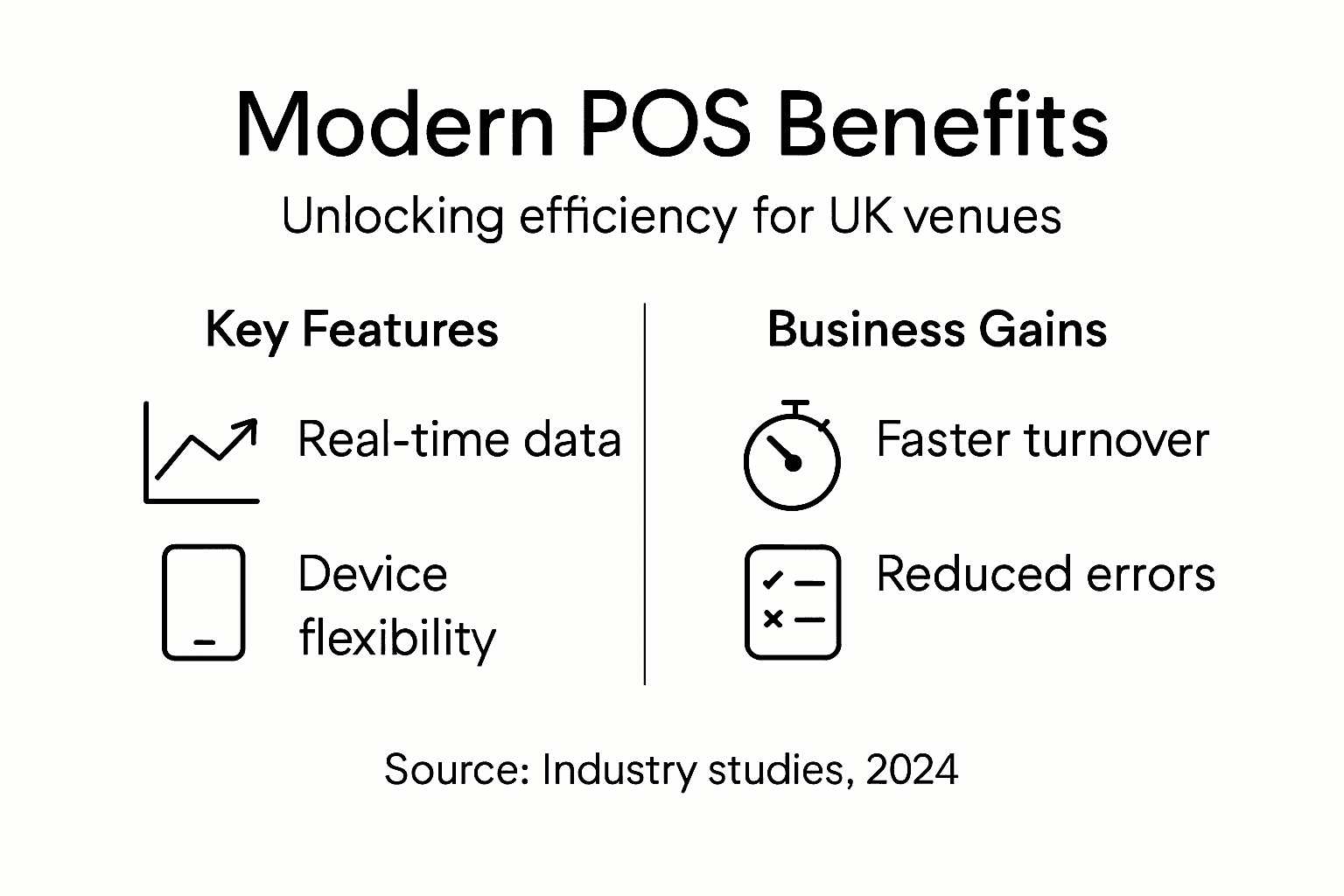
Here is a summary of how key POS features benefit hospitality businesses:
| Feature Area | Typical Capability | Business Benefit |
|---|---|---|
| Cloud Management | Remote access to sales data | Informed decision-making on-the-go |
| Real-time Reporting | Instant performance analytics | Quickly respond to operational trends |
| Inventory Tracking | Automated stock level updates | Reduces waste and prevents shortages |
| Staff Scheduling | Integrated shift management | Optimises labour costs and productivity |
| Multi-platform Use | Operates on tablets, mobiles, terminals | Adapts to varied service environments |
Pro tip: When evaluating POS systems, prioritise solutions offering comprehensive feature sets and local UK technical support to ensure smooth implementation and ongoing reliability.
Service modes and hardware variations explained
Modern hospitality POS systems are incredibly versatile, offering multiple service modes that cater to different operational styles and customer interaction preferences. From traditional counter service to sophisticated table ordering platforms, these technological solutions have dramatically transformed how UK venues manage their daily operations.
The primary service modes in contemporary hospitality POS systems include:
- Counter Service: Traditional walk-up ordering with immediate transaction processing
- Table Service: Tablet-based ordering where staff take orders directly at customer tables
- Self-Service Kiosks: Customer-driven ordering platforms with minimal staff intervention
- Mobile Catering: Portable POS systems for food trucks, festival stalls, and pop-up venues
- Kitchen Order Screens: Digital displays managing food preparation workflow
Hardware variations have expanded dramatically, offering venues unprecedented flexibility in choosing integrated hospitality solutions. Modern POS platforms support multiple device types, including:
- Android tablets
- Dedicated countertop terminals
- Handheld mobile devices
- Large kitchen display screens
- Compact payment terminals
These diverse hardware options enable restaurants, cafés, and quick-service venues to create custom technology ecosystems that precisely match their unique operational requirements. The ability to mix and match hardware configurations means businesses can design highly personalised technological infrastructures without compromising functionality.
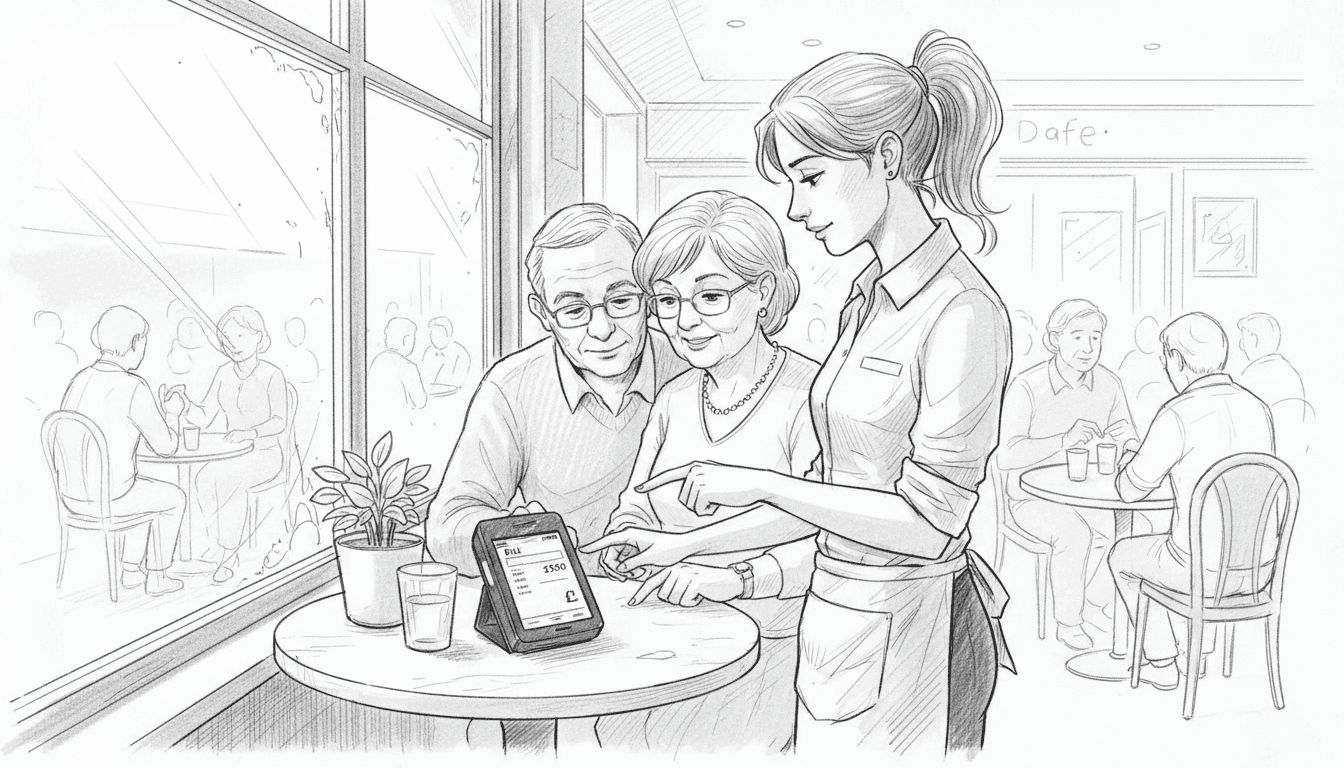
The following table compares common POS hardware types in hospitality:
| Hardware Type | Typical Use Case | Key Advantage |
|---|---|---|
| Countertop Terminal | Fixed till for payments | Robust and secure for high volumes |
| Tablet Device | Table service ordering | Enhances interaction, increases speed |
| Mobile Handheld | On-the-move order taking | Boosts flexibility for busy venues |
| Kitchen Display | Order management in kitchen | Minimises errors, streamlines workflow |
| Payment Terminal | Processing diverse payments | Supports cards, contactless, wallets |
Integration is key in modern POS systems. Each hardware component communicates seamlessly, creating a unified platform that tracks orders, manages inventory, processes payments, and generates comprehensive business insights – all in real time.
Pro tip: Select a POS system offering hardware flexibility and comprehensive device compatibility to future-proof your technological investment.
Key features: integration, reporting and payments
Modern hospitality point of sale (POS) systems represent far more than simple transaction processing tools – they are sophisticated business intelligence platforms that transform operational capabilities for UK venues. POS terminals act as operational hubs by seamlessly managing complex business functions across multiple integrated domains.
Key integration capabilities include:
- Accounting software synchronisation
- Real-time inventory management
- Customer relationship management (CRM) connections
- Staff scheduling and payroll systems
- E-commerce platform integrations
Reporting features provide unprecedented business visibility through:
- Detailed sales analytics
- Performance tracking by staff member
- Inventory consumption insights
- Peak trading time identification
- Profit margin calculations
Payment processing has also evolved dramatically, supporting multiple transaction methods:
- Traditional card payments
- Contactless transactions
- Mobile wallet systems
- QR code payments
- Split billing options
- International currency handling
These comprehensive systems eliminate manual administrative tasks, reducing human error and providing real-time insights that enable more strategic business decision-making. The ability to instantly access granular performance data means hospitality managers can respond quickly to emerging trends and operational challenges.
Pro tip: Choose a POS system offering comprehensive integration capabilities that align with your specific operational requirements and can scale alongside your business growth.
Costs, compliance and support requirements
Understanding the total cost of ownership for hospitality POS systems involves more than just the initial purchase price. POS software costs encompass multiple critical components that UK venues must carefully evaluate to make informed technological investments.
Cost considerations typically include:
- Initial hardware purchase
- Software licensing fees
- Monthly subscription charges
- Training and implementation expenses
- Ongoing maintenance and support costs
- Potential upgrade investments
Compliance requirements are equally crucial, demanding rigorous attention to:
- Data protection regulations
- Payment Card Industry (PCI) standards
- General Data Protection Regulation (GDPR)
- Cybersecurity protocols
- Financial transaction security measures
Support requirements represent a fundamental aspect of successful POS system implementation. Effective support channels should provide:
- 24/7 technical assistance
- Rapid issue resolution
- Regular software updates
- Security vulnerability patches
- Local UK-based customer service
- Onsite technical support options
Small and medium hospitality venues must view POS investment as a strategic decision balancing immediate costs against long-term operational efficiency. Comprehensive support structures ensure smooth technological transitions and minimise potential disruptions to business operations.
Pro tip: Request detailed cost breakdowns and support contracts before finalising your POS system investment, ensuring complete transparency about ongoing expenses and service commitments.
Risks of outdated systems and mistakes to avoid
Outdated point of sale (POS) systems represent a significant operational liability for UK hospitality venues, potentially compromising business efficiency, customer experience, and financial security. Clinging to legacy technology creates multiple hidden risks that can gradually erode a business’s competitive position and operational capabilities.
Critical risks associated with outdated POS systems include:
- Increased cybersecurity vulnerabilities
- Slower transaction processing times
- Limited reporting and analytics capabilities
- Incompatibility with modern payment technologies
- Higher maintenance and repair costs
- Reduced staff productivity
Common mistakes hospitality managers make when managing technological transitions involve:
- Delaying system upgrades indefinitely
- Choosing cost as the primary selection criteria
- Neglecting staff training during implementation
- Failing to assess future scalability
- Overlooking integration capabilities
- Underestimating data migration complexities
The financial implications of maintaining obsolete systems extend beyond immediate technology costs. Reduced operational efficiency, potential security breaches, and missed business intelligence opportunities can significantly impact long-term profitability. Modern POS platforms offer comprehensive features that transform technological investments from expense lines into strategic business enablers.
Small and medium hospitality venues must adopt a proactive approach to technological infrastructure, viewing POS systems as dynamic business tools rather than static equipment. Regular system assessments, staying informed about emerging technologies, and planning strategic upgrades are crucial for maintaining competitive advantage.
Pro tip: Conduct an annual comprehensive review of your POS system’s performance, comparing its capabilities against current market standards to identify potential upgrade opportunities.
Upgrade Your POS System to Unlock True Hospitality Potential
Is your current POS system holding back your venue’s efficiency and growth? Modern UK hospitality businesses face challenges such as outdated technology, limited integration, and fragmented hardware that slow down operations and impact customer experience. With demands for cloud-based management, real-time reporting, and seamless payment options growing, now is the perfect time to transform your business with a tailored solution.
At EZEEPos, our specialised Android-based POS platform is designed to meet the unique needs of cafés, bars, restaurants, and mobile caterers. Supported by flexible hardware options like tablets, kiosks, and kitchen display screens, we provide a unified system that simplifies staff training and gives you full feature access without confusing tiered pricing. Discover how our comprehensive hospitality solutions can streamline inventory management, optimise staff scheduling and improve sales insight by visiting Hospitality – EZEEPos Solution.
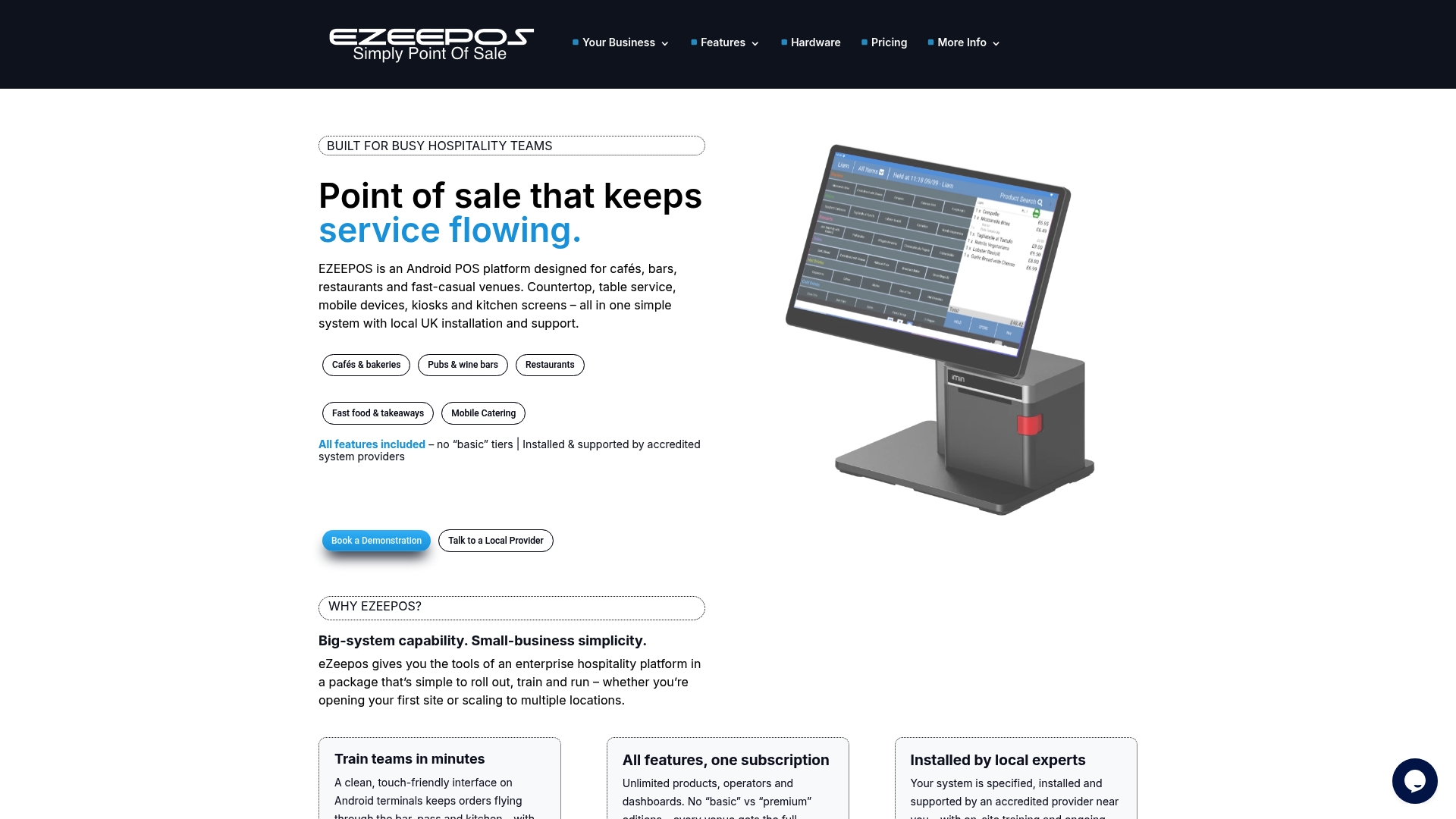
Don’t let outdated POS systems limit your venue’s success. Explore our integrated features and local UK support and empower your business with enterprise-level technology that is simple to use and scales with your growth. Take the next step now by learning more at EZEEPos and see how our Add On Modules – EZEEPos Solution can enhance your system’s capabilities. Your upgraded hospitality operation starts here.
Frequently Asked Questions
What are the key benefits of upgrading to a modern POS system in hospitality?
Upgrading to a modern POS system enhances operational efficiency, improves customer experience, offers real-time reporting and analytics, automates inventory tracking, and provides robust staff management features.
How does a modern POS system improve customer experiences in UK hospitality?
Modern POS systems streamline the ordering process with features like table-side ordering and self-service kiosks, reduce wait times, and enable accurate and quick transaction processing, all of which contribute to an enhanced customer experience.
What integration capabilities should I look for in a new POS system?
Look for a system that integrates seamlessly with accounting software, CRM platforms, inventory management solutions, and e-commerce systems to create a cohesive operational framework that supports your business needs.
What are the risks of continuing to use an outdated POS system?
Using an outdated POS system can expose your business to cybersecurity threats, slow transaction processing, limited reporting capabilities, and increased maintenance costs, ultimately hindering your operational efficiency and customer satisfaction.
Recent Comments