
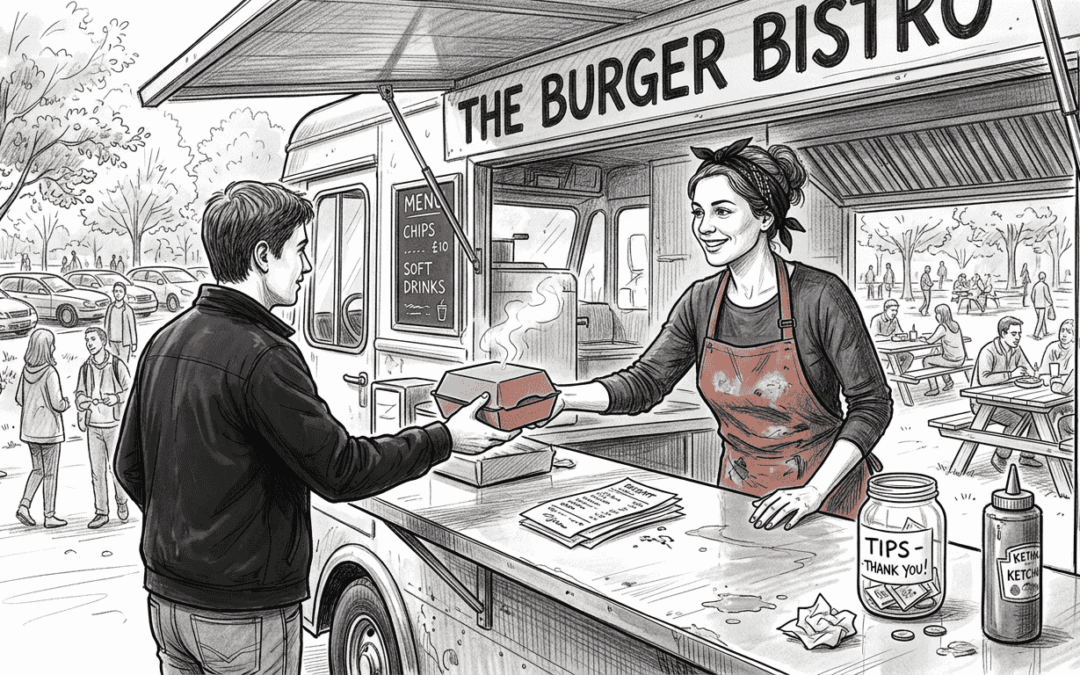
Many food truck owners believe manual cash registers are sufficient for their needs, but this outdated thinking costs them revenue every single day. Modern food truck POS systems reduce transaction times by up to 34%, transforming customer flow and profitability. This guide reveals how the right point of sale technology streamlines operations, increases sales volume, and positions your mobile catering business for sustainable growth in 2026’s competitive UK market.
Table of Contents
- How Pos Systems Transform Food Truck Operations
- Choosing The Right Pos System For Your Food Truck
- Comparing Top Pos Solutions For Uk Food Trucks In 2026
- Maximising Your Food Truck’s Potential With The Right Pos
- Explore Pos Solutions Tailored For Uk Food Trucks
Key takeaways
| Point | Details |
|---|---|
| Speed matters | POS systems cut transaction times from 47 to 31 seconds, serving more customers per hour. |
| Hidden costs | Choosing solely on transaction fees ignores total ownership costs including hardware and software. |
| Mobile optimisation | Food truck POS must handle outdoor conditions, battery life, and internet connectivity challenges. |
| Growth planning | Scalable systems adapt as you add vehicles, staff, or online ordering channels. |
| Data drives profit | Real-time sales analytics inform menu pricing, inventory purchasing, and staffing decisions. |
How POS systems transform food truck operations
Transaction speed determines how many customers you serve during peak lunch hours. Traditional cash registers force staff to manually calculate totals, handle change, and record sales separately. Food truck POS systems eliminate these bottlenecks by automating calculations, accepting multiple payment methods, and syncing data instantly.
Real-world data proves the impact. Food trucks using modern POS technology reduced average transaction times from 47 seconds to just 31 seconds. That 16-second improvement means serving five additional customers every ten minutes during busy periods. Over a typical lunch service, this translates to 30 more transactions and significant revenue gains.
Customer experience improves dramatically when staff focus on service rather than payment processing. Your team takes orders faster, processes payments seamlessly, and handles queue management efficiently. Accuracy increases because the system calculates totals automatically, reducing both mistakes and customer complaints.
Benefits extend beyond speed:
- Contactless payments attract customers preferring card or mobile wallet transactions
- Digital receipts via email or SMS eliminate paper waste and printing costs
- Split payment options accommodate groups sharing bills
- Integration with kitchen screens ensures orders reach preparation staff instantly
Faster transactions create a positive feedback loop. Shorter queues attract more customers who might otherwise walk past when seeing long waits. Your setting up food truck POS correctly from day one establishes efficient workflows that compound over time.
“The difference between manual and automated sales processing isn’t just convenience. It’s the difference between serving 80 customers versus 110 during your busiest two hours.”
Revenue gains from improved throughput often exceed 20% during peak periods. When you serve more customers in the same timeframe, fixed costs like rent, licences, and staff wages spread across higher sales volumes, directly improving profit margins.
Choosing the right POS system for your food truck
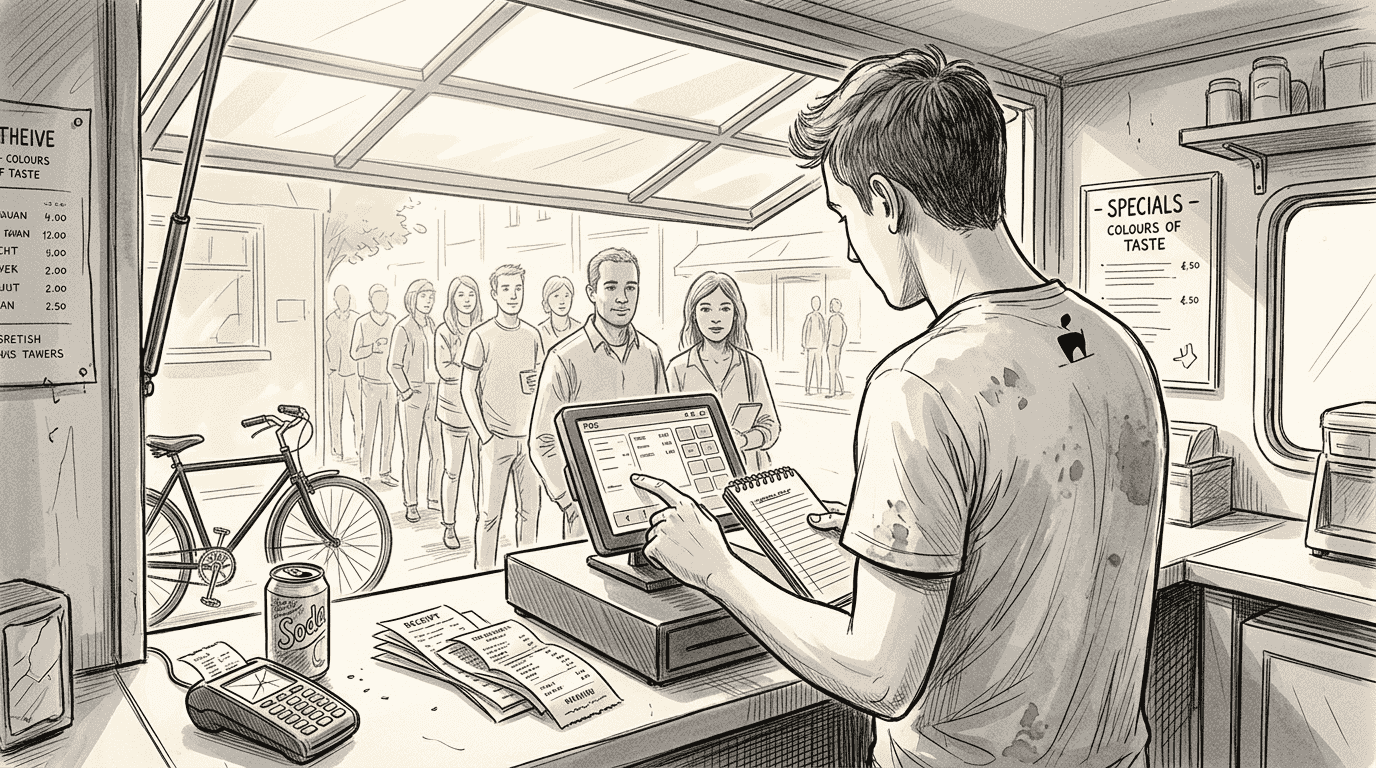
Selecting appropriate technology requires evaluating your specific business model and operational needs. Different food trucks operate differently. A gourmet burger van serving complex customised orders needs different features than a coffee cart handling quick transactions. Start by mapping your requirements across several dimensions.
Consider your sales channels first. Do you only serve walk-up customers, or do you handle pre-orders through social media? Will you add online ordering or delivery partnerships? Your POS should accommodate current operations whilst supporting future expansion plans. Stock tracking becomes essential if you prepare ingredients on-site or manage perishable inventory across multiple days.
Essential evaluation criteria include:
- Business type compatibility with food service workflows and menu complexity
- Payment processing options including contactless, chip and PIN, and mobile wallets
- Inventory management capabilities for tracking ingredients and finished products
- Staff management tools for scheduling, permissions, and performance tracking
- Loyalty programme features to encourage repeat customer visits
- Reporting and analytics dashboards accessible remotely via cloud platforms
Pricing structures vary significantly between providers. Many providers offer free starter plans, but these often come with limitations on features, hardware compatibility or transaction volume. Monthly software fees typically range from £0 to £80, whilst card processing charges add 1.5% to 2.75% per transaction depending on payment type and provider.
Total cost of ownership extends beyond obvious fees. Factor in hardware expenses like card readers, tablets, receipt printers, and protective cases. Consider whether you need multiple devices for taking orders queue-side versus processing payments at the service window. Some systems require proprietary hardware, whilst others work with standard Android tablets you already own.
Mobile-friendliness isn’t optional for food trucks. Your system must function reliably in outdoor environments with varying temperatures, direct sunlight on screens, and potential connectivity issues. Battery life matters when operating away from mains power for extended periods. Offline mode becomes critical if mobile internet drops during service.
Pro tip: Test free plans thoroughly before committing. Many limitations only become apparent during real-world use. Check transaction caps, feature restrictions, and whether “free” requires using specific payment processors with higher fees. Calculate your actual monthly costs including all components, not just advertised software prices. Understanding the types of POS systems for mobile caterers helps narrow options quickly.
| Provider | Monthly cost | Card fees | Best for |
|---|---|---|---|
| Square | Free to £49 | 1.75% in-person | Straightforward operations needing reliable free tier |
| SumUp | £0 to £80 | 1.69% contactless | Budget-conscious trucks minimising fixed costs |
| Shopify | £25 to £384 | 1.6% to 2.5% | Multi-channel sellers combining online and physical sales |
Comparing top POS solutions for UK food trucks in 2026
Three providers dominate the UK mobile catering market, each offering distinct advantages depending on your priorities. Understanding their strengths and limitations helps match technology to your business requirements and growth trajectory.
Square ranked number one for UK businesses due to a genuinely usable free plan, simple upgrades, and transparent in-person fees. Their ecosystem includes card readers, kitchen display systems, and online ordering integration. The free tier supports unlimited transactions, making it viable for new trucks testing concepts before investing in premium features. Upgrading adds advanced inventory management, employee permissions, and loyalty programmes.
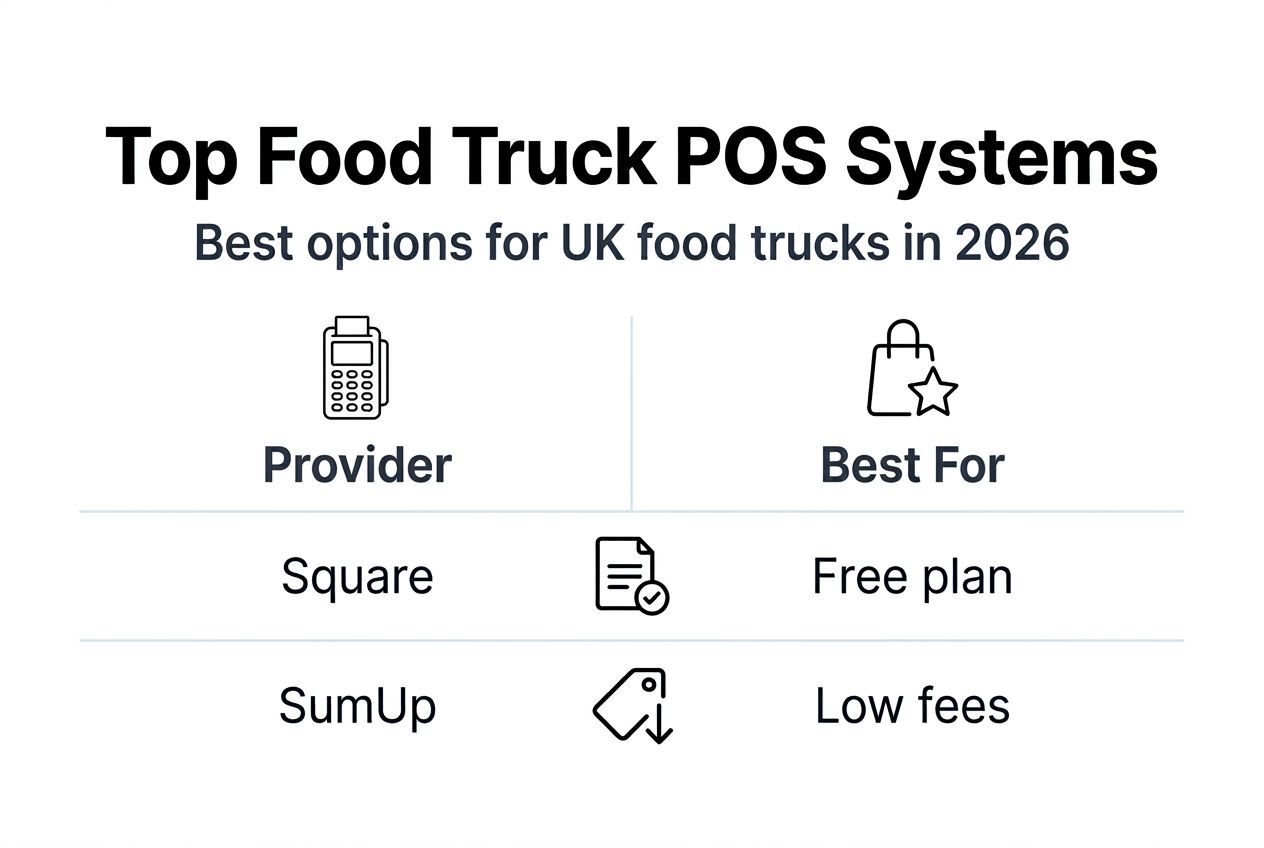
SumUp is the most affordable option on the market with £0 to £80 monthly software costs plus competitive card fees. Their strength lies in simplicity and low barriers to entry. The system handles essential POS functions without overwhelming users with complex features. This streamlined approach suits trucks prioritising ease of use and minimal ongoing expenses over comprehensive business management tools.
Shopify excels for retailers selling both online and in-store, with a very user-friendly dashboard and powerful inventory syncing. Food trucks building brand presence through e-commerce benefit from unified product catalogues, customer databases, and marketing tools. The platform seamlessly connects physical sales with online orders, subscription boxes, and merchandise. Monthly costs start higher but include robust website functionality alongside POS capabilities.
Detailed comparison considerations:
- Scalability: Square and Shopify support multi-location expansion easily; SumUp focuses on single-unit simplicity
- Hardware flexibility: Square offers proprietary and third-party options; SumUp provides affordable readers; Shopify integrates various systems
- Payment options: All three handle contactless, chip and PIN, and mobile wallets with similar reliability
- Reporting depth: Shopify provides most comprehensive analytics; Square offers strong insights; SumUp covers basics
- Customer support: Square includes phone and chat support; SumUp focuses on online resources; Shopify provides 24/7 assistance on higher tiers
Negotiating better rates becomes possible once you establish transaction history. Many providers reduce processing fees for consistent high-volume merchants. Demonstrate your monthly sales data when requesting custom pricing. Some flexibility exists, particularly with annual prepayment or exclusive processing agreements.
Future growth planning influences which system makes sense long-term. If you plan adding vehicles, hiring staff, or opening a permanent location, choose platforms accommodating expansion. Switching POS systems later disrupts operations, requires staff retraining, and risks data migration problems. Starting with scalable technology, even if current needs seem simple, prevents costly transitions.
Pro tip: Verify hardware compatibility before purchasing additional devices. Not all tablets work with every POS system, and proprietary readers limit flexibility. Check whether your preferred system supports standard Bluetooth printers or requires specific models. Understanding best POS systems for mobile caterers in-depth reveals these practical considerations often overlooked during initial research.
Maximising your food truck’s potential with the right POS
Implementing technology only creates value when you actively leverage its capabilities. Specialised POS systems for food trucks can significantly impact the bottom line through reduced processing fees, faster service times, and inventory optimisation. These practical steps transform your system from a payment processor into a comprehensive business management tool.
-
Configure inventory tracking from day one. Input your ingredients, set par levels, and enable low-stock alerts. The system monitors usage patterns and flags when reordering becomes necessary. This prevents running out of popular items mid-service whilst reducing waste from over-purchasing perishables. Track food costs as percentages of sales to identify profit margin opportunities.
-
Utilise staff management features comprehensively. Assign individual login credentials to each team member, enabling performance tracking and accountability. Clock-in functionality records actual working hours for accurate payroll. Permission levels prevent unauthorised discounts or refunds. Sales data per employee reveals top performers and training needs.
-
Analyse sales reports weekly for actionable insights. Identify your best-selling items, peak hours, and slowest periods. Use this data to optimise menu offerings, adjusting prices on high-demand items and eliminating poor performers. Schedule staff according to actual traffic patterns rather than guesswork. Some trucks increase annual profits by £8,000 to £12,000 simply by making data-informed decisions about menu pricing and labour allocation.
-
Implement customer loyalty programmes. Digital stamp cards or points systems encourage repeat visits without physical punch cards that get lost. Automated reminders via email or SMS bring customers back during slower periods. Track redemption rates to measure programme effectiveness and adjust rewards accordingly.
-
Integrate online ordering if your POS supports it. Pre-orders reduce queue congestion during peak times and guarantee sales even before service begins. Customers appreciate the convenience, often spending more when browsing menus without time pressure. Sync online and in-person menus automatically to avoid discrepancies.
Pro tip: Schedule monthly reviews of your POS reports with key staff members. Fresh perspectives often spot patterns you miss. Look beyond sales totals to examine transaction times, popular combinations, and seasonal trends. Your inventory management guide for caterers provides frameworks for interpreting data and implementing improvements. The staff management in POS systems capabilities become more valuable as your team grows and operations become more complex.
Consistent data analysis drives continuous improvement. Track key metrics monthly: average transaction value, customer count, items per sale, and gross profit margins. Set specific improvement targets and measure progress. The goal isn’t just collecting data but translating insights into actions that measurably increase efficiency and revenue.
Explore POS solutions tailored for UK food trucks
Transitioning from manual systems to modern technology transforms how you operate daily. The right POS partner understands mobile catering challenges and provides solutions addressing your specific needs. eZeepos offers point of sale software designed specifically for hospitality businesses including food trucks and mobile caterers operating throughout the UK.
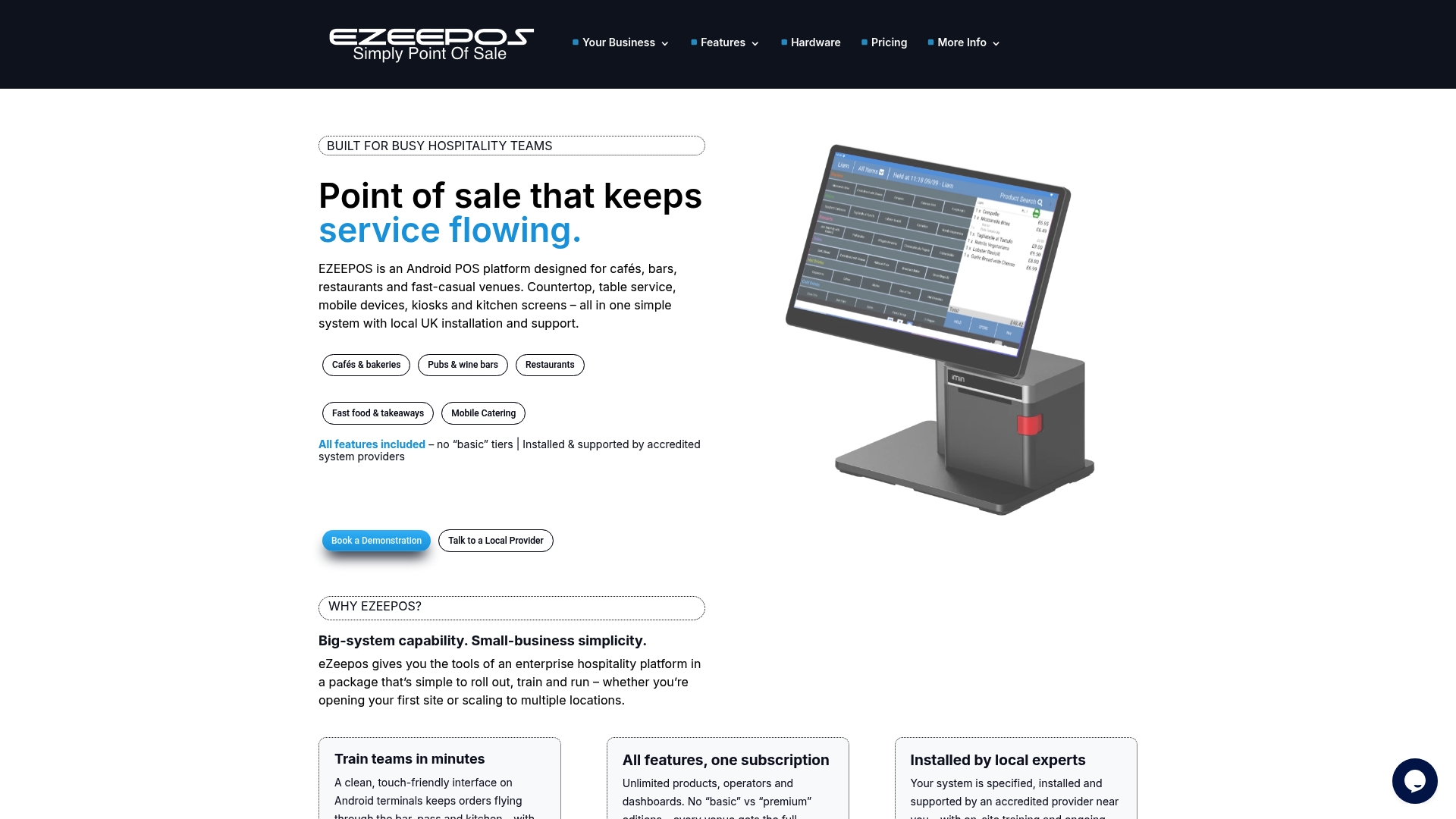
Our Android-based platform handles everything from order taking to inventory tracking through intuitive interfaces your team learns quickly. Cloud access means monitoring sales remotely, adjusting prices instantly, and generating reports from anywhere with internet connectivity. Integration with multiple payment providers gives you flexibility choosing processors with competitive rates whilst maintaining unified data across all transactions. The types of POS systems for mobile caterers we support include countertop terminals, tablets for queue-side ordering, and kitchen display screens coordinating preparation efficiently. Local UK installation and ongoing human support from accredited providers ensure you receive assistance when needed, not just automated responses. Whether you operate one truck or manage a fleet, our scalable solutions grow with your ambitions. Explore our comprehensive inventory management guide for caterers to understand how proper stock control increases profitability whilst reducing waste.
FAQ
What is the best POS system for small food trucks?
Square and SumUp both excel for smaller operations due to affordable entry points and straightforward functionality. Square’s free plan supports unlimited transactions with essential features, whilst SumUp minimises monthly costs. Both handle contactless payments reliably and work with standard mobile devices. Explore our guide to best POS systems for mobile caterers for detailed comparisons based on specific business needs.
How much does a food truck POS system cost in the UK?
Monthly software fees range from £0 to £80, whilst card processing charges typically add 1.5% to 2.75% per transaction depending on payment type. Hardware costs vary from £29 for basic card readers to £400+ for complete tablet setups with printers and stands. Calculate total monthly costs including all components when comparing providers, not just advertised subscription prices.
Can POS systems integrate with online food ordering?
Many modern POS platforms sync seamlessly with online ordering, particularly Shopify which excels at unified inventory management across channels. Square offers integrated online ordering through their ecosystem, whilst third-party services like Deliveroo and Just Eat connect with various POS systems via APIs. This integration prevents overselling items and maintains consistent pricing across all customer touchpoints.
Do I need internet connectivity for my food truck POS?
Most systems require internet for real-time card processing and cloud syncing, but quality POS platforms include offline modes for temporary connectivity loss. Transactions process locally and sync automatically when connection restores. Consider mobile data plans with reliable coverage in your operating areas, and verify your chosen system’s offline capabilities handle your typical transaction volume during outages.
How long does it take to train staff on a new POS system?
Well-designed food truck POS systems require only 30 to 60 minutes for basic proficiency with core functions like taking orders and processing payments. Complete mastery including inventory management, reporting, and troubleshooting develops over the first week of regular use. Intuitive interfaces and role-based permissions simplify training, whilst ongoing access to support resources helps staff resolve questions independently.
Recent Comments