
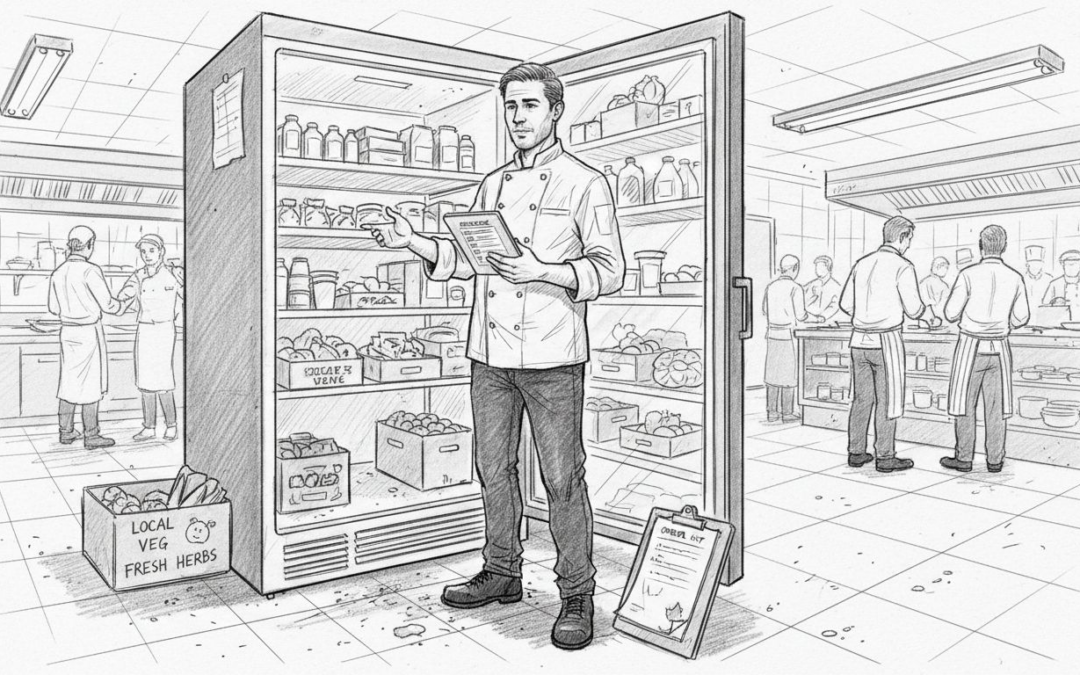
Keeping up with the constant demands of a busy British hospitality venue is challenging when inventory management processes fall short. Without solid tracking and accurate supplier records, even well-run restaurants and bars risk costly waste and stock shortages. By focusing on systematic documentation and integrating real-time digital solutions, managers can shift from reactive fixes to proactive control, paving the way for smoother operations and smarter ordering decisions.
Table of Contents
- Step 1: Assess Current Stock and Supply Processes
- Step 2: Configure Your POS for Inventory Tracking
- Step 3: Set Up Stock Levels and Supplier Details
- Step 4: Monitor Inventory Usage in Real Time
- Step 5: Review Reports and Adjust Ordering
Quick Summary
| Key Point | Explanation |
|---|---|
| 1. Assess Current Inventory Processes | Review stock management practices to identify weaknesses and improve efficiency, minimising waste and maximising resource allocation. |
| 2. Configure POS for Inventory Tracking | Properly configure your POS system to track stock in real time, allowing for automatic updates and accurate inventory management. |
| 3. Set Up Accurate Stock Levels | Establish specific stock levels and detailed supplier information to ensure a reliable inventory control system. |
| 4. Monitor Usage with Real-Time Technology | Implement real-time inventory monitoring to gain insights into usage patterns, which helps prevent waste and reduce spoilage. |
| 5. Analyse Reporting for Smarter Ordering | Regularly review inventory reports to adjust orders based on accurate consumption rates, helping to optimise purchasing and reduce costs. |
Step 1: Assess current stock and supply processes
Evaluating your hospitality venue’s current inventory management processes forms the critical foundation for improving operational efficiency. By systematically reviewing your existing stock control methods, you can identify potential weaknesses and develop more robust systems that minimise waste and optimise resource allocation.
To begin this assessment, start by conducting a comprehensive review of your current stock management practices. This involves examining several key areas, including:
- Tracking mechanisms currently in place
- Frequency of stock checks
- Recording and documentation methods
- Supplier relationship management
- Historical ordering patterns
The Food Standards Agency recommends detailed stock control processes that involve meticulously reviewing menus to estimate ingredient requirements and planning stock levels for each operational shift. This approach ensures you maintain precise control over your inventory.
A thorough assessment should include physical stock counts, reviewing delivery records, and analysing past purchasing trends. Compare your current system against best practices in the hospitality sector, focusing on accuracy, efficiency, and cost-effectiveness. Pay particular attention to areas of potential over-ordering or unnecessary stock accumulation.
Effective inventory management isn’t just about counting items—it’s about understanding your venue’s unique consumption patterns and creating a responsive, strategic approach.
Systematic documentation is crucial during this assessment. Create detailed spreadsheets tracking ingredient quantities, expiration dates, and usage rates. This data will provide insights into your venue’s specific inventory needs and help you make informed purchasing decisions.

Pro tip: Implement a digital inventory tracking system that provides real-time updates and helps you monitor stock levels with greater precision and ease.
Here is a summary of the potential challenges in inventory management and their practical solutions:
| Challenge | Impact on Operations | Recommended Solution |
|---|---|---|
| Inaccurate stock tracking | Increases waste and shortages | Adopt digital tracking technologies |
| Over-ordering | Ties up capital and space | Set accurate reorder thresholds |
| Poor supplier reliability | Disrupts kitchen operations | Regularly assess supplier performance |
| Lack of real-time data | Delays decision-making | Integrate POS with live inventory updates |
Step 2: Configure your POS for inventory tracking
Configuring your Point of Sale (POS) system for effective inventory tracking is a critical step in streamlining your hospitality venue’s operational efficiency. The right configuration will transform your POS from a simple transaction tool into a powerful inventory management system that provides real-time insights and control.
Begin by exploring your POS system’s inventory management configuration features, ensuring you can track stock levels automatically. This involves setting up comprehensive product profiles that include:
- Unique product identifiers
- Current stock quantities
- Pricing information
- Reorder thresholds
- Ingredient or component details
Each product in your system should be meticulously catalogued with precise tracking capabilities. This means every menu item needs a corresponding inventory profile that updates in real-time as sales occur. For instance, when a burger is sold, the system should automatically deduct the exact quantities of beef, bun, lettuce, and other ingredients.
Accurate POS configuration is the backbone of efficient inventory management—get the details right, and your entire operation becomes more streamlined.
Implement automatic stock alerts that notify you when ingredients reach critical low levels. Configure these thresholds based on your venue’s average consumption rates, ensuring you never run out of essential items during peak service times. Most modern POS systems allow granular customisation of these alert mechanisms.
Pro tip: Conduct a comprehensive staff training session to ensure everyone understands how to input and manage inventory data accurately within your POS system.
Step 3: Set up stock levels and supplier details
Establishing precise stock levels and maintaining comprehensive supplier details are fundamental to creating a robust inventory management system for your hospitality venue. This critical step involves creating a systematic approach to tracking and managing your ingredient inventory that supports both operational efficiency and financial sustainability.
Begin by developing a detailed inventory database that incorporates comprehensive stock control strategies recommended by food safety experts. Your supplier details and stock level setup should include:
- Supplier contact information
- Delivery schedules
- Minimum order quantities
- Price lists
- Quality specifications
- Ingredient shelf life details
- Historical purchasing volumes
Create a standardised tracking system that allows you to monitor each ingredient’s current stock level, anticipated consumption rate, and reorder point. This requires careful calculation of your venue’s typical usage patterns, taking into account seasonal variations, menu changes, and projected sales volumes.
Precise inventory management is not just about counting items—it’s about understanding the dynamic relationship between your menu, sales, and ingredient supply.
Detailed supplier agreements should outline expectations for delivery frequency, quality standards, and pricing. Develop a scoring system to evaluate supplier performance, tracking metrics such as delivery reliability, product quality, and pricing consistency. This approach enables you to make informed decisions about maintaining or changing your supplier relationships.
Pro tip: Implement a digital tracking system that automatically updates stock levels and generates alerts when ingredients approach critical reorder thresholds.
Step 4: Monitor inventory usage in real time
Real-time inventory monitoring transforms how hospitality venues manage their stock, providing immediate insights into ingredient consumption, waste patterns, and supply chain dynamics. By implementing continuous tracking technologies, you can make proactive decisions that directly impact your venue’s operational efficiency and financial performance.
Utilise advanced inventory control technologies that enable precise, automated stock tracking. Your real-time monitoring strategy should incorporate:
- Barcode scanning systems
- Digital tracking software
- Automated stock level alerts
- Consumption rate analysis
- Ingredient movement tracking
- Waste percentage calculations
- Historical usage comparisons
Each ingredient’s journey through your venue becomes transparent, allowing you to understand exactly how much of each item is used, when it is used, and at what rate. This granular visibility helps prevent unnecessary overstocking and reduces the risk of ingredient spoilage.
Effective real-time monitoring transforms raw data into actionable intelligence that drives strategic inventory management.
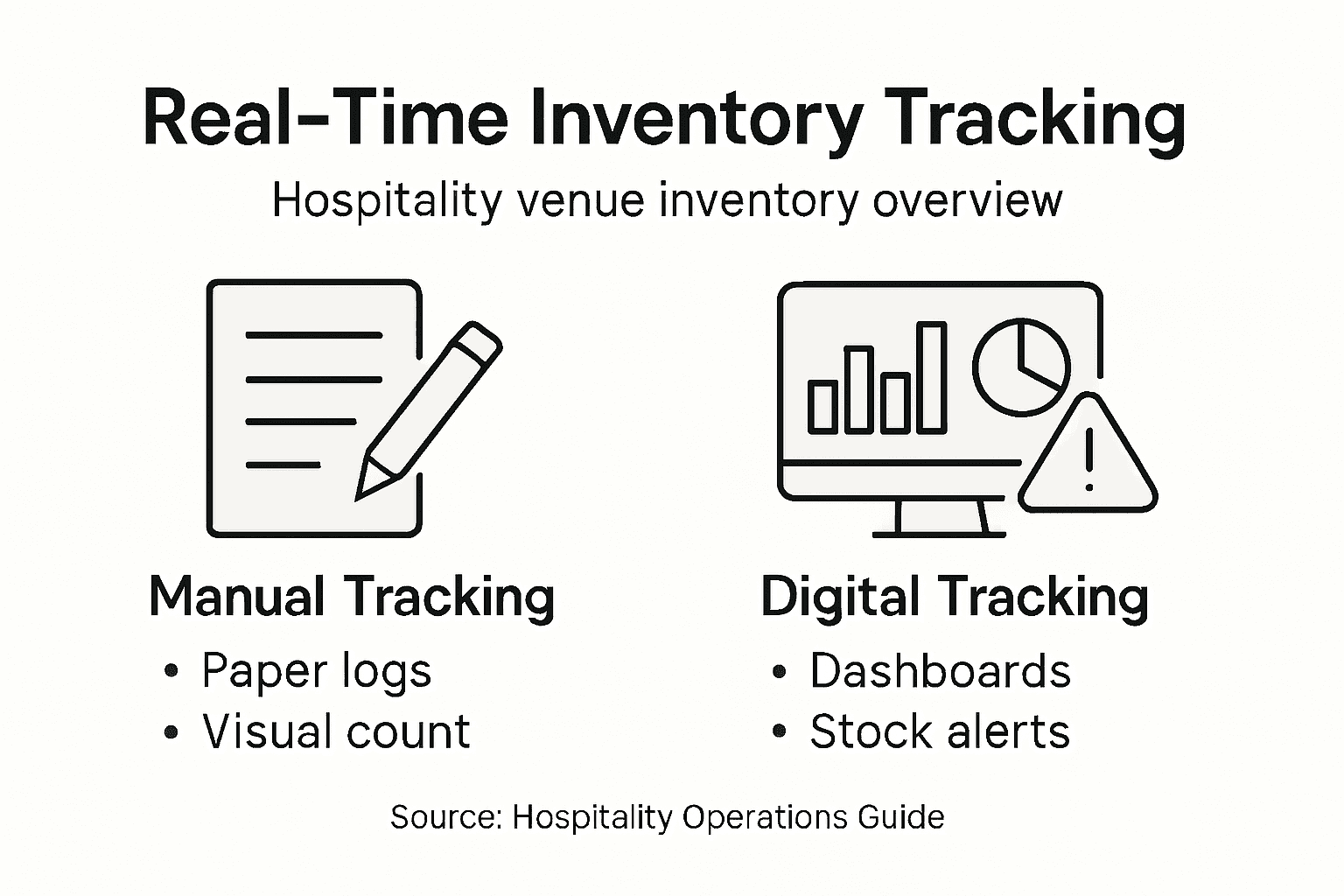
Develop comprehensive tracking dashboards that provide instant visibility into your inventory status. These systems should integrate seamlessly with your point of sale platform, automatically updating stock levels with each transaction and generating alerts when specific ingredients approach critical thresholds.
Pro tip: Schedule weekly inventory review meetings to discuss tracking insights and develop continuous improvement strategies for your stock management processes.
The following table compares manual and digital inventory management approaches for hospitality venues:
| Aspect | Manual Approach | Digital Approach |
|---|---|---|
| Speed | Slow, time-consuming | Fast, automated processes |
| Error Risk | Prone to human mistakes | Significantly reduced |
| Data Accessibility | Limited, paper-based records | Instant, centralised access |
| Real-Time Insights | Not available | Available at a glance |
Step 5: Review reports and adjust ordering
Analysing inventory reports is a critical process that enables hospitality venues to optimise their purchasing strategies, reduce waste, and maintain precise stock control. By systematically reviewing your inventory data, you can make informed decisions that directly impact your venue’s operational efficiency and financial performance.
Implement comprehensive stock management reporting that provides detailed insights into your ingredient consumption patterns. Your reporting review should focus on key metrics such as:
- Ingredient usage rates
- Seasonal consumption variations
- Waste percentage trends
- Purchasing cost fluctuations
- Supplier performance indicators
- Stock turnover speeds
- Forecasted demand projections
Carefully examine your historical data to identify recurring patterns in ingredient consumption. Look for opportunities to adjust your ordering quantities, timing, and frequency based on actual usage rather than estimated requirements. This approach helps prevent overstocking and minimises the risk of ingredient spoilage.
Effective inventory reporting transforms raw numbers into strategic insights that drive smarter purchasing decisions.
Precise ordering adjustments should be made incrementally, tracking the impact of each change. Develop a systematic approach to modifying your procurement strategy, using data-driven evidence to support each decision.
Pro tip: Create a standardised monthly review process that compares actual consumption against projected usage, allowing for continuous refinement of your inventory management approach.
Streamline Your Hospitality Inventory Management with EZEEPos
Effective inventory management is essential to reducing waste, avoiding shortages, and maintaining smooth kitchen operations as highlighted in the guide. If you are looking to implement real-time tracking, automatic stock alerts and integrated reporting that adapts to your venue’s unique needs EZEEPos offers a specialised solution designed specifically for hospitality venues. Our platform transforms your POS system into a powerful tool that simplifies stock control while enhancing accuracy and efficiency.
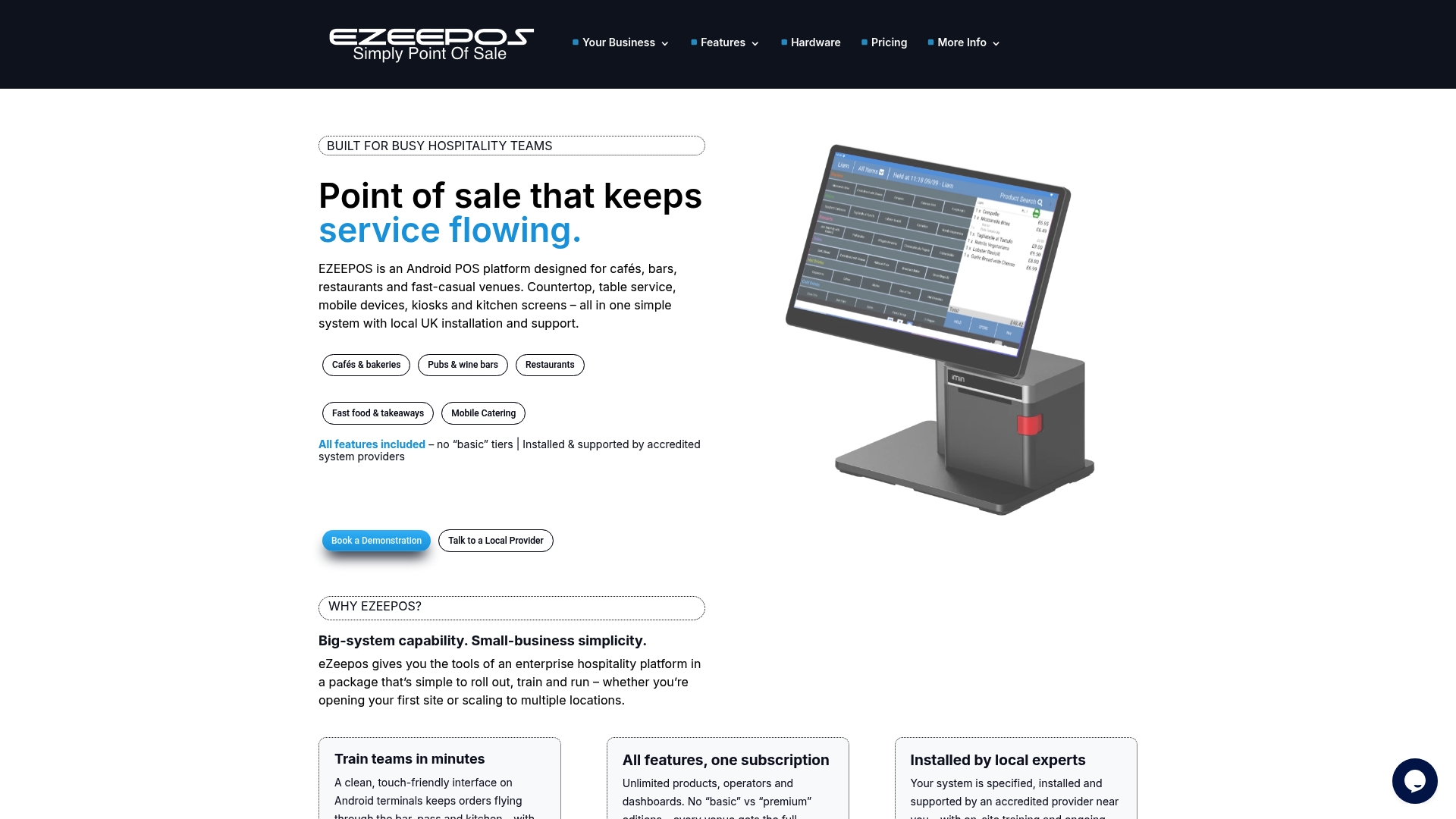
Discover how our Android-based Hospitality POS Solution supports seamless inventory monitoring and supplier management through intuitive software and hardware options. With features like cloud-based back-office access and easy team training you can take control of your inventory challenges today. Visit EZEEPos now and explore our Add On Modules to enhance your stock management capabilities in line with industry best practices.
Frequently Asked Questions
How can I assess my current inventory management processes in a hospitality venue?
To assess your current inventory management processes, conduct a thorough review of stock control methods, tracking mechanisms, and ordering patterns. Start by comparing your practices with best practices in the hospitality sector, focusing on areas of over-ordering and waste minimisation.
What features should I configure in my POS system for effective inventory tracking?
You should configure your POS system to include unique product identifiers, current stock quantities, and automatic stock alerts for low-level items. Set up profiles for each menu item to ensure real-time updates occur with every sale, maintaining accurate stock levels.
How can I determine optimal stock levels for my hospitality venue?
To establish optimal stock levels, develop a detailed inventory database that tracks usage rates and reorder points based on historical sales data. Regularly review your consumption patterns and adjust quantities accordingly to prevent overstocking or spoilage.
What are the best practices for monitoring inventory usage in real time?
Implement barcode scanning systems and digital tracking software to automate your inventory monitoring. Ensure that tracking dashboards are integrated with your POS system, providing up-to-date insights into stock status and consumption rates.
How often should I review my inventory reports and adjust ordering?
You should conduct a monthly review of your inventory reports to analyse consumption patterns and waste trends. Adjust your ordering incrementally, using data-driven evidence to refine your approach, which can enhance stock efficiency by approximately 20% over time.
What challenges might I face in inventory management, and how can I address them?
Common challenges include inaccurate tracking and supplier reliability issues. To address these, adopt digital tracking technologies and regularly assess supplier performance to ensure consistent quality and timely deliveries.
Recommended
- Inventory Management Guide for Caterers: Streamline Operations
- Inventory Management in Hospitality: Cutting Costs and Waste
- 7 Essential Inventory Management Tips for UK Cafés and Restaurants
- Role of POS in Inventory Control for UK Hospitality
- VIP Hospitality Workflow – Elevating Austin Experiences | Trinity Concierge
Recent Comments