
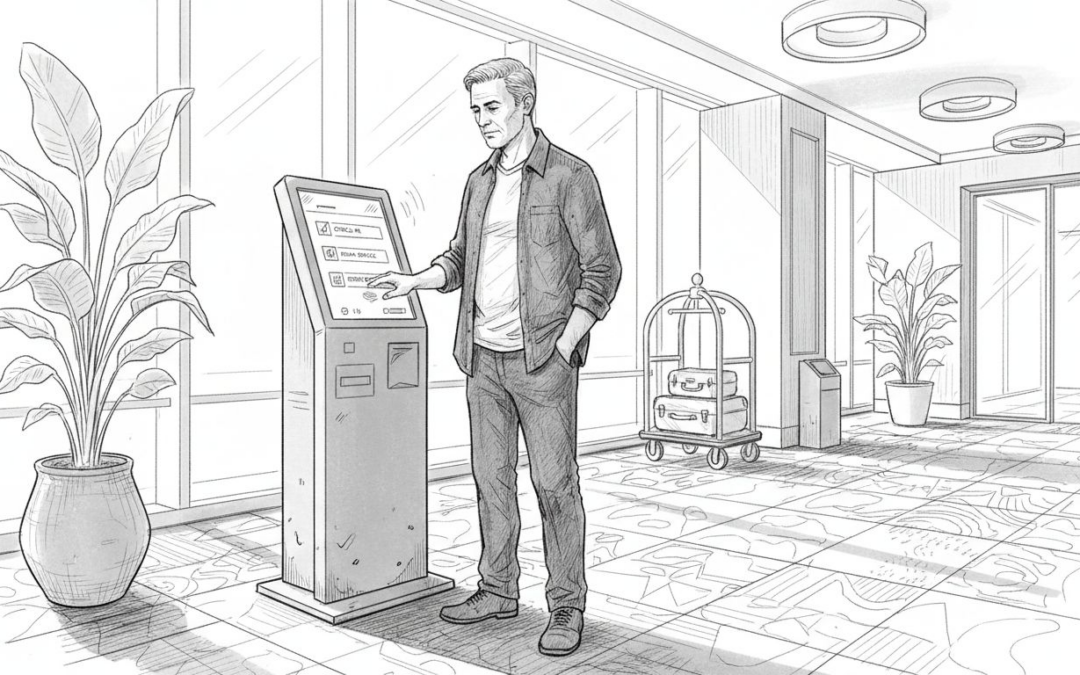
Long queues and delayed orders can quickly frustrate both guests and staff in busy British hospitality venues. As customer expectations climb, finding a way to deliver faster, more accurate service without hiring extra hands has become a real challenge. Self-service kiosks now offer a practical solution, letting guests place orders, handle payments, and manage requests through simple digital screens, reshaping daily operations for venues focused on speed and satisfaction.
Table of Contents
- What Are Self-Service Kiosks in Hospitality?
- Types of Self-Service Kiosks for Hospitality
- How Self-Service Kiosks Operate in Venues
- Operational Benefits and Common Pitfalls
- Regulations and Safety Standards in the UK
Key Takeaways
| Point | Details |
|---|---|
| Self-service Kiosks Enhance Customer Experience | These kiosks allow guests to independently manage ordering and payment, reducing wait times and minimising human error. |
| Integration with Hospitality Systems is Essential | Self-service kiosks should seamlessly connect with existing point-of-sale and management systems for optimal operational efficiency. |
| User Experience and Accessibility Matter | Ensure the kiosks have intuitive interfaces and meet accessibility standards to accommodate all customers. |
| Operational Benefits Must be Balanced with Challenges | While self-service kiosks streamline processes, venues must address potential technical issues and invest in staff training. |
What Are Self-Service Kiosks in Hospitality?
Self-service kiosks represent advanced digital interfaces transforming customer interactions within hospitality venues. These innovative technological solutions enable guests to independently manage ordering, payment, and service processes with minimal staff intervention. Digital ordering technologies have revolutionised how restaurants, cafes, and quick-service establishments operate.
Typically, these kiosks feature interactive touchscreen displays allowing customers to browse menus, customise orders, select payment methods, and complete transactions autonomously. Unlike traditional counter service, self-service kiosks provide a streamlined experience that reduces waiting times and minimises human error. Customers can explore menu options at their own pace, review nutritional information, and make informed choices without feeling rushed.
The technological evolution of these systems has been remarkable. From basic buffet-style self-service stations, modern kiosks now incorporate sophisticated software enabling complex interactions. They integrate seamlessly with point-of-sale systems, kitchen displays, and inventory management platforms, creating a cohesive operational ecosystem. These digital solutions are particularly prevalent in fast-casual dining, quick-service restaurants, and venues prioritising efficiency and customer convenience.
Pro tip: When implementing self-service kiosks, ensure the interface is intuitive, offers clear instructions, and provides multiple language options to accommodate diverse customer preferences.
Types of Self-Service Kiosks for Hospitality
Self-service kiosks in the hospitality sector have evolved into sophisticated solutions catering to diverse operational needs. Hospitality venues now employ multiple kiosk types designed to enhance customer experience and streamline service delivery. These technological interfaces range from ordering systems to comprehensive guest management platforms.
The primary categories of self-service kiosks include self-ordering kiosks, payment kiosks, and check-in/check-out systems. Self-ordering kiosks allow customers to browse menus, customise meals, and place orders independently. These touchscreen interfaces are particularly popular in quick-service restaurants, cafes, and fast-casual dining establishments. Payment kiosks complement ordering systems by enabling swift, secure transaction processing without traditional counter interactions.
Additionally, informational and check-in kiosks play crucial roles in hospitality settings. Hotels utilise these systems for guest registration, room assignment, and providing local area information. Standalone and wall-mounted kiosk solutions can be integrated with existing point-of-sale systems, creating a seamless operational environment. Some advanced kiosks even offer multilingual support, wayfinding capabilities, and service booking functionalities.
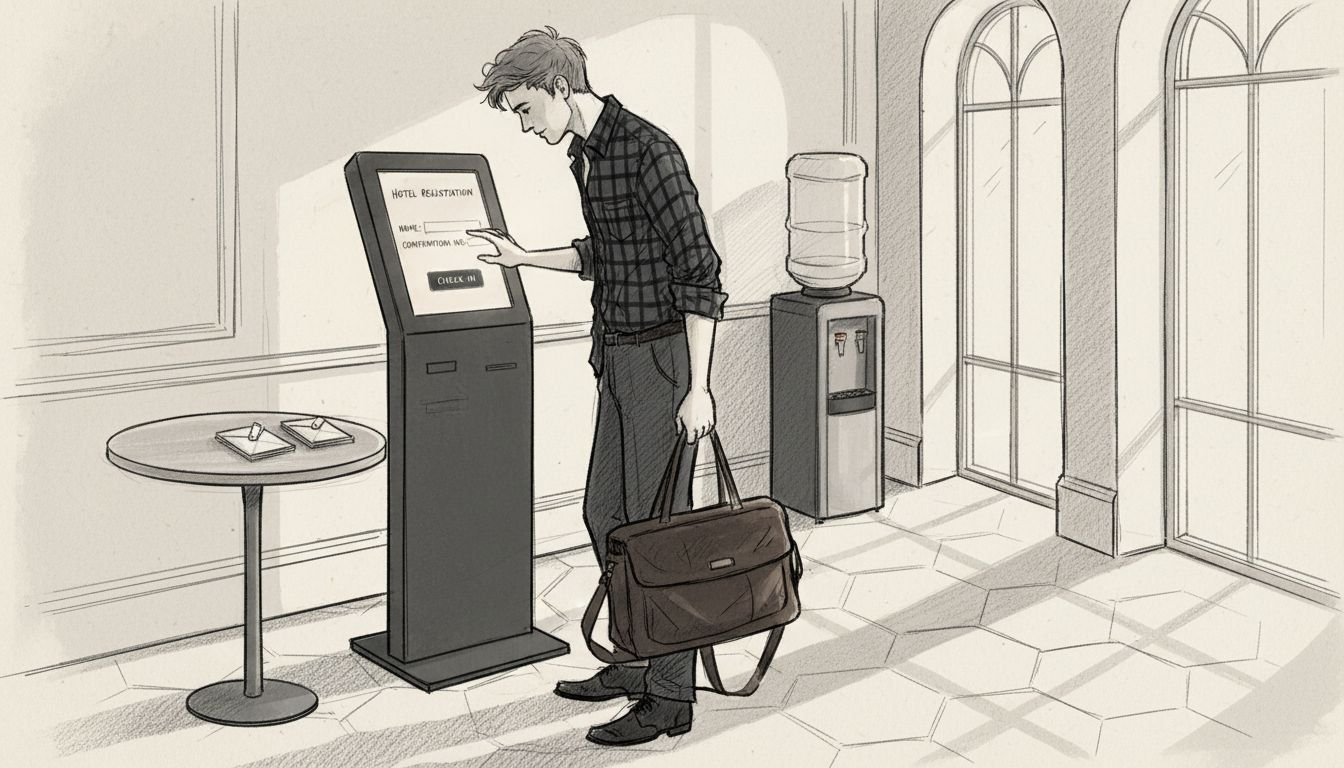
Here is a comparison of the main types of self-service kiosks found in UK hospitality venues:
| Kiosk Type | Core Function | Typical Venue | Business Impact |
|---|---|---|---|
| Self-ordering kiosk | Menu browsing and meal customisation | Quick-service restaurant | Faster ordering, fewer errors |
| Payment kiosk | Secure transaction processing | Cafés, casual dining | Reduced queues, speedier payments |
| Check-in/check-out kiosk | Guest registration, room assignment | Hotels | Smoother arrivals, less waiting |
| Information kiosk | Local guidance, service booking | Hotel lobbies | Improved guest satisfaction |
Pro tip: When selecting self-service kiosk technologies, prioritise systems with intuitive user interfaces, robust security features, and flexible integration capabilities to maximise operational efficiency.
How Self-Service Kiosks Operate in Venues
Advanced digital interactions drive self-service kiosks in modern hospitality venues, enabling guests to manage multiple service touchpoints independently. These sophisticated technological platforms function as interactive digital terminals that streamline customer interactions across various operational processes. By combining intuitive user interfaces with robust backend systems, these kiosks transform traditional service delivery models.
The operational mechanism of self-service kiosks involves seamless integration with core hospitality management systems. Touchscreen interfaces allow customers to perform tasks ranging from menu browsing and order placement to room check-ins and payment processing. Each interaction is instantly communicated to relevant backend systems such as point-of-sale, property management, and customer relationship platforms, ensuring real-time data synchronisation and operational efficiency.
Technically, these kiosks operate through complex software architectures that prioritise user experience and operational accuracy. Customers interact with high-resolution touchscreens featuring intuitive navigation, multilingual support, and personalised service options. Backend systems route orders directly to kitchens, process payments securely, and update inventory management systems simultaneously. This integrated approach reduces human error, minimises waiting times, and provides a consistently smooth service experience across different hospitality environments.
Pro tip: Select self-service kiosk technologies with open API capabilities to ensure seamless integration with your existing operational infrastructure and future technological upgrades.
Operational Benefits and Common Pitfalls
Self-service kiosks transform hospitality operations by delivering significant operational advantages while simultaneously presenting unique challenges. These technological solutions offer remarkable benefits including reduced wait times, improved order accuracy, and enhanced staff productivity. By automating routine transactions, hospitality venues can redirect human resources towards more complex, value-added customer interactions that require personal attention and expertise.
The operational benefits extend beyond immediate service improvements. Self-service kiosks enable sophisticated upselling strategies, allowing venues to showcase additional menu items or services through intelligent interface design. Customers can explore options at their own pace, often leading to increased transaction values. Furthermore, these systems generate valuable data insights about customer preferences, ordering patterns, and peak service times, enabling more strategic business decision-making.
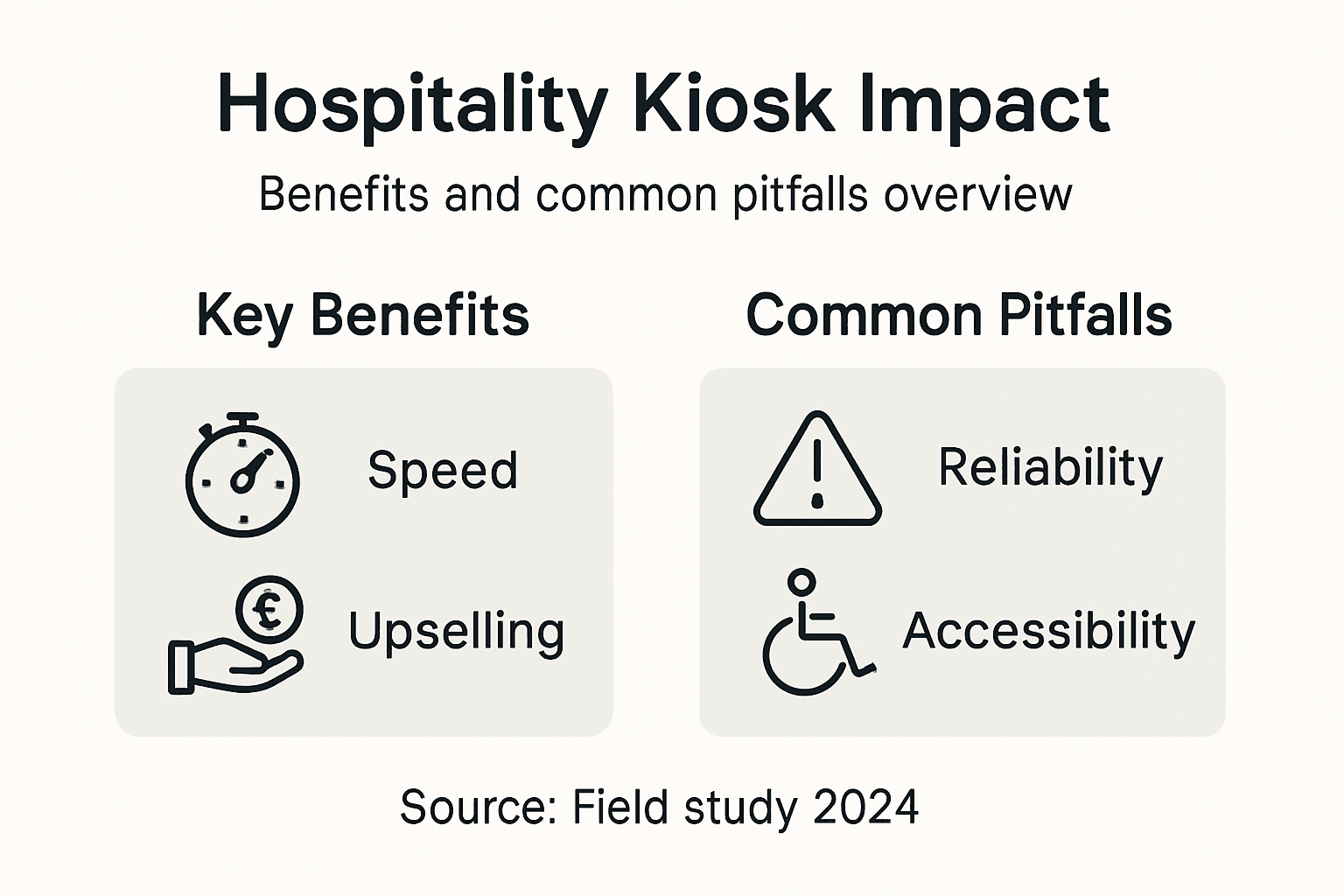
However, successful implementation requires carefully navigating potential pitfalls. Technical reliability, user interface design, and staff training are critical factors. Deployment challenges include software vulnerabilities and potential customer resistance to new technologies. Venues must invest in user-friendly interfaces, comprehensive staff training, and robust maintenance protocols to ensure smooth operational integration. Accessibility considerations are equally important, ensuring these systems can be effectively used by customers with diverse technological capabilities and physical requirements.
Below is a summary of operational benefits and pitfalls when deploying hospitality self-service kiosks:
| Benefit/Pitfall | Operational Detail | Long-term Effect |
|---|---|---|
| Shorter waiting times | Automates routine transactions | Higher customer satisfaction |
| Enhanced staff productivity | Frees staff for complex tasks | Improved service quality |
| Data-driven insights | Tracks customer preferences | Smarter business decisions |
| Technical challenges | Software reliability issues | Requires continuous updates |
| Accessibility concerns | Usability for all guests | Potential legal compliance risks |
Pro tip: Conduct regular user experience testing and maintain flexible technology platforms that can be quickly updated to address emerging customer interaction challenges.
Regulations and Safety Standards in the UK
Health and safety guidelines for self-service kiosks in UK hospitality venues represent a critical framework ensuring operational compliance and customer protection. The Health and Safety Executive (HSE) provides comprehensive regulations that mandate rigorous standards for technological installations, focusing on preventing potential physical and operational risks associated with digital service interfaces.
The regulatory landscape encompasses multiple dimensions of kiosk deployment. Electrical safety standards require meticulous installation procedures, ensuring kiosks meet stringent technical specifications. Venues must guarantee proper electrical connections, earthing mechanisms, and protection against potential electrical hazards. Additionally, ergonomic considerations are paramount, with regulations demanding kiosks be positioned at appropriate heights, with accessible interfaces that accommodate users with varying physical capabilities.
Accessibility represents a crucial regulatory requirement for self-service kiosks in the United Kingdom. The Equality Act 2010 mandates that technological solutions must be universally designed, enabling comfortable usage for individuals with different physical abilities. This includes provisions for screen readability, touchscreen sensitivity, audio guidance options, and physical positioning that allows wheelchair users and individuals with mobility challenges to interact comfortably. Hospitality venues must ensure their kiosk implementations do not inadvertently create barriers to service access.
Pro tip: Engage an independent accessibility consultant to audit your self-service kiosk implementation, ensuring comprehensive compliance with current UK disability and technological access regulations.
Boost Hospitality Efficiency with EZEEPos Self-Service Kiosk Solutions
Transform the challenges of long queues and operational complexity into seamless guest experiences by adopting a truly integrated self-service kiosk system. The article highlights key pain points such as the need for reduced waiting times, enhanced order accuracy, and smooth integration with existing back-end systems. EZEEPos addresses these exact challenges with its specialised Android-based Hospitality POS platform designed for busy venues. This platform unifies touchscreen kiosks, kitchen screens, and payment solutions to streamline ordering, payment, and guest management under one easy-to-use system.
Take control of your venue operations now by upgrading to an intuitive, scalable solution that supports multiple service modes including self-service kiosks. Designed for quick setup, local UK installation, and backed by expert human support, EZEEPos offers the reliability and flexibility needed to improve staff productivity and elevate customer satisfaction today. Discover more about how our platform can help you drive efficiency at EZEEPos or explore compatible hardware options like our EFT Terminals and value-adding Add On Modules to complete your hospitality technology suite.
Frequently Asked Questions
What are self-service kiosks in hospitality?
Self-service kiosks in hospitality are advanced digital interfaces that allow customers to independently manage ordering, payment, and other service processes with minimal staff intervention. They streamline customer interactions and improve efficiency in venues such as restaurants and cafes.
How do self-service kiosks enhance customer experience?
Self-service kiosks enhance customer experience by reducing waiting times, minimising human error, and allowing guests to explore menu options at their own pace. They also offer features like nutritional information and customised ordering, making the process more informative and straightforward for customers.
What types of self-service kiosks are commonly used in hospitality?
Common types of self-service kiosks in hospitality include self-ordering kiosks for menu browsing and order placement, payment kiosks for secure transaction processing, and check-in/check-out systems for guest registration in hotels. Each type serves a unique function to enhance service delivery.
What are the operational benefits of using self-service kiosks?
The operational benefits of using self-service kiosks include shorter waiting times, enhanced staff productivity, and valuable data insights about customer preferences. They automate routine transactions, allowing venues to focus on improving overall service quality.
Recommended
- Quick-Service POS: Streamlining Fast-Paced Hospitality
- 7 Examples of Hospitality Software for UK Cafés and Restaurants
- Inventory Management in Hospitality: Cutting Costs and Waste
- What Is Mobile POS and Why It Matters for UK Hospitality
- Complete Guide to Why Book Travel Online – PilotTravelDeals.com
Recent Comments