

Why inventory control matters for hospitality venues

Inventory control is the practice of managing stock levels precisely to balance demand, minimise waste, and protect cash flow in hospitality venues. Without it, venues bleed money through spoilage, emergency orders, and capital tied up in stock that never moves. The importance of inventory management goes beyond counting bottles and ingredients. It directly shapes your margins, your service reliability, and your ability to make confident financial decisions. Understanding why inventory control matters is the first step to running a tighter, more profitable operation.
Why inventory control matters for your costs and cash flow
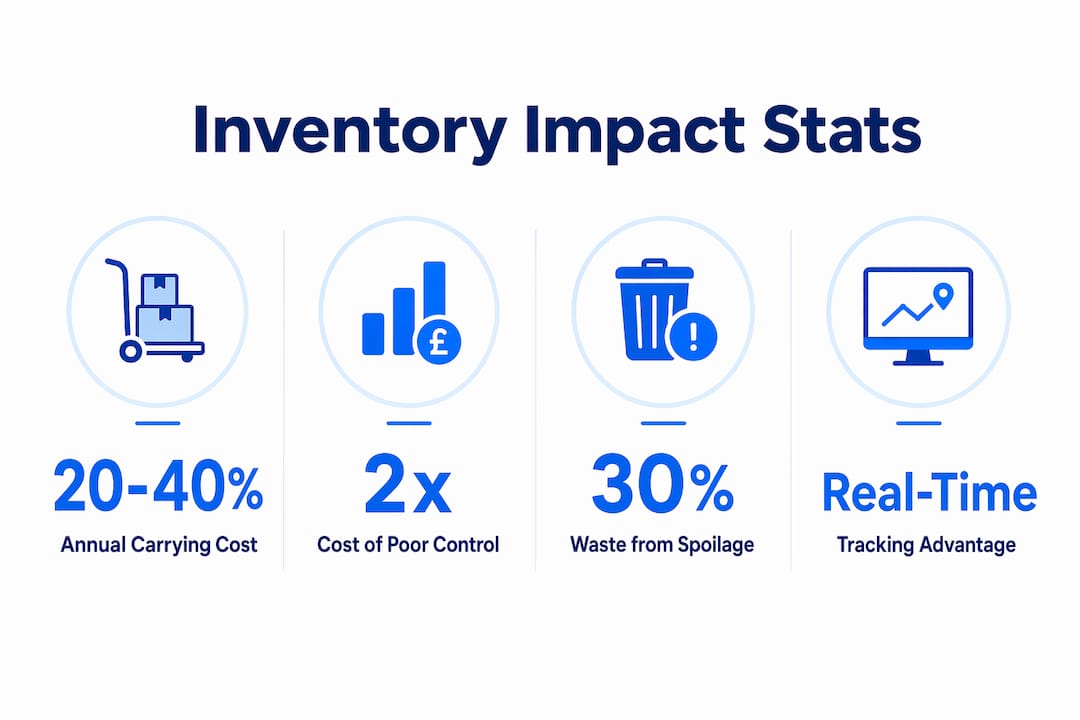
Carrying cost is the total expense of holding stock, covering capital, storage, insurance, spoilage, and shrinkage. Carrying cost typically ranges 20–30% of inventory value annually, rising to 30–40% in spoilage-heavy sectors like food and beverage. That means a venue holding £10,000 of stock could be paying up to £4,000 a year simply to keep it on the shelf.
Over-ordering is the most common driver of high carrying costs in hospitality. When you order more than you need, capital sits idle in stock rather than funding wages, maintenance, or marketing. Shopify’s inventory guide stresses that avoiding over-ordering frees cash and reduces carrying cost directly. The financial relief from tighter ordering is immediate and measurable.

Spoilage compounds the problem further. A case of produce that expires before service is not just a waste of food. It is a waste of the purchase price, the storage cost, and the labour used to receive and store it. Venues that track stock by category and expiry date catch these losses before they accumulate.
Pro Tip: Before placing your next supplier order, compare the volume discount on offer against your carrying cost rate. If the discount is smaller than what it costs you to hold the extra stock, the deal is not worth taking.
The benefits of inventory control on cash flow are clearest when you compare two venues of similar size: one ordering reactively and one ordering from data. The data-driven venue consistently holds less stock, pays less in carrying costs, and has more working capital available at any given time.
What happens when stock control goes wrong?
Poor inventory control costs a business twice. Amazon Business highlights the compounding financial impact: idle capital tied up in surplus stock on one side, and operational disruption plus premium emergency orders on the other. Both hit the bottom line simultaneously.
Stockouts cause immediate service failures. A bar that runs out of a popular lager on a Friday night loses not just that sale but the confidence of the customer. Emergency procurement to cover the gap typically costs significantly more than a planned order. That premium is a direct penalty for poor stock management.
Overstocking creates a different but equally damaging problem:
- Cash drain. Capital locked in excess stock cannot be used elsewhere in the business.
- Spoilage risk. Perishable items ordered in excess will expire before use, generating direct losses.
- Storage pressure. Overstocked venues run out of usable storage space, creating operational friction.
- Inaccurate data. Excess stock distorts consumption patterns, making future ordering decisions less reliable.
The impact of poor inventory is not a single event. It compounds over time. A venue that consistently overstocks will find its cash position eroding gradually, with no single obvious cause.
Pro Tip: Set a reorder point for every high-turnover item. A reorder point is the stock level that triggers a new order, calculated from your average daily usage and your supplier’s lead time. This removes guesswork from procurement entirely.
How does inventory accuracy affect financial reporting?
Inventory accuracy affects COGS reporting and margin decisions directly. If your stock data is stale or incorrect, your cost of goods sold figure is wrong. A wrong COGS figure distorts your gross margin, which then distorts every pricing and menu decision you make on top of it.
Shrinkage and spoilage are the two most common causes of inaccurate stock data. When these are not recorded promptly, they are misclassified or simply missed. The result is a financial statement that shows higher margins than the venue is actually achieving. Managers making menu pricing decisions based on that data are working from fiction.
ABC analysis is the most practical framework for prioritising inventory accuracy in hospitality. It segments stock into three categories:
- A items: High value or high turnover. These warrant daily or near-daily verification.
- B items: Moderate value and turnover. Weekly checks are appropriate.
- C items: Low value, slow moving. Monthly counts are sufficient.
Applying ABC analysis to hospitality stock means your tightest controls sit where the financial impact is greatest. A premium spirits range or a high-volume ingredient like coffee beans should never be counted less than weekly.
Inventory control supports customer satisfaction too. When stock data is accurate, you know what is available before service begins. That prevents mid-service shortages and the awkward conversation with a guest whose order cannot be fulfilled.
Pro Tip: Verify your fastest-moving and highest-margin items at the start of every shift, not just at the end of the week. Catching a discrepancy on Tuesday morning costs far less than discovering it on Sunday night.
Practical inventory management techniques for hospitality venues
Effective inventory control follows a consistent process. The steps below reflect inventory control best practices adapted for hospitality operations:
- Categorise your stock. Group items by type, turnover rate, and margin contribution. This is the foundation of ABC analysis.
- Set par levels. A par level is the minimum quantity of each item you need to operate through a service period. Orders bring stock back to par, not beyond it.
- Record every movement. Receiving, wastage, transfers between areas, and returns must all be logged immediately. Delayed posting is the single most common cause of inventory inaccuracy.
- Count regularly. High-value and high-turnover items need frequent physical counts. Spot counts between full stocktakes catch discrepancies early.
- Reconcile against sales data. Compare what your POS system records as sold against what stock has been consumed. Any gap signals theft, wastage, or a recording error.
- Review and adjust. Use consumption data to refine par levels and reorder points each month.
Digital systems make this process far more reliable than manual methods. Platforms like NetSuite and Shopify offer real-time inventory tracking that updates stock levels as transactions occur. A POS system integrated with inventory removes the need for manual reconciliation by connecting sales data directly to stock records.
Centralised, real-time inventory data enables unified views for procurement, operations, and finance. When your purchasing manager, head chef, and finance lead all see the same stock position, decisions align. Reactive procurement, where orders are placed in a panic rather than from data, disappears.
Two inventory management techniques deserve particular attention in hospitality. First-in, first-out (FIFO) ensures older stock is used before newer deliveries, reducing spoilage on perishables. Just-in-time delivery reduces the volume of stock held at any one time, lowering carrying costs and spoilage risk simultaneously. Both techniques work best when supported by a digital system that tracks stock movement in real time.
A common pitfall is treating inventory control as a periodic event rather than a continuous discipline. Treating stock counts as periodic rather than real-time delays detection of theft, damage, and mis-usage, increasing losses. The venues that control costs most effectively are those where stock visibility is constant, not monthly.
| Approach | Best suited to | Key benefit |
|---|---|---|
| ABC analysis | All venue types | Focuses effort where financial impact is highest |
| FIFO | Food and perishable beverage | Reduces spoilage on dated stock |
| Just-in-time delivery | High-turnover venues with reliable suppliers | Lowers carrying cost and storage pressure |
| Real-time POS integration | Multi-area or multi-site venues | Removes manual reconciliation and speeds up discrepancy detection |
| Par level ordering | All venue types | Prevents over-ordering and maintains service continuity |
Key takeaways
Inventory control is the single most direct lever hospitality venue managers have over their cost base, cash flow, and service reliability.
| Point | Details |
|---|---|
| Carrying cost is significant | Holding stock costs 20–40% of its value annually; tighter ordering reduces this directly. |
| Poor control costs twice | Overstocking ties up cash while stockouts trigger costly emergency orders simultaneously. |
| Accuracy drives financial decisions | Stale stock data corrupts COGS reporting and distorts every margin and pricing decision. |
| ABC analysis prioritises effort | Focus daily checks on high-value and high-turnover items where errors cost the most. |
| Real-time discipline beats periodic counting | Continuous stock visibility catches theft, spoilage, and errors before they compound. |
The discipline that separates profitable venues from struggling ones
I have worked with hospitality venues across the UK for long enough to know that the ones consistently turning a profit share one habit: they treat inventory as a live financial instrument, not a storage problem. The venues that struggle almost always share the opposite habit. They count stock when something goes wrong, not before.
The shift in mindset that matters most is recognising that inventory is one of the largest investments on your balance sheet. It is not a background operational task. Every item on your shelves represents cash that could be doing something else. When that item expires, gets stolen, or sits unsold for three weeks, that cash is gone.
Real-time discipline is not complicated. It means posting every transaction as it happens, counting your top-value items frequently, and reconciling your POS data against your stock position at least weekly. The venues I have seen implement this consistently report fewer stockouts, lower spoilage, and a clearer picture of their actual margins within weeks.
The practical advice I give most often is this: start with your A items. Pick the ten ingredients or products that cost the most or sell the most. Control those tightly first. Once that habit is established, extend it down the list. You do not need a perfect system on day one. You need a consistent one.
— John
How Ezeepos helps hospitality venues take control of stock
Running a busy venue leaves little time for manual stock reconciliation. Ezeepos is a POS platform built specifically for UK hospitality, with inventory control built in alongside sales, orders, and reporting in a single system.
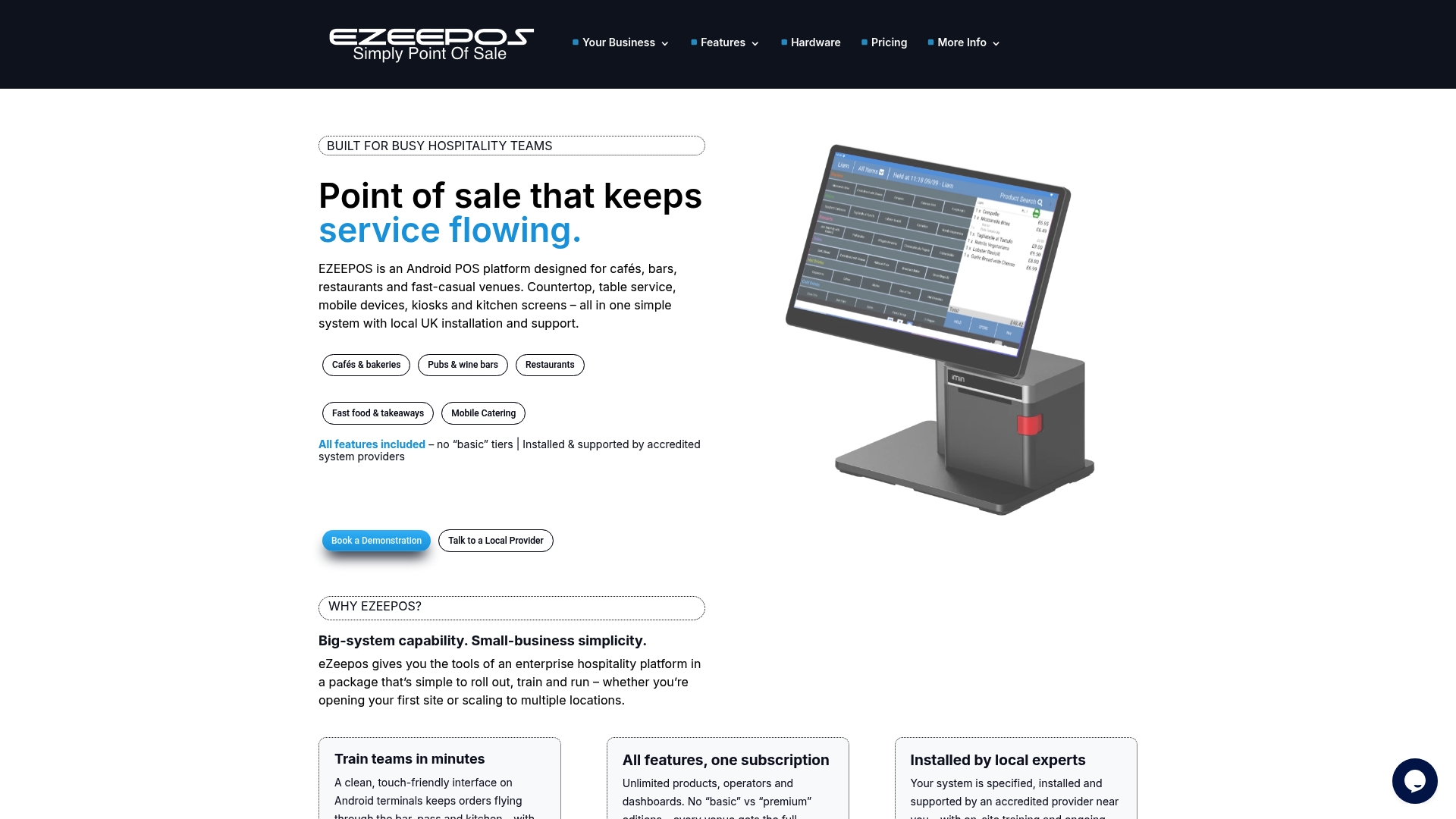
Stock movements update in real time as transactions are processed, giving venue managers a live view of what is available across every area of the operation. There are no tiered pricing barriers to accessing inventory features. Every venue gets the full capability from day one, backed by local UK installation and ongoing human support. For managers who want to put the practices in this article into action, the Ezeepos inventory management guide is a practical next step.
FAQ
What is inventory control in hospitality?
Inventory control in hospitality is the process of managing stock levels to match demand, reduce waste, and protect cash flow. It covers purchasing, receiving, storage, usage tracking, and reconciliation against sales data.
How does inventory affect business profitability?
Inventory directly affects profitability through carrying costs, spoilage, and stockout-related losses. Carrying cost alone can reach 20–40% of inventory value annually in food and beverage operations.
What are the main inventory management techniques for venues?
The most effective techniques for hospitality venues are ABC analysis, FIFO stock rotation, par level ordering, and just-in-time delivery. Each reduces waste or carrying cost in a different way.
Why is real-time inventory tracking better than periodic counting?
Periodic counting delays the detection of theft, spoilage, and recording errors. Real-time tracking catches discrepancies as they occur, reducing cumulative losses and keeping financial data accurate.
How does poor inventory control affect financial reporting?
Inaccurate stock data corrupts cost of goods sold figures, which distorts gross margin calculations. Venue managers relying on that data make pricing and menu decisions based on figures that do not reflect actual performance.
Recent Comments