
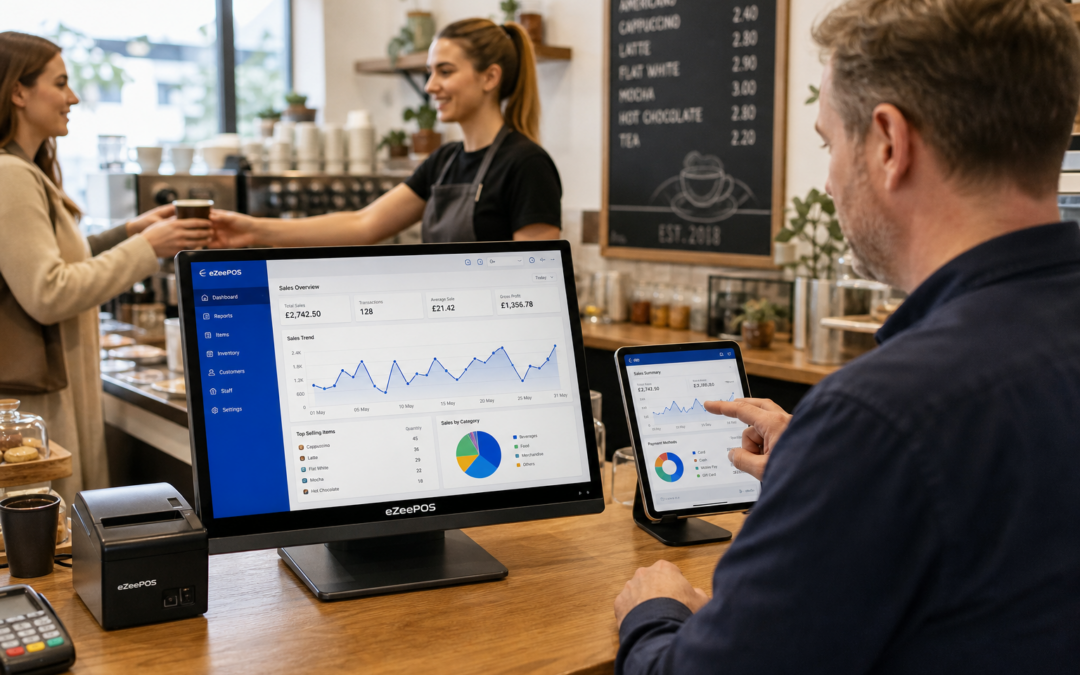
For many independent businesses, the challenge is not collecting information. It is knowing what to do with it. Sales can change quickly, busy periods can be unpredictable, and margins can be tight. That is where eZeePOS can help by giving owners clearer EPOS reporting that is easier to use in day-to-day decision-making.
Whether you run a shop, cafe, restaurant, takeaway or multi-site business, the right reports can show what is selling, when your busiest periods happen and where small adjustments may improve trading. Good reporting does not need to be complicated. It just needs to be useful.
Why EPOS reporting matters for independent businesses
In a busy business, it is easy to rely on instinct alone. Experience matters, of course, but reports can back that instinct up with facts. Instead of guessing which products are doing well or which days are strongest, you can look at real data from your till system.
That can help with practical decisions such as:
- spotting the busiest trading times
- seeing which products or menu items sell best
- comparing performance across weekdays and weekends
- identifying seasonal changes in demand
- understanding where promotions have had impact
For small teams, this matters because there is rarely time to dig through spreadsheets or manually add up figures from several sources. A well-set-up EPOS system makes the information easier to access when you need it.
What useful reporting can show you
The most helpful reports are not always the most complex ones. In fact, simple reports are often the most valuable because they are easy to review and act on quickly.
Sales by day and time
Knowing when trade is strongest can help you schedule staff more sensibly, prepare stock or menu items in advance and reduce pressure during busy periods. If you see a regular lunchtime rush, for example, you can make sure the counter, kitchen or till area is ready before it starts.
Best-selling products or menu items
Product and item reports help highlight what customers actually buy most often. In retail, that might influence what you display near the till. In hospitality, it may help you plan prep more accurately or focus on the most popular dishes and drinks.
Less successful lines
Reporting can also show what is not moving as well as expected. That does not always mean an item should be removed, but it may prompt a closer look at pricing, visibility or how the product is being promoted.
Staff and till activity
For businesses with several team members, reports can help owners understand when the till is busiest, how different shifts are performing and whether there are patterns that deserve attention. This is useful for planning, training and keeping service consistent.
How reporting helps different business types
Every business uses reporting in slightly different ways. A cafe may care most about peak breakfast and lunch periods, while a shop may want to understand weekend footfall. A takeaway may look closely at order patterns by time of day, and a bar may focus on evening trade.
Retail businesses
Retailers often benefit from seeing which categories are strongest and which times see the most customers. That can help with staffing, product placement and window displays. For shops with changing ranges, reporting can also help owners judge whether new lines are worth repeating.
Hospitality businesses
For cafes, restaurants and takeaways, reporting can support decisions around preparation, ordering ingredients and arranging staff cover. If a certain day or time consistently performs well, you can plan more confidently rather than reacting too late.
Multi-site businesses
For businesses with more than one location, reporting becomes even more valuable. It can help owners compare sites, identify stronger performers and understand whether differences are down to location, staffing or customer habits. Clear reporting from a central EPOS setup can make those comparisons far simpler.
Using reports without getting buried in data
One common problem with business reporting is having too much information but not enough clarity. The best EPOS reports should help you answer a question quickly, not give you pages of numbers that are hard to interpret.
A practical approach is to ask a simple question first. For example:
- What were our busiest hours last week?
- Which items sold best during the lunch period?
- Did that promotion increase sales or just reduce margin?
- Which day of the week was strongest this month?
Once you know the question, the report becomes more useful. That is why a business-focused EPOS setup should make key information easy to find, not hidden behind unnecessary steps.
Why reporting supports better planning
Good reporting is about more than looking back. It can help you plan the next few days with more confidence. If you know weekends are consistently busy, you can prepare for them. If a quiet Tuesday is normal, you can plan staffing accordingly. If certain products always sell better in winter, you can order and promote them earlier.
That kind of planning can make a real difference to everyday trading. It can also reduce waste, improve service and help owners spend more time on customers rather than paperwork.
How eZeePOS fits into everyday decision-making
eZeePOS is designed to be practical for UK retail and hospitality businesses that want clearer control over day-to-day operations. If you are looking for EPOS software that can support reporting in a straightforward way, it is worth exploring what the system can show and how easily that information can be accessed.
You can learn more at www.ezeepos.co.uk and see how a modern POS setup may support reporting, service speed and day-to-day business management without adding extra complexity.
Choosing reports that are actually useful
The best reporting tools are the ones your team will actually use. That usually means reports that are:
- clear and easy to read
- relevant to your type of business
- quick to access when needed
- helpful for short-term as well as long-term planning
If your reports help you make one better decision a day, that can already make a meaningful difference over time.
For business owners who want more clarity from their till system, EPOS reporting is one of the simplest ways to turn everyday trading into useful insight. It is not about replacing experience. It is about giving that experience better information to work with.
Contact YCR Distribution at sales@ezeepos.co.uk or call 01924 438238.
To discuss a practical EPOS setup for your business, visit www.ezeepos.co.uk and see how eZeePOS could support your day-to-day decision-making.
Recent Comments