
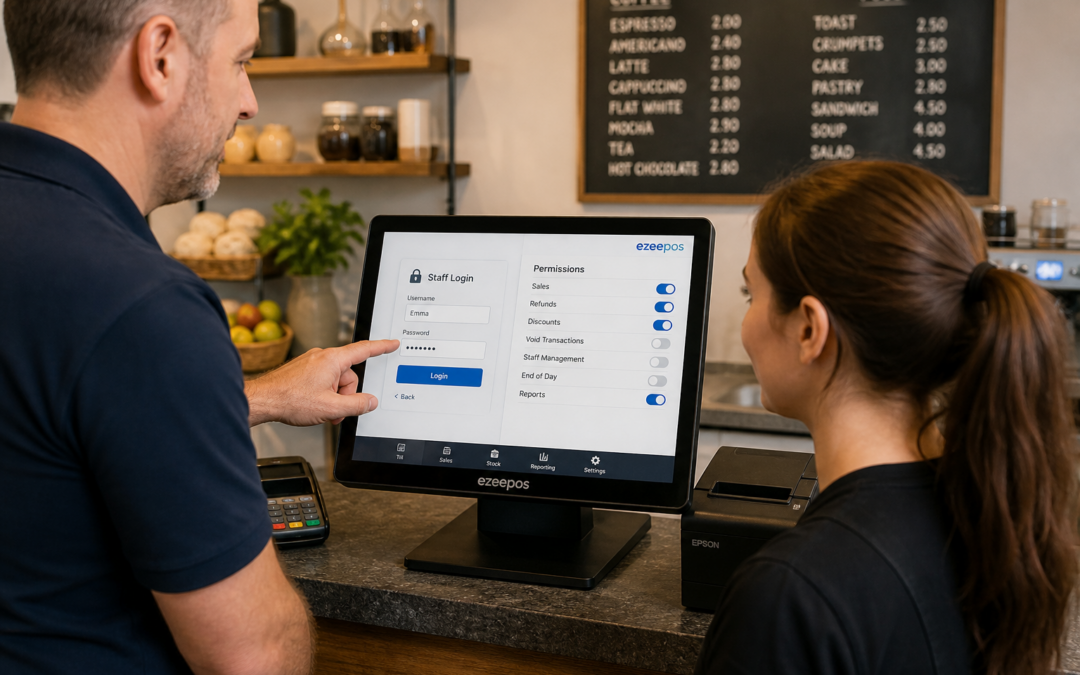
For independent retailers and hospitality businesses, the till is often where the day moves fastest. Staff need to serve customers quickly, but owners still need control over refunds, discounts, voids and sensitive settings. That is where well-planned staff permissions can make a real difference.
If you are reviewing your till setup, eZeePOS offers a practical UK EPOS option for businesses that want clearer control without making the system hard to use. It is designed for retail and hospitality teams that need straightforward workflows and sensible user access. You can learn more at www.ezeepos.co.uk.
What staff permissions actually do
Staff permissions let you decide which team members can access certain features in your EPOS system. In practice, that means one person may be able to take payments and print receipts, while a supervisor can authorise refunds or apply discounts, and an owner can view reports or change key settings.
This matters because not every role needs the same level of access. A new waiter, for example, should not necessarily be able to process a refund without approval. Similarly, a member of shop staff may only need to add items, search products and complete sales, while a manager handles end-of-day checks and more sensitive tasks.
Why permissions matter in day-to-day trading
The value of permissions is not just about security. In busy retail and hospitality settings, they also help reduce mistakes and make service more consistent.
Fewer errors at the till
When every member of staff has unlimited access, the chance of accidental discounts, incorrect refunds or deleted transactions goes up. A permission-based setup adds a sensible layer of control. Staff can still do their jobs quickly, but difficult actions are reserved for the right person.
Better accountability
When each user has their own login, it becomes easier to see who carried out a transaction or made a change. That can help when reviewing unusual sales, checking voids or investigating customer queries. For many business owners, this visibility is just as important as the control itself.
Smoother team training
New staff can be given access to the parts of the system they need first, without overwhelming them with every feature on day one. This can make training simpler and reduce the risk of mistakes while they are learning the till side of the job.
How permissions help different types of business
Permissions are useful across retail and hospitality, but the priorities can look a little different depending on the business type.
For shops and independent retailers
In a retail environment, permissions can help control price changes, discount approvals, refunds and cash-related actions. This is especially useful in shops with several team members using the same counter over a long trading day. It can also help when different staff work different shifts and need clear boundaries around what they can do.
For cafés, restaurants and takeaways
In hospitality, the till often has to move quickly during peak service. Permissions can help ensure that only supervisors can override orders, delete items or offer special discounts. That can protect margins and reduce confusion during busy lunch or evening periods. It also helps staff focus on service rather than worrying about tasks that are outside their role.
Common permission settings worth considering
Every business will want to set permissions differently, but there are a few areas that are worth reviewing when setting up or refining your EPOS system.
- Refunds: limit who can process them without approval.
- Discounts: decide whether all staff can apply them or only managers.
- Voids and cancellations: protect against accidental or unauthorised changes.
- Reports: restrict access to financial or performance information where needed.
- System settings: keep critical setup changes available only to senior users.
- Cash drawer actions: allow you to monitor who opened the drawer and when.
These settings do not need to make the system clumsy. The best EPOS setups keep everyday tasks fast while placing sensible checks around higher-risk actions.
Balancing control with ease of use
One of the most common mistakes businesses make is setting permissions too tightly from the start. If staff need permission for almost every action, service slows down and frustration grows. On the other hand, if everyone has access to everything, the business may lose control over important parts of the operation.
The best approach is to map permissions to real roles. Think about what a cashier, supervisor, bar person, waiter or store manager actually needs to do during a shift. Then keep the settings as simple as possible while still protecting the business.
Why this matters for owners and managers
For owners, staff permissions can help create a more dependable operation. You can spend less time sorting out avoidable till issues and more time focusing on customers, trading patterns and day-to-day decisions. In businesses where several people share the same EPOS terminal, that control becomes even more valuable.
It also supports a more professional culture. When staff know there is a clear structure in place, it is easier to follow the right process. That can improve consistency across shifts and locations, especially for growing businesses that are starting to rely on multiple users and managers.
Setting up permissions the practical way with eZeePOS
If you are looking for a UK EPOS system that can support clearer control at the till, eZeePOS is built to help retail and hospitality businesses work more confidently. The aim is not to add extra complexity, but to make everyday use more organised and easier to manage.
Whether you run a shop, café, restaurant or takeaway, staff permissions are worth treating as part of the wider setup rather than an afterthought. They can help reduce mistakes, protect margins and give you better visibility over how the till is being used.
Contact YCR Distribution at sales@ezeepos.co.uk or call 01924 438238.
To find out more about eZeePOS and how it can support your business, visit www.ezeepos.co.uk.
Recent Comments