
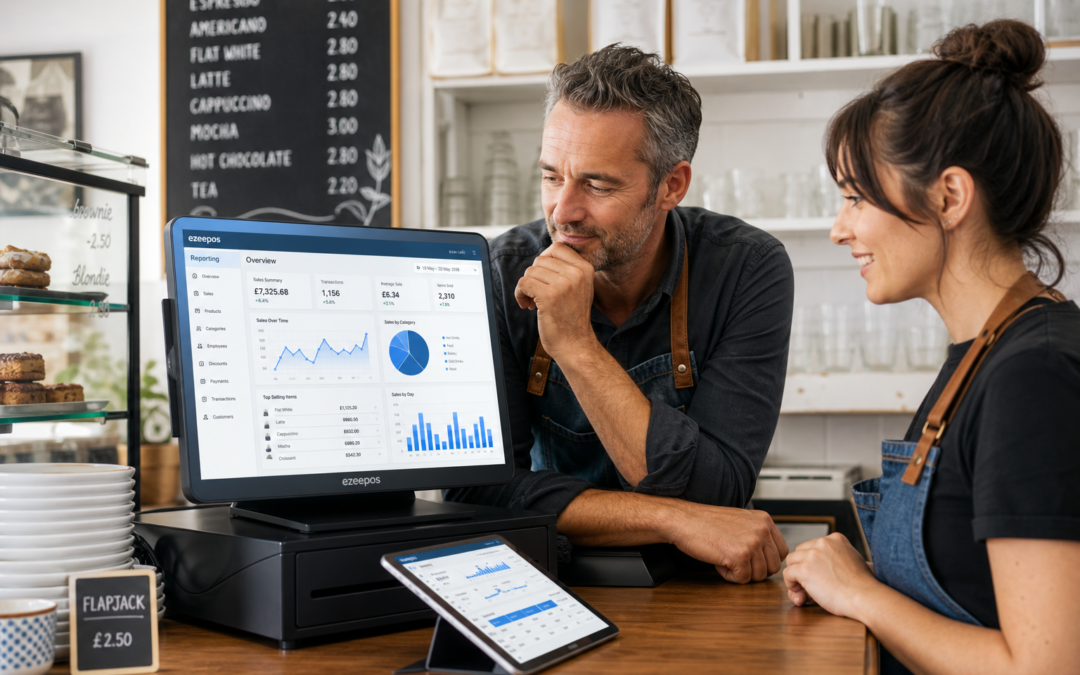
If you run an independent cafe, shop or small hospitality business, it is easy to get caught up in the day-to-day rush and make decisions based on instinct alone. That can work for a while, but it is not always the best way to understand what is happening across your business. A good EPOS reporting setup gives you clearer insight into sales, busy periods, product performance and staff activity, all from the same system.
At eZeePOS, we work with UK businesses that want practical, easy-to-use software rather than a complicated system full of data they never look at. The aim is not to drown owners in charts. It is to make reporting useful, simple and relevant enough to support better decisions every day.
Why reporting matters in a busy independent business
In a small business, every decision has an impact. If you schedule staff too early, open too much stock, or miss a rush period, the effects are felt quickly. EPOS reporting helps you see patterns that are easy to overlook when you are focused on serving customers.
For cafes, shops, takeaways and similar businesses, reporting can help answer practical questions such as:
- What times are busiest during the week?
- Which products or menu items sell best?
- Are there quieter periods where staffing could be adjusted?
- How do sales compare between weekdays and weekends?
- Which till users are taking the most transactions?
These are the kind of answers that help owners make sensible decisions, rather than guessing from memory or relying on a rough feel for trade.
What good EPOS reports should show
A useful reporting setup should be straightforward to read and quick to access. You do not want to spend ages searching for information. You want the important figures in front of you when you need them.
Sales trends and trading patterns
Daily, weekly and monthly sales reports can show whether trade is improving, holding steady or dipping. For a cafe, that might mean spotting a stronger breakfast period than expected. For a shop, it could highlight certain days where transaction volume is much higher than others.
When you can compare periods properly, it becomes easier to plan opening hours, promotions and staffing levels with more confidence.
Popular items and underperformers
Every business has products or menu items that perform differently over time. EPOS reports can show which items are selling well and which ones are moving slowly. That is especially helpful for businesses with changing ranges, seasonal products or short menus.
For example, a gift shop might notice that certain lines sell strongly at weekends, while a cafe may find particular food or drink items perform better at lunchtime. That information can support better ordering, display and menu decisions.
Busy times and customer flow
Understanding when trade is busiest can make a noticeable difference to service quality. If you know your busiest half hour each day, you can plan staff rotas more effectively and reduce the chance of long queues or rushed service.
This is especially useful for independent businesses where a small team often covers several tasks at once. Reporting helps you make better use of the staff you already have.
How reporting supports day-to-day decisions
One of the best things about EPOS reporting is that it helps with ordinary business decisions, not just high-level planning. It can influence small changes that add up over time.
Planning staff rotas more accurately
Many businesses staff to habit rather than evidence. A report that highlights predictable peak periods can help you match staffing to demand more closely. That can improve service, reduce pressure on the team and avoid paying for quiet hours that do not need full cover.
Making promotions more focused
If you know which products sell well, which sell poorly and when customers are most active, promotions become more targeted. You can use reports to decide when to run offers, what to feature in-store, and which items need more visibility.
For independent retailers and cafes, that kind of focus is often more effective than running broad discounts without knowing whether they are working.
Spotting changes early
When trade starts to change, reporting can help you spot it sooner. That might be a shift in customer behaviour, a drop in a certain product category or a quieter trading pattern during a period you normally depend on.
Early visibility gives you a chance to respond before small issues become bigger ones.
Reports that are useful without becoming complicated
Some businesses worry that reporting means spending hours studying spreadsheets. In practice, the most useful EPOS reports are usually the simplest ones. The best systems present information in a way that is easy to understand and practical to act on.
For many UK small businesses, that means having access to:
- Daily sales summaries
- Item-level sales reports
- Peak trading time reports
- Staff performance figures
- Comparison reports for different date ranges
These reports do not need to be complicated to be valuable. In fact, the simpler they are, the more likely staff and owners are to use them regularly.
Why independent businesses benefit from a clear view of sales
Larger businesses often have dedicated finance or operations teams to interpret data. Independent cafes and shops usually do not. That makes clear reporting even more important, because the owner, manager and frontline staff often need to make decisions quickly and on the spot.
A practical EPOS system such as eZeePOS can help keep this information accessible in one place, so you are not switching between different systems or trying to piece together figures manually. For many businesses, that saves time and makes the numbers easier to trust.
If you are comparing options, it is worth thinking about how the reporting is presented as much as what reports are available. A report only helps if it is easy to read and relevant to the way you actually run the business.
How to make reporting part of your weekly routine
One of the simplest ways to get value from EPOS reporting is to build a short review into your week. You do not need a long management meeting. A quick look at sales, busy times and top-selling items can be enough to highlight useful trends.
Try reviewing:
- Last week’s sales compared with the week before
- The busiest trading window each day
- Any unexpected changes in product performance
- Whether staffing matched demand well
Over time, those small reviews can lead to better decisions and a more organised business.
A practical next step for UK businesses
If you want clearer insight into how your cafe, shop or hospitality business is performing, reporting is one of the most useful parts of a modern EPOS setup. It gives you the evidence to plan better, respond sooner and manage day-to-day trade with more confidence.
To find out more about how eZeePOS can support your business with practical reporting tools, visit www.ezeepos.co.uk.
Contact YCR Distribution at sales@ezeepos.co.uk or call 01924 438238.
Recent Comments