
In the fast-paced world of UK hospitality, every second and every penny counts. Yet, many operators are still clinging to the "traditional" method of using standalone card machines that aren't connected to their POS. It might seem cheaper on the surface, but the hidden costs of manual entry, reconciliation errors, and slow service are likely bleeding your business dry.
This guide breaks down exactly why separate card machines are costing you thousands and how moving to integrated card payments with a modern affordable hospitality POS is the single best move you can make for your margins.
Table of Contents
- The "Fat-Finger" Tax: The High Cost of Human Error
- The Reconciliation Black Hole: Where Your Profit Goes to Die
- The Fraud Gap: How Separate Systems Invite Shrinkage
- Service Speed: Winning the Peak-Time Battle
- Comparison Table: Integrated vs. Standalone
- My Take: The View from the MD’s Desk
- FAQs: Making the Switch
1. The "Fat-Finger" Tax: The High Cost of Human Error
When a staff member has to manually re-key a bill total from your POS into a separate card terminal, you are introducing a massive point of failure. Industry data suggests a 3% per-transaction error risk in manual entry environments.
Think about a busy Friday night. Your server is rushing, the music is loud, and they’re trying to close a £145.00 bill. They accidentally type £14.50 into the card machine. The customer taps, the payment clears, and your server moves on. By the time you spot that error during your weekly audit, that £130.50 is gone, unrecoverable and straight out of your net profit.
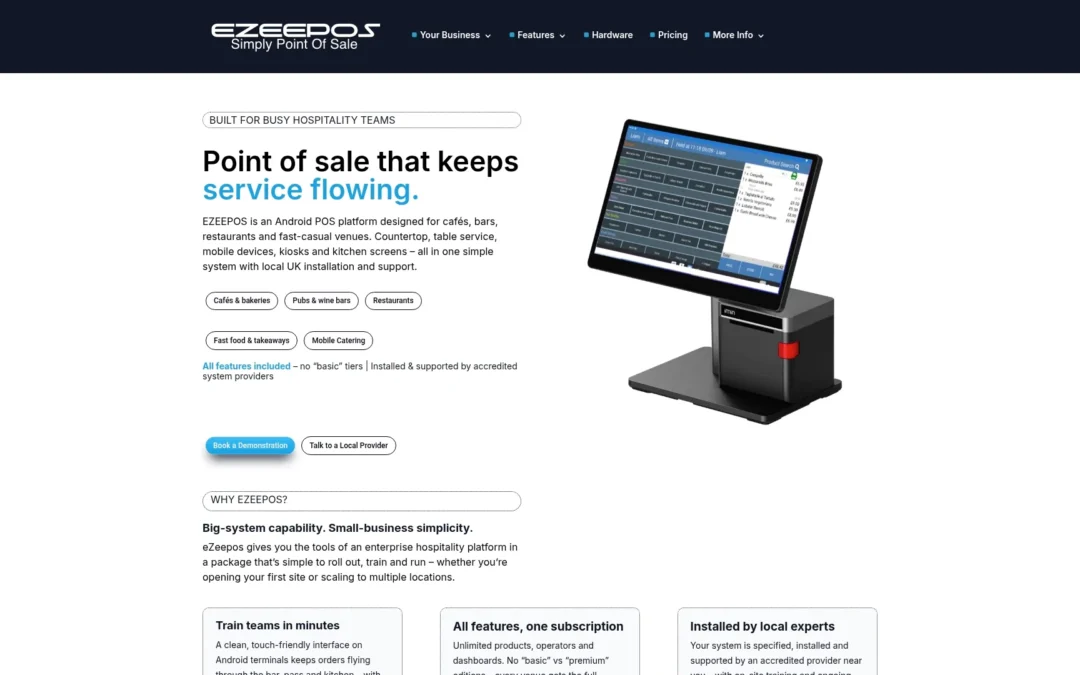
Integrated payments eliminate this entirely. With eZeepos, the total is sent directly from the Android POS for cafes to the terminal. There is zero re-keying, and therefore, zero "fat-finger" errors.
Pro Tip: The Receipt Audit Test
Pick 10 random card receipts from last Saturday’s peak service. Cross-reference the amount on the card slip with the amount on the POS bill. If even one doesn't match, you have a systemic leakage problem that integration would solve instantly.

2. The Reconciliation Black Hole: Where Your Profit Goes to Die
If you use separate card machines, your end-of-day process likely looks like this:
- Print a Z-report from the POS.
- Print a totals report from each card machine.
- Spend 30–60 minutes trying to figure out why they don't match.
Whether it’s a mis-keyed tip, a forgotten refund, or a transaction that went through on the card machine but wasn't closed on the POS, these discrepancies require manual investigation. This isn't just annoying; it's expensive. If your manager spends 5 hours a week on reconciliation admin, that’s thousands of pounds a year in labor costs alone.
Integrated card payments offer automatic reconciliation. Because the POS and the terminal share the same data in real-time, the transaction is logged as "paid" the moment the card is tapped. There is no "matching" to do, it’s already done. Operators using cloud-based POS technology report a 95% reduction in reconciliation time.
3. The Fraud Gap: How Separate Systems Invite Shrinkage
Non-integrated setups create a "blind spot" between what your sales reports say and what your bank account says. This is exactly where internal fraud and skimming hide.
Without integration, a dishonest staff member can:
- Charge a customer £50 on the terminal but only record £30 on the POS, pocketing the difference or "giving away" items.
- Process a refund to their own card without any record appearing on the POS reports.
With an integrated system, every penny must match. The till cannot be closed unless the payment matches the order. UK venues that switch to integrated processing report up to 60% less fraud. By closing the gap between your types of POS stations and your payments, you are protecting your revenue from the inside out.
4. Service Speed: Winning the Peak-Time Battle
In hospitality, speed is revenue. If you can shave 10 seconds off every transaction, you can serve more customers during peak hours.
Manual entry takes time. Handing over a terminal, waiting for the staff member to type the amount, double-checking it, and then waiting for the connection, it all adds up. In a high-volume bar or takeaway, those seconds are the difference between a customer getting their drink or walking out because the queue is too long.
Integrated payments move at the speed of your business. The step-by-step mobile payment flow is seamless: tap "Pay," the terminal wakes up instantly, the customer taps, and the receipt prints.

5. Comparison Table: Integrated vs. Standalone
| Feature | Integrated (eZeepos) | Separate / Standalone |
|---|---|---|
| Error Risk | Near Zero. Auto-syncing. | High. ~3% manual entry error. |
| Admin Time | Minimal. Auto-reconciliation. | Heavy. 5+ hours/week for managers. |
| Fraud Protection | High. Data must match POS. | Low. Gaps between systems. |
| Service Speed | Fast. Seconds saved per bill. | Slower. Manual entry slows queues. |
| Reporting | Real-time, single source of truth. | Manual, prone to discrepancies. |
6. My Take: The View from the MD’s Desk
I have visited hundreds of venues across the UK, and the story is always the same: owners think they are "saving money" by using a cheap, standalone card contract they found online.
But when we sit down and look at the "Missing Money", the errors that weren't caught, the labor cost of reconciliation, and the slow table turn times, that "cheap" contract actually costs them five times more than an integrated solution.
In 2026, operating without integration is like trying to run a marathon with your shoelaces tied together. It’s frustrating for your staff, annoying for your customers, and lethal for your margins. My recommendation? Integrated is the only way forward.
7. FAQs: Making the Switch
Q: Is integrated more expensive per transaction?
A: Often, the rates are highly competitive. However, even if the "rate" is slightly higher, the savings from error reduction and admin time far outweigh any minor difference in percentage.
Q: What happens if my internet goes down?
A: Modern systems like eZeepos have robust offline modes. You can read more about the role of offline mode in POS systems here.
Q: Do I need new hardware?
A: Usually, yes. To get the benefit of integration, your POS and your card terminal need to speak the same language. We provide sleek, modern Android-based terminals designed for this exact purpose.
Q: How long does it take to set up?
A: With our accredited local partners, we can usually have you up and running in a matter of days, including full staff training.
Stop bleeding money into the gaps between your systems.
Ready to see how integrated payments can transform your business?
Contact EZEEPOS today:
- Website: www.ezeepos.co.uk
- Email: sales@ezeepos.co.uk
- Phone: 01924 438238
Recent Comments