
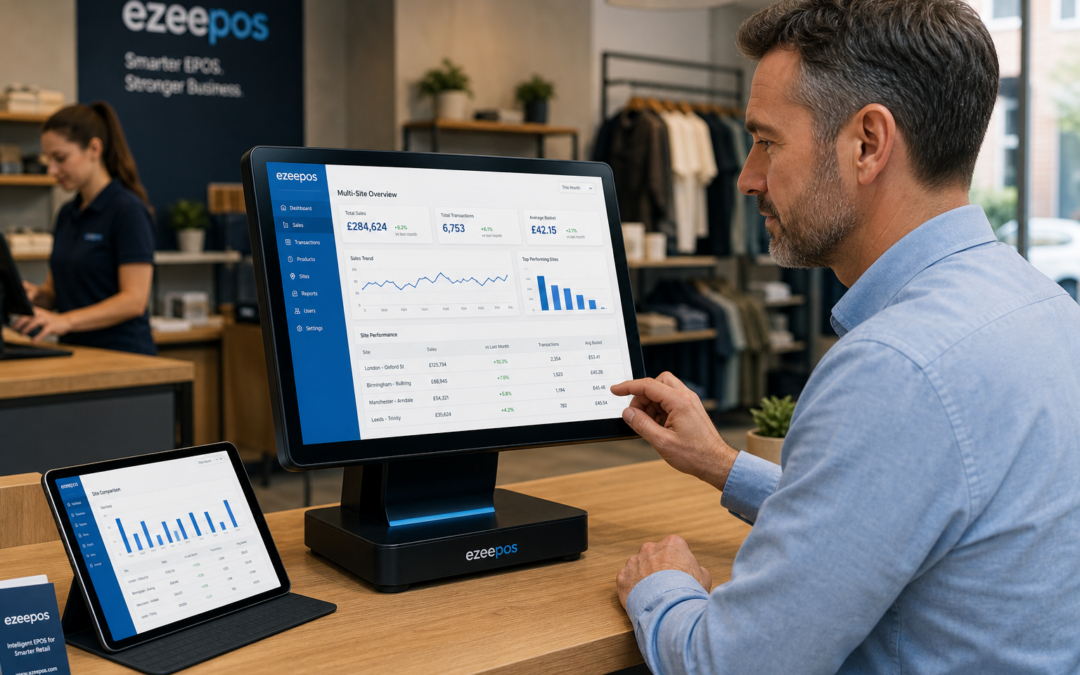
Why multi-site reporting is worth paying attention to
When a retail business grows from one shop to two, or from a few locations to a small chain, the challenge changes quickly. It is no longer enough to know that sales are up overall. Owners need to see which branch is performing well, where trading is slower and which locations may need support.
That is where eZeePOS and other modern EPOS systems can help. With the right setup, multi-site reporting gives retailers a clearer picture of day-to-day trade across every branch, without having to pull figures together manually from separate tills or spreadsheets.
For independent retailers, convenience store groups, fashion chains, gift shops and other multi-location businesses, this is not just a reporting feature. It is a practical way to keep standards more consistent and react faster when performance changes.
What multi-site reporting actually shows
Multi-site reporting brings sales information from different locations into one place so owners and managers can compare branch performance more easily. Instead of checking each shop separately, you can review trading data across the whole business and spot useful patterns.
Common information businesses look at
- Daily and weekly sales by branch
- Best-selling products or departments at each site
- Busiest trading times across different locations
- Average transaction values
- Staff performance and till activity
- Refunds, voids and other till actions
This makes it easier to see whether one site is outperforming another because of footfall, local demand, staffing or hours of trade. It also helps owners avoid guessing when it comes to planning.
Why this matters for growing retail businesses
A business with one store can often make decisions from instinct as well as data. Once several branches are involved, that becomes much harder. Small differences between sites can quickly add up, especially if you are managing opening hours, staffing, stock and promotions across several locations.
Multi-site reporting helps you move from broad assumptions to clearer comparisons. If one branch is strong on weekday mornings and another is strongest at weekends, you can plan staffing more sensibly. If one store sells more of a particular range, you can look at whether that pattern should influence your wider product mix.
It also supports better conversations with managers. Rather than asking a branch to explain general performance, you can use specific figures to discuss what is working and where support may be needed.
How multi-site reporting helps day-to-day decisions
The real value of reporting is not just in reviewing history. It is in making better decisions this week, not just at the end of the month.
1. Compare branches fairly
Multi-site reporting helps you compare locations using the same information. That makes it easier to identify whether differences are linked to customer demand, trading hours, location or operational issues.
2. Spot trends earlier
If sales at one branch begin to dip, you are more likely to notice quickly when all locations are visible in a single reporting view. Early visibility can make a real difference in retail, where a small change in footfall or basket size can affect weekly trade.
3. Support staff planning
Knowing when each store is busiest can help you schedule staff more effectively. One branch may need more hands at lunch, while another may need extra help on Saturday afternoons. Multi-site reporting makes those patterns easier to see.
4. Improve consistency across sites
Multi-site businesses often want a consistent customer experience, but that is harder to maintain if different branches work in very different ways. Shared reporting helps highlight where one location is handling things more efficiently than another.
What retail sectors benefit most
Multi-site reporting is useful for many UK retail businesses, especially those with similar branches that need to be managed centrally.
Convenience store groups
Convenience retailers often need fast access to sales figures across branches so they can keep pace with local demand and trading patterns.
Fashion and clothing shops
Clothing businesses may want to compare seasonal lines, basket values and branch-by-branch performance for different product ranges.
Gift shops and mixed retail
Where product mixes vary from store to store, reporting can show which ranges are strongest in each location and where a branch may need a better fit for its customer base.
Farm shops and specialty retailers
Businesses with a mix of everyday essentials and more specialist products can use reporting to see how patterns differ between sites and trading days.
How eZeePOS fits into multi-site reporting
For retailers wanting a practical EPOS setup, eZeePOS provides tools that help businesses keep better track of sales activity across locations. The aim is not to overcomplicate the process, but to give owners a clearer, more useful view of trading.
That can be especially helpful for businesses that have outgrown basic tills or manual reporting methods. A modern EPOS system can save time at the end of the day, reduce the need to chase figures from multiple branches and make branch comparisons much easier to understand.
If you are reviewing your wider EPOS setup, it may also be worth looking at how reporting sits alongside other day-to-day features such as product lookup, permissions and customer service tools. You can explore more at www.ezeepos.co.uk.
What to look for in a reporting setup
Good reporting should be easy to access and simple to interpret. If staff have to spend too long pulling figures together, the system is not saving much time.
- Clear branch comparison views
- Easy access to daily, weekly and monthly sales data
- Useful detail without unnecessary complexity
- Figures that can support planning and staff discussions
- Consistent reporting across all locations
For many retailers, the best reporting tools are the ones that help answer straightforward questions quickly: which branch is busiest, which location is growing, and where should attention go next?
Making reporting part of everyday management
Multi-site reporting works best when it becomes part of normal management, not something checked only once in a while. A short review at the end of the day or week can highlight issues early and help managers respond before small problems become bigger ones.
For growing retail businesses, that kind of visibility can be the difference between reacting late and running a more organised operation. It supports better staffing, better planning and a clearer understanding of how each branch contributes to the business as a whole.
Contact YCR Distribution at sales@ezeepos.co.uk or call 01924 438238.
To learn more about practical EPOS reporting for UK retailers, visit www.ezeepos.co.uk.
Recent Comments