
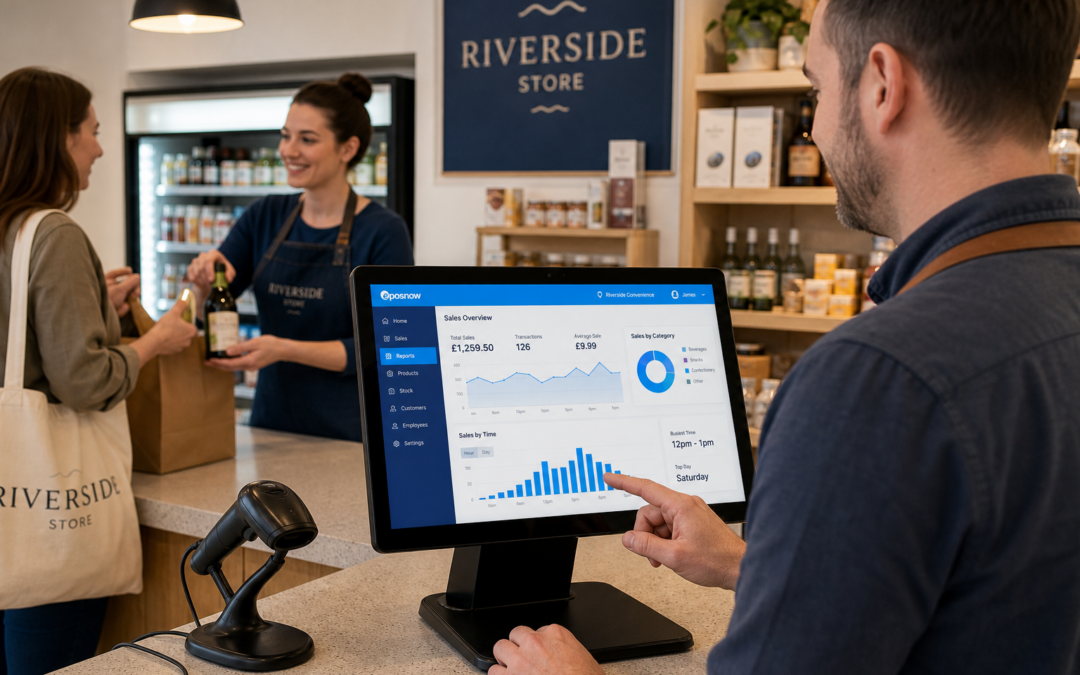
For many independent retailers, the till does far more than process sales. It also holds valuable trading information that can help owners understand what is happening in the business each day. With the right eZeePOS setup, small shops can use reporting to make quicker, more confident decisions based on real trading patterns rather than guesswork.
Why reporting matters in a small shop
When you run a busy independent shop, there is rarely time to spend hours reviewing spreadsheets. You need quick answers to practical questions such as:
- Which products are selling well today?
- What time of day is busiest?
- Are some days stronger than others?
- Which staff shifts or trading periods need more support?
EPOS reporting brings that information together in one place. Instead of relying on memory or end-of-week notes, owners can look at clear sales data and use it to shape daily decisions. That can make a real difference in convenience stores, gift shops, hardware shops, pet shops and other independent retail businesses.
What kind of reporting is most useful?
The best reporting tools are not always the most complicated ones. For most small retailers, simple reports are often the most useful because they are easy to read and quick to act on.
Sales by day and time
Knowing when trade is strongest helps shop owners plan staff cover, prepare the counter and manage queue pressure. If afternoons are consistently busier than mornings, for example, it makes sense to have more support available when it matters most.
Best-selling products
Sales reports can show which items are moving well and which ones are selling more slowly. That helps with display planning, promotions and product mix. For a gift shop, that might mean seeing which seasonal lines are performing. For a pet shop, it might highlight repeat purchases or popular everyday essentials.
Basket value and transaction trends
Understanding average spend can help shops spot changes in customer behaviour. If customers are buying fewer items per visit, owners can review pricing, promotions or store layout. If basket values are rising, it may show that upselling and merchandising are working well.
Turning data into practical decisions
Reporting is only valuable when it leads to action. The aim is not to collect more numbers for the sake of it, but to use the data to improve day-to-day trading.
Better staff planning
If your EPOS reports show that Fridays between 3 pm and 5 pm are your busiest trading times, you can schedule stronger cover for that period. That may reduce queue length, improve customer service and make the shift less stressful for the team.
Smarter product choices
Small shops often work with limited shelf space, so every product needs to earn its place. Reporting can help identify lines that deserve more visibility and items that may be taking up space without delivering enough sales.
Clearer promotion decisions
Promotions are more effective when they are based on real trading patterns. If certain products already sell well without discounting, you may not need to promote them heavily. If other items are slow to move, a short offer or display change may help improve results.
Reporting for different types of independent retail
Different businesses use reporting in different ways, even if the general goal is the same: make better decisions faster.
Convenience stores
Convenience store owners often need quick insight into peak periods, basket size and high-volume lines. That helps with staffing, product replenishment and making sure everyday essentials are always easy to find.
Gift shops
Gift shops usually sell a wide mix of products, from small impulse buys to seasonal lines. Reporting helps owners see which ranges are worth reordering, which products suit window displays and where special promotions may work best.
Hardware stores
In hardware retail, report data can help owners track which product groups are more active during different times of year. That makes it easier to plan displays, stock levels and staffing around the real pace of trade.
Pet shops
Pet shops often rely on repeat purchases, so reporting can be useful for understanding regular sales patterns and popular everyday items. That can support better range planning and more focused merchandising.
Reporting does not need to be complicated
One of the biggest advantages of modern EPOS software is that reports are easier to access than they used to be. Rather than pulling information from several different systems, shop owners can often check the figures they need from the till software itself.
That matters for small businesses because time is limited. A report should help you decide what to do next, not create another admin task. Whether you are comparing this week with last week or checking today’s performance before closing, the right tools should keep things simple.
Using reporting alongside other EPOS features
Reporting works best when it sits alongside other useful EPOS functions. For example, if your team uses barcode scanning or fast product lookup at the till, sales data becomes cleaner because items are being recorded accurately. If your business uses staff permissions, it can also be easier to trust the data behind each transaction.
For growing shops, those small improvements can build a more reliable picture of trading over time. That is especially useful when you want to compare different periods, review local demand or prepare for busier trading weeks.
Why small shops benefit from clearer daily insight
A small shop does not need a huge management system to make better decisions. It needs straightforward information that helps the owner respond quickly and confidently. EPOS reporting can do exactly that by showing what is happening on the ground, while there is still time to act.
From staffing and promotions to product selection and trading patterns, the right reports can help independent retailers run a tidier, more responsive business. If you want a practical UK EPOS solution that supports everyday decision-making, eZeePOS is worth exploring at www.ezeepos.co.uk.
Contact YCR Distribution at sales@ezeepos.co.uk or call 01924 438238.
Recent Comments