

Top 6 ezpermit.ca Alternatives 2026

Selecting a hospitality point of sale system that matches both local support needs and real world UK venue workflows often exposes gaps in available features, reliability and pricing clarity. Many established options restrict core capabilities behind complex paywalls, lock operators into hardware bundles or lack transparent support for venues with multi-site or cultural requirements. This comparison details pricing, integration breadth and support models across six POS providers so venue managers can shortlist a system that actually fits their service model without a protracted trial and error process.
Table of Contents
- Ezeepos POS System
- Syrve
- TISSL
- Seamless POS
- pointOne POS
- Comparative Analysis: Hospitality POS Systems
Ezeepos POS System
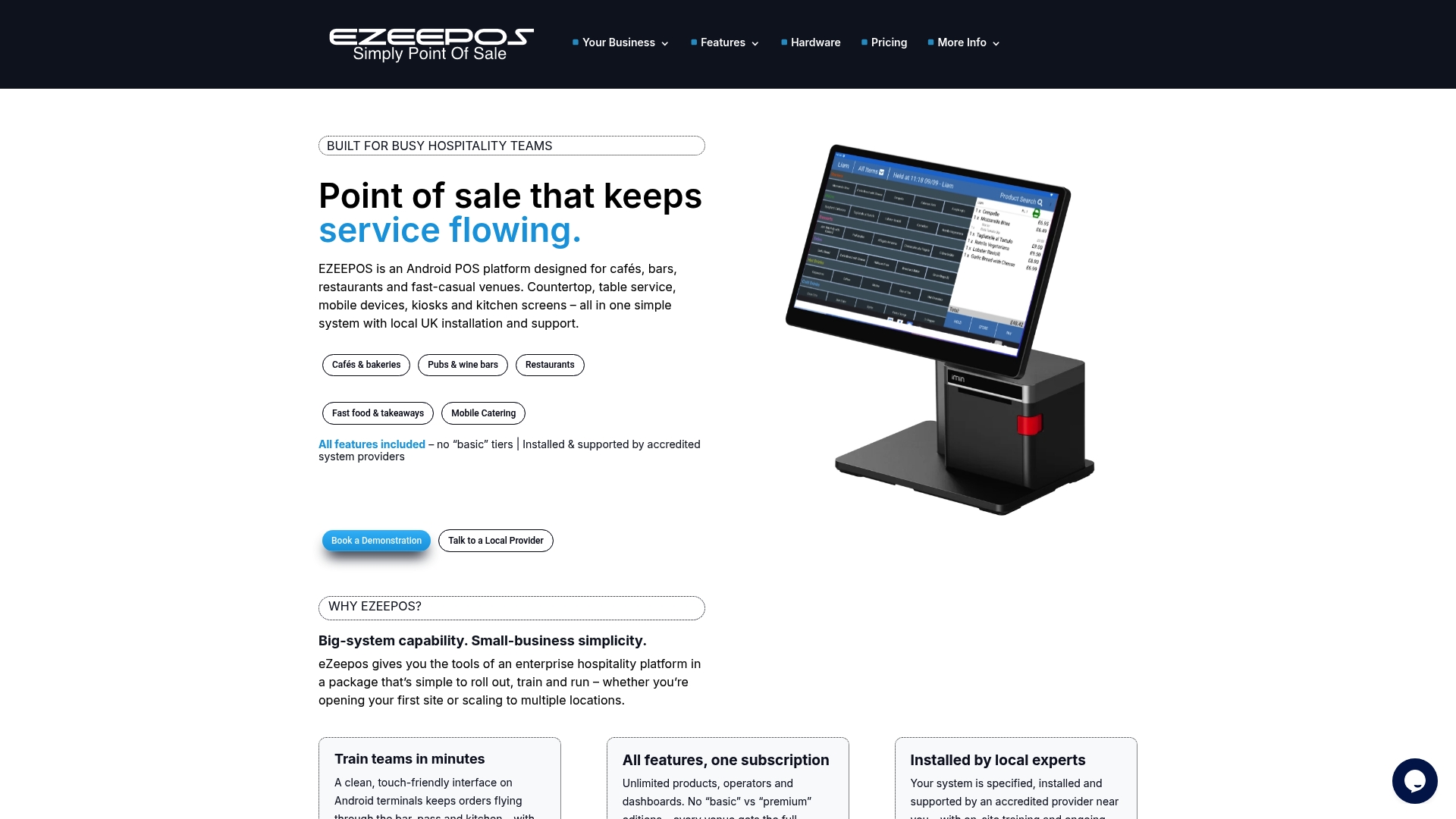
At a Glance
All features come under a single subscription with no tiered pricing and local UK installation by accredited providers. The package supports countertop tills, handhelds, kiosks and kitchen screens while offering cloud-backed back office management and integrated card payments.
Core Features
- Cloud-based management with real-time dashboards, reporting and centralised inventory control.
- Supports countertop, table ordering, mobile POS for catering, self-service kiosks and kitchen display screens.
- Unlimited products and operators plus menu, modifier and promotion management built into the platform.
- Multi-site control, recipe and allergen management, and options for multi-network data SIMs on mobile devices.
Key Differentiator
The defining trait is the all-in-one feature set delivered without tiered editions and backed by local UK installation and on-site support from accredited providers. That pairing removes hidden feature gates and gives venues a single supplier for hardware, software and training.
Pros
- Local installation and onsite training mean the team spends less time learning the system and more time serving customers.
- No tiered editions: every listed feature is included in the subscription, which simplifies procurement and avoids surprise upgrade costs.
- Integral inventory and sales analytics let managers spot low-stock lines and menu items that are underperforming from the same interface used to take orders.
- Flexible hardware options match venue formats from food trucks to multi-floor restaurants, reducing one-off custom hardware purchases.
- Integrated payments with major providers reduce reconciliation work and shorten settlement cycles compared with manual terminal reconciliation.
Cons
- Dependence on local support providers means response times and on-site availability will vary by region; this can be limiting for venues far from an accredited partner.
Notable Integrations
Ezeepos connects natively to a set of payment platforms common in UK hospitality. The supported integrations listed are Teya Payments, Dojo, Sum-Up and eMerchantPay, which cover a range of terminal and acquiring options.
Who It’s For
Hospitality owners and managers running cafés, bars, restaurants, quick-service outlets or mobile caterers who want a single system to run front-of-house, kitchen displays and head-office reporting with localised installation and support.
Unique Value Proposition
Local UK installation combined with unrestricted feature access changes the operational equation. Instead of buying a base tier and adding modules, you get full POS, inventory, reporting and hardware options in a single engagement, so rollout timelines compress and training becomes a one-time investment.
Real World Use Case
A regional restaurant chain uses Ezeepos to centralise multi-site menu changes, push updates to kitchen screens, and process payments through integrated terminals. The chain reduced order errors at peak service by moving to tablet ordering and synchronised stock control across outlets.
Pricing
Pricing is customised. Costs depend on chosen hardware, number of sites and any ancillary services such as on-site training or bespoke integrations. The vendor provides detailed quotes on request rather than a fixed public price list.
Website: https://ezeepos.co.uk
Syrve
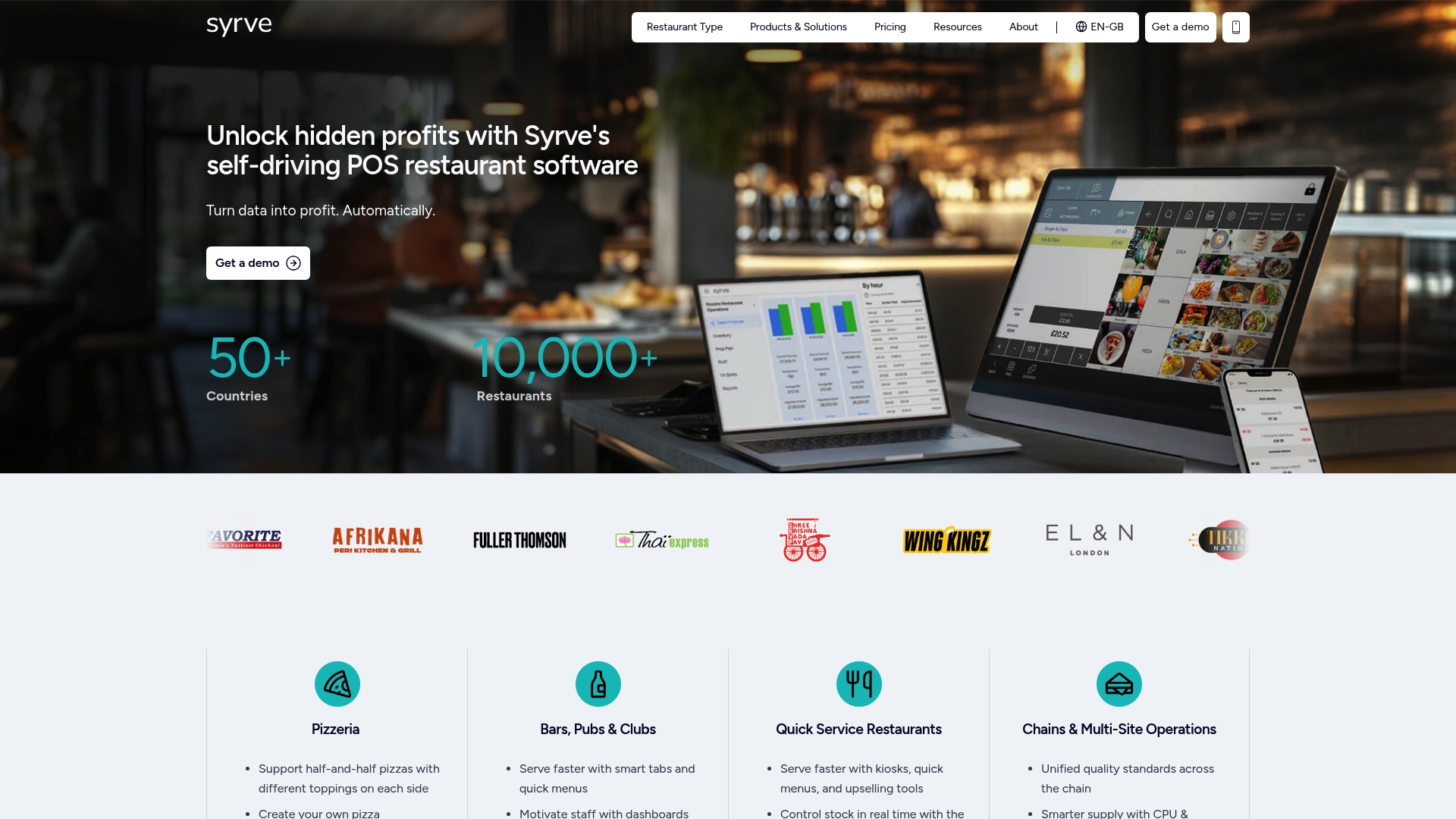
At a Glance
Syrve reports being used by over 10,000 restaurants across more than 50 countries, a scale the vendor cites when describing its global footprint. The platform bundles POS, inventory, staff and delivery tools into one product aimed at multi outlet operations.
Core Features
- POS and restaurant management covering front of house order capture and table modes.
- Real time sales and inventory analytics with centralised reporting for multiple outlets.
- Order management for online, delivery and in house with kitchen workflow automation and menu centralisation.
- Staff scheduling, payroll, supply chain controls and advanced forecasting for sales, staffing and stock.
Key Differentiator
Syrve leans on deep customisation and centralised control across sites. The product positions its multi outlet management as a single pane for menu changes, promotions and stock allocation, which appeals to franchise owners who want one source of truth for operations and reporting.
Pros
- The vendor advertises integrations with more than 40 platforms via an open API, which supports connections to delivery, payments and accounting systems.
- Strong multi outlet features reduce manual menu updates by letting you push changes from a central console to every site.
- Built in forecasting and reporting give managers near real time visibility of sales and stock so you can react to trends rather than wait for month end.
- The system is pitched as flexible and customisable, allowing different service models such as quick service, dark kitchens and full table service to run on the same platform.
Cons
- User feedback includes repeated complaints about system reliability, notably around online ordering failures that have impacted revenue.
- Several reviews report poor responsiveness from support and slow bug fixes, with some features still described as beta.
- If you rely heavily on online ordering, the reported instability of that module is a material operational risk.
When It May Not Fit
If uninterrupted online ordering is central to your operation, Syrve may be a risky choice given the reported reliability problems. Single outlet independents seeking a simple till may find the platform overfeatured and unnecessarily complex.
Notable Integrations
- Delivery platforms: UberEats, Deliveroo, JustEat
- Accounting: Xero, QuickBooks
- Loyalty and CRM systems
- E commerce channels
- Major payment providers
Who It’s For
Mid sized to large restaurant operators, franchise groups and hospitality enterprises that need centralised control across multiple locations. The product suits organisations prepared to customise workflows and tolerate some platform maturation to gain integration breadth and multi outlet management.
Real World Use Case
A regional restaurant chain uses Syrve to publish menu updates centrally, unify sales and inventory data daily and route online orders to the correct kitchen station. That setup reduces discrepancies between tills and the warehouse and provides managers with same day financial snapshots.
Pricing
Starter plans begin at £49 p/m for single locations, which offers an entry point for independents. Pricing scales for multi outlet and enterprise features, and vendors commonly quote bespoke figures for larger chains.
Website: https://syrve.com/en-gb
TISSL
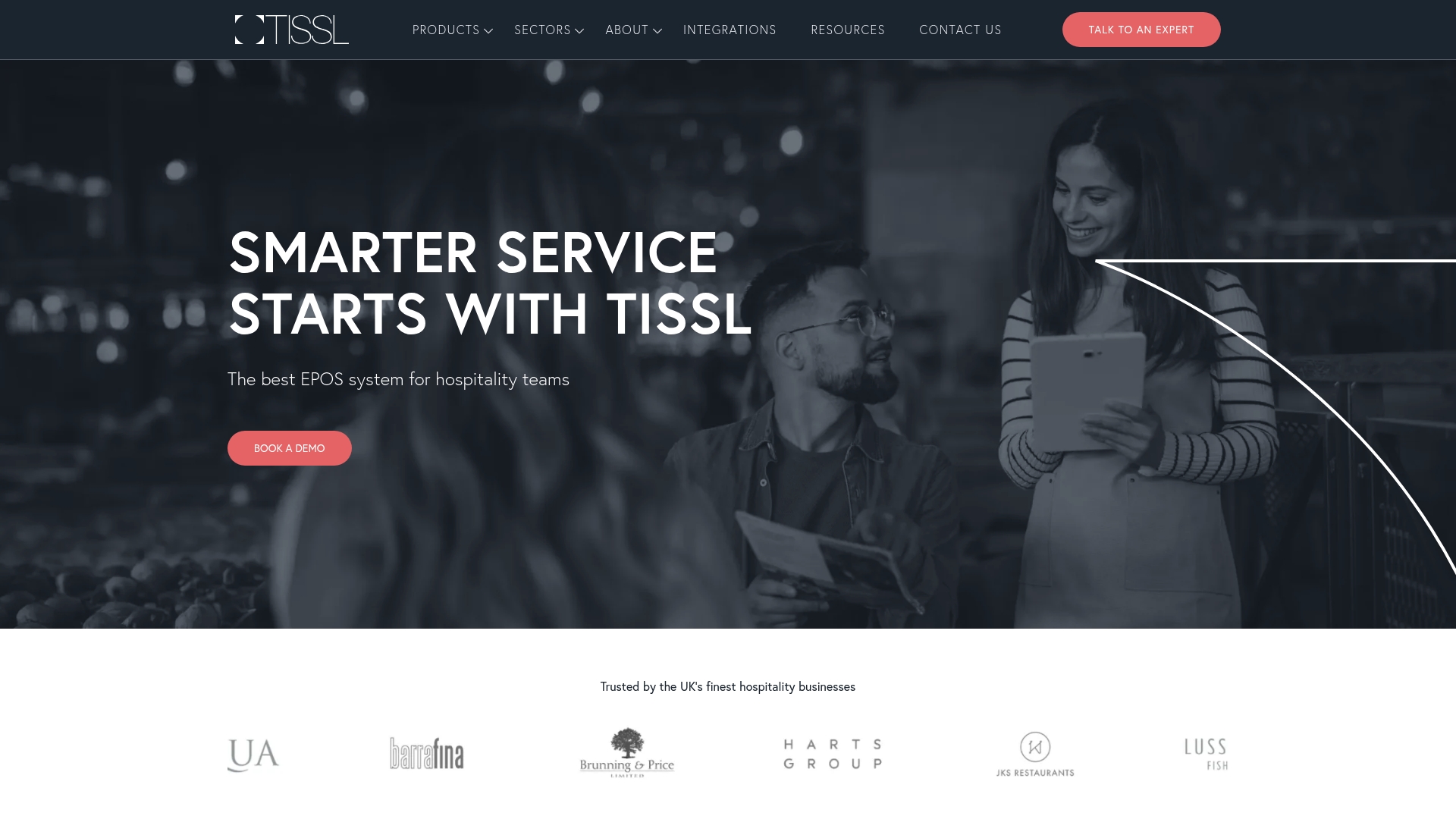
At a Glance
Built in payments via TISSLPay powered by ClearAccept are authorised by the FCA, allowing operators to accept card transactions on the same platform they use for orders and reporting. The vendor states it is used by some of the UK’s leading hospitality brands.
Core Features
- Real time analytics and performance tracking for venues and consolidated reports across sites.
- Order and payment management that supports multi venue operations and handheld PDQ or tablet workflows.
- Customisable menus, deals, table and seat management to reflect service styles and seating plans.
- Integrated payments via TISSLPay with ClearAccept authorisation and a library of third party delivery, reservations and loyalty connectors.
Key Differentiator
TISSL’s primary angle is its hardware agnostic approach combined with built in payments and live analytics. That lets operators reuse existing devices while centralising reporting, which shortens rollout time when opening additional pubs, restaurants or hotel outlets.
Pros
- Intuitive interface geared to hospitality workflows makes staff training shorter and reduces tillside mistakes during rush service.
- Strong partner ecosystem connects to common hospitality tools, which reduces the need for bespoke integrations.
- Because the platform is hardware agnostic you can repurpose tablets or terminals you already own rather than buying new kit for every venue.
- Support options include on site assistance in covered regions, which helps larger multi venue operators who prefer local engineers.
- Scalable features let groups manage multiple outlets from a single dashboard rather than logging into separate systems for each site.
Cons
- User feedback highlights the platform as highly buggy and unreliable in some deployments, which undermines trust during peak service periods.
- Data reporting is described as inconsistent on the management hub, making financial reconciliations harder for managers and accountants.
- Multiple reports of unresponsive or unaccountable customer service create risk when issues affect trading.
- Contract terms and add on costs are reported as unclear, which can surprise operators at renewal or when expanding functionality.
When It May Not Fit
If your priority is rock solid stability and prompt vendor support for every location, TISSL’s reported inconsistencies and support gaps make it a risky choice. Independent operators used to strict reporting accuracy or those without local on site support should shortlist alternatives with stronger reliability records.
Notable Integrations
- Giftpro for gift card and loyalty programmes.
- Rezcontrol for reservations management and storekit for kiosk ordering.
- Accounting links to Xero and Sage and delivery partners such as Deliveroo and UberEats.
- The vendor advertises many other hospitality ecosystem connectors.
Who It’s For
Hospitality operators, restaurant and pub owners and hotel management teams who want a single POS that can run across multiple venues and reuse existing devices. It fits groups willing to trade some maturity for flexibility and broader integration options.
Real World Use Case
A busy pub chain deploys handheld tablets on the floor and counter tablets at each site, processes payments through TISSLPay and consolidates daily takings to a central dashboard. That setup reduces manual cashing up and gives head office same day performance visibility.
Pricing
TISSL’s published entry point starts at £89 for the Essentials package, rising to £259 for the Advanced package. Additional features and integrations are available as add ons which may affect the final monthly cost.
Website: https://tissl.co.uk
Seamless POS
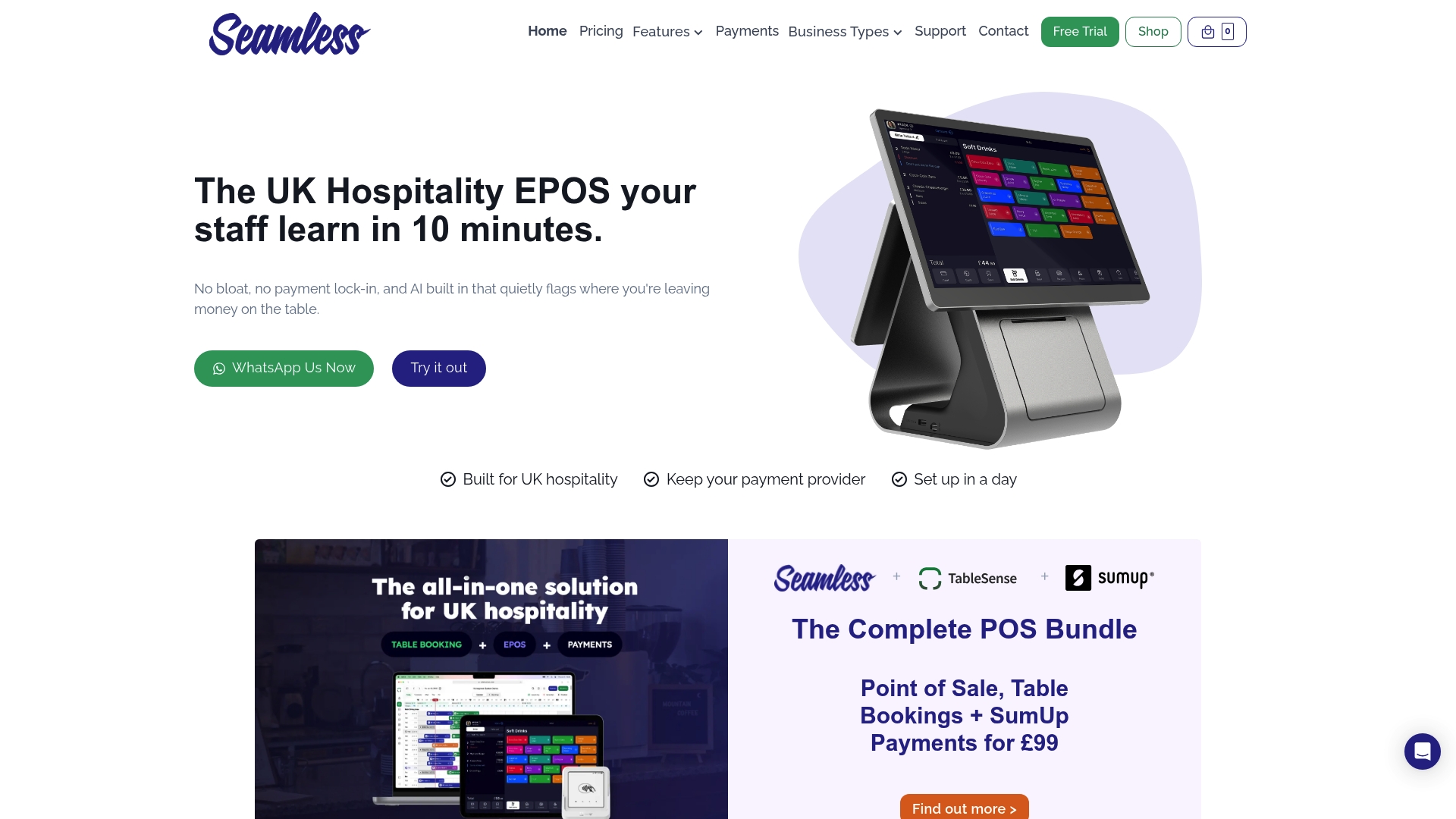
At a Glance
Plans start with a free tier and rise to paid packages from £14 to £39 per terminal each month, which makes the entry cost tangible for small venues and scalable for larger operators. The system pairs an iPad interface with AI sales analysis and offline operation for continuity.
Core Features
- iPad-based POS tailored for hospitality with order modifiers and quick item prompts for busy service.
- Pulse AI sales analysis that highlights trends and menu performance for data-driven decisions.
- Offline mode so tills continue working and orders queue when the connection drops.
- Table booking and floor planning that map to printers and prep stations.
- Delivery orchestration with optional connectors for popular services and cloud backoffice reporting.
Key Differentiator
Seamless POS is aimed squarely at UK hospitality venues and couples local market features with offline resilience and built in AI analysis. That mix means venues get tools for both front of house speed and back of house insight without stitching together multiple providers.
Pros
-
Offers an intuitive iPad layout that new staff learn quickly and that reduces training time on busy shifts.
-
Works while disconnected which prevents lost takings during temporary internet failures and keeps kitchen printers in sync when service resumes.
-
Pulse AI gives straightforward sales signals rather than raw dashboards so managers can act on menu changes and promotions faster.
-
No long term contracts and a free entry tier lower the barrier to trial for micro cafés and food trucks.
-
Feature set prioritises UK needs such as local payment providers and delivery options that match common British operators.
Cons
-
There are no visible third party reviews in the data, which makes it harder to judge real world reliability beyond vendor claims.
-
The pricing model includes multiple tiers and optional add ons which requires careful comparison to avoid surprise costs when enabling delivery or stock features.
-
Heavy tailoring to the UK market reduces suitability for venues that operate internationally or in mixed currency environments.
When It May Not Fit
If you run a multisite group with international venues or require enterprise grade integrations out of the box then this UK focused product may feel limiting. Likewise, teams that rely on public reviews to validate stability will want independent feedback before committing.
Who It’s For
Independent restaurants, cafés, pubs and food trucks in the UK that need a fast to learn EPOS with reliable offline behaviour and straightforward analytics. It suits operators who want local payments, delivery routing and a cloud backoffice without lengthy contracts.
Real World Use Case
A café in Edinburgh uses Seamless POS on two iPads, links printers to the right stations and adds delivery routing for evening orders. Staff errors drop and table turnover increases because orders reach the kitchen faster and managers act on the Pulse AI sales cues.
Pricing
Free plan available for very small sites. Paid tiers start at £14 per terminal per month and go to £39 per terminal per month. Optional add ons cover delivery integrations, stock management and other extras which alter monthly cost.
Website: https://seamlesspos.co.uk
pointOne POS
At a Glance
The vendor markets more than 20 years of sector experience and UK-based technicians available seven days a week, 365 days a year. That combination is positioned for venues that cannot tolerate downtime during performances or busy visitor hours.
pointOne POS recently merged with Kurve and focuses on theatre, arts, museum and hospitality sites. The product pitch centres on bespoke configurations, mobile order and pay, and self-service kiosk options tailored for cultural venues.
Core Features
- Interval & Pre-show Ordering to capture concessions and bar sales during short breaks.
- Mobile order and pay and cashless kiosk hardware for contactless visitor transactions.
- Ticketing connectors and reporting tools that surface sales and secondary spend trends.
- Roaming sales and digital tills for front-of-house staff and pop-up kiosks.
Key Differentiator
The main claim is long sector tenure paired with on-call UK support. For venue operators that run nightly performances and weekend events, that focus on cultural operations and local support is what pointOne stresses over general retail EPOS vendors.
Pros
- Twenty plus years of reported experience brings domain knowledge for theatre and museum workflows rather than generic retail setups.
- Customisable and feature-rich setups let you map interval sales and pre-show offers to performance schedules.
- UK-based support seven days a week provides a single contact point during peak operating times, which reduces call routing in incidents.
- Sector specialisation includes cashless kiosks and roaming sales technology useful for immersive or temporary exhibitions.
Cons
- There is limited third-party review data; the vendor’s claims are not widely validated in independent sources.
- The public material suggests a tilt towards larger venues, so small independent operators may find the deployment and cost structure heavy.
- No explicit weaknesses have surfaced from external reviews, which makes comparative purchasing harder for buyers seeking peer feedback.
When It May Not Fit
If you run a small café or a single-site pub with low transaction complexity, pointOne’s bespoke, venue-focused approach may be more feature than you need. Non-cultural retailers seeking a generic, low-cost EPOS will likely prefer simpler, off-the-shelf options.
Notable Integrations
- Spektrix
- LineUp
- VisitOne
- Rezlynx
- ResDiary
- Columbus
- Yoyo
- ReceiptHero
These connectors matter when you need ticket sales, CRM, or loyalty data to flow into tills and reports.
Who It’s For
Operators of theatres, museums and cultural venues that require EPOS functionality mapped to performance schedules and visitor flows. Also suitable for multi-site cultural organisations that want a supplier familiar with arts sector routines.
Real World Use Case
According to the vendor, Hull Theatres and Barbican utilise pointOne to handle ticket-linked sales and concessions. That example illustrates how interval ordering and roaming tills can lift secondary spend and reduce transaction queues during performance breaks.
Pricing
The vendor does not publish standard pricing. Pricing is handled on a bespoke basis, reflecting site size, hardware choice and integration scope rather than a simple per-terminal sticker.
Website: https://pointone-epos.co.uk
Comparative Analysis: Hospitality POS Systems
Selecting the right point-of-sale (POS) solution for your hospitality business necessitates evaluating key differences in features, adaptability, and support frameworks. Below, we analyse the prominent options to guide your decision-making process.
Feature Accessibility and Expandability
Ezeepos distinguishes itself by offering an all-encompassing feature suite under a single subscription without tier-based restrictions, which ensures full capabilities are available across all subscribers. In contrast, Syrve stands out with its advanced centralised control for managing multiple outlets, a notable benefit for multi-location operations. Comparatively, TISSL adopts a hardware-agnostic approach, making it suitable for operators looking to repurpose existing equipment.
Reliability and Support Mechanisms
Hospitality environments demand consistent performance. POS integrates offline functionality, ensuring uninterrupted transactions during connectivity disruptions, an asset for venues prioritising operational reliability. Meanwhile, pointOne POS excels in offering UK-based technical support accessible throughout the year, which is particularly advantageous for businesses reliant on real-time assistance during peak hours.
Best Fit Scenarios
- Ezeepos: For businesses seeking functionality paired with UK-based installation and consistent feature access in their POS solution.
- Syrve: Suitable for multi-site operations requiring extensive centralised management capabilities and flexibility in adapting to diverse service models.
- POS: for small to medium-sized venues prioritising offline transaction capability and straightforward pricing tiers.
- pointOne POS: A strong choice for cultural or performance venues with needs uniquely tied to event-driven and audience-focused sales workflows.
Our Pick
For operators prioritising extensive feature access coupled with localised installation and ongoing support within the UK, Ezeepos offers substantial value without hidden costs or feature omissions. However, those needing multi-site forecasting, as offered by Syrve, may find it better suited.
Hospitality POS Software Comparison
Choose the ideal point-of-sale software for your hospitality business by comparing their features, target users, pricing, and potential limitations.
| Product Name | Key Differentiator | Best For | Pricing | Notable Limitation |
|---|---|---|---|---|
| Ezeepos | All-in-one features with no tiered pricing; local installation and support | Restaurants, cafés, bars, and catering businesses in the UK | Not disclosed | Dependence on local support availability by region |
| Syrve | Robust multi-outlet control and deep customisation for large-scale chains | Mid-sized to large franchise restaurant operators | Starts at £49 per month | Reported system reliability issues |
| TISSL | Hardware-agnostic platform enabling device reuse | Multi-venue organisations and adaptable setups | Starts at £89 per month | Reports of instability and weak customer support |
| Seamless POS | Offline operation with easy AI sales analysis | UK-based cafés, food trucks, and pubs | Free plan, Paid from £14/month | Limited global suitability due to UK market focus |
| pointOne POS | Theatre and cultural venue specialisation | Theatres, museums, and cultural organisations | Not disclosed | Customisation complexity may exceed smaller venues’ needs |
Consider Ezeepos as a Strong Alternative to ezpermit.ca
Choosing the right POS solution can feel daunting when comparing ezpermit.ca alternatives. Many hospitality operators struggle with fragmented systems that complicate order management, inventory tracking and payments. Ezeepos offers a unified platform built for cafés, bars and restaurants requiring seamless control over sales, orders and staff without tiered pricing or surprise feature locks.
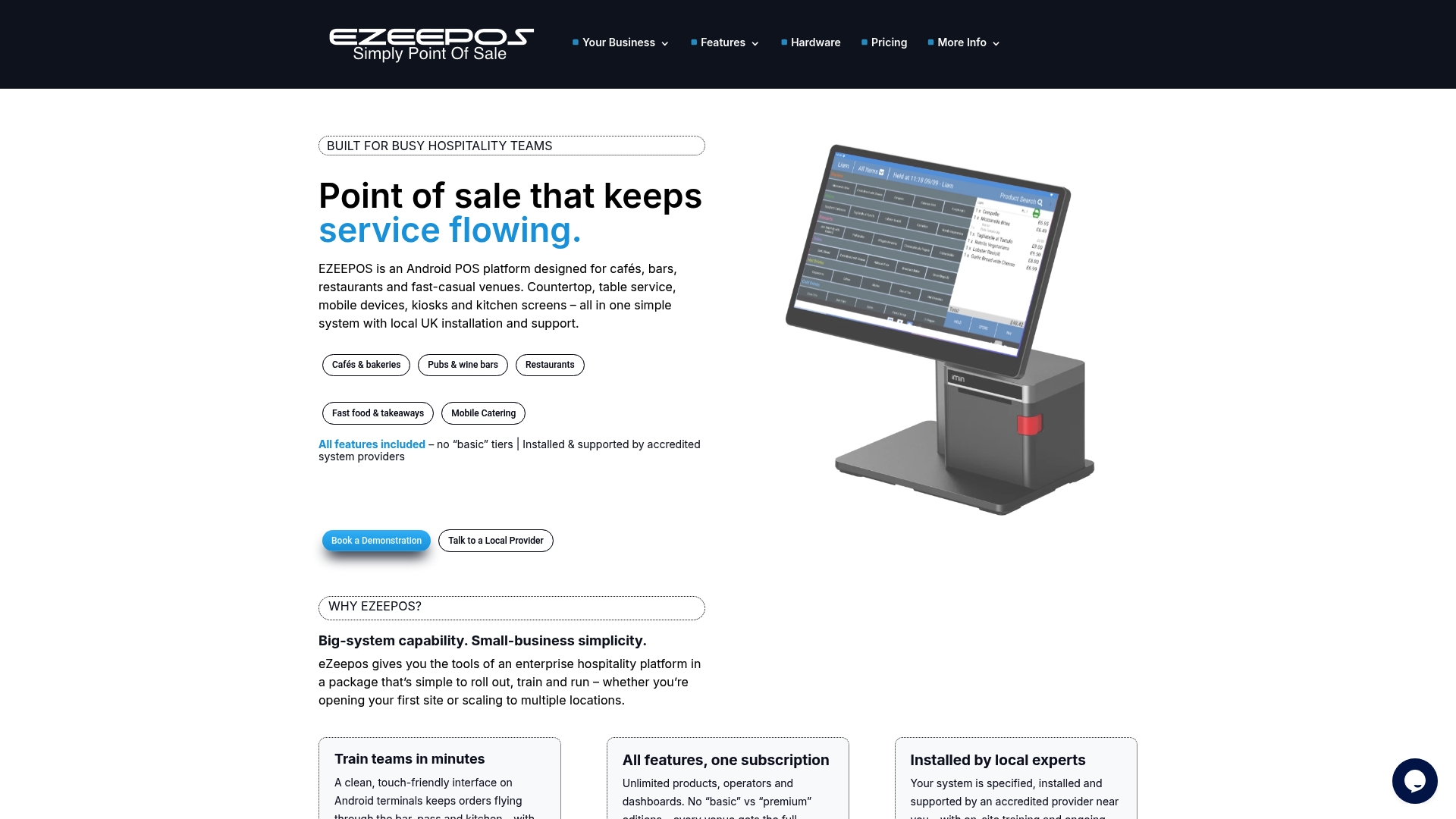
Discover how Ezeepos combines local UK installation and human support with flexible hardware options including tablets, kiosks and kitchen screens. Visit Ezeepos to explore how you can take charge of your hospitality venue’s full operations under one system. Book a demonstration today and experience easy team training plus cloud-backed reporting that empowers faster menu updates and real-time stock control.
Frequently Asked Questions
What features make Ezeepos a strong choice for hospitality businesses?
Ezeepos offers cloud-based management with real-time dashboards and integrated card payments tailored for hospitality. This allows managers to control inventory and monitor sales analytics from a single platform, which simplifies operations and enhances efficiency for venues. Businesses should consider Ezeepos for its all-in-one feature set that supports a variety of hospitality formats.
How does Ezeepos compare with Syrve for multi-location restaurant management?
Syrve excels in deep customisation and centralised control for multi-outlet operations, allowing for streamlined menu updates across locations. In contrast, Ezeepos offers straightforward management with no tiered editions or hidden features, making it suitable for those looking to simplify their system without the complexity of bespoke configurations. If ease of use with clear pricing is a priority, Ezeepos is a worthy alternative.
Which aspect of Ezeepos benefits café owners looking for onsite installation and training?
Ezeepos provides local installation and onsite training, facilitating a quicker learning curve for staff. This feature ensures that teams can efficiently use the system with minimal downtime during service, which is critical for busy cafés. Owners should expect a seamless transition as their staff become familiar with the system faster.
What is the pricing model for Ezeepos compared to other point-of-sale systems?
Ezeepos employs a customised pricing model based on chosen hardware and services, with no tiered pricing structure. This is advantageous as it removes surprise upgrade costs that other platforms might impose. Prospective users should inquire about specific pricing to understand how it can accommodate their operational needs effectively.
How does Ezeepos support businesses with integrated payment solutions?
Ezeepos integrates with major payment providers such as Teya Payments and Dojo, which helps streamline transaction processes. This integration can significantly reduce reconciliation work and enhance cash flow management, providing operators with faster payment settlements. Businesses aiming to simplify payment processing should find this feature appealing.
Recent Comments