

Top 3 denverresearch.com Alternatives 2026

Choosing a hospitality point of sale system that lets you manage tills, kiosks, kitchen displays and staff in one package without surprise billing makes day to day operations easier for cafés, pubs and multi site restaurants. Far too many vendors gate critical features behind bespoke quotes, add unpredictable licensing costs or depend on overseas support teams that cannot resolve deployment issues quickly. Price, device flexibility and support quality are compared across three POS platforms so you can match the system to your venue size and budget with fewer contract surprises.
Table of Contents
eZeepos POS System
At a Glance
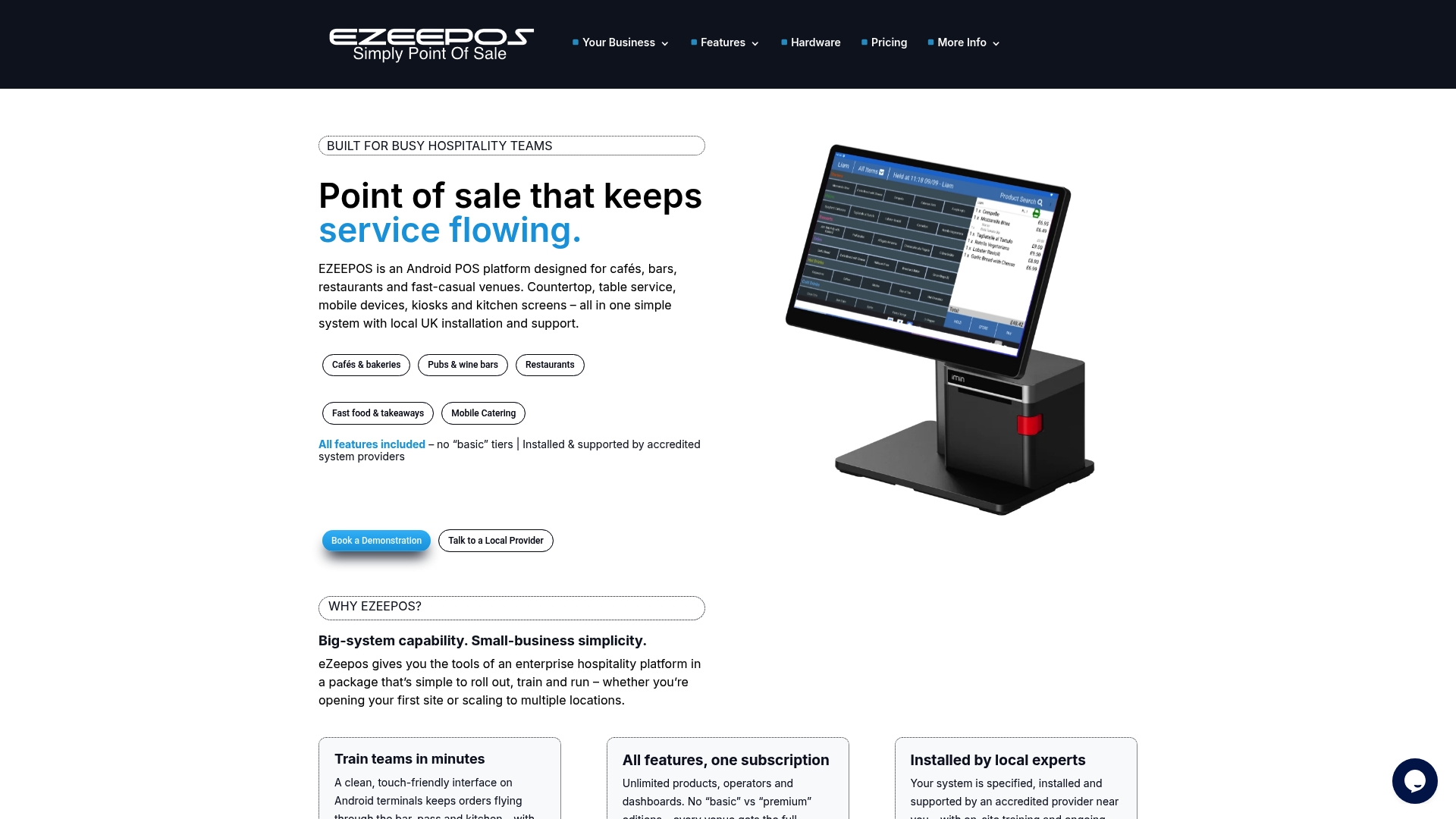
A single subscription includes every capability with no tiers and no operator limits from day one. That structure removes licence puzzles when you add kiosks, tablets or extra tills and keeps monthly admin simple for multi-site operators.
The platform is Android based and supported by local UK installers and accredited providers who offer on-site and remote help for rollouts and training.
Core Features
- Multiple hardware types: countertop terminals, mobile devices, self-service kiosks and kitchen screens for different service flows.
- Service modes: counter service, table ordering, mobile POS for catering, kiosks and kitchen order displays.
- Cloud back office: real time dashboards, sales reporting, inventory control, staff permissions and analytics.
- Product and operator limits: unlimited products and operators in one system without tiered restrictions.
- Promos, allergen management, price levels and multi-site control for group operations.
Key Differentiator
All features are delivered in one subscription with local UK installation and ongoing human support via accredited providers. That mix of an all-inclusive licence and local assistance reduces the number of third parties you must manage during deployment.
Pros
-
Keeps costs predictable because there are no feature tiers or per-operator licences. Managers can deploy extra tablets or kiosks without renegotiating contracts.
-
Adapts to many formats. Cafés, bars and fast food counters can share a single configuration that also supports mobile catering or a self-service kiosk.
-
Local support avoids overseas call centres. Accredited UK providers offer on-site installation and training which speeds initial uptime and reduces configuration errors.
-
Integrates with widely used card terminals so payments flow through Teya, Dojo, Sum-Up or eMerchantPay without complex middleware.
-
The cloud back office gives live sales and inventory figures that let you act during a busy service rather than after it finishes.
Cons
- Pricing is bespoke. Costs vary with hardware choices and local provider services which means you must request a tailored quote rather than selecting a fixed package.
Notable Integrations
- Teya Payments
- Dojo
- Sum-Up
- eMerchantPay
These tie directly to on-terminal card processing and reduce the work of pairing terminals with the POS.
Who It’s For
Hospitality owners and managers in the UK who run cafés, bars, restaurants, quick service outlets or mobile catering and want a single system that covers tills, kiosks and kitchen displays. Suitable for single sites and operators planning multi-site rollouts.
Unique Value Proposition
A single, unlimited subscription removes per-seat billing and feature gating, so adding staff or devices does not change your licence structure. For venues that expand tills or trial kiosks during peak season, that licensing model changes the operational decision you make.
Real World Use Case
A busy café runs two counters and a self-service kiosk. eZeepos synchronises sales and inventory, applies promotions at peak times and sends kitchen tickets to screens while payments clear through a Teya terminal, keeping queues moving during the morning rush.
Pricing
Pricing varies by hardware and the level of local support required. The vendor asks prospects to request a bespoke quote so your final cost reflects the terminals, tablets and on-site services you choose.
Website: https://ezeepos.co.uk
YUMA POS System
At a Glance
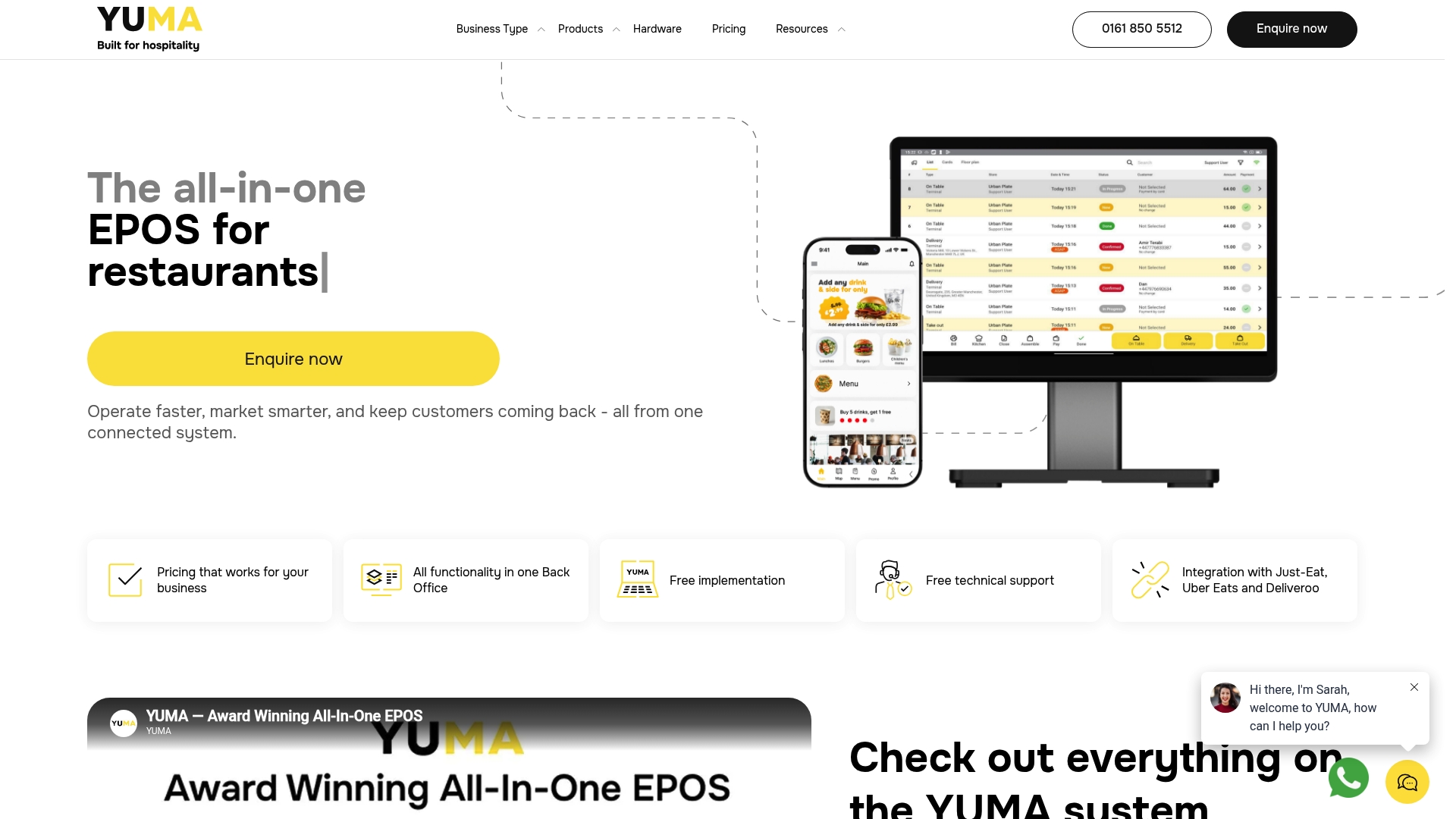
YUMA’s marketing materials state it supports over 10,000 locations globally and cites more than 16 years of hospitality experience. That reach and longevity explain why the vendor pitches a full stack for restaurants, cafés, takeaways and food trucks rather than a single till app.
The system bundles tills, kiosks, online ordering, kitchen displays and campaign tools into one package. Expect a single supplier relationship rather than stitching together separate providers.
Core Features
- POS terminals with customisable hardware options for counter, tablet and kiosk deployments.
- Back office management covering inventory, staff rotas and financial reporting.
- Online ordering and mobile apps for customers, drivers and front of house.
- Kitchen display systems and digital queues to manage real time order flow.
- Marketing, loyalty and analytics for repeat business and performance monitoring.
Key Differentiator
The vendor highlights both long sector experience and wide deployment as the product narrative. That combination positions YUMA as a hospitality-first stack where order capture, fulfilment and retention live under a single roof rather than being bolted together from separate vendors.
Pros
- Faster onboarding reported by users. The interface and setup are commonly described as user friendly, which reduces training time for casual staff.
- Responsive support and professional onboarding appear to shorten the time from purchase to live trading in many implementations.
- Single supplier for front of house, kiosks and kitchen screens means fewer integration points to manage when you run multiple service modes.
- Customisable solutions adapt to cafés, counter service and mobile catering, so you do not shoehorn your operation into a one‑size system.
- Built in marketing and loyalty tools let operators run promotions and reward repeat customers without a separate app.
Cons
- Some customers report slow response times and communication delays after initial onboarding.
- Reviews mention bugs or promised features that did not work reliably in certain deployments.
- Usability complaints and a clunky interface affect a subset of users, particularly in high volume settings.
- Several negative reports reference disputes over contracts or refunds, which raises procurement caution.
When It May Not Fit
If you need transparent, published pricing it may frustrate you. The public information is limited and pricing appears tied to hardware and support packages.
If you run very high throughput kitchens and demand flawless UI performance under sustained load, the reported usability issues above make testing in a pilot essential before committing nationally.
Notable Integrations
- Uber Eats
- Just‑Eat
- Deliveroo
Who It’s For
Restaurants, cafés, takeaways and food trucks that want an integrated vendor to handle POS, online ordering, kitchen routing and loyalty. Also useful for multi site operators who prefer a single contract for hardware and software.
Real World Use Case
A mid sized restaurant uses YUMA to unify counter sales, table orders and delivery. Orders from the online portal and third party platforms route to kitchen displays while the back office updates stock and staff hours automatically, reducing manual reconciliation at day end.
Pricing
The vendor does not publish standard pricing. Costs are typically bespoke, reflecting your chosen hardware, number of terminals and level of support or onboarding required. Request a quote for a tailored package.
Website: https://yumapos.co.uk
TISSL
At a Glance
Plans start from £89 for the Essentials tier and rise to £259 for Advanced, with extra costs for additional licences and features. The pricing band is the clearest starting fact; some customers nonetheless report opaque contract terms and surprise add-ons.
TISSL targets hospitality sites that need table coursing, seat-level orders and centralised control across venues in a cloud‑managed package.
Core Features
TISSL delivers real-time analytics and sales reporting, table and seat order management with coursing, and a cloud back office for multiple venues. Integrated payments are included and are powered by ClearAccept, and the system supports a choice of tablets and payment terminals.
The platform also includes age verification, order modification, custom menu setup and delivery management tools suitable for pubs, restaurants and hotels.
Key Differentiator
What sets TISSL apart is its hospitality focus: built-in coursing, waitlist handling and centralised control across several venues in a cloud model. That feature mix is aimed at businesses that organise service by course and require quick table changes without creating a maze of manual work.
Pros
-
Offers industry specific POS features that match restaurant workflows, so your front of house can take coursed meals, assign seats and manage coursing without heavy custom scripting.
-
Integrated payments reduce reconciliation steps by keeping transactions and orders in one place and support common terminal choices for UK venues.
-
Multi venue control makes it feasible to manage tills, menus and reporting centrally across multiple sites while pushing updates from the cloud.
-
Real-time analytics give immediate visibility into sales velocity and staff performance, useful during service peaks.
-
Flexible hardware support lets you choose tablets, countertop terminals or a mixed estate rather than buying vendor locked hardware.
Cons
-
Multiple user reviews cite software bugs and inconsistent behaviour that interrupt service during busy periods.
-
Customer support responsiveness is frequently criticised, with reports of slow or unhelpful responses when issues occur.
-
Pricing and contract terms are described by some customers as expensive or unclear, which can make total cost of ownership hard to forecast.
-
Trustpilot reviews indicate a low overall rating and only limited positive feedback, according to public review pages.
-
A number of users report occasional incorrect figures in reports, which undermines trust in analytics for stock control or accounting.
When It May Not Fit
If your venue cannot tolerate intermittent bugs during peak service, TISSL may feel risky. Likewise, if you need a supplier with a highly rated, fast support team, the reported responsiveness issues are a real consideration.
Also avoid TISSL if transparent, itemised pricing and simple contract terms are non negotiable for your procurement process.
Who It’s For
You should consider TISSL if you run restaurants, pubs or hotels that require table coursing, seat-level control and the ability to manage several sites from a single cloud console. It suits operators who prioritise hospitality‑specific features over a generic till.
Real World Use Case
A busy pub uses TISSL to handle orders across bar, dining room and private hire areas. Orders are sent by seat and course, payments clear through the integrated processor and managers view live sales across venues to reallocate staff between service areas.
That setup reduces order errors and shortens turnaround when it behaves as expected.
Pricing
Vendor pricing starts at £89 per month for the Essentials plan and goes up to £259 for Advanced. Expect additional charges for extra licences, add‑on features and some payment processing arrangements, which customers report can affect the final monthly figure.
Website: https://tissl.co.uk
Comparative Analysis of Hospitality POS Systems
In the competitive field of hospitality management software, several POS solutions offer unique features tailored to different operational needs. This section compares three notable systems: eZeepos, YUMA, and TISSL, providing insights to help decision-makers identify the most suitable option for their requirements.
Feature Range and Scalability
eZeepos caters to a diverse range of hospitality formats, such as cafes, restaurants, and mobile catering, by offering extensive device compatibility—including kiosks, terminals, and mobile tablets—without limit on users or features within its subscription. YUMA similarly proposes flexible deployments; however, it tends to focus on maintaining single-supplier solutions, which streamline system complexity but can make modifications less flexible. TISSL differentiates itself by excelling in high-level features like table-specific management and multi-venue operations, valuable for establishments running multiple locations or sophisticated dining environments.
Support and Usability
A major strength for eZeepos is its reliance on local UK providers for on-site setup, ensuring smooth implementation and solid ongoing support. Conversely, YUMA is often praised for its user-friendly onboarding process, which accelerates staff training, though long-term access to responsive support has been flagged as inconsistent. TISSL, while providing adaptable hardware support, has faced some criticism regarding customer service responsiveness and recurrent software performance issues—both of which may impact operation during peak times.
Best Fit
- Select eZeepos if you value localised UK-based support combined with scalable deployment options and predictable licensing costs, especially for dynamic applications like kiosks and catering.
- Choose YUMA if a single contract handling both online ordering and in-house hospitality tools simplifies your management processes.
- Opt for TISSL when your venue focuses on elaborate dining services requiring table coursing and centralised multi-venue oversight across cloud-based interfaces.
Our Pick
Due to its unified pricing model, diverse deployment scenarios, and reliable local support network ensuring adaptation for UK hospitality settings, eZeepos stands out in this comparison. However, if centralised management of multiple venues or a simplified single-vendor ecosystem is your core requirement, exploring TISSL or YUMA is prudent.
Hospitality Point of Sale Software Comparison
Choosing the ideal point of sale system involves evaluating features, support, and pricing structures tailored to hospitality operations.
| Product | Key Differentiator | Best For | Pricing | Notable Limitation |
|---|---|---|---|---|
| eZeepos | All-inclusive subscription with UK local support | Multi-site and dynamic format operations | Not disclosed | Requires a tailored price quote |
| YUMA POS System | Integrated vendor for POS and online ordering | Restaurants and food trucks | Not disclosed | Reports of usability issues in high-throughput settings |
| TISSL | Table and seat-level control with coursing order management | Restaurants, pubs, and hotels | £89–£259/month plus add-ons | User feedback notes unreliable software performance |
Discover Reliable Alternatives to Denverresearch.com with Ezeepos
If you are exploring denverresearch.com alternatives for your hospitality business you may have found challenges such as complicated licensing tiers and limited local support. Ezeepos offers a straightforward Android-based POS platform designed to remove those barriers by providing a single subscription with unlimited operators and no feature restrictions. Its cloud back office and hardware versatility ensure your café, bar or restaurant runs smoothly with real-time sales and inventory control.
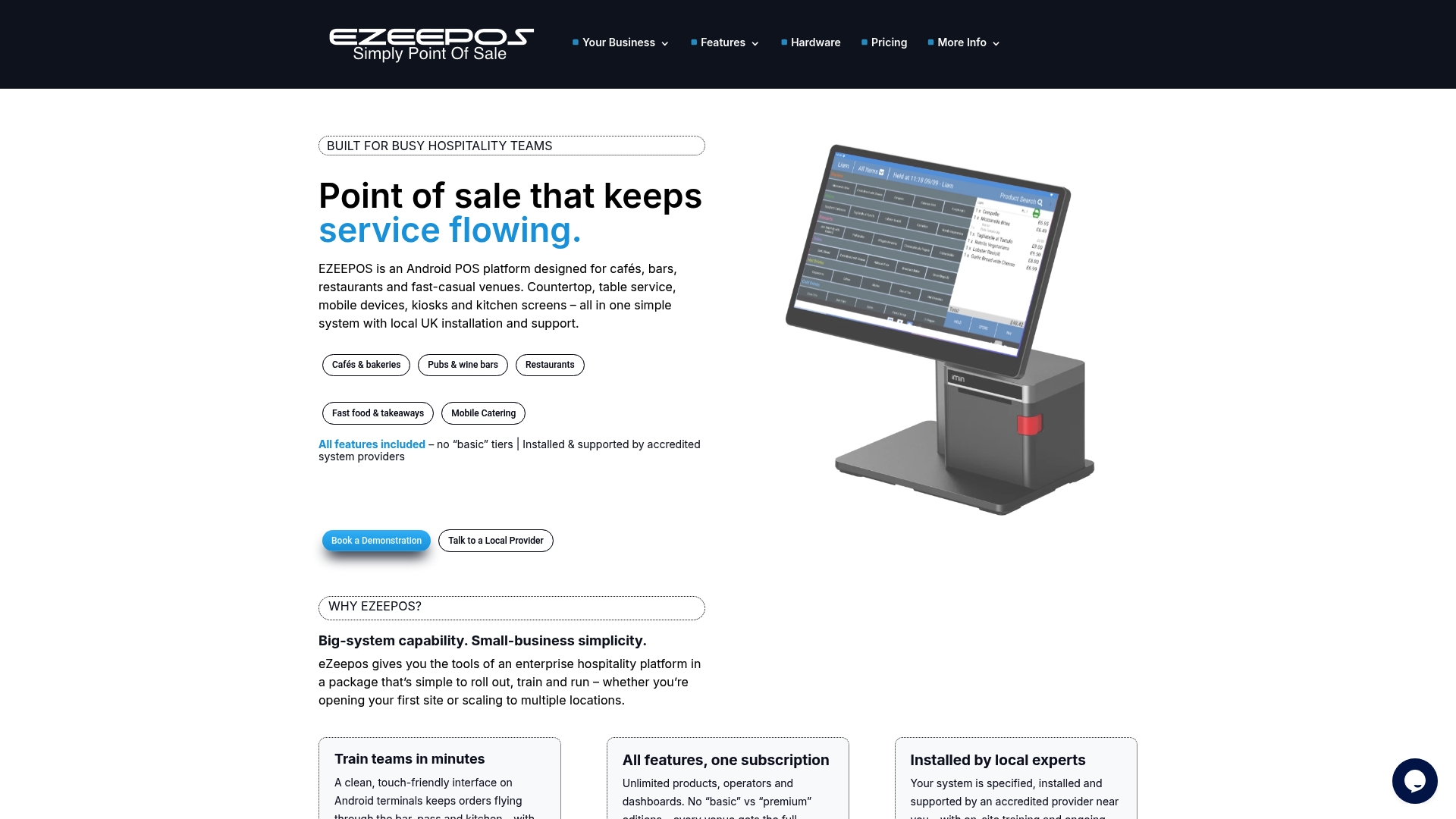
Experience local UK installation backed by expert help and integrate payments effortlessly with trusted providers. Visit Ezeepos to learn how you can simplify your point of sale and add devices without surprise costs. Request a tailored quote and get started with a system that keeps your service flowing during the busiest times.
Frequently Asked Questions
How does Ezeepos manage multiple hardware types for hospitality?
Ezeepos supports various hardware formats, including countertop terminals, mobile devices, self-service kiosks, and kitchen screens. This flexibility allows businesses to operate effectively and caters to different service flows, making it ideal for diverse hospitality settings. Consider using Ezeepos if you need an adaptable POS solution that fits multiple operational needs.
What is the difference between Ezeepos and YUMA for onboarding?
YUMA is known for faster onboarding due to its user-friendly interface, which helps reduce training time for staff. In contrast, Ezeepos provides unlimited products and operators without tiered restrictions, making it advantageous for businesses that plan to expand. If you value rapid setup over unlimited capacity, YUMA might serve you well, but for long-term growth, consider Ezeepos’s structure.
Can I use Ezeepos for multi-site operations?
Ezeepos is designed for multi-site management, permitting unlimited product and operator access within a single subscription. This feature simplifies administration for hospitality businesses operating at multiple locations, making it easier to manage everything from inventory to staff permissions. If multi-site control is a priority, Ezeepos provides an effective solution to help streamline operations.
Does Ezeepos integrate with common payment processors?
Ezeepos integrates with widely used card terminals like Teya, Dojo, Sum-Up, and eMerchantPay, simplifying the payment process for users. This means you can manage payments directly through the POS without needing additional middleware, streamlining your operations. Knowing your payment options are compatible can significantly ease financial transactions in busy settings.
How does Ezeepos ensure ongoing support for hospitality businesses?
Ezeepos offers local UK installation and ongoing support from accredited providers, ensuring that users receive timely assistance and training. This local support can help reduce configuration errors and speeds up the initial setup process, which is critical for operational efficiency. If you seek a POS solution that prioritises dependable customer service, Ezeepos’s approach may meet your expectations.
Recent Comments