

Long queues and order mix-ups can quickly sour the dining experience for both customers and staff in busy UK restaurants and cafés. As expectations for speed and accuracy continue to rise, many hospitality owners are turning to self-service kiosks to offer customers greater control while minimising errors and wait times. This article explores how these interactive digital platforms transform daily operations, increase service efficiency, and enhance guest satisfaction in the competitive world of British hospitality.
Table of Contents
- Defining Self-Service Kiosks For Hospitality
- Key Types And Technology Variations
- How Self-Service Kiosks Operate
- Benefits For Restaurants And Cafés
- Costs, Challenges And Legal Requirements
- Comparing Kiosks To Traditional Service Methods
Key Takeaways
| Point | Details |
|---|---|
| Efficiency | Self-service kiosks streamline operations by reducing queue times and allowing customers to complete transactions independently. |
| Revenue Boost | Kiosks can enhance sales through automated upselling, improving customer satisfaction and order accuracy. |
| Accessibility Compliance | Upcoming legal requirements necessitate the incorporation of accessibility features in kiosk design to avoid penalties. |
| Hybrid Implementation | Combining kiosks with human staff creates a balanced service model, improving efficiency while maintaining personal customer interaction. |
Defining self-service kiosks for hospitality
Self-service kiosks are interactive digital platforms designed to enable customers to independently complete service transactions without direct staff intervention. In the hospitality sector, these technological interfaces provide efficient alternatives to traditional service methods, allowing guests to manage various tasks quickly and autonomously.
Within UK restaurants and cafés, these kiosks typically offer functions like menu browsing, order placement, payment processing, and customisation options. Self-service technologies in hospitality represent a growing trend where businesses streamline operations while providing customers greater control over their dining experience. Modern kiosks are sophisticated touchscreen systems integrated with point-of-sale software, capable of handling complex ordering processes with remarkable speed and accuracy.
The primary components of a hospitality self-service kiosk include a robust touchscreen interface, secure payment terminal, menu management system, and connectivity to kitchen order platforms. These systems are designed to reduce queue times, minimise human error, and provide a consistent customer interaction experience across different service points. By offering multilingual options and intuitive user interfaces, self-service kiosks can accommodate diverse customer preferences and improve overall service accessibility.
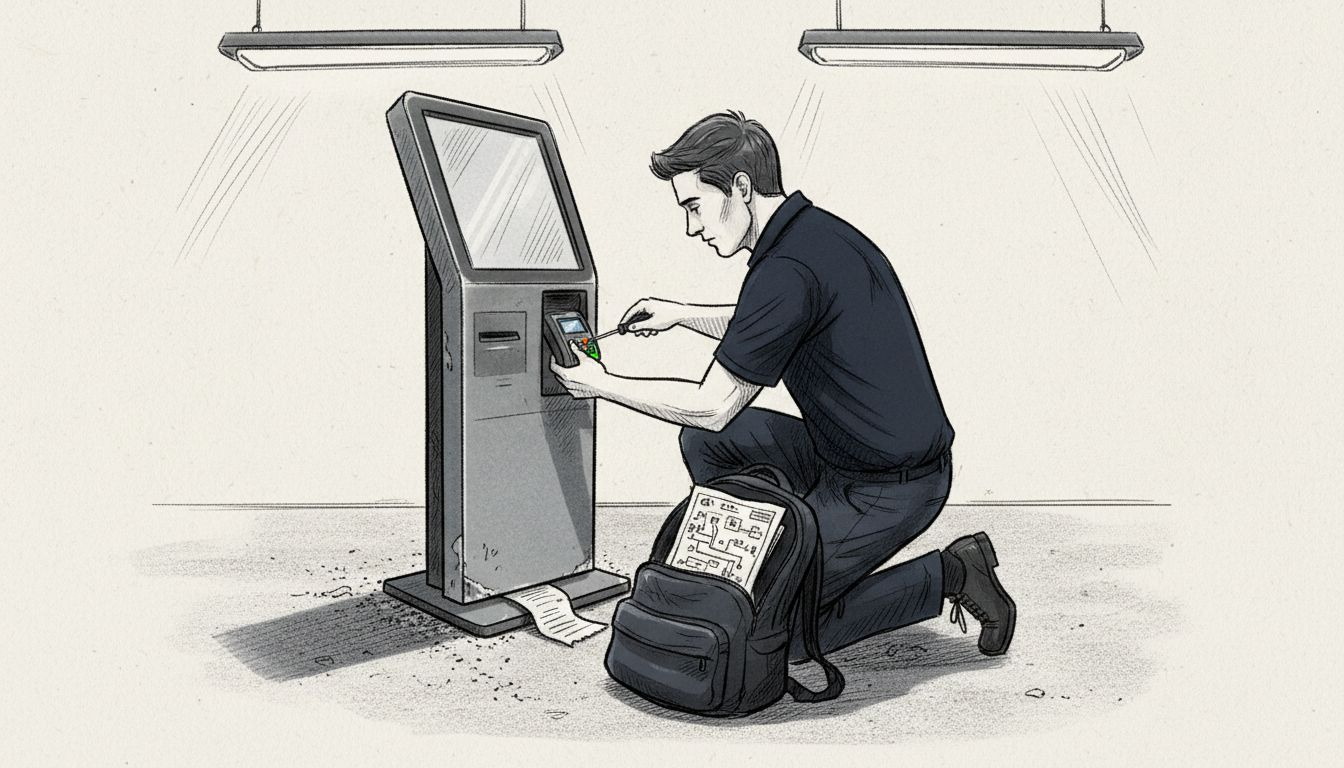
Pro tip: When implementing a self-service kiosk, prioritise user experience by ensuring clear navigation, large readable text, and an intuitive design that guides customers seamlessly through their ordering process.
Key types and technology variations
Self-service kiosks encompass several distinct technological variations designed to meet specific hospitality and customer service requirements. Self-service kiosk technology includes multiple categories tailored to different operational needs, with each type offering unique functionalities and interaction models.
The primary categories of self-service kiosks in the hospitality sector include self-order kiosks, check-in kiosks, and self-checkout platforms. Self-order kiosks are predominantly used in restaurants and fast-food establishments, allowing customers to browse menus, customise orders, and complete transactions independently. Check-in kiosks facilitate guest registration in hotels and similar venues, streamlining the arrival process by enabling quick, automated registration without queuing. Self-checkout platforms, while more common in retail environments, are increasingly being adapted for hospitality settings to provide rapid, staff-independent transaction experiences.
Technologically, these kiosks integrate sophisticated hardware and software components to create seamless user experiences. Different kiosk technologies typically incorporate touchscreens, secure payment terminals, barcode scanners, and near-field communication (NFC) payment systems. Advanced models include multilingual interfaces, accessibility features, and robust backend integrations with inventory and point-of-sale systems, ensuring real-time data synchronisation and operational efficiency.
Pro tip: When selecting a self-service kiosk system, prioritise platforms with flexible integration capabilities and intuitive user interfaces to ensure smooth adoption by both staff and customers.
How self-service kiosks operate
Self-service kiosks function as sophisticated digital platforms that enable customers to complete transactions independently through intuitive technological interfaces. UK hospitality kiosk solutions leverage advanced touchscreen technologies that guide users through seamless interaction processes, transforming traditional customer service models.
The operational mechanism of these kiosks involves multiple interconnected technological components working in synchronisation. When a customer approaches the kiosk, they are greeted by a user-friendly touchscreen interface presenting clear navigation options. The system processes user inputs in real-time, connecting directly with backend point-of-sale (POS) systems to validate transactions, update inventory, and generate instant order confirmations. These digital platforms incorporate secure payment gateways, enabling customers to complete transactions using various payment methods including contactless cards, mobile payments, and digital wallets.
At the core of kiosk functionality is a complex software architecture designed to streamline customer interactions while maintaining operational efficiency. The systems integrate multiple features such as menu customisation, real-time pricing updates, promotional display capabilities, and personalised recommendation algorithms. Advanced kiosks can also collect valuable customer interaction data, providing businesses with insights into ordering patterns, peak transaction times, and customer preferences, which can be leveraged for strategic decision-making and targeted marketing initiatives.
Pro tip: Regularly update your kiosk’s user interface and ensure consistent software maintenance to provide a smooth, responsive customer experience that encourages repeated usage.
Benefits for restaurants and cafés
Self-service kiosks present a transformative solution for restaurants and cafés seeking to optimise their operational efficiency and customer experience. Benefits for restaurant technology demonstrate significant advantages in streamlining service delivery and enhancing overall business performance.
One of the most compelling benefits is the potential for increased sales through intelligent upselling mechanisms. Unlike human staff who might occasionally forget to suggest additional items, kiosks can be programmed to consistently recommend complementary products, side dishes, or upgrades based on customer selections. This automated approach not only boosts revenue but also provides customers with personalised dining suggestions that enhance their overall ordering experience. The kiosks eliminate human error in order taking, allowing customers to input their precise preferences directly, which dramatically reduces misunderstandings and incorrect food preparation.
Operational efficiency represents another critical advantage for hospitality venues. Self-service kiosks significantly reduce queuing times, enabling faster service during peak hours and minimising customer frustration. By redistributing staff resources, restaurants can reallocate employees from manual order-taking to more value-added tasks such as food preparation, customer interaction, and table service. The technology also provides valuable data insights, capturing detailed information about ordering patterns, popular menu items, and customer preferences, which can inform strategic business decisions around menu design, pricing, and marketing strategies.
Pro tip: Implement a gradual kiosk integration strategy, training staff to positively encourage customer usage and providing clear, welcoming guidance to help customers feel comfortable with the new technology.
Costs, challenges and legal requirements
Implementing self-service kiosks involves navigating a complex landscape of technological investment, operational challenges, and emerging legal requirements. Technological adoption challenges reveal that businesses must carefully consider multiple factors beyond initial hardware costs.
The financial investment for self-service kiosks varies significantly, with initial hardware and software implementation ranging from £3,000 to £15,000 per unit, depending on complexity and features. Beyond direct costs, businesses must factor in staff training, ongoing maintenance, and potential software updates. Technology anxiety represents a critical challenge, with both staff and customers potentially resistant to new interaction models. Some employees may perceive kiosks as threats to job security, while older customers might find digital interfaces intimidating, necessitating comprehensive change management strategies.
European Accessibility Act requirements mandate critical legal considerations for kiosk deployment. From June 2025, businesses must ensure kiosks are fully accessible, incorporating features like screen reader compatibility, high-contrast displays, tactile input options, and inclusive payment interfaces. Non-compliance can result in significant legal penalties, making accessibility a fundamental design requirement rather than an optional enhancement. This legislation demands that hospitality venues design kiosks to accommodate diverse user needs, including individuals with visual, auditory, and motor impairments.
Below is an overview of major cost and legal factors impacting kiosk implementation:
| Factor | Description | Impact on Hospitality Businesses |
|---|---|---|
| Initial Investment | £3,000–£15,000 per unit | Significant budget planning required |
| Ongoing Maintenance | Software updates, hardware servicing | Ensures operational reliability |
| Staff Training | Familiarisation with kiosk interfaces | Smooth adoption, reduced resistance |
| Accessibility Laws | Mandatory features from June 2025 | Avoids penalties, promotes inclusivity |
| Change Management | Handling technology anxiety | Supports staff and customer acceptance |
Pro tip: Conduct thorough user testing with diverse demographic groups to identify potential accessibility barriers and design solutions before final kiosk implementation.
Comparing kiosks to traditional service methods
The emergence of self-service kiosks represents a significant shift from traditional hospitality service models, introducing a nuanced approach to customer interaction that complements rather than entirely replaces human service. Hospitality service transformation demonstrates that digital technologies can enhance, not diminish, the overall customer experience.
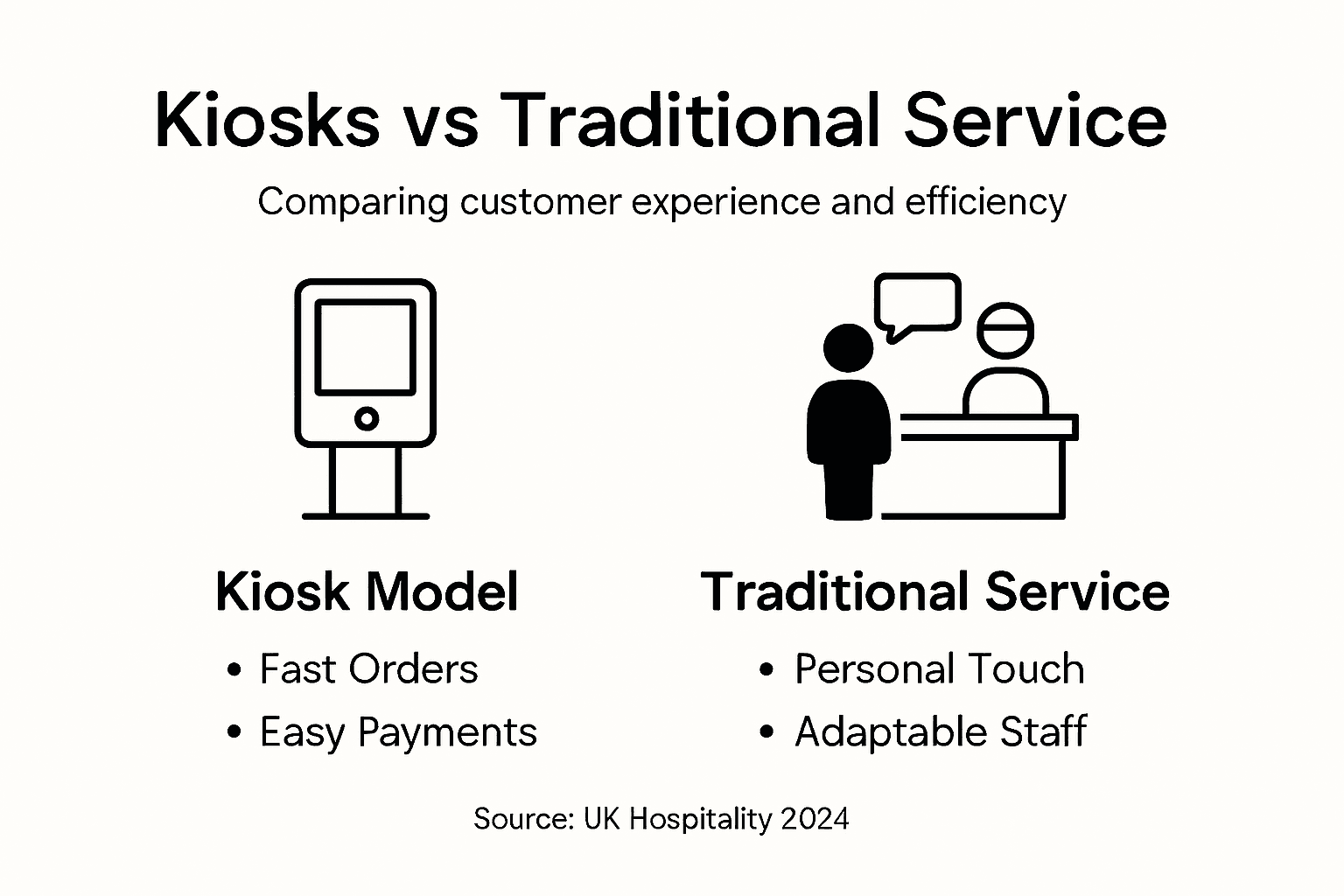
Traditional service methods rely exclusively on human staff for order taking, payment processing, and customer interactions. In contrast, self-service kiosks offer a streamlined, technology-driven alternative that provides customers with greater control and efficiency. Where traditional methods might involve waiting in queues, potential miscommunication, and variable staff performance, kiosks deliver consistent, accurate service with reduced human error. Customers can take their time exploring menu options, customise orders precisely, and complete transactions at their own pace without feeling rushed or pressured.
The most effective hospitality strategies now embrace a hybrid model that combines technological efficiency with human warmth. Kiosks handle transactional elements like order placement and payment, freeing staff to focus on more nuanced aspects of customer service such as personalised recommendations, resolving complex queries, and creating memorable dining experiences. This approach addresses potential concerns about technology depersonalising service by repositioning human staff as customer experience specialists rather than transaction processors. The result is a more dynamic, responsive service environment that leverages the strengths of both digital and human interactions.
Here’s a summary contrasting self-service kiosks and traditional service methods in UK hospitality venues:
| Aspect | Self-Service Kiosks | Traditional Service Methods | Hybrid Model Benefit |
|---|---|---|---|
| Speed of Service | Reduces waiting times | Queues can be lengthy | Faster transactions, improved flow |
| Personalisation | Menu customisation available | Depends on staff attention | Personalisation plus expert support |
| Error Reduction | Minimises human mistakes | Prone to miscommunication | Accurate orders, less confusion |
| Staff Allocation | Frees staff for key tasks | Staff handle all transactions | Staff focus on customer experience |
Pro tip: Implement kiosks as complementary tools alongside trained staff, ensuring a seamless blend of technological efficiency and personal customer care.
Transform Your Hospitality Service with Advanced Self-Service Kiosks
The move towards self-service kiosks in UK hospitality brings exciting opportunities alongside real challenges such as seamless integration, accessibility compliance, and user-friendly operation. EZEEPos understands these vital needs and offers a specialised Android-based POS system designed specifically to empower venues like cafés and restaurants with efficient self-service kiosks. Our platform supports intuitive order management, fast payment processing with reliable EFT terminals, and easy-to-use interfaces that reduce queues and boost customer satisfaction.
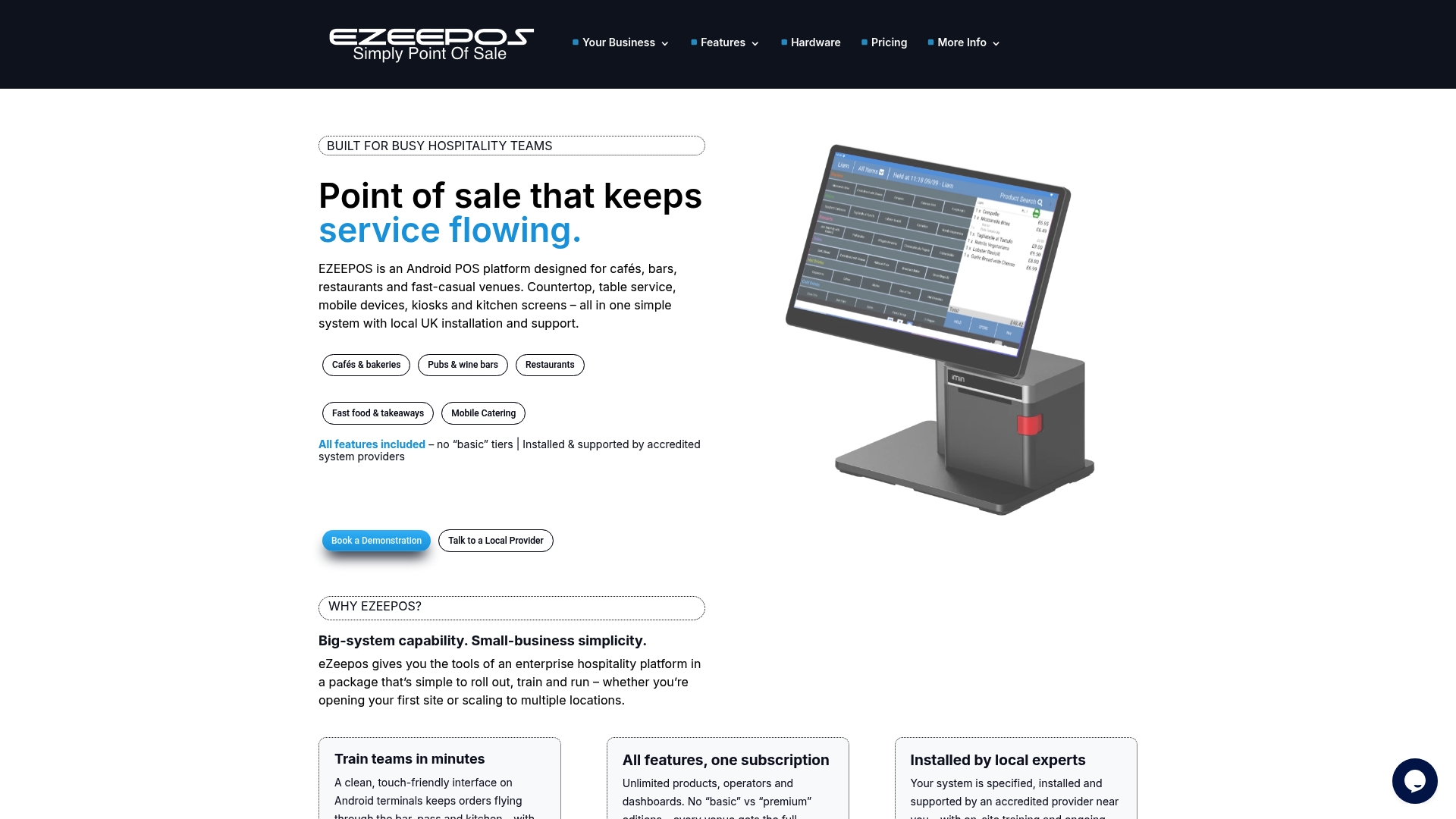
Discover how adding cutting-edge kiosk technology can transform your service experience today. Explore our Add On Modules to enhance your system with features tailored to your unique hospitality demands. Visit EZEEPos now for seamless adoption and ongoing local support that keeps your business ahead in the evolving hospitality landscape.
Frequently Asked Questions
What is a self-service kiosk?
Self-service kiosks are interactive digital platforms that allow customers to independently complete service transactions without direct staff intervention, offering various functionalities such as menu browsing, order placement, and payment processing.
How do self-service kiosks operate in hospitality settings?
Self-service kiosks use a user-friendly touchscreen interface that guides customers through managing their orders. They connect seamlessly with backend point-of-sale systems to validate transactions and provide instant order confirmations.
What are the benefits of using self-service kiosks for restaurants and cafés?
Self-service kiosks can increase sales through upselling, reduce queuing times, and eliminate human error in order taking. They also provide valuable insights into customer preferences and ordering patterns, enhancing overall operational efficiency.
What challenges should businesses consider when implementing self-service kiosks?
Businesses should account for the initial financial investment, need for staff training, and compliance with accessibility laws. Additionally, they must address potential customer resistance to new technology and ensure regular maintenance for optimal performance.
Recent Comments