
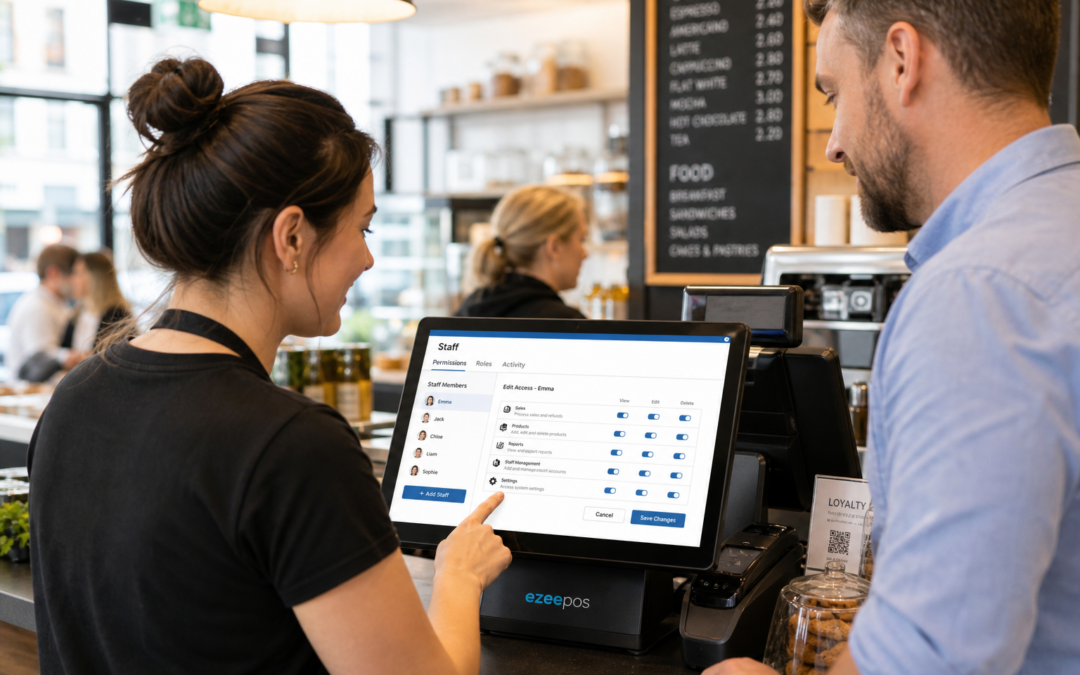
When a till is busy, it is not just speed that matters. It is also who can do what, when they can do it and how easily managers can keep control of the day. That is where staff permissions become a very practical part of a modern EPOS setup.
For many independent retailers, cafes, takeaways and hospitality businesses, permissions are not about creating barriers. They are about giving the right people the right access, so daily trading stays smooth, accurate and easier to manage. If you are looking at a flexible UK EPOS option, eZeePOS is designed to help businesses stay organised without making the till complicated.
What staff permissions do in an EPOS system
Staff permissions let you control which users can access different parts of the till. In simple terms, a team member might be able to take orders and process payments, while a supervisor has access to refunds, discounts, reports or user settings.
That level of control is useful because not every task should sit with every member of staff. In a busy business, clear permissions can help reduce mistakes, prevent pointless delays and make it easier to understand what happened during a shift.
Common areas that permissions can cover
- Refund approvals
- Discounts and manual price changes
- Void and delete actions
- Report access
- Stock and product settings
- User account changes
- End-of-day functions
These controls may sound small, but they can have a real impact on day-to-day trading. A well set up till system makes it easier for staff to do their jobs confidently, while managers keep oversight where it matters.
Why permissions matter for independent businesses
Independent retailers and hospitality businesses often rely on a small team covering long hours, busy peaks and a wide range of tasks. In that environment, staff permissions can help you avoid confusion and keep decisions consistent across the business.
For example, a shop assistant may need to serve customers quickly without having access to pricing changes. In a cafe or takeaway, front-of-house staff may need to take orders and payments, while a manager handles refunds or special adjustments. When everyone has a clear role at the till, service tends to feel calmer and more reliable.
Reducing mistakes at the counter
One of the biggest benefits of permissions is simple error reduction. If every staff member can override prices, issue refunds or delete items freely, small mistakes can add up quickly. A careful permission structure can help limit those risks.
That does not mean staff should feel restricted. It means the business can set sensible controls around actions that affect revenue, reporting and customer records. In practice, this can make training easier too, because new staff do not have to learn every function at once.
How permissions support better control and accountability
Permissions also make it easier to see who did what. If a refund was processed, a discount was applied or an item was voided, the till history can help managers review it later. That accountability is useful for both day-to-day supervision and stronger business control.
For larger teams or multi-shift businesses, that visibility can prevent a lot of awkward guesswork. Instead of wondering how a transaction changed, managers can check the record and understand what happened. This is particularly helpful in retail and hospitality settings where multiple people may share the same counter during a busy day.
Useful for training new staff
Permissions can also help when onboarding new team members. A new starter does not need full access on day one. Instead, you can give them the core functions they need and expand access when they are ready.
That approach can build confidence without overwhelming people. It also gives managers a chance to introduce the system in stages, which can lead to fewer errors and a smoother learning curve. For businesses using a modern touchscreen till or Android-based setup, this can make the system feel much more approachable for new team members.
Where permissions are especially useful
Most businesses can benefit from permissions, but they are especially helpful in settings where several roles share the same EPOS system.
Retail shops
In convenience stores, gift shops, fashion shops and other retail environments, permissions help protect pricing consistency and reduce unnecessary overrides. Staff can focus on serving customers while managers retain control over exceptions.
Cafes, restaurants and takeaways
Hospitality businesses often need quick service and clear control at the same time. Permissions can help ensure that only the right people can approve voids, apply discounts or adjust bills, especially during busy periods.
Multi-site or growing businesses
As businesses grow, permissions become even more valuable. They can help keep procedures consistent between sites, team members and shifts. Combined with good reporting, they give owners a clearer view of daily trading across the business.
Staff permissions and day-to-day peace of mind
One of the less obvious benefits of permissions is peace of mind. Owners and managers do not need to worry that every team member has the same level of access. At the same time, staff can focus on service instead of second-guessing whether they are allowed to use a particular function.
This balance matters. A good EPOS system should make service easier, not create extra admin. When permissions are set properly, the till can support the business quietly in the background, rather than becoming another source of stress.
Choosing an EPOS setup that fits your operation
Not every business needs the same level of control, which is why it helps to choose a system that can be configured around how your team actually works. A small shop may only need a few simple user levels. A busy hospitality site may want more detailed access controls for managers, supervisors and service staff.
If you are comparing EPOS options, think about the practical questions first. Who needs refund access? Who should be able to change prices? Who can view reports? Who should approve discounts? The answers to those questions will help shape a system that works for your team rather than against it.
That is where a practical UK EPOS provider like eZeePOS can be useful. It gives independent businesses a straightforward way to think about setup, team access and daily trading without overcomplicating the till.
Final thoughts
Staff permissions may not be the most visible part of an EPOS system, but they are one of the most useful. They help businesses reduce avoidable mistakes, keep control over sensitive actions and support a smoother routine for both staff and managers.
If your current till setup feels too open, too rigid or too hard to manage, it may be time to look at a system that gives you better control without slowing service down.
Contact YCR Distribution at sales@ezeepos.co.uk or call 01924 438238.
To learn more about practical EPOS options for UK retail and hospitality businesses, visit www.ezeepos.co.uk.
Recent Comments