
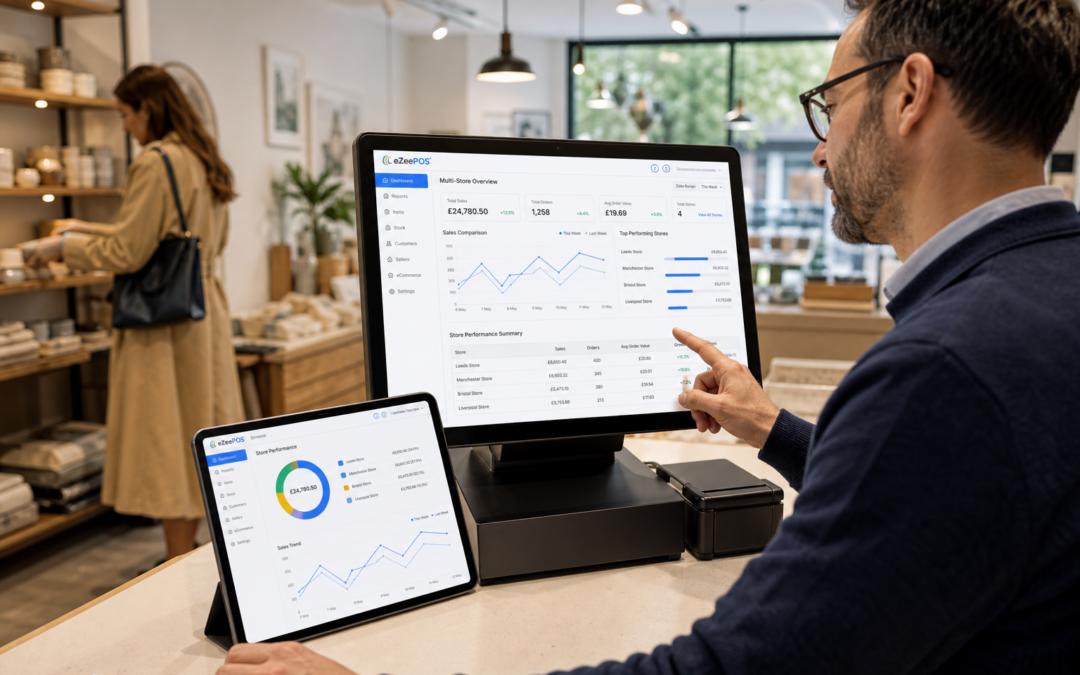
For retailers opening a second shop, taking on a concessions space or running several branches, the day-to-day challenge changes quickly. It is no longer just about knowing what sold today. It becomes about understanding which location is performing well, where staff may need support and how to keep standards consistent across the business.
That is where eZeePOS can help. If you are looking for practical, UK-focused ePOS software, multi-site reporting gives you a clearer view of each branch without forcing you to piece together numbers from separate systems or manual spreadsheets.
Why multi-site reporting matters once you grow
A single shop can often be managed from the till, a cash-up sheet and a quick look at the day’s takings. Once you have more than one location, that approach starts to break down. You need a way to compare performance across sites while still keeping enough detail to understand what is happening in each branch.
Multi-site reporting brings that information together in one place. Instead of checking each branch separately, business owners and managers can review sales by location, see which products are performing well and identify where trading patterns are different.
For independent retailers, this can be especially useful because no two sites are always the same. A town-centre shop, for example, may trade differently from a suburban branch. Seasonal footfall, local events and customer profiles can all affect results, so getting a clearer picture helps with planning.
What you can learn from multi-site reports
Good reporting should do more than show a total figure for the day. It should help you understand the story behind the numbers. In a multi-site retail setup, that may include:
- Which branch is generating the strongest sales
- Which products or departments perform better in each location
- How busy periods differ between stores
- Whether average basket values vary by branch
- How staff performance compares across locations
- Where promotions are working best
That kind of information can help you make practical decisions. You may notice that one store does particularly well with a certain product range, or that another branch needs a different staffing pattern at weekends. Without shared reporting, those differences are harder to spot.
Comparing branches without extra admin
One of the main benefits of multi-site reporting is that it reduces the need to collect and compare data by hand. Rather than asking managers to send over figures in different formats, you can review the same type of report across all locations.
That makes it easier to keep track of branch performance, especially if you are managing the business from a central office or splitting your time between sites. It also helps if you need to discuss performance with supervisors, as everyone can work from the same information.
Using reports to support stock, staffing and promotions
Although this article is not about stock control alone, reporting can still support wider business decisions. If a particular site sells more of a certain product line, you can plan purchases more confidently. If another branch is busier on specific days, you can adjust staffing accordingly. If a promotion works well in one area but not another, you can tailor future offers rather than using the same approach everywhere.
That makes reporting a practical tool rather than just a record of what has already happened. For growing retailers, it can help with planning across the whole operation, not just one checkout.
Keeping a consistent view of the business
As a retail business grows, consistency becomes more valuable. Multi-site reporting helps you maintain a standard view of sales and performance across all branches. That can make it easier to spot unusual activity, check whether procedures are being followed properly and identify areas that need attention.
It can also help owners stay close to day-to-day trading without needing to be physically present at every site. For independent businesses, that visibility can be a real advantage as the business becomes more complex.
Who benefits most from multi-site EPOS reporting?
This feature is particularly useful for:
- Independent retailers with two or more branches
- Shops operating in different trading locations
- Businesses with a mix of owned and concession sites
- Retailers planning to expand beyond a single store
- Owners who want clearer oversight without more paperwork
If you are still using separate tills or disconnected systems, it can be difficult to get a full picture of how the business is performing. A more joined-up EPOS setup makes it easier to manage growth sensibly.
How eZeePOS supports growing retail businesses
At www.ezeepos.co.uk, the focus is on practical EPOS software that suits the needs of UK retailers. Multi-site reporting is most useful when it is easy to access, easy to understand and relevant to the way your business actually operates.
Whether you are running convenience stores, clothing shops, gift shops or a wider retail group, the right reporting setup can help you keep control as you grow. It is not about replacing good management; it is about making the information easier to use.
If you are also exploring a wider payment setup, eZeePOS can support discussions around payment integration options such as Teya and Dojo Payments, which may be worth considering alongside your EPOS planning.
Final thoughts
Multi-site reporting gives growing retailers a clearer view of what is happening across the business. It helps compare branches, spot trends and make better decisions without relying on guesswork or scattered spreadsheets. For business owners who want more oversight without adding unnecessary admin, it is one of the most useful features in a modern EPOS system.
To find out more about eZeePOS and how it can support your retail operation, visit www.ezeepos.co.uk.
Contact YCR Distribution at sales@ezeepos.co.uk or call 01924 438238.
Recent Comments