
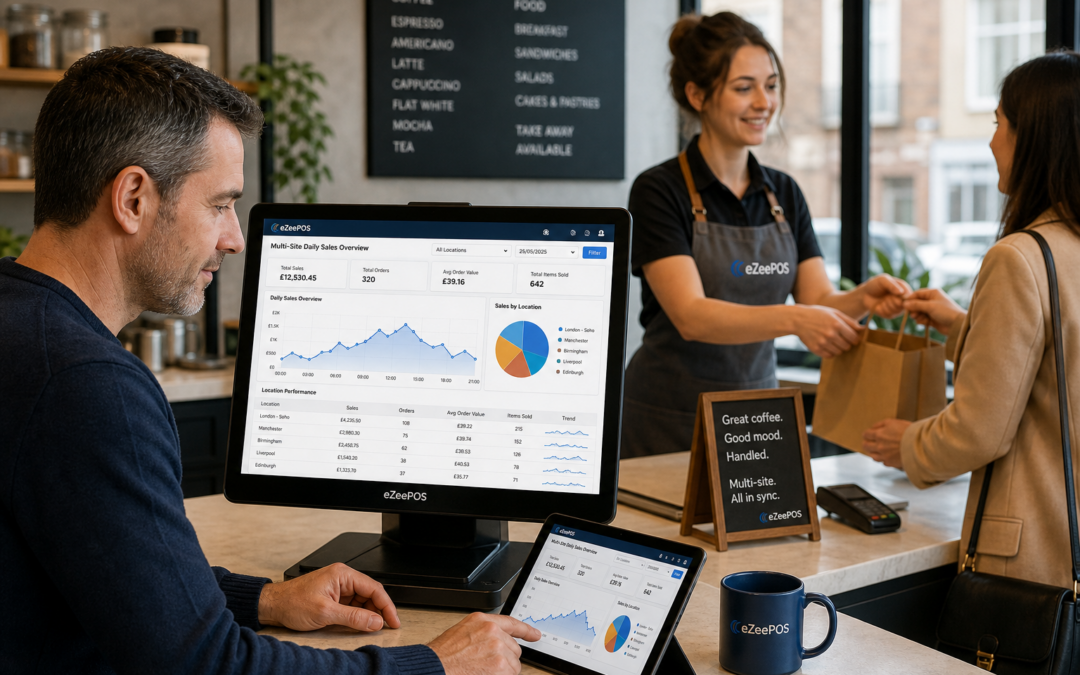
When a business grows from one site to two, three or more, keeping track of performance becomes a lot harder. Sales may look healthy overall, but the real story is often hiding in the detail: which branch is trading best, which location is quiet on weekdays, and where margins or customer spend are changing.
That is where multi-site reporting becomes valuable. With the right EPOS software, owners can view trading data across all locations in one place, rather than piecing together separate reports from each branch. For UK retail and hospitality businesses, that can make day-to-day management far more practical. If you are looking at a modern system for this kind of visibility, eZeePOS is one option designed to help businesses stay organised as they expand.
Why multi-site reporting is useful
Running more than one site often means managing different teams, different customer habits and sometimes different trading patterns. A café in a city centre may be busiest at lunchtime, while a branch in a retail park could peak at weekends. A convenience store in one area may rely on repeat local trade, while another location gets more seasonal footfall.
Without joined-up reporting, it can be difficult to compare those differences properly. You may know that one site is busier, but not whether it is more profitable. You may notice higher takings at another branch, but not realise it is also discounting more heavily or running less efficiently.
Multi-site reporting helps bring that information together so owners can see the bigger picture and make calmer decisions.
What businesses can learn from multi-site reporting
A good reporting setup should help you answer practical questions, not just show numbers on a screen. The most useful reports often highlight:
- Which locations are selling the most overall
- Which products, menu items or categories perform best at each site
- How trade changes by day of the week or time of day
- Whether one branch is relying more heavily on discounts or promotions
- How staff performance and sales trends compare across locations
That kind of information is helpful for retail shops, cafés, restaurants, bars and takeaways alike. It can show where a location needs support, where a layout or menu is working well, or where trading patterns are starting to shift.
Spotting branch-specific trends
One of the biggest advantages of multi-site reporting is that it helps businesses stop treating every branch as if it were exactly the same. A report may show that one location sells more premium items, while another moves more entry-level products. In hospitality, one site may be strong on breakfasts, while another performs better in the evening.
Once those patterns are clear, owners can make better decisions about staffing, opening hours, promotions and ordering. Instead of guessing, you can look at what the data is actually showing.
Keeping an eye on sales consistency
For growing businesses, consistency matters. If one location is regularly underperforming, the cause may not be obvious from a weekly total. Multi-site reporting can help reveal whether the issue is footfall, basket size, timing, product mix or something else entirely.
That does not mean every branch has to trade in the same way. In fact, varied performance between sites is normal. The benefit comes from being able to see those differences clearly and respond in a measured way.
Multi-site reporting for retail businesses
In retail, multi-site reporting can help businesses compare sales by branch, department or category. That is useful for convenience stores, gift shops, fashion retailers, pet shops and other businesses with more than one location.
For example, a gift shop chain may find that one store performs best with seasonal lines, while another sells more everyday impulse purchases. A fashion business may discover that size ranges or product types vary from site to site. A convenience retailer may see different buying patterns depending on local demographics or nearby competition.
That information can support better decisions on product range, promotion planning and staff scheduling. It can also help managers identify which locations may need extra support during busier periods.
Multi-site reporting for hospitality businesses
Hospitality businesses often face fast-changing trade patterns, so having a clear view across multiple sites can be particularly useful. Cafés, restaurants, bars, pubs and takeaways may all benefit from understanding when each branch is busiest, which items are proving popular and where service is fastest.
For example, a restaurant group may notice that one branch sells more lunch deals while another performs better with evening dining. A takeaway business may see that orders rise sharply on specific days in one area but not another. These are the kinds of details that can influence staffing, menu planning and opening decisions.
When reporting is joined up across all locations, owners do not need to wait until the end of the month to understand what is happening. They can stay closer to live trading and react sooner when something changes.
Linking reporting to better day-to-day decisions
Multi-site reporting is most useful when it helps with real decisions rather than just producing reports for the sake of it. That might include:
- Adjusting staffing levels at specific branches
- Reviewing opening hours based on local demand
- Comparing sales performance after a promotion
- Supporting managers with clearer targets
- Identifying branches that need more training or operational support
It can also reduce the time owners spend collecting information from different systems or spreadsheets. For busy businesses, that time saving alone can make reporting worthwhile.
How eZeePOS can help
A modern EPOS system should do more than process transactions. It should help you understand how your business is performing across every site, so you can manage with more confidence. That is the value of a practical setup from www.ezeepos.co.uk for growing UK retailers and hospitality businesses.
eZeePOS is designed to support businesses that need a clearer view of trading, whether they run one site or several. If you are comparing branch performance, reviewing sales trends or looking for a more organised way to manage day-to-day data, it is worth speaking to a provider that understands real-world business needs.
For businesses exploring wider EPOS options, including reporting, operational oversight and payment setup, eZeePOS can also be discussed alongside payment integration options such as Teya and Dojo Payments where relevant to the overall setup.
Making growth easier to manage
Growth should not make a business harder to understand. Multi-site reporting helps turn everyday sales data into something useful, giving owners a clearer view of what is working and where attention is needed. For independent UK businesses, that can make expansion feel more manageable and less stressful.
If you want to see how a practical EPOS system could support reporting across more than one location, visit www.ezeepos.co.uk to find out more.
Contact YCR Distribution at sales@ezeepos.co.uk or call 01924 438238.
Recent Comments