
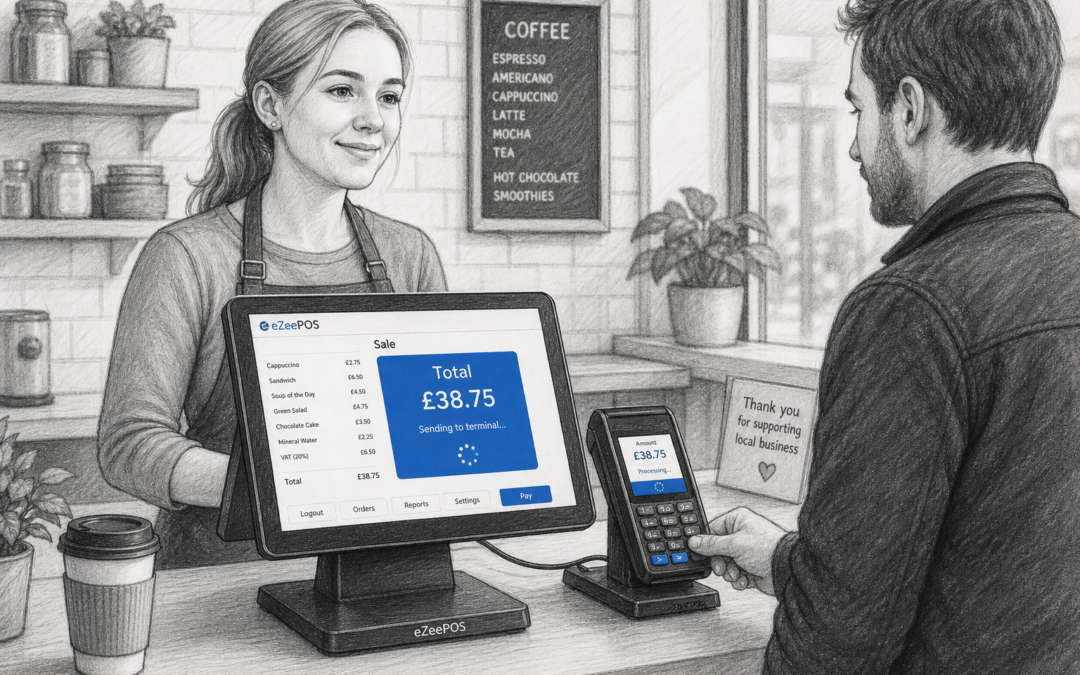
For many independent businesses, the payment step is where a fast service can suddenly slow down. A customer is ready to pay, staff need to type in the amount, double-check the total, and then wait for the card terminal to finish before moving on to the next sale. Over the course of a busy day, that extra time adds up.
That is why integrated payments are worth a closer look. When the EPOS system and card payment process work together, the checkout can feel simpler, cleaner and more efficient. For retailers, cafes, takeaways and other busy counters, that can make a real difference to both staff and customers. If you are reviewing your setup, eZeePOS at www.ezeepos.co.uk is one place to start when thinking about a more joined-up till system.
What integrated payments actually do
In plain terms, integrated payments connect the sale value in your EPOS system to the card payment step. Instead of entering the total manually on a separate device every time, the amount goes across from the till to the payment process more directly.
That may sound like a small change, but it can help in several practical ways:
- less manual entry at the till
- fewer chances to type the wrong amount
- faster handover at checkout
- a cleaner, more organised counter routine
- less interruption for staff during busy periods
For businesses that process lots of smaller payments each day, even modest time savings can make the front counter feel calmer and better controlled.
Why it matters in retail and hospitality
Integrated payments are useful in any business where speed and accuracy matter. In retail, they can help keep queues moving when several customers are waiting to pay at once. In hospitality, they can support quicker table payments, faster counter service and less confusion when orders are completed in a rush.
In retail
Shops often need to move from one sale to the next without delays. Staff may be serving customers, answering questions and handling cash, cards and mixed baskets at the same time. If the payment amount has to be keyed in manually every time, it adds another step and creates another point where mistakes can happen.
With an integrated setup, the till can do more of the work for the team. That makes it easier to stay focused on the customer rather than the payment machine.
In cafes, takeaways and restaurants
Hospitality businesses face a different kind of pressure. Orders may be coming in at the counter, at the table or across several service points at once. During lunch rushes, evening peaks or weekend trading, anything that slows payment can quickly build into a queue.
A smoother payment flow helps staff clear orders faster, reduce waiting time and keep service moving. It also helps create a better customer experience, especially when people are in a hurry.
Reducing manual entry at the till
One of the most useful benefits of integrated payments is the simple reduction in manual entry. When staff have to type amounts into a separate card machine all day, they are more likely to make errors or waste time checking totals. That can lead to small mistakes, slower service and unnecessary corrections.
By linking the sale value more directly to the payment process, the till becomes easier to use consistently. It also helps new staff settle in more quickly because there are fewer steps to remember during a sale.
That is especially helpful in businesses with seasonal staff, part-time teams or busy shift patterns. The less staff need to juggle at the counter, the more confident they are likely to feel.
Keeping checkout speed steady during busy periods
Payment speed is not just about saving a few seconds. It is about keeping the whole checkout experience predictable. When the payment stage is smooth, customers move through more calmly and staff can focus on the next task straight away.
This matters most when the business is under pressure. Think of a Saturday morning in a shop, a lunchtime rush in a cafe or a takeaway where orders are building quickly. If each payment is slightly quicker and simpler, the counter is less likely to become congested.
That is one reason many growing businesses look for EPOS software that supports a more efficient checkout flow rather than relying on a basic till and standalone card terminal.
Payment integration options such as Teya and Dojo Payments
When businesses are reviewing payment setups, it can be useful to discuss integration options with YCR Distribution, including providers such as Teya and Dojo Payments. The right approach depends on the business type, the counter layout and how payments are handled day to day.
The main thing is to think practically. A payment setup should fit the way you trade, reduce unnecessary steps and support the flow of service. If you already use EPOS software, the question is not just whether a card machine works, but whether it works well alongside the rest of the till process.
That is where a conversation about integration can be helpful. It may not be the right answer for every business, but for many retailers and hospitality venues it is worth exploring as part of a wider EPOS review.
Why this can also improve staff confidence
Staff often work better when the tools in front of them are straightforward. A payment process that feels repetitive and reliable is easier to learn and easier to keep consistent during a busy shift.
That can help in several ways:
- less stress at the counter
- fewer payment-related interruptions
- more time for customer service
- smoother training for new starters
- better day-to-day consistency
In a small business, that kind of confidence can be just as valuable as the time saved.
Choosing an EPOS setup that suits the way you work
If you are still relying on a basic till or a card machine that sits apart from the main sales workflow, it may be worth looking at how much time is being lost to small tasks. A modern EPOS setup does not need to be complicated. In many cases, the best systems are the ones that keep the counter simple, reduce manual steps and help your team serve customers more efficiently.
eZeePOS is designed as a practical UK EPOS option for retail and hospitality businesses, including those using touchscreen tills and Android-based POS terminals. It is worth exploring if you want a system that supports a cleaner checkout process and a more organised front counter.
Final thoughts
Integrated payments are not just a technical upgrade. For many independent businesses, they are a practical way to reduce manual entry, improve checkout speed and make everyday service feel a little easier to manage.
If you are reviewing your till setup and want to see how eZeePOS could support a faster, more organised payment flow, visit www.ezeepos.co.uk. Contact YCR Distribution at sales@ezeepos.co.uk or call 01924 438238.
Recent Comments