
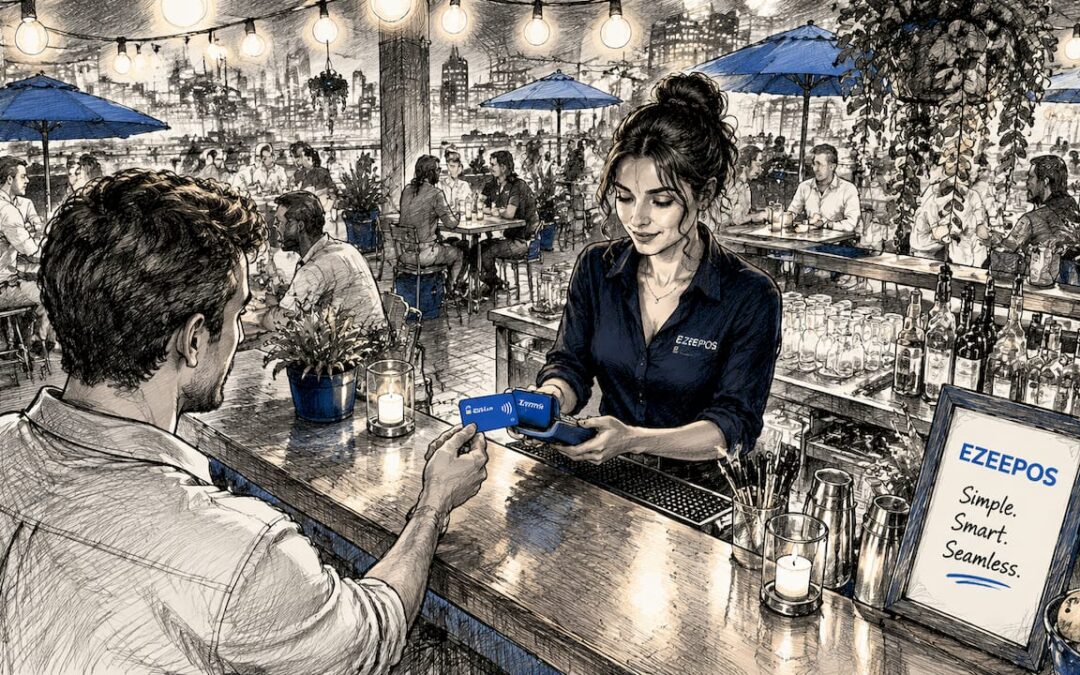
Why cashless payments in bars matter in 2026
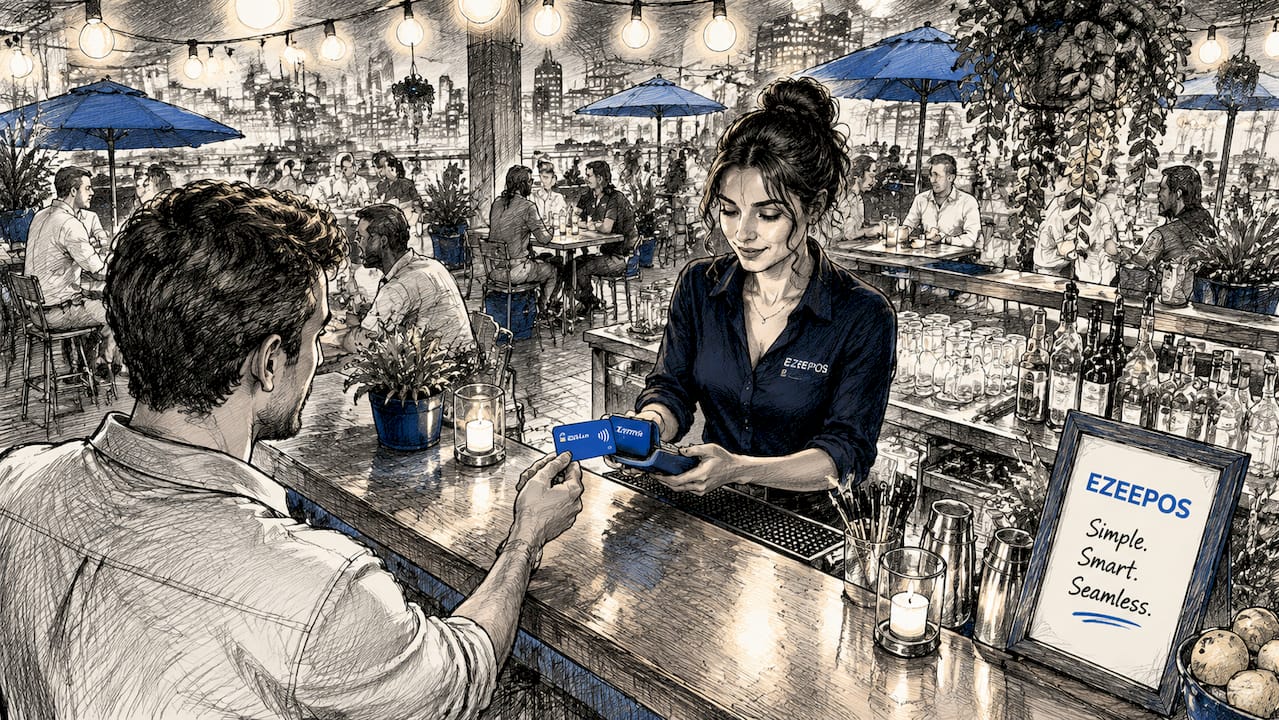
Cashless payments in bars are defined as any transaction completed without physical currency, including contactless cards, mobile wallets such as Apple Pay and Google Pay, and digital tab systems. These methods now sit at the centre of how UK bars operate, and the shift is not cosmetic. Contactless transactions boost spending by 15–20% compared to cash, because removing the physical act of handing over notes reduces the psychological friction of spending. For bar and pub owners weighing up a move to digital payments, the commercial case is already settled. The operational case is what this article unpacks.
Why cashless payments in bars speed up service
Speed is the single biggest operational argument for going cashless. Contactless payments process in as little as 15 seconds, roughly twice as fast as a standard chip-and-PIN transaction. At a busy Friday night bar, that difference compounds across hundreds of transactions and translates directly into shorter queues and more rounds served per hour.
The practical benefits break down into three areas:
- Queue reduction at peak hours. Faster transactions mean the line at the bar clears more quickly. Staff spend less time waiting for customers to count change or enter PINs, and more time pouring drinks.
- Tab management. Digital tab systems let customers open a tab with a single card or mobile wallet authorisation. They order freely throughout the night without returning to pay after every round.
- Staff workload. When staff are not handling cash, counting floats, or chasing incorrect change, they focus entirely on service. That shift in attention is visible to customers.
Pro Tip: Check that your POS system supports digital wallet pre-authorisation for tabs. Some POS systems do not support this feature, which forces staff to re-enter payment details for every round and defeats the speed advantage entirely.
Modern customers expect tap-and-go payments as a baseline. Venues that cannot offer this are increasingly seen as outdated, and repeat visits suffer as a result. Speed is no longer a differentiator. It is a minimum standard.
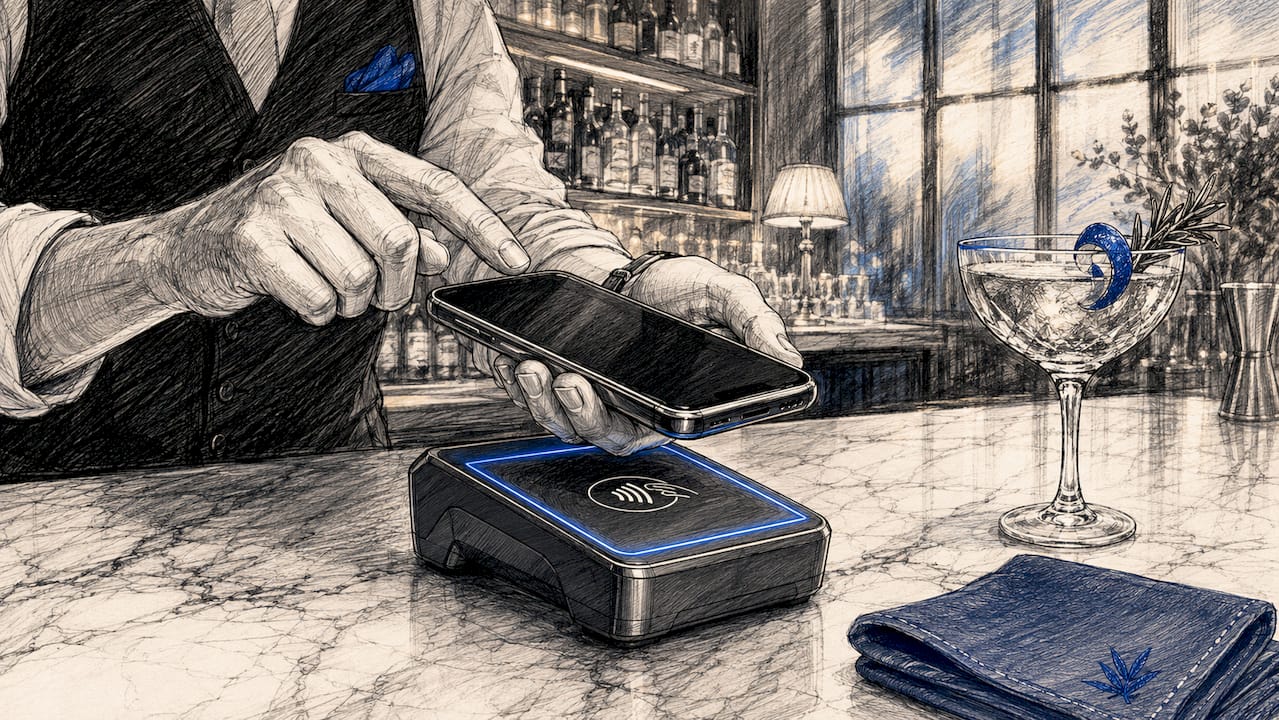
What are the financial advantages for bar owners?
The financial case for digital payments goes well beyond faster service. The 15–20% increase in consumer spending linked to cashless transactions is the headline figure, but the operational savings underneath it are equally significant.
Going cashless reduces internal fraud, cash miscounting, and the physical security risk of holding large amounts of cash on site. Every cash transaction carries a small but real risk of error or theft. Remove cash from the equation and those risks disappear entirely.
| Financial benefit | What it means in practice |
|---|---|
| Higher average spend | Customers spend 15–20% more without cash friction |
| Reduced theft risk | No cash float means no opportunity for internal cash theft |
| Automated reconciliation | End-of-night totals are generated automatically, with no manual counting |
| Sales data insights | Transaction records show peak hours, best-selling products, and staffing needs |
| Lower accounting time | Digital records reduce the time spent on manual bookkeeping |
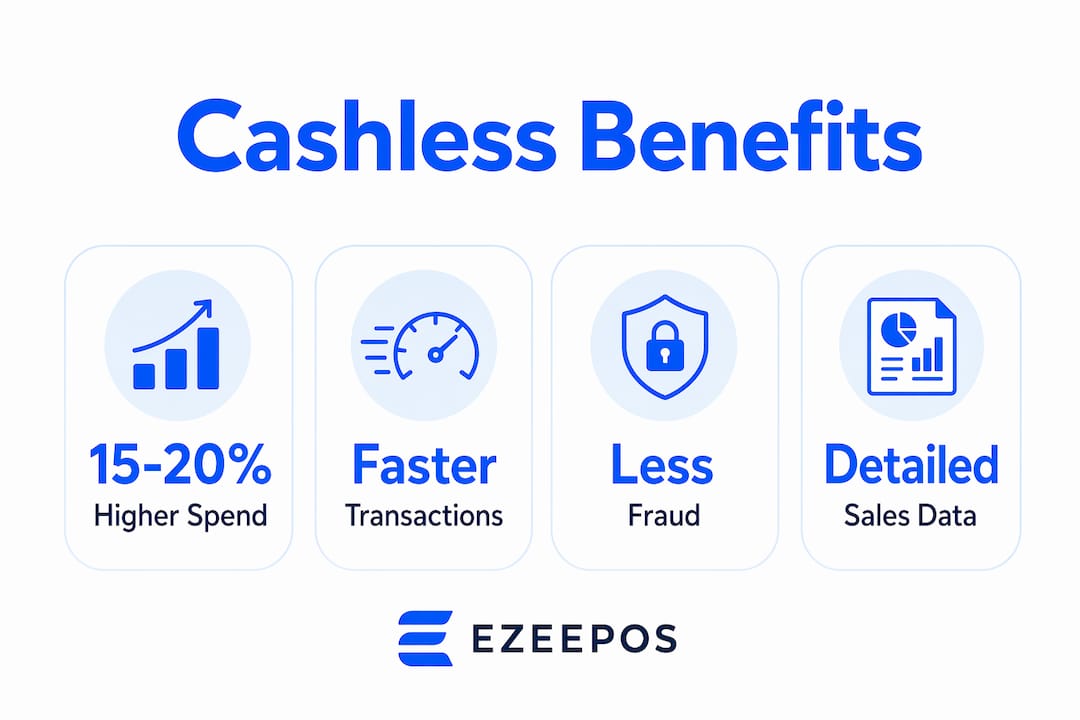
Cashless systems provide detailed sales data that cash simply cannot match. That data tells you which products sell fastest on a Saturday night, when your busiest 30 minutes occur, and whether a promotional offer actually moved volume. Cash gives you a total. Digital payments give you a picture.
Pro Tip: Use your POS sales reports to adjust staffing rotas around your actual peak periods rather than guessing. The data from bar tab management systems makes this straightforward and removes the guesswork from scheduling.
What challenges should bar owners expect?
Adopting digital payments is not without genuine complications. A balanced view requires acknowledging the risks alongside the benefits.
- System dependency. POS system downtime is the biggest risk of going fully cashless. If your internet connection drops or your terminal fails during a busy Saturday night, you lose the ability to take any payment at all. A backup plan is not optional.
- Customer inclusivity. Not every customer carries a card or smartphone. Older regulars in particular may rely on cash. Removing it entirely risks alienating a loyal segment of your customer base.
- Setup and hardware costs. Moving to cashless requires compatible POS hardware, payment terminals, and potentially new software licences. These are upfront costs that need factoring into any business case.
- Staff training. Staff need to understand how digital tab systems work, how to handle declined cards, and what to do when a terminal goes offline. Training time has a cost.
- Transaction fees. Card payments carry processing fees that cash does not. For high-volume, low-margin operations, these fees accumulate and need accounting for in your pricing model.
The inclusivity point deserves particular attention. Removing cash can reduce the social moment of paying, which some regular customers value as part of their experience. A regular who always pays with a note and receives change from a familiar face is having a different interaction than one who taps and walks away. Neither is wrong, but the distinction matters for venues built on community loyalty.
The practical answer for most UK bars is a hybrid approach: accept all payment types, but design your service around cashless as the default. This protects inclusivity while capturing the speed and financial benefits.
Comparing cashless payment options for bars
Not all cashless payment methods are equal, and the right choice depends on your venue type, customer base, and existing technology.
Contactless cards vs digital wallets
Contactless card payments via Visa and Mastercard are the most widely used method in UK bars. They are fast, familiar, and accepted by virtually every customer. Apple Pay and Google Pay add a layer of convenience by removing the need to carry a physical card, and both use the same contactless infrastructure. The practical difference for bar owners is minimal. Both process in under 15 seconds and work with standard payment terminals.
RFID wristbands and closed-loop systems
RFID wristbands and closed-loop cashless systems are common at festivals and large outdoor venues. Customers load credit onto a wristband or account at the start of an event and spend from that balance throughout. This eliminates card terminals at individual bars entirely and speeds up service dramatically. The trade-off is setup complexity and the need to manage refunds for unspent balances at the end of an event.
Integration with POS and loyalty programmes
The most commercially valuable cashless setups link payment data directly to your POS system and loyalty programme. When a customer pays, their purchase history updates automatically. You can then target them with relevant offers, track their preferences, and build a genuine picture of your most valuable regulars. Explore the contactless payment options available specifically for UK hospitality venues to understand which methods suit your service model.
- Contactless cards: best for most bars; low setup cost, universal acceptance
- Apple Pay and Google Pay: ideal for younger customer bases; no additional hardware needed
- RFID wristbands: suited to festivals and large events; high setup cost but maximum speed
- Digital tab systems: best for bars with high repeat-order volume; requires POS compatibility
UPI-based cashless spending at bars and pubs grew 3% year-on-year in april 2026. That growth reflects a broader consumer shift that is not slowing down. Venues that have not yet adopted digital payments are moving against the current.
Key takeaways
Cashless payments in bars increase revenue, reduce risk, and give owners the data they need to run a tighter operation.
| Point | Details |
|---|---|
| Speed drives revenue | Contactless transactions complete in 15 seconds, cutting queues and increasing rounds served per hour. |
| Spending increases | Customers spend 15–20% more when paying without physical cash due to reduced friction. |
| Financial control improves | Digital payments eliminate cash theft risk and automate end-of-night reconciliation. |
| Data is the hidden benefit | Sales records reveal peak periods, top products, and staffing needs that cash cannot show. |
| Backup planning is non-negotiable | POS downtime removes all payment capability; every cashless bar needs an offline contingency. |
The uncomfortable truth about going cashless too fast
I have worked with enough UK bar and pub owners to know that the biggest mistakes happen not when venues refuse to go cashless, but when they rush into it without preparing their team or their systems. The technology is straightforward. The transition is where things go wrong.
The most common error I see is treating cashless as a switch rather than a process. Owners install new terminals, brief staff for twenty minutes, and then wonder why service slows down on the first busy night. Staff who are uncertain about how digital tabs work, or what to do when a card is declined, create exactly the kind of friction that cashless is supposed to remove.
The second error is underestimating the backup question. System downtime is a critical risk, and I have seen bars lose an entire evening’s revenue because a router failed and nobody had a contingency. A simple offline mode or a small cash float kept behind the bar costs almost nothing and protects you from a genuinely damaging situation.
My honest advice: go cashless as your primary method, keep a small cash option available, and invest the time in proper staff training before your first busy weekend. The POS systems built for pubs that I recommend always include offline capability and clear staff workflows. That combination is what makes the transition smooth rather than stressful.
— John
How Ezeepos helps UK bars go cashless with confidence
Ezeepos builds POS systems specifically for UK hospitality venues, including bars and pubs that need fast, reliable cashless payment processing. The platform integrates contactless card payments, Apple Pay, and Google Pay directly into the POS workflow, with tab pre-authorisation built in as standard. Sales data, inventory tracking, and staff management all sit within the same system, so your end-of-night reporting is automatic.
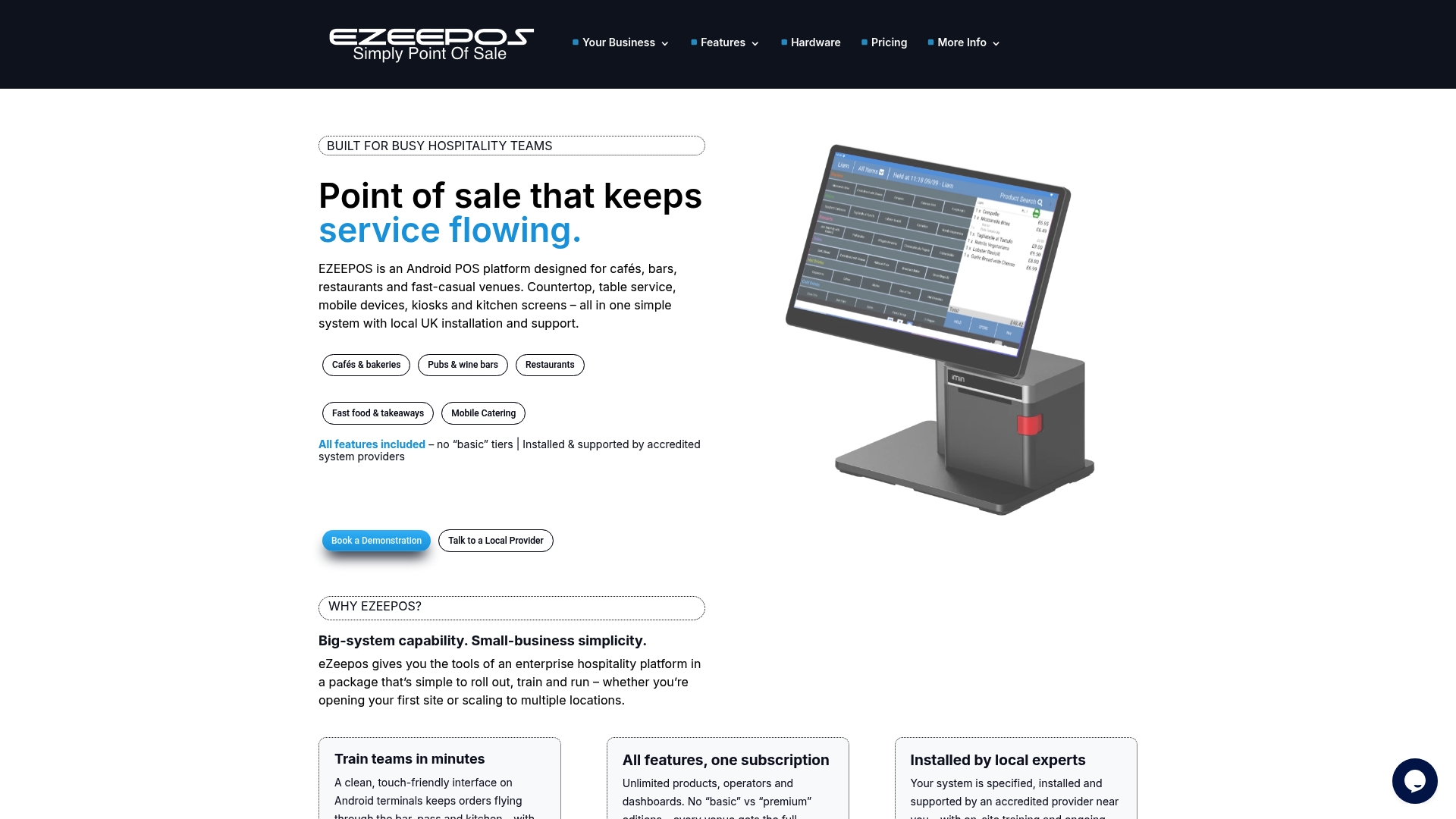
Ezeepos installs locally across the UK, with ongoing human support from accredited providers rather than a remote helpdesk. For bar owners ready to move to digital payments without the risk of a poorly supported system, the Ezeepos hospitality brochure sets out exactly what the platform includes and how it fits a busy bar environment.
FAQ
What is the main benefit of cashless payments for bars?
The primary benefit is speed. Contactless transactions complete in as little as 15 seconds, which reduces queues and allows staff to serve more customers per hour during peak periods.
Do cashless payments increase how much customers spend?
Yes. Customers spend 15–20% more when paying without physical cash, because removing the act of handling notes reduces the psychological friction of spending.
What happens if the POS system goes offline?
Without a working POS or internet connection, a fully cashless bar cannot process any payments. Every cashless venue needs a backup plan, such as an offline payment mode or a small cash float, to avoid losing revenue during outages.
Are all customers comfortable with cashless payments?
Not all customers prefer cashless. Older regulars in particular may rely on cash, and removing it entirely risks losing their custom. A hybrid approach that accepts both cash and digital payments protects inclusivity while defaulting to the faster cashless option.
Which cashless payment method is best for a UK bar?
Contactless card payments via Visa and Mastercard are the most practical starting point for most UK bars, as they require no additional customer behaviour change. Apple Pay and Google Pay work on the same infrastructure and add convenience for customers who prefer not to carry a physical card.
Recent Comments