
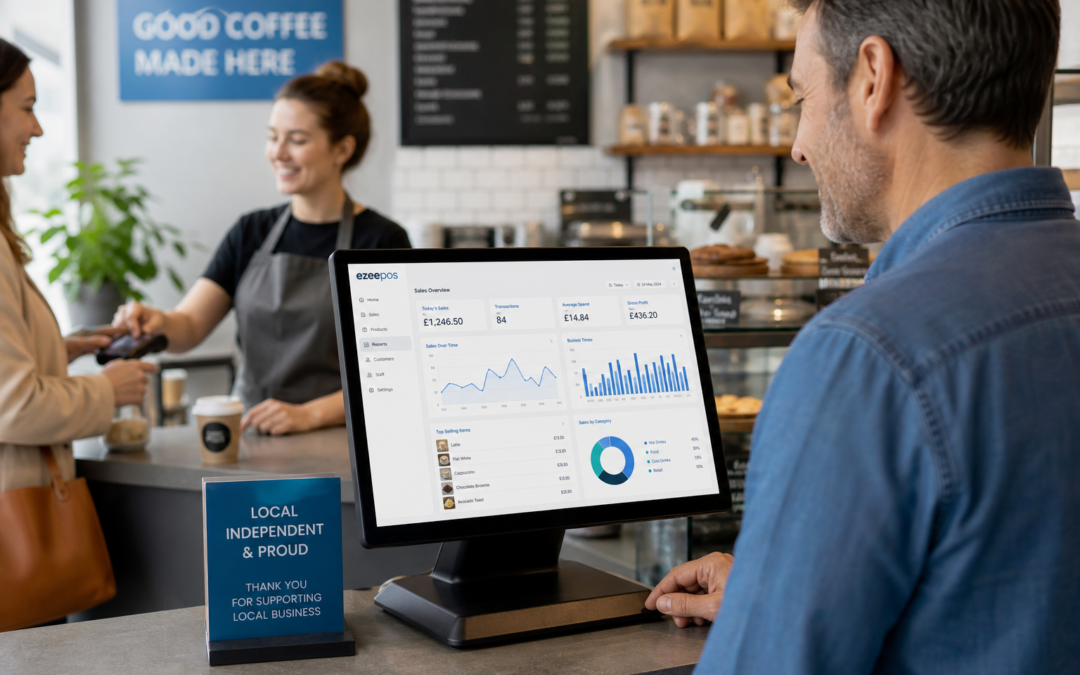
Why reporting matters more than many business owners realise
For many independent retailers, cafés, restaurants and takeaways, daily decisions are made quickly. You decide what to prepare, when to bring in staff, which products to promote and where the busiest parts of the day fall. If those decisions are based on guesswork, it is easier to miss opportunities or waste time on the wrong tasks.
That is where better reporting can make a real difference. A practical EPOS system such as eZeePOS can help turn everyday sales into useful information, making it easier to see what is happening across the business. For UK businesses that want a clearer view of performance without adding more admin, www.ezeepos.co.uk is a useful place to start.
The value is not in having more numbers for the sake of it. It is about having the right information at the right time, in a format that helps owners and managers make sensible decisions.
What useful EPOS reporting can show you
Good reporting needs to be practical. Rather than overwhelming staff with spreadsheets, it should give a straightforward picture of how the business is performing day to day.
- Best-selling products or menu items: helps you understand what customers keep coming back for.
- Busiest trading times: shows when the counter, till or kitchen is under the most pressure.
- Average transaction values: gives a sense of whether customers are spending more or less over time.
- Daily and weekly sales trends: helps you spot patterns across different days and seasons.
- Staff performance insights: can support better rota planning, training and service management.
For a café, that might mean spotting that pastry sales are strongest in the morning but drop quickly after lunch. For a shop, it might reveal that certain products perform well at weekends, while others need a better display or clearer promotion. For a takeaway, it may show exactly when order volumes rise sharply so the team can prepare in advance.
How reporting supports better decisions in retail
Retail businesses often have more variation than they expect. Even a small shop can have very different trading patterns depending on the day, the weather, the season or local footfall. Reporting helps make those patterns easier to see.
Stock, promotions and product range
If you know which products are moving well, it becomes easier to decide what deserves more shelf space or better promotion. If something is not selling, you can review whether the price, placement or product mix needs attention. This does not mean making every decision from reports alone, but it does mean you are not relying on instinct every time.
For shops with a mixed range, reporting can also show whether customers are buying across departments or focusing on a few key categories. That is useful for businesses such as gift shops, convenience stores, garden centres and farm shops, where customer behaviour can change quite quickly throughout the year.
Staffing and trading patterns
Retail reporting can also help with staffing decisions. If Mondays are slow but Saturdays are consistently busy, rotas become easier to plan. That can help reduce wasted labour at quiet times while making sure customers still get fast service when trade picks up.
It also makes it easier to prepare for seasonal peaks. Instead of reacting once the queue has already formed, you can use recent sales trends to decide when extra cover may be needed.
Why hospitality businesses benefit from clearer reporting
In cafés, restaurants, bars and takeaways, reporting is not just about revenue. It can help owners manage service flow, menu planning and team workload more effectively.
Menu planning and customer demand
Some items may look popular because they are regularly ordered, but reports can show which dishes or drinks are actually driving profit and which are only appearing occasionally. That insight can help with menu changes, specials and preparation levels.
For example, a takeaway may notice that certain meal deals are more popular on specific days, while a café may see that hot drinks remain steady but food orders rise sharply at lunchtime. These are the kinds of details that make planning easier and reduce waste in everyday service.
Balancing service and staffing
Many hospitality businesses struggle most when busy periods arrive unexpectedly. Reporting helps by showing patterns that are easy to act on. If Friday evenings are always strong, or Sunday lunch begins earlier than expected, your rota and prep can reflect that reality.
In practical terms, this can help reduce stress during service and improve the customer experience. Staff are better prepared, queues are shorter and the business is less likely to feel reactive.
Making reports useful, not complicated
The best reporting tools are the ones people actually use. That means reports should be simple to access, easy to understand and relevant to the way the business trades. You do not need to spend hours analysing every figure. Often, a few key reports can answer the most important questions.
- Which items sold best this week?
- What time of day was busiest?
- Did last week perform better than the week before?
- Are there products or services that need reviewing?
- Do staffing levels match trading patterns?
When reporting is built into the till system, it becomes part of daily management rather than a separate admin task. That makes it much easier for independent businesses to stay organised without losing time on manual record keeping.
Using reporting alongside other EPOS features
Reporting is even more useful when it works with the rest of your EPOS setup. Sales data, product lookup, promotions, table orders and payment records can all contribute to a clearer picture of what is happening in the business. If you are also using payment integration options such as Teya or Dojo Payments, it can be helpful to discuss how your overall setup is managed with YCR Distribution so everything works as smoothly as possible.
That joined-up approach is often what makes the biggest difference. Instead of looking at sales, service and payments as separate tasks, you get one clearer view of the whole business.
A practical way to make better decisions every day
For UK independent businesses, reporting does not need to be complex to be valuable. Even a small amount of reliable information can help you make better choices about staffing, stock, service and trading patterns. Over time, those small decisions can add up to a more organised and more confident business.
If you are looking for a practical EPOS solution that supports clearer reporting for retail or hospitality, explore eZeePOS and see how it could fit your day-to-day operations.
Contact YCR Distribution at sales@ezeepos.co.uk or call 01924 438238.
Recent Comments