
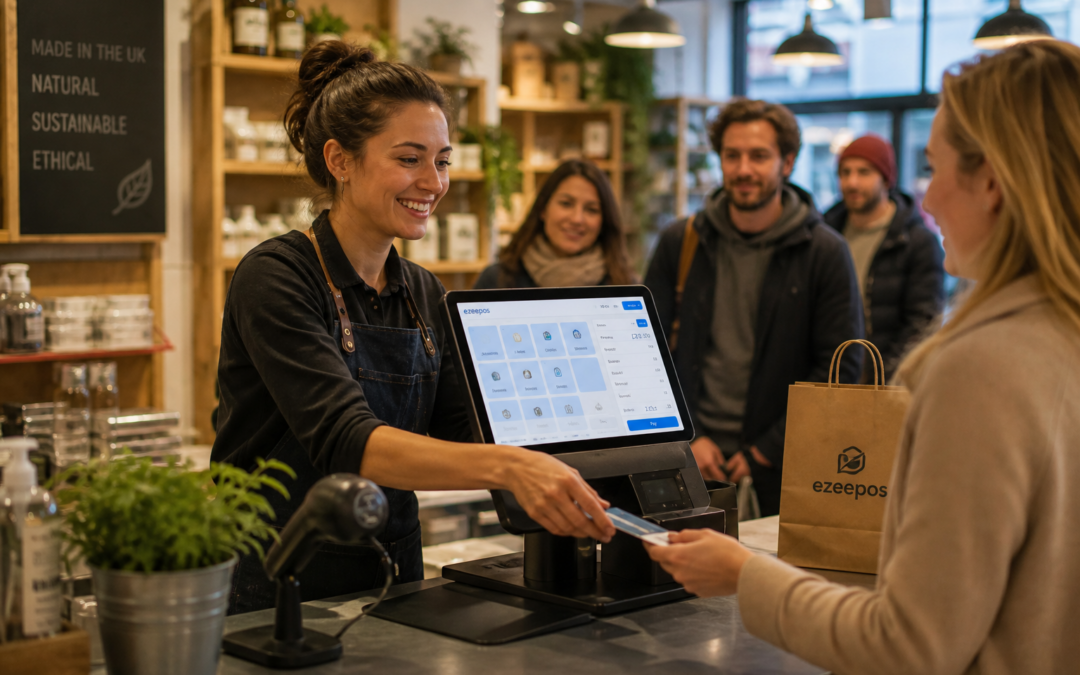
Why checkout queues matter more than many retailers think
For independent retailers, queues are not just a small inconvenience. They can shape the whole customer experience, especially during lunch breaks, weekends, school runs and other busy trading periods. A slow checkout can lead to abandoned purchases, impatient customers and staff feeling under pressure.
That is why many UK businesses look at their till setup as more than a way to take payment. A well-planned EPOS system can help staff process sales faster, find products more easily and keep the queue moving when the shop gets busy. If you are reviewing your current setup, eZeePOS offers a practical place to start.
Where queues usually build up
Checkout delays often come from familiar problems rather than one major issue. Common causes include slow product lookup, unclear pricing, too many manual steps, limited till access and staff needing to pause for approvals or corrections. Even a few extra seconds per transaction can make a noticeable difference when a queue starts to form.
In some shops, the issue is not the number of customers but the amount of time spent at the till on each sale. If staff are searching through menus, checking discounts or correcting entries, the queue can build quickly. The good news is that many of these problems can be reduced with better EPOS setup and better day-to-day processes.
How EPOS can help reduce waiting times
1. Make product lookup faster
A clear product lookup layout helps staff find items quickly, especially in shops with varied product ranges. This matters in convenience stores, gift shops, farm shops and multi-department retailers where not every item can be scanned immediately. A sensible button layout, product categories and clear naming can save valuable seconds at the till.
2. Keep the most common actions simple
When staff can complete the most frequent tasks with fewer taps, service naturally becomes quicker. That includes adding popular items, applying standard discounts, checking totals and moving to payment without extra screens or unnecessary steps. A simpler workflow also helps new starters get up to speed more confidently.
3. Reduce avoidable corrections
Queues often slow down when staff need to void items, reopen transactions or call for help. Clear staff permissions, tidy menu structures and well-set-up product records can help reduce those interruptions. In busy retail environments, even a small reduction in mistakes can have a noticeable impact on the pace of service.
4. Use reporting to spot busy periods
Reporting is not just about looking back at sales. It can also help shops plan ahead for the busiest times of day. If your reports show regular peaks on Friday afternoons or Saturday mornings, you can schedule cover more effectively and make sure the till area is ready when the queue appears.
The value of a well-organised checkout area
Sometimes faster service is about layout as much as software. A clean counter, a sensible till position and a straightforward customer flow can reduce hesitation and help staff work more efficiently. If the checkout area is cluttered, staff may waste time reaching for items, waiting for printers or moving around awkwardly.
For smaller stores, a compact touchscreen till setup can keep the counter tidy and easier to manage. For larger shops, placing tills strategically across the sales floor can help spread demand and prevent one checkout from becoming overloaded.
Helping staff stay confident during busy periods
Queue reduction is also about confidence. Staff who know where items are, how to handle common transactions and what to do when a problem appears are more likely to keep service moving. Good training is important, but so is a system that feels easy to use from the start.
One of the advantages of modern retail EPOS is consistency. When the till behaves the same way every time, staff spend less time thinking about the process and more time serving the customer. That can make a real difference in shops with part-time staff, seasonal team members or changing shift patterns.
When card payments and checkout speed work together
In many retail settings, the checkout experience is not only about scanning items. It is also about how smoothly the payment step fits into the overall sale. If payment needs to be re-entered manually or checked across separate devices, it can add friction at the exact point when the customer is ready to leave.
For that reason, some businesses choose to discuss integrated card payments as part of their wider till setup. eZeePOS can support conversations about payment integration options, including providers such as Teya and Dojo Payments, where this is relevant to the business. The aim is simple: fewer steps, fewer delays and a cleaner checkout flow. If you want to explore that further, it is worth discussing the practical options with YCR Distribution.
Practical habits that can make a difference straight away
- Place the most frequently sold items in easy-to-find categories.
- Review till layouts so common actions take fewer taps.
- Train staff to spot and resolve simple issues quickly.
- Use reports to prepare for busy trading times.
- Keep the checkout area clean and easy to work in.
- Think through how payment and checkout steps connect.
A better checkout feels better for everyone
Reducing queues is not just about speed for the sake of it. It helps customers feel looked after, reduces pressure on staff and makes the business feel more organised. For independent retailers, that can make a real difference to repeat custom and everyday trading comfort.
If your current till process feels clunky, it may be worth reviewing the whole checkout journey, from product lookup through to payment. A practical EPOS system can often remove small delays that add up across the day.
To learn more about a flexible UK EPOS solution for retail, visit www.ezeepos.co.uk.
Contact YCR Distribution at sales@ezeepos.co.uk or call 01924 438238.
Recent Comments